Should I Learn Multiple SAP Modules or Focus on One?
Should you focus on one SAP module or learn multiple modules? This guide explains the advantages, challenges, career opportunities, and the best learning approach to build a successful SAP career in India.
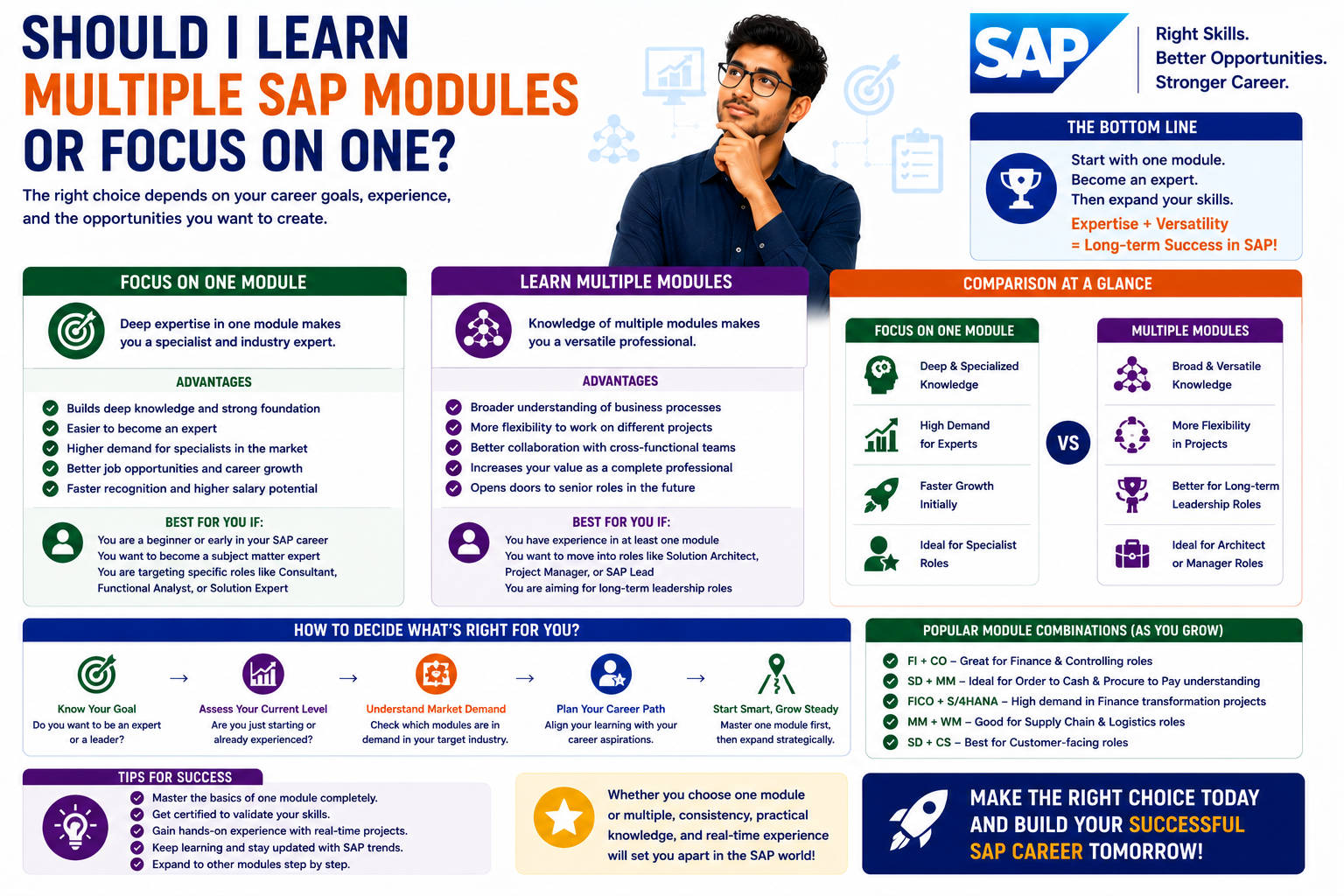
Introduction
One of the most common questions asked by SAP beginners is whether they should specialize in a single SAP module or learn multiple modules to improve their job prospects. With SAP offering dozens of functional and technical modules, it's easy to assume that learning more automatically leads to better career opportunities. However, that's not always the case.
Many students and working professionals ask:
"Should I learn SAP FICO, MM, and SD together?"
"Will knowing multiple SAP modules help me get hired faster?"
The reality is that employers generally prefer professionals with strong expertise in one module rather than superficial knowledge of several. Once you've built a solid foundation, learning related modules can significantly enhance your career. This guide explains the advantages and disadvantages of both approaches and helps you choose the best learning strategy.
Understanding SAP Modules
SAP modules are designed to manage specific business functions within an organization. Each module focuses on a different department but integrates with others to support end-to-end business processes.
Popular SAP functional modules include:
- SAP FICO – Finance and Controlling
- SAP MM – Materials Management
- SAP SD – Sales and Distribution
- SAP PP – Production Planning
- SAP HCM – Human Capital Management
- SAP EWM – Extended Warehouse Management
- SAP SuccessFactors – Cloud Human Resources
Technical modules include:
Understanding how these modules work together is important, but mastering one module is usually the best starting point.
Why Focusing on One SAP Module Is Recommended
For beginners, specializing in one module provides several advantages.
1. Stronger Expertise
Learning one module in depth helps you understand business processes, SAP configuration, transactions, reporting, and real-world scenarios more effectively than trying to cover several modules at once.
2. Better Interview Performance
Recruiters often ask detailed questions about your chosen module. Candidates with deep knowledge are more likely to answer confidently and demonstrate practical understanding.
3. Faster Job Readiness
Completing one module thoroughly allows you to:
- Build practical projects
- Practice business scenarios
- Prepare for interviews
- Develop implementation knowledge
This makes you job-ready much sooner.
4. Easier Certification Preparation
If you plan to pursue SAP certification, focusing on one module improves your chances of understanding the concepts and passing the exam successfully.
When Should You Learn Multiple SAP Modules?
Learning multiple modules becomes beneficial after you've gained confidence in your primary specialization.
For example:
- SAP MM + SAP SD
- SAP MM + SAP WM
- SAP FICO + SAP CO
- SAP SD + SAP CRM
- SAP HCM + SAP SuccessFactors
- SAP ABAP + SAP Fiori
- SAP Basis + SAP BTP
These combinations reflect how businesses actually use SAP and can broaden your career opportunities.
Advantages of Learning Related SAP Modules
Once you have expertise in one module, learning a complementary module can help you:
- Understand end-to-end business processes.
- Work on cross-functional implementation projects.
- Collaborate more effectively with other SAP teams.
- Increase your value to employers.
- Qualify for more advanced consulting roles.
The key is to build depth first and then expand your knowledge strategically.
Risks of Learning Too Many Modules at Once
Trying to study multiple SAP modules simultaneously can create several challenges.
Common issues include:
- Confusion between business processes.
- Difficulty retaining concepts.
- Limited hands-on practice.
- Poor interview preparation.
- Longer learning time.
- Lack of specialization.
Recruiters often notice when candidates have only surface-level knowledge across multiple modules.
Which SAP Module Should You Choose?
Your educational background and career interests can help determine the best SAP module.
| Background | Recommended SAP Module |
|---|---|
| B.Com / M.Com / CA | SAP FICO |
| MBA Finance | SAP FICO |
| Mechanical Engineering | SAP PP |
| Supply Chain / Logistics | SAP MM |
| Sales & Marketing | SAP SD |
| HR Professionals | SAP HCM / SuccessFactors |
| Computer Science / IT | SAP ABAP, Basis, BTP |
Choosing a module aligned with your existing knowledge makes learning easier and improves employability.
Career Growth Strategy
A practical learning roadmap looks like this:
Stage 1 – Learn One Core Module
Focus entirely on one specialization and build a strong foundation.
Stage 2 – Gain Practical Experience
Work on projects, internships, or support roles to understand real business scenarios.
Stage 3 – Learn a Related Module
Expand your expertise by studying a complementary SAP module that naturally integrates with your primary specialization.
Stage 4 – Explore Advanced Technologies
As your career grows, learn:
- SAP S/4HANA
- SAP Fiori
- SAP BTP
- SAP Analytics Cloud
- SAP AI and Automation tools
This approach supports long-term career growth.
Employer Perspective
Most employers prefer candidates who:
- Have strong knowledge of one SAP module.
- Understand related business processes.
- Can explain real-world scenarios.
- Demonstrate practical problem-solving skills.
- Are willing to continue learning.
Depth of knowledge is generally more valuable than listing multiple modules on a resume without practical expertise.
Tips for Choosing the Right Learning Path
To make the best decision:
- Choose a module that matches your educational background.
- Consider the industries you want to work in.
- Research current job demand.
- Focus on practical learning rather than memorization.
- Build project experience.
- Improve communication and analytical skills.
- Continue learning related modules as your career progresses.
A clear learning strategy helps you stay focused and achieve your career goals more efficiently.
Frequently Asked Questions (FAQs)
Q1. Is it better to learn one SAP module or multiple modules?
For beginners, it's usually better to master one SAP module first. Once you gain practical experience, learning related modules can enhance your career prospects.
Q2. Can I learn SAP MM and SAP SD together?
While it's possible, most beginners benefit from learning one module thoroughly before moving on to another. This leads to stronger expertise and better interview performance.
Q3. Do employers prefer specialists or generalists?
Most employers prefer specialists with deep knowledge of one module who also understand how it integrates with related SAP modules.
Q4. Which SAP module has the highest demand?
Modules such as SAP FICO, MM, SD, SuccessFactors, ABAP, and BTP continue to have strong demand, depending on industry trends and business requirements.
Q5. Can learning multiple SAP modules increase my salary?
Yes, but only after you've developed expertise in your primary module. Cross-functional knowledge combined with real project experience often leads to better career growth and higher earning potential.
Conclusion
If you're just starting your SAP journey, focusing on one module is the smartest and most effective strategy. Building deep expertise in a single area helps you understand business processes, perform better in interviews, and become job-ready faster. Once you've gained confidence and practical experience, expanding into related SAP modules can open the door to broader consulting opportunities and long-term career growth.
Remember, successful SAP professionals are known not for the number of modules they've studied but for how well they can solve real business problems. Start with one specialization, master it thoroughly, and then grow your knowledge strategically to build a rewarding SAP career in India and beyond.
Get Training Quote for Free
Related Blogs

Top Interview Questions for Java Backend Developers
This blog covers top Java backend interview questions with clear answers, focusing on Spring Boot, REST APIs, Hibernate, security, and performance to help freshers and professionals prepare confidently.

How Can You Get Ready for a Data Science Interview After Finishing a Course?
Preparing for a data science interview is an important step after completing a data science course. While training helps you learn key concepts, interviews require you to demonstrate practical knowledge, problem-solving ability, and clear communication. This blog explains how reviewing core data science concepts, practicing real-world projects, strengthening programming skills, and preparing common interview questions can help candidates succeed. It also highlights the importance of building a strong portfolio, improving communication skills, and staying updated with industry trends to increase your chances of starting a successful career in data science.
What You Will Learn in a Professional MySQL Course – Curriculum Explained
In today’s data-driven world, databases play a critical role in almost every application, from small websites to large enterprise systems. Among all database technologies, MySQL continues to be one of the most widely used and trusted solutions across industries. If you are planning to build a career in database management, web development, or data-related roles, enrolling in professional mysql courses can be a smart and future-proof decision. This blog explains in detail what you will learn in a professional MySQL course, how the curriculum is structured, and why choosing the best mysql course can make a real difference in your career growth.

Java Courses: The Smart Way to Build a Strong Programming Career
This blog explains why Java remains a top programming language, highlights the benefits of Java courses and online training, and shows how certification and hands-on learning can boost career growth.