Popular
Is SAP Still in Demand in India in 2026?
Akram
July 1, 2026
5 min read
Learn whether SAP is still in demand in India in 2026. Explore hiring trends, top industries, in-demand SAP modules, career opportunities, and why SAP remains a future-proof skill.
Introduction
As businesses continue embracing digital transformation, Enterprise Resource Planning (ERP) systems have become essential for managing operations efficiently. Among the leading ERP solutions, SAP remains one of the most trusted platforms used by organizations worldwide. From finance and supply chain management to human resources and procurement, SAP supports critical business processes across industries.
Many students, graduates, and working professionals often ask:
"Is SAP still in demand in India in 2026?"
"Is learning SAP worth it for a long-term career?"
The answer is yes. SAP continues to play a significant role in enterprise technology, with organizations investing in SAP S/4HANA, cloud solutions, and business automation. This guide explores the current demand for SAP professionals in India, hiring trends, career opportunities, and why SAP remains a strong career choice.
Why Is SAP Still Important?
SAP is an Enterprise Resource Planning (ERP) platform that integrates multiple business functions into one centralized system. It enables organizations to manage data, automate workflows, improve productivity, and make informed business decisions.
Businesses use SAP to manage:
- Financial accounting
- Procurement
- Sales and distribution
- Inventory management
- Manufacturing
- Human resources
- Customer relationship management
- Business analytics
Because SAP supports mission-critical operations, organizations continue investing in skilled SAP professionals.
Why SAP Demand Continues to Grow
Several factors contribute to the increasing demand for SAP professionals in India.
These include:
- Digital transformation initiatives
- Migration to SAP S/4HANA
- Growing adoption of cloud-based SAP solutions
- Increasing automation of business processes
- Expansion of global capability centers (GCCs)
- Enterprise modernization projects
As companies upgrade their ERP systems, experienced SAP consultants remain highly valuable.
Industries Hiring SAP Professionals
SAP is widely used across multiple industries, creating opportunities for professionals with different specializations.
Major hiring industries include:
- Information Technology
- Manufacturing
- Banking and Financial Services
- Healthcare
- Retail
- Automotive
- Pharmaceuticals
- Logistics and Supply Chain
- Oil and Gas
- Consulting Services
Large enterprises and multinational corporations continue recruiting SAP professionals for implementation, support, and optimization projects.
Most In-Demand SAP Modules in 2026
Some SAP modules are experiencing particularly strong demand due to evolving business requirements.
Popular SAP specializations include:
- SAP S/4HANA
- SAP FICO
- SAP MM
- SAP SD
- SAP SuccessFactors
- SAP ABAP
- SAP BTP (Business Technology Platform)
- SAP EWM
- SAP Ariba
- SAP BW/4HANA
Professionals with expertise in cloud-based SAP technologies often enjoy better job opportunities and salary growth.
Career Opportunities in SAP
Completing SAP training can lead to various career paths across technical and functional domains.
Popular job roles include:
- SAP Functional Consultant
- SAP Technical Consultant
- SAP FICO Consultant
- SAP MM Consultant
- SAP SD Consultant
- SAP ABAP Developer
- SAP Business Analyst
- SAP Support Consultant
- SAP Basis Administrator
- SAP Project Manager](https://edubrights.in/courses/sap-ps-course-in-chennai)
As professionals gain experience, they can move into leadership, architecture, or consulting roles.
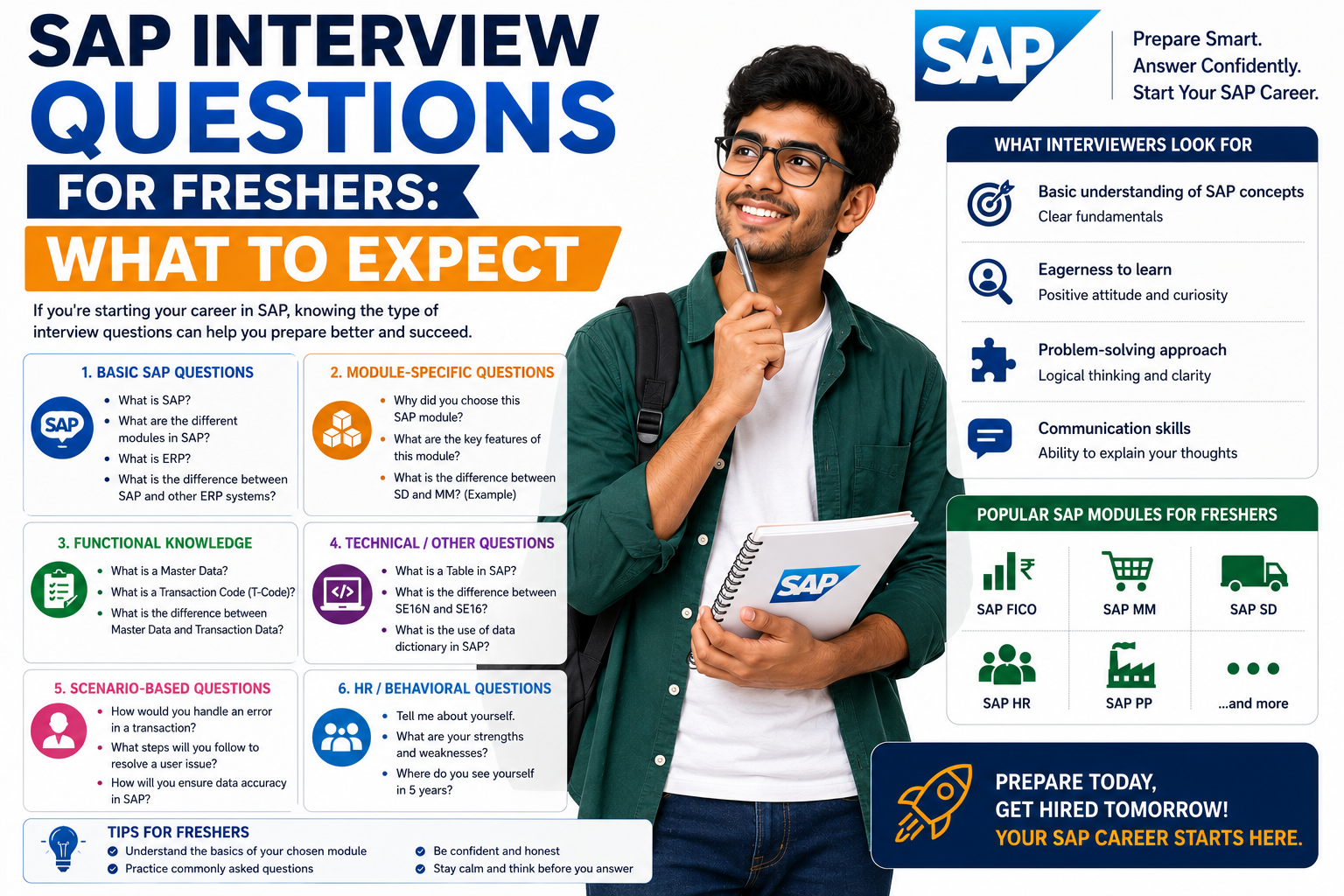
Is SAP a Good Career for Freshers?
Yes. Freshers who complete structured SAP training and gain practical project experience can find entry-level opportunities in consulting firms, IT companies, and enterprise organizations.
To improve employability, freshers should focus on:
- Understanding ERP fundamentals
- Learning one SAP module thoroughly
- Practicing real-world business scenarios
- Building strong communication skills
- Preparing for SAP interviews
Hands-on experience and business process knowledge are highly valued by employers.
Skills Employers Look for in SAP Professionals
Recruiters expect more than technical knowledge.
They also look for:
- Business process understanding
- Analytical thinking
- Problem-solving skills
- Communication abilities
- Team collaboration
- Adaptability
- Willingness to learn new SAP technologies
Developing both technical and soft skills improves long-term career growth.
Future of SAP in India
The future of SAP remains promising as organizations continue modernizing their operations.
Key trends shaping SAP careers include:
- Increased adoption of SAP S/4HANA
- Growth of SAP cloud applications
- AI-powered business automation
- Data-driven decision-making
- Integration with emerging technologies
- Expansion of digital transformation projects
Professionals who continuously upgrade their skills will remain competitive in the evolving SAP ecosystem.
Tips to Build a Successful SAP Career
If you're planning to start a career in SAP, consider these recommendations:
- Choose a module aligned with your background.
- Learn SAP S/4HANA concepts.
- Gain practical project experience.
- Earn relevant SAP certifications.
- Stay updated with industry trends.
- Improve communication and consulting skills.
- Build a professional portfolio and LinkedIn profile.
Consistent learning and practical exposure are key to long-term success.
Frequently Asked Questions (FAQs)
Q1. Is SAP still a good career in India in 2026?
Yes. SAP continues to be one of the most in-demand ERP platforms, offering excellent career opportunities across multiple industries.
Q2. Which SAP module has the highest demand?
SAP S/4HANA, SAP FICO, SAP MM, SAP SD, SAP SuccessFactors, SAP BTP, and SAP EWM are among the most sought-after modules.
Q3. Can freshers get SAP jobs?
Yes. Freshers with practical training, project experience, and a good understanding of SAP concepts can apply for entry-level SAP roles.
Q4. Is SAP better than learning a programming language?
SAP and programming serve different career paths. SAP combines business process knowledge with enterprise technology, while programming focuses on software development.
Q5. Is SAP future-proof?
Yes. As organizations continue investing in ERP modernization, cloud migration, and digital transformation, SAP professionals are expected to remain in demand for years to come.
Conclusion
SAP continues to be one of the most valuable enterprise technologies in India in 2026. Organizations across industries rely on SAP to manage critical business operations, creating consistent demand for skilled consultants, analysts, developers, and support professionals.
Whether you're a student, a fresher, or an experienced professional looking to switch careers, learning SAP can provide strong job prospects, competitive salaries, and long-term career stability. By choosing the right SAP module, gaining hands-on experience, and staying updated with the latest SAP innovations, you can build a successful and future-ready career in the growing ERP industry.
SAP Demand India
SAP Jobs
SAP Career
SAP S/4HANA
SAP Consultant
SAP Certification
SAP Training
SAP Job Opportunities
SAP Market
SAP Careers


