Course Objectives
1. What exactly Webpack training cover?
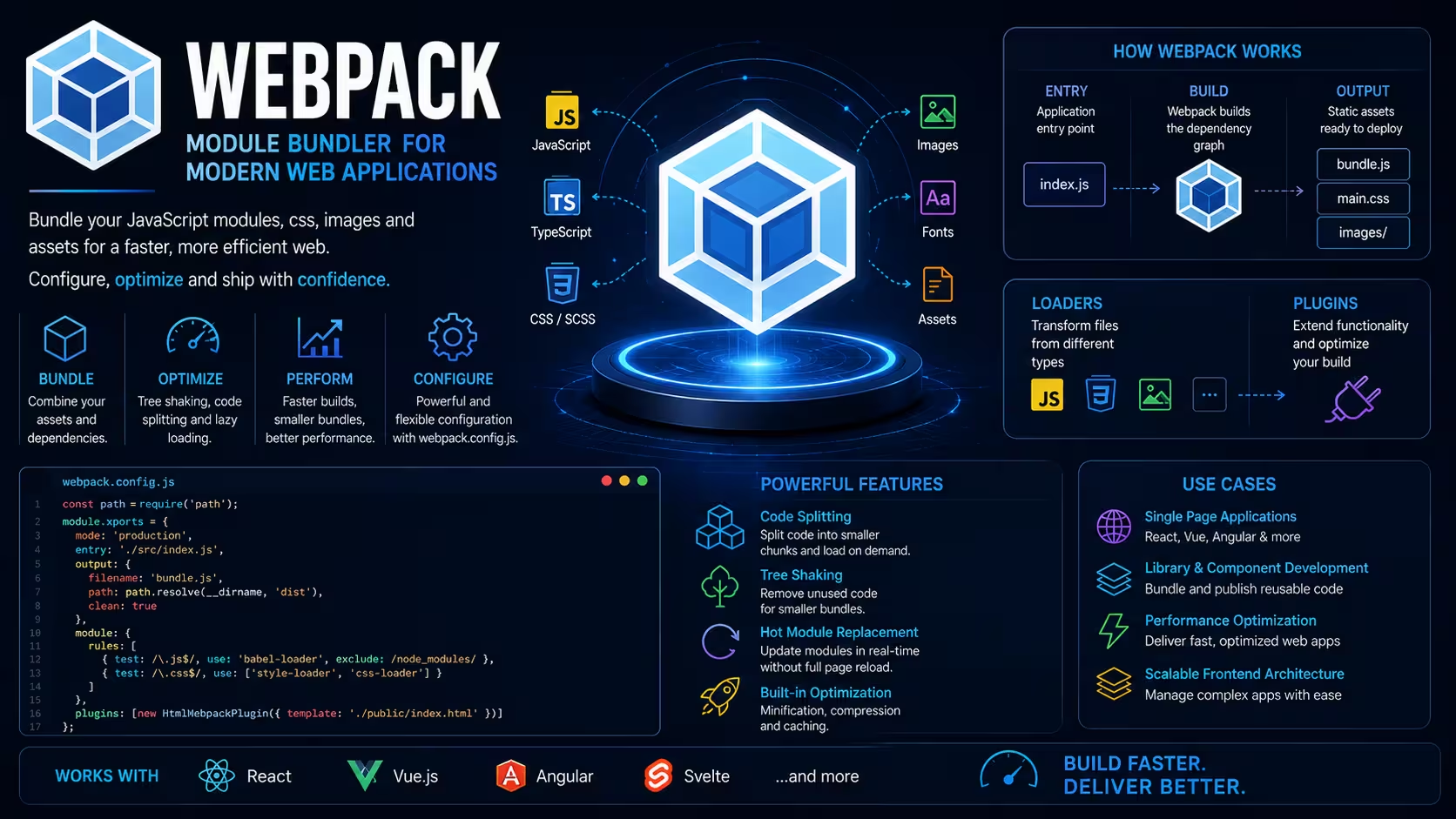
- Webpack training teaches you how to bundle and optimize web application assets like JavaScript, CSS, and images using Webpack 5.
- It covers setting up Webpack configurations from scratch, using loaders and plugins, code splitting, hot module replacement, and integrating with modern JavaScript tools like Babel and NPM.
- The course also dives into advanced topics such as Module Federation, production build optimization, and using Webpack with frameworks like React and Node.js
2. What are the main objectives of the Webpack course for my development skills ?
- The main goals are to help you understand how Webpack works under the hood, enable you to create and customize your own Webpack configurations, optimize builds for performance, and improve your development workflow with features like hot module replacement.
- By the end, you will be able to confidently manage asset bundling, implement code splitting, and integrate Webpack into complex projects, boosting your frontend development efficiency and project maintainability
3. How do you improve development speed for frontend teams?
You will implement Webpack’s Hot Module Replacement (HMR) and dev server features that allow instant updates without full page reloads.
4. How do you prepare applications for enterprise deployment?
You will apply code splitting, tree shaking, and optimization techniques to create smaller, faster bundles suitable for high-traffic applications.
Popular Techniques Covered in This Course
1.Strong JavaScript Knowledge
2.Understanding of Module Bundling Concepts
3.Proficiency in Webpack Configuration
4.Experience with Loaders and Plugins
5.Familiarity with Development Tools (Webpack Dev Server, HMR)
6.Performance Optimization Skills
7.Integration with Frameworks (React, Vue, etc.)
8.Debugging and Troubleshooting Abilities
9.Knowledge of Build Automation
10.Version Control
11.Good communication and collaboration abilities
12.Soft Skill
Get Hands-on Knowledge about Real-Time Projects
Project 1
Project 1: React E-Commerce Application Build Optimization
Optimize a large React-based online store by implementing code splitting, lazy loading, and production-ready configurations to improve page load speed.
Project 2
Project 2: Modern Dashboard Application Setup
Build and configure a complete Webpack setup for a data dashboard with multiple modules, CSS modules, and asset handling for a clean development experience.
Project 3
Project 3: Vue.js Enterprise Portal Bundling
Create an optimized Webpack configuration for a Vue.js internal portal, including tree shaking, caching, and performance tuning.
Project 4
Project 4: Full-Stack Application Production Build
Develop production-ready builds with environment variables, minification, and source maps for a React + Node.js application.
Project 5
Project 5: Performance Optimization of Legacy Codebase
Migrate and optimize an older JavaScript application to modern Webpack standards, significantly reducing bundle size and improving load times.
Key Features
Edubrights offers Webpack Training in virtual mode with expert trainers. Here are the key features,
40 Hours Course Duration
100% Job Oriented Training
Industry Expert Faculties
Free Demo Class Available
Completed 500+ Batches
Certification Guidance
Curriculum
Module 1: Introduction and Setup
- Overview of Webpack and its purpose
- Installing Webpack and setting up the development environment
- Understanding entry and output points
- Creating a basic Webpack configuration file
Module 2: Loaders and Asset Management
- Using loaders to process different file types (JavaScript, CSS, Sass, images, fonts)
- Configuring Babel loader for JavaScript transpiling
- Handling styles with CSS and Sass loaders
- Managing static assets like images and fonts
Module 3: Plugins and Enhancements
- Introduction to Webpack plugins and their role
- Using HTML Webpack Plugin to manage HTML files
- CleanWebpackPlugin for cleaning output directories
- Hot Module Replacement for improved development experience
- Webpack Bundle Analyzer for performance optimization
Module 4: Advanced Configuration and Optimization
- Code splitting and lazy loading for better performance
- Caching and hash setup for efficient browser caching
- Source maps for debugging
- Production build optimizations (minification, tree shaking)
Module 5: Development Server and Workflow
- Setting up Webpack Dev Server for live reloading
- Configuring development and production modes
- Using npm scripts to automate build tasks
- Integrating Webpack with Babel and PostCSS
Module 6: Real-World Application and Integration
- Building multi-page and single-page applications with Webpack
- Integrating Webpack with frameworks like React and Node.js
- Module Federation for micro-frontend architecture
- Final project: creating a complete Webpack-powered web application
Receive Training From Our Skilled and Effective Trainers
Experience in the Industry Gain knowledge from experts with practical Webpack project experience in a variety of sectors.
Backgrounds at the Top Prominent corporations such as HCL, TCS, Accenture, and Cognizant employed trainers.
Clear & Effective Teaching Excellent communication and real-world examples simplify complex subjects.
Hands-On Learning Focus Students can apply their abilities in real-world situations with the use of case studies and real-time projects.
Up-to-Date Knowledge Trainers stay current with the latest tools, techniques and best practices.
Succeed Our Resourceful Certification
Our Webpack certification program is designed to validate your skills in bundling, optimizing, and managing modern web application assets using Webpack. The certification covers essential concepts such as configuration, loaders, plugins, code splitting, and performance optimization through practical, hands-on projects.

Course FAQs
1. What is Webpack?
Webpack is a powerful module bundler for JavaScript applications that compiles and bundles various assets like JavaScript, CSS, and images into optimized files for the browser. It builds a dependency graph to manage and bundle all modules efficiently
2. Why should I use Webpack?
Webpack helps manage complex front-end projects by bundling multiple files into fewer optimized assets, enabling features like code splitting, hot module replacement, and asset management, which improve performance and development workflow
3. What are Loaders and Plugins in Webpack?
Loaders transform different file types (e.g., CSS, images) into modules Webpack can process, working at the file level. Plugins extend Webpack’s functionality by managing bundles, optimizing output, and injecting environment variables, operating mostly at the bundle level.
4. How does Webpack’s development server improve development?
Webpack DevServer provides live reloading and a local server, allowing developers to see changes instantly without manual refreshes, speeding up the development process
5. What is a bundle in Webpack?
A bundle is the output file generated by Webpack containing all the modules and assets required by the application, optimized for browser delivery
6. How does Webpack handle assets like images and fonts?
Webpack uses loaders like file-loader and url-loader to process and include images, fonts, and other assets as modules within the bundle.
7. What is code splitting in Webpack?
Code splitting allows breaking the application into smaller chunks that load on demand, improving initial load times and overall performance.
8. What is Hot Module Replacement (HMR)?
HMR enables updating modules in the browser at runtime without a full page reload, preserving application state during development
9. How does Webpack optimize production builds?
Webpack applies techniques like minification, tree shaking (removing unused code), and caching strategies to create efficient production bundles
10. What is the difference between Webpack and other build tools like Gulp or Grunt?
Webpack focuses on module bundling and dependency management, while Gulp and Grunt are task runners primarily used for automating repetitive tasks. Webpack combines bundling with build automation
11. Is this course suitable for freshers?
Yes, if you have basic JavaScript knowledge. We start with fundamentals and move to advanced configurations.
12. Do you cover integration with React and Vue?
Yes. You will learn framework-specific Webpack setups that are commonly used in the industry.
Get Training Quote for Free
Testimonials
Hear What Our Students Say
"Transform your life through Education, hear it from our Alumni"

6 LPA
Fathima
Student
Software Engineer
"Transform your life through Education, hear it from our Alumni"

8 LPA
Rahul
Student
Data Scientist
"Transform your life through Education, hear it from our Alumni"

8 LPA
Siddharth
NIELSON IQ
Data Analyst