Course Objectives
1. What will I learn in the SAP CLM (Contract Lifecycle Management) course?
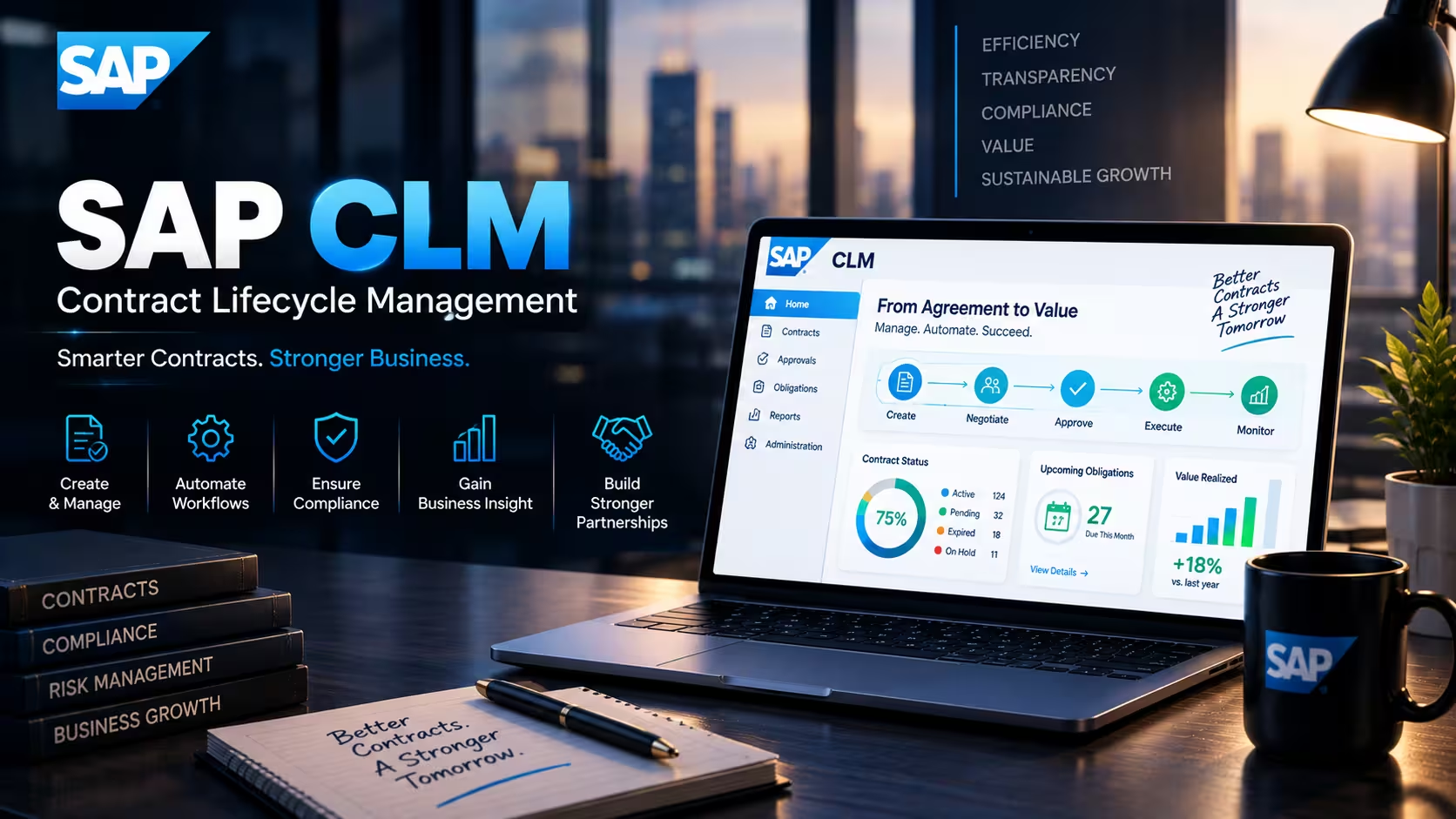
You will learn how to manage the complete contract lifecycle using SAP CLM, including contract creation, authoring, approvals, negotiations, execution, compliance management, renewals, reporting, and workflow automation. The course provides practical knowledge of enterprise contract management processes used across multiple industries.
2. Why should I learn SAP CLM?
SAP CLM helps organizations automate contract processes, improve compliance, reduce business risks, and streamline procurement operations. Learning SAP CLM equips you with practical skills required for enterprise contract management, SAP implementation, consulting, and business process optimization.
3. What practical skills will I gain from this course?
You will gain hands-on experience in contract authoring, clause management, workflow configuration, approval processes, supplier contract management, procurement integration, compliance monitoring, reporting, document management, and enterprise contract lifecycle administration through practical labs and real-world projects.
4. Will I work on real-time SAP CLM projects?
Yes. The course includes enterprise implementation projects covering contract lifecycle management, approval workflows, supplier agreements, procurement integration, compliance monitoring, reporting dashboards, and workflow automation using real-world business scenarios.
5. How does this course support my career growth?
This training helps you build practical expertise in enterprise contract management, procurement processes, compliance management, workflow automation, SAP implementation, and business process optimization. Hands-on project experience prepares you for SAP consulting, implementation, and support opportunities.
Popular Techniques Covered in This Course
SAP CLM Fundamentals
Contract Authoring
Clause Library Management
Contract Templates
Approval Workflow Configuration
Contract Negotiation
Document Management
Contract Repository Management
Compliance Monitoring
Supplier Contract Management
Procurement Integration
Contract Renewals & Amendments
Reporting & Analytics
Workflow Automation
SAP CLM Administration
Get Hands-on Knowledge about Real-Time Projects
Project 1
Enterprise Contract Lifecycle Management Project
Design and manage the complete lifecycle of enterprise contracts, from drafting and approvals to execution, amendments, renewals, and archival. Learn how organizations standardize and automate contract management processes.
Project 2
Supplier Contract Management Implementation
Create supplier agreements, configure approval workflows, manage contract versions, monitor obligations, and integrate procurement processes using SAP CLM in a real-world procurement environment.
Project 3
Contract Compliance & Audit Management
Implement compliance monitoring, obligation tracking, policy management, audit documentation, and contract review processes to ensure enterprise contracts meet business and regulatory requirements.
Project 4
SAP CLM Workflow Automation Project
Configure automated approval workflows, notifications, escalation rules, document routing, role-based approvals, and contract lifecycle automation to improve business efficiency and governance.
Project 5
End-to-End SAP CLM Enterprise Implementation
Develop a complete SAP CLM solution covering contract creation, negotiation, approvals, supplier integration, compliance management, reporting dashboards, renewals, workflow automation, and enterprise contract administration using real-world business scenarios.
Key Features
Edubrights offers SAP CLM (Contract Lifecycle Management) in virtual mode with expert trainers. Here are the key features,
40 Hours Course Duration
100% Job Oriented Training
Industry Expert Faculties
Free Demo Class Available
Completed 500+ Batches
Certification Guidance
Curriculum
SAP CLM (Contract Lifecycle Management) Course Syllabus
Module 1: Introduction to SAP CLM
- Contract Lifecycle Management Overview
- SAP CLM Architecture
- Business Benefits
- SAP CLM Navigation
- Enterprise Contract Management
- Business Use Cases
Module 2: Contract Authoring and Templates
- Contract Creation
- Clause Library
- Template Management
- Document Version Control
- Contract Structure
- Standard Contract Templates
Module 3: Workflow and Approval Management
- Workflow Configuration
- Approval Hierarchies
- Notifications
- Escalation Rules
- Role-Based Approvals
- Workflow Monitoring
Module 4: Contract Negotiation and Collaboration
- Internal Collaboration
- Supplier Negotiations
- Contract Revisions
- Version Comparison
- Change Tracking
- Review Process
Module 5: Contract Execution and Repository
- Contract Execution
- Electronic Signatures
- Central Repository
- Document Storage
- Search & Retrieval
- Contract Archiving
Module 6: Compliance and Obligation Management
- Compliance Monitoring
- Obligation Tracking
- Audit Management
- Regulatory Compliance
- Policy Enforcement
- Risk Management
Module 7: Contract Amendments and Renewals
- Contract Amendments
- Renewal Management
- Expiration Alerts
- Extension Processing
- Contract History
- Renewal Strategies
Module 8: Procurement and Supplier Integration
- Procurement Integration
- Supplier Agreements
- Purchase Contracts
- Sourcing Integration
- Vendor Collaboration
- Enterprise Procurement
Module 9: Reporting and Analytics
- Contract Dashboards
- KPI Monitoring
- Business Reports
- Performance Analysis
- Custom Reporting
- Contract Analytics
Module 10: SAP CLM Administration
- User Management
- Authorization Management
- Security Roles
- Configuration Basics
- System Administration
- Best Practices
Module 11: Enterprise SAP CLM Projects
- Contract Lifecycle Implementation
- Workflow Automation Project
- Procurement Integration
- Compliance Monitoring
- Reporting Dashboard
- End-to-End Business Scenario
Module 12: SAP CLM Best Practices & Career Preparation
- SAP CLM Implementation Methodology
- Industry Best Practices
- Enterprise Case Studies
- Interview Preparation
- Resume Building
- Career Guidance
Receive Training From Our Skilled and Effective Trainers
Learn from Experienced SAP CLM Instructors
Experience in the Industry
Learn from experienced SAP professionals who have implemented and supported SAP Contract Lifecycle Management (CLM) solutions across manufacturing, banking, retail, healthcare, pharmaceuticals, energy, and enterprise organizations. Their practical implementation experience helps learners understand how contract management is applied in real business environments.
Backgrounds at the Top
Our SAP CLM instructors have extensive expertise in contract lifecycle management, procurement, sourcing, supplier relationship management, workflow automation, compliance management, document management, SAP integration, reporting, and enterprise business process optimization. Their industry experience provides valuable insights into end-to-end contract management projects.
Clear & Effective Teaching
Every SAP CLM concept is taught through live demonstrations, enterprise implementation scenarios, real-world case studies, and hands-on exercises. Topics such as contract authoring, clause management, approval workflows, supplier contracts, compliance monitoring, renewals, reporting, and workflow automation are explained in a simple, structured, and practical manner.
Hands-On Learning Focus
Develop practical SAP CLM expertise through guided labs, contract creation exercises, workflow configuration, supplier agreement management, compliance tracking, reporting dashboards, document management, and real-time enterprise projects. Every session is designed to build practical, job-ready skills used in SAP implementation and support environments.
Up-to-Date Knowledge
Our instructors continuously update the SAP CLM curriculum based on the latest SAP technologies, enterprise contract management practices, procurement processes, workflow automation, compliance requirements, SAP integration capabilities, and implementation best practices. This ensures learners gain current, practical, and industry-relevant knowledge aligned with today's enterprise contract management needs.
About Our Course Certification*
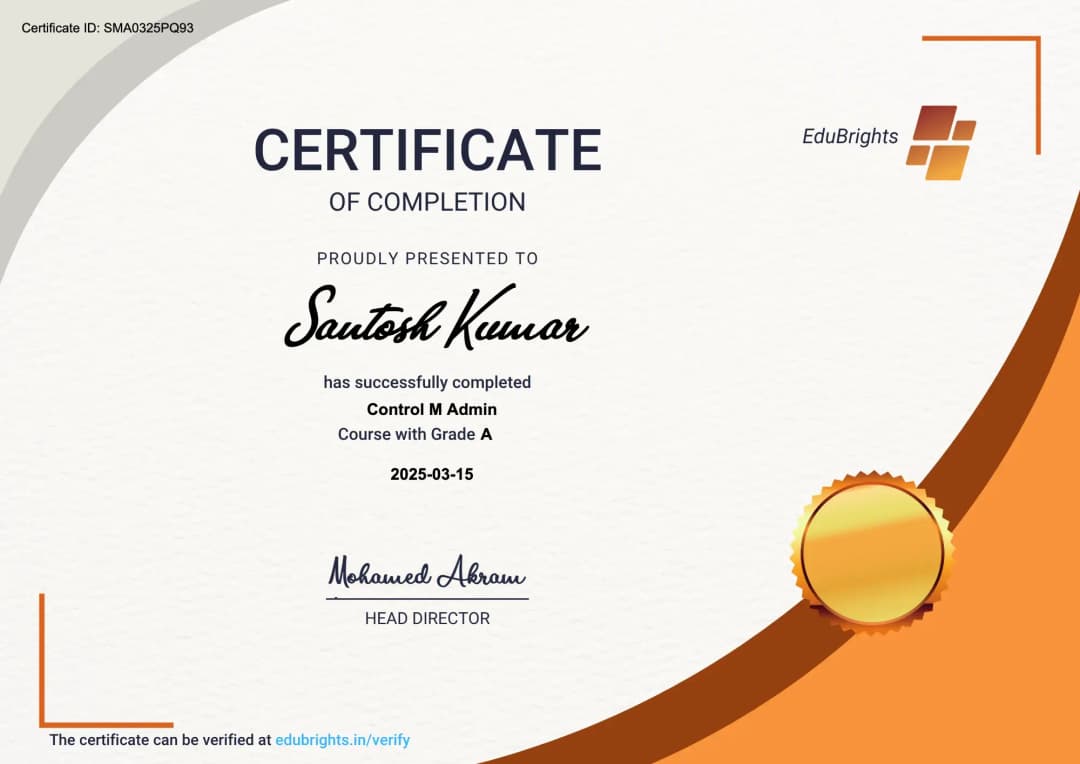
Upon successful completion of the SAP CLM (Contract Lifecycle Management) Training, learners will receive the Edubrights Course Completion Certificate. The certification validates your practical expertise in contract authoring, clause management, approval workflows, supplier contract management, procurement integration, workflow automation, compliance monitoring, reporting, document management, and enterprise contract lifecycle administration. This training also equips you with the implementation knowledge, practical project experience, and business process understanding required to confidently contribute to SAP CLM implementation, consulting, support, and enterprise contract management projects across a wide range of industries.
Course FAQs
1. What is SAP CLM (Contract Lifecycle Management)?
SAP Contract Lifecycle Management (CLM) is used to manage contracts throughout their lifecycle, from creation and negotiation to approval, execution, compliance, renewal, and archiving. It helps organizations standardize contract processes and improve visibility and governance.
2. What are the main stages of the contract lifecycle in SAP CLM?
The contract lifecycle typically includes creation, authoring, negotiation, approval, execution, repository management, compliance monitoring, amendment, renewal, and archival. SAP CLM connects these stages through structured processes and workflows.
3. What is SAP CLM architecture?
SAP CLM architecture defines how contract documents, workflows, users, repositories, business rules, integrations, and reporting capabilities work together. A well-designed architecture supports centralized contract management across enterprise processes.
4. What is contract creation in SAP CLM?
Contract creation is the process of initiating a new agreement using business information, predefined templates, clauses, and required contract attributes. It provides the starting point for subsequent review, negotiation, approval, and execution.
5. What is contract authoring in SAP CLM?
Contract authoring involves preparing contract documents using standardized templates, clauses, document structures, and business rules. It helps users create consistent agreements while reducing manual document preparation.
6. What is a clause library in SAP CLM?
A clause library is a centralized collection of approved contract clauses that can be reused during contract creation. It helps organizations maintain standardized legal and commercial language across agreements.
7. How does clause library management work?
Clause library management involves maintaining, organizing, reviewing, and controlling reusable contract clauses. Authorized users can select appropriate clauses while creating or modifying contracts according to organizational policies.
8. What is contract template management?
Contract template management provides standardized document templates for different contract types. Templates can include predefined structures, clauses, terms, and formatting to improve consistency and authoring efficiency.
9. What is document version control in SAP CLM?
Document version control maintains different versions of a contract as it is modified during drafting and negotiation. It helps users identify changes, preserve historical versions, and determine the latest applicable document.
10. What is contract structure management?
Contract structure management organizes contract content into sections, clauses, schedules, attachments, and supporting documents. It provides a consistent structure for managing complex enterprise agreements.
11. What is workflow configuration in SAP CLM?
Workflow configuration defines how contracts move through activities such as review, approval, negotiation, execution, and renewal. Workflow rules can determine tasks, users, conditions, notifications, and escalation actions.
12. What are approval hierarchies in SAP CLM?
Approval hierarchies define the sequence and levels of authorization required before a contract can proceed. They can be designed according to contract value, business unit, risk, contract type, or organizational responsibility.
13. What are role-based approvals?
Role-based approvals assign contract approval responsibilities according to predefined user roles. This ensures that the appropriate stakeholders review contracts before they move to the next lifecycle stage.
14. How do notifications work in SAP CLM workflows?
Notifications inform users about pending approvals, contract tasks, deadlines, status changes, and required actions. They help reduce delays by keeping responsible stakeholders informed.
15. What are escalation rules in SAP CLM?
Escalation rules define actions when tasks or approvals remain incomplete beyond specified conditions or deadlines. They can route overdue activities to supervisors or other responsible stakeholders.
16. How is workflow monitoring performed in SAP CLM?
Workflow monitoring provides visibility into contract activities and their current statuses. Users and administrators can identify pending tasks, approval delays, exceptions, and completed workflow steps.
17. What is contract negotiation management?
Contract negotiation management supports collaboration between internal teams and external parties during contract discussions. It can include revisions, comments, version comparison, change tracking, and approval cycles.
18. How does SAP CLM support supplier negotiations?
SAP CLM can manage supplier contract revisions, comments, document versions, approval activities, and negotiation records. This provides better control over supplier agreements throughout the negotiation process.
19. What is contract version comparison?
Version comparison helps users identify differences between two versions of a contract. It can support review activities by making changes to clauses, terms, and other document content easier to analyze.
20. What is change tracking in SAP CLM?
Change tracking records modifications made to contract content during drafting and negotiation. It helps users understand how an agreement evolved and supports contract governance and auditability.
21. What is the contract review process in SAP CLM?
The contract review process allows relevant stakeholders to examine contract terms, clauses, commercial conditions, risks, and supporting documents before approval. Review activities can be incorporated into configured workflows.
22. What is contract execution in SAP CLM?
Contract execution is the stage where an approved agreement is formally finalized and signed by the relevant parties. SAP CLM can support execution processes and maintain the resulting contract documentation.
23. How are electronic signatures used in SAP CLM?
Electronic signatures allow authorized parties to sign contracts digitally. They can accelerate execution and provide a controlled record of the finalized agreement.
24. What is a centralized contract repository?
A centralized contract repository stores contracts and related documents in an organized location. It improves visibility, controlled access, searchability, and retrieval of contract information.
25. How does SAP CLM manage contract document storage?
SAP CLM can organize contracts, signed documents, amendments, attachments, and supporting records within the contract repository. Proper document management helps maintain a complete contract history.
26. What are search and retrieval capabilities in SAP CLM?
Search and retrieval capabilities help authorized users locate contracts using attributes, metadata, dates, parties, statuses, and other relevant information. This reduces the time required to locate agreements within large repositories.
27. What is contract archiving?
Contract archiving involves retaining completed or inactive contracts and their related documentation according to organizational requirements. It helps preserve historical records while keeping active contract information easier to manage.
28. What is compliance monitoring in SAP CLM?
Compliance monitoring evaluates whether contracts and associated activities meet defined business, policy, regulatory, and contractual requirements. It can help organizations identify exceptions and reduce contractual risk.
29. What is obligation tracking in SAP CLM?
Obligation tracking monitors responsibilities and commitments defined within contracts. Obligations can include payments, delivery requirements, service levels, reporting duties, compliance requirements, and deadlines.
30. How does SAP CLM support audit management?
SAP CLM can maintain contract versions, approvals, documents, obligations, workflow records, and compliance information that support audit activities. These records help organizations demonstrate contract governance and process history.
31. What is regulatory compliance in contract management?
Regulatory compliance ensures that contract processes and contractual obligations follow applicable laws, regulations, and organizational policies. SAP CLM can support monitoring and documentation of compliance-related requirements.
32. What is policy enforcement in SAP CLM?
Policy enforcement ensures that contract creation, approval, negotiation, and execution follow defined organizational rules. Policies can help standardize contract processes and reduce unauthorized or non-compliant activities.
33. How does SAP CLM support contract risk management?
Contract risk management involves identifying, monitoring, and controlling risks associated with contractual terms and obligations. Risk considerations can be incorporated into review, approval, compliance, and monitoring processes.
34. What is contract amendment processing?
Contract amendment processing manages formal changes to existing agreements. Amendments can update terms, clauses, pricing, dates, responsibilities, or other contractual information while maintaining the original contract history.
35. What is renewal management in SAP CLM?
Renewal management controls the process of extending contracts when their validity period approaches completion. Users can review performance, obligations, compliance, and commercial terms before deciding whether to renew.
36. What are contract expiration alerts?
Expiration alerts notify responsible users when contracts approach their expiration dates. Early alerts allow teams to begin renewal, extension, renegotiation, or termination activities on time.
37. What is extension processing in SAP CLM?
Extension processing manages the continuation of an existing contract beyond its original validity period. It allows organizations to formally manage extended terms while maintaining contract history and approvals.
38. What are renewal strategies in SAP CLM?
Renewal strategies define how contracts approaching expiration should be handled. Possible approaches include renewal, renegotiation, extension, replacement, or termination depending on business requirements.
39. What is contract history management?
Contract history management maintains information about previous versions, amendments, approvals, negotiations, and lifecycle activities. It provides traceability into how a contract changed over time.
40. How does SAP CLM support procurement integration?
SAP CLM can connect contract management with procurement processes such as sourcing, supplier management, purchasing, and purchase contracts. Integration helps ensure that procurement activities align with approved contractual terms.
41. What are supplier agreements in SAP CLM?
Supplier agreements are contracts that define commercial, operational, legal, and service-related conditions between an organization and its suppliers. SAP CLM can manage their creation, approval, execution, compliance, and renewal.
42. What are purchase contracts in SAP CLM?
Purchase contracts define agreed purchasing conditions between buyers and suppliers. SAP CLM can manage these agreements and connect relevant contract information with enterprise procurement processes.
43. How does SAP CLM support sourcing integration?
Sourcing integration connects contract management with sourcing activities and supplier selection processes. It can help organizations transition negotiated sourcing outcomes into formally managed contracts.
44. What is vendor collaboration in SAP CLM?
Vendor collaboration allows suppliers and internal stakeholders to participate in relevant contract activities. It can support negotiation, document exchange, review, approvals, and supplier agreement management.
45. What are enterprise procurement processes in SAP CLM?
Enterprise procurement processes connect contract management with broader purchasing and supplier-management activities. SAP CLM can help organizations manage contractual terms alongside sourcing, purchasing, supplier agreements, and compliance requirements.
46. What types of reports can be created in SAP CLM?
SAP CLM reporting can provide information about contract status, approvals, suppliers, obligations, compliance, renewals, expiration dates, and contract performance. Custom reporting can be designed around organizational reporting requirements.
47. What are contract dashboards and KPIs?
Contract dashboards provide visual summaries of important contract information and performance indicators. KPIs can include contract cycle time, approval turnaround time, upcoming expirations, renewal rates, compliance exceptions, obligation completion, and supplier performance.
48. What is SAP CLM administration?
SAP CLM administration involves managing users, authorizations, security roles, configuration settings, workflows, contract-related data, and system processes. Administrators help maintain the solution according to enterprise requirements.
49. What practical SAP CLM projects can be covered in training?
Practical projects can include Enterprise Contract Lifecycle Management, Supplier Contract Management Implementation, Contract Compliance and Audit Management, SAP CLM Workflow Automation, and End-to-End SAP CLM Enterprise Implementation. These projects cover contract creation, approvals, supplier agreements, procurement integration, compliance, reporting, renewals, and workflow automation.
50. What technical skills can I gain through SAP CLM training?
SAP CLM training can help develop skills in contract authoring, clause library management, templates, document version control, approval workflows, role-based approvals, negotiation, version comparison, change tracking, contract repositories, electronic signatures, compliance monitoring, obligation tracking, amendments, renewals, procurement integration, supplier management, reporting, analytics, security, and administration. These areas closely follow the technical curriculum published on the Edubrights SAP CLM training page.
Get Training Quote for Free
Testimonials
Hear What our Students say
"Transform your life through Education, hear it from our Alumni"

8 LPA
Rahul
Student
Data Scientist
"Transform your life through Education, hear it from our Alumni"

6 LPA
Fathima
Student
Software Engineer
"Transform your life through Education, hear it from our Alumni"

8 LPA
Siddharth
NIELSON IQ
Data Analyst