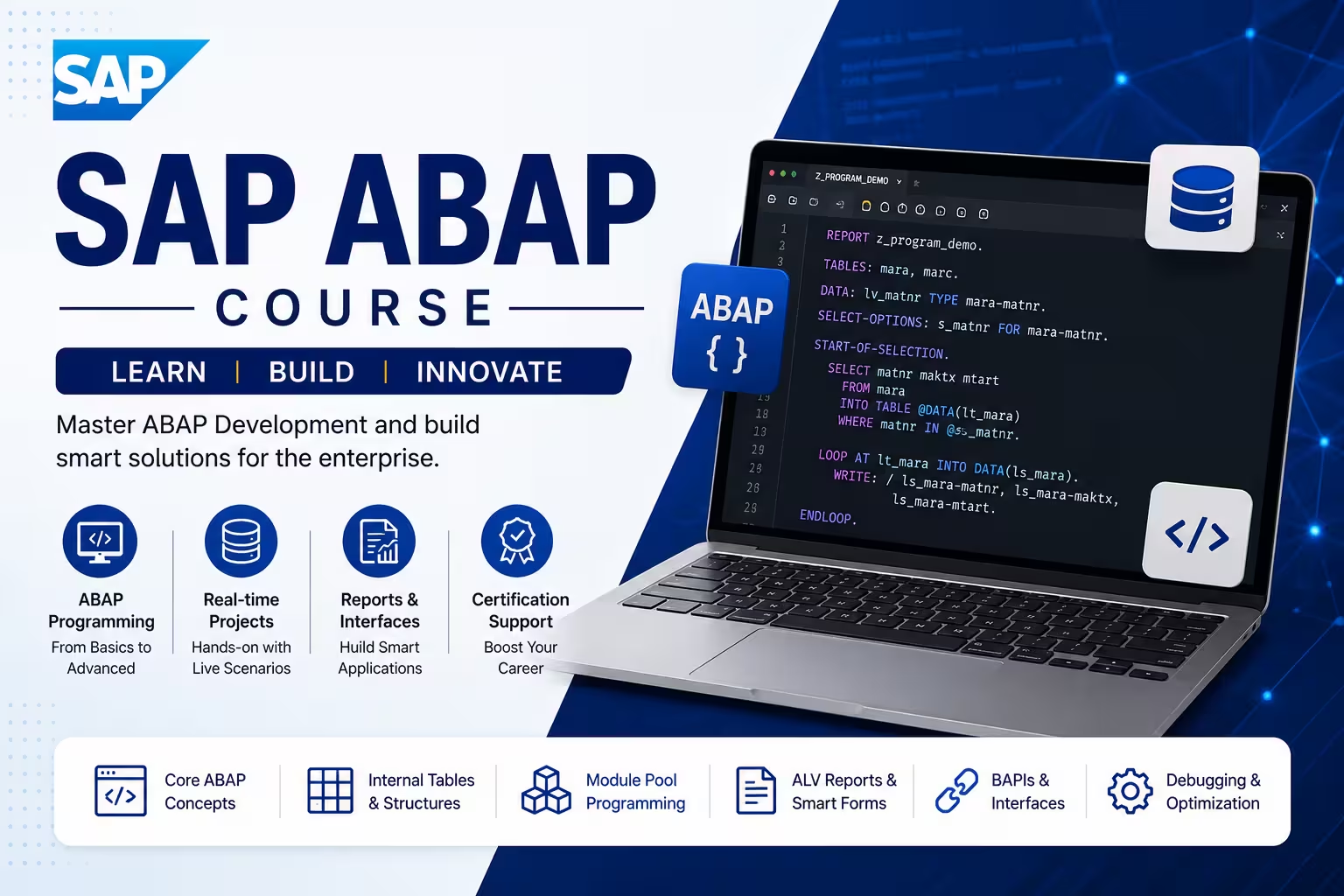
Course Objectives
1. What will I learn by taking the SAP Abap course in Bangalore?
You'll build a solid understanding of the core concepts, terminology, and fundamentals of SAP Abap, giving you a strong foundation to build on.
2. What hands-on skills will I gain from the SAP Abap training?
You'll get hands-on experience with industry-relevant SAP Abap tools and workflows through guided exercises, so you learn by doing rather than just reading theory.
3. How does the SAP Abap course prepare me for real-world work?
The SAP Abap course is designed around how SAP Abap is actually applied to solve real-world problems in professional settings, not just textbook scenarios.
4. What practical, job-ready skills will I build during SAP Abap training in Bangalore?
You'll develop the practical skills needed to confidently work with SAP Abap on the job, so you're ready to contribute from day one in a SAP Abap role.
5. Will I work on real projects during the SAP Abap course?
Yes, the SAP Abap course includes real-time projects and case studies that reinforce concepts through practice, giving you portfolio-ready work by the end.
6. How does the SAP Abap course help with certification and job interviews?
The SAP Abap course is structured to help you prepare for relevant certifications and interviews, covering the concepts and terminology employers and exam boards expect.
Popular Techniques Covered in This Course
SAP ABAP Module Configuration & Customising
SAP S/4HANA Business Process Implementation
SAP Integration (IDoc, BAPI, RFC, API, BTP Integration Suite)
SAP Reporting & Analytics (SAP Analytics Cloud, Embedded Analytics)
SAP Master Data Management & Data Governance
Business Process Mapping, Blueprint & Gap Analysis
SAP User Roles, Profiles & Authorisation Concepts
SAP Testing (Unit Testing, Integration Testing, UAT)
SAP Upgrade, Migration & Transport Management (TMS)
SAP Cloud Solutions (BTP, Cloud ALM, Rise with SAP)
ABAP Development Basics for Functional Consultants
SAP Activate Implementation Methodology & Project Governance
SAP Fiori / UI5 User Experience & Launchpad Configuration
SAP GRC, Security Basics & Compliance Controls
SAP Performance Optimisation, Monitoring & Troubleshooting
Get Hands-on Knowledge about Real-Time Projects
Project 1
Employee Management System Project
Develop a complete employee management application with reports, forms, and database integration.
Project 2
ALV Reporting Project
Create dynamic ALV reports with sorting, filtering, analytics, and export functionality.
Project 3
SmartForms Invoice Generation Project
Design and implement invoice printing and document management solutions.
Key Features
Edubrights offers SAP ABAP Training in virtual mode with expert trainers. Here are the key features,
40 Hours Course Duration
100% Job Oriented Training
Industry Expert Faculties
Free Demo Class Available
Completed 500+ Batches
Certification Guidance
Curriculum
Module 1: Introduction to SAP ABAP
- Overview of ABAP (Advanced Business Application Programming)
- SAP system architecture and ABAP workbench
- ABAP editor, function builder, and class builder
- Data dictionary overview
- Transport management system (TMS)
Module 2: ABAP Language Fundamentals
- Data types, variables, and constants
- Operators and expressions
- Control structures: IF, CASE, LOOP, DO, WHILE
- Internal tables: Standard, sorted, hashed
- Field symbols and data references
Module 3: ABAP Data Dictionary
- Tables, views, and data elements
- Domains and search helps
- Lock objects and type groups
- Database indexes and buffering
- Transparent, pooled, and cluster tables
Module 4: Modularization Techniques
- Subroutines (FORM/PERFORM)
- Function modules and function groups
- Include programs
- ABAP Objects: Classes, methods, interfaces
- Exception handling
Module 5: Database Programming
- Open SQL: SELECT, INSERT, UPDATE, DELETE, MODIFY
- Native SQL and ADBC
- Database cursors
- Performance optimization: Indexes, buffering, joins
- SAP HANA-specific SQL optimizations
Module 6: Dialog Programming
- Screen painter and menu painter
- Flow logic: PBO, PAI
- Module pools and screen sequences
- Table controls and tabstrip controls
- GUI status and title
Module 7: Reports and ALV
- Classical and interactive reports
- ALV Grid (CL_GUI_ALV_GRID)
- ALV List (REUSE_ALV_GRID_DISPLAY)
- ALV Tree and ALV hierarchy
- Drill-down reporting
Module 8: Forms and Outputs
- SAPscript forms
- Smart Forms design and programming
- Adobe Interactive Forms (ADS)
- Output determination integration
- PDF generation
Module 9: ABAP Objects (OOP)
- Classes and objects
- Inheritance and polymorphism
- Interfaces and abstract classes
- Events and event handling
- Design patterns in ABAP
Module 10: Enhancements and Modifications
- User exits and customer exits
- BADIs (Business Add-Ins)
- Enhancement spots and implicit enhancements
- BTE (Business Transaction Events)
- Classic vs. new enhancement framework
Module 11: ABAP in SAP S/4HANA
- ABAP for SAP HANA: CDS views, AMDPs
- Core Data Services (CDS) annotations
- Open SQL improvements in S/4HANA
- Fiori development with ABAP backend
- RAP (RESTful ABAP Programming Model)
Module 12: Real-Time Projects and Case Studies
- Custom report and ALV development
- Interface development using IDocs and BAPIs
- Enhancement of standard SAP transactions
- Certification and interview preparation
Receive Training From Our Skilled and Effective Trainers
Experience in the Industry Gain expertise from SAP Abap professionals training in Bangalore who have applied their skills on live projects across corporate, product, and consulting environments, bringing practical, real-world context into every SAP Abap session.
Backgrounds at the Top Our SAP Abap trainers in Bangalore bring hands-on industry experience, having worked on real SAP Abap projects for organizations across various industries before moving into training.
Clear & Effective Teaching Core SAP Abap concepts, tools, and workflows are explained using real project examples and practical scenarios, so you understand not just the theory but how SAP Abap is actually used on the job.
Hands-On Learning Focus Students get structured, hands-on practice with SAP Abap through guided exercises, mini-projects, and lab work designed to build practical, job-ready skills.
Up-to-Date Knowledge Trainers keep the SAP Abap curriculum current with the latest tools, versions, and industry best practices, so what you learn stays relevant to how SAP Abap is used today in Bangalore and beyond.
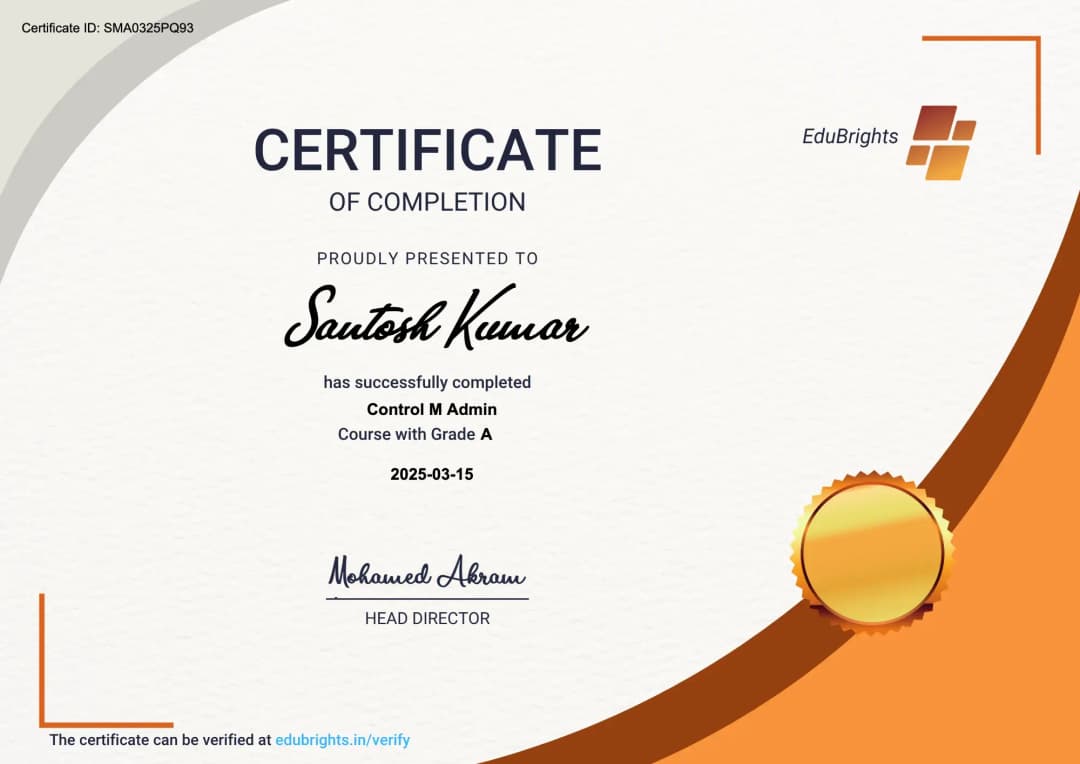
About Our Course Certification*
EduBrights provides a course completion certificate for SAP ABAP upon successful completion of all training modules, hands-on SAP system exercises, and course assessments. The certificate reflects the SAP skills acquired through structured instructor-led training with live sandbox access. It is designed to support your career in SAP consulting and serves as verifiable evidence of your training for prospective employers and project engagements.
Course FAQs
1. What is SAP ABAP Training in Bangalore?
SAP ABAP Training in Bangalore is a technical training program focused on developing applications, reports, database programs, interfaces, forms, enhancements, and extensions using ABAP. The training can progress from ABAP fundamentals to modern SAP S/4HANA development technologies such as CDS, AMDP, and RAP.
2. Is SAP ABAP Training in Bangalore suitable for beginners?
Yes. Beginners can start with ABAP syntax, data types, variables, control statements, internal tables, and modularization before moving into advanced development concepts such as Object-Oriented ABAP, database programming, and S/4HANA development.
3. What programming concepts are covered in SAP ABAP?
The course covers variables, constants, data types, operators, expressions, conditional statements, loops, structures, internal tables, field symbols, data references, modularization, and exception handling.
4. What are internal tables in SAP ABAP?
Internal tables are runtime data structures used to store and process collections of records within an ABAP program. They are extensively used for database results, data transformation, calculations, sorting, filtering, and report generation.
5. What is the difference between standard, sorted, and hashed internal tables?
Standard tables are generally optimized for index-based processing, sorted tables maintain their contents according to a defined key, and hashed tables provide efficient key-based access. Choosing the correct table type depends on access patterns and application performance requirements.
6. What are field symbols in SAP ABAP?
Field symbols are dynamic aliases that point to existing memory areas or data objects. They are useful for dynamic data manipulation, generic programming, and efficient processing of internal table records.
7. What are data references in ABAP?
Data references contain references to dynamically created data objects. They are commonly used in dynamic programming, object-oriented development, and scenarios where the data type or structure needs to be determined at runtime.
8. What is modularization in SAP ABAP?
Modularization divides large ABAP programs into smaller reusable components. ABAP supports techniques such as subroutines, function modules, methods, and classes for organizing application logic.
9. What is the ABAP Data Dictionary?
The ABAP Data Dictionary, or DDIC, is SAP's central repository for defining and managing metadata and data-related objects. It includes tables, data elements, domains, structures, table types, search helps, lock objects, and other database-related definitions.
10. What is the difference between a domain and a data element?
A domain defines technical properties such as data type, length, and value range. A data element provides the semantic or business meaning of a field and can contain field labels and documentation.
11. What are transparent tables in SAP ABAP?
Transparent tables are database tables whose definition in the ABAP Dictionary corresponds to a physical database table. They are commonly used to persist application and business data.
12. What are structures and table types in ABAP?
Structures define reusable collections of fields without independently storing database records. Table types define the structure and key characteristics of internal tables used by ABAP programs.
13. What are search helps in SAP ABAP?
Search helps provide input assistance for SAP fields. They allow users to search and select valid values from defined data sources instead of manually entering values.
14. What are lock objects in SAP ABAP?
Lock objects provide logical locking mechanisms that help prevent conflicting simultaneous changes to the same business data. SAP generates enqueue and dequeue function modules for managing these locks.
15. What is Open SQL in SAP ABAP?
Open SQL is SAP's database-independent SQL interface used by ABAP programs to access and modify application data. Common statements include SELECT, INSERT, UPDATE, MODIFY, and DELETE.
16. What is the difference between Open SQL and Native SQL?
Open SQL provides database-independent access through the ABAP database interface. Native SQL uses database-specific SQL syntax and is generally considered when functionality cannot be achieved through standard Open SQL.
17. How are joins used in ABAP SQL?
Joins combine related records from multiple database tables in a database operation. They can help retrieve related business information efficiently while reducing unnecessary database access.
18. What is FOR ALL ENTRIES in ABAP?
FOR ALL ENTRIES allows an ABAP SQL statement to retrieve records based on values contained in an internal table. The driving internal table should be checked for emptiness before executing the statement to avoid unintended broad data selection.
19. How can SQL performance be optimized in SAP ABAP?
SQL performance can be improved by selecting only required fields, applying appropriate filters, avoiding unnecessary database calls, using suitable joins, minimizing database access inside loops, and analyzing expensive SQL statements.
20. What is database cursor processing in ABAP?
Database cursors allow an application to process database results in controlled portions rather than loading an entire result set into memory at once. They can be useful for selected large-volume processing scenarios.
21. What is ALV in SAP ABAP?
ALV, or ABAP List Viewer, is a reporting framework used to display business data interactively. It supports features such as sorting, filtering, grouping, aggregation, layouts, totals, and export.
22. What is the difference between classical and ALV reports?
Classical reports rely on traditional list-processing techniques, while ALV reports provide a standardized interactive reporting framework. ALV simplifies common reporting functions such as sorting, filtering, layouts, and aggregation.
23. What is Module Pool Programming in SAP ABAP?
Module Pool Programming is used to create interactive SAP GUI applications using Dynpro screens. It involves screen design, flow logic, PBO, PAI, GUI status, and ABAP modules.
24. What are PBO and PAI in ABAP?
PBO means Process Before Output and is executed before a screen is displayed. PAI means Process After Input and is executed after the user provides input and triggers an action.
25. What are Smart Forms and Adobe Forms in SAP?
Smart Forms and Adobe Forms are technologies for creating formatted business documents such as invoices, purchase orders, delivery documents, and statements. They can support print and PDF-based output scenarios.
26. What is Object-Oriented ABAP?
Object-Oriented ABAP uses classes and objects to organize application logic into reusable components. It includes concepts such as methods, attributes, inheritance, interfaces, polymorphism, events, and exception handling.
27. What is the difference between a class and an object in ABAP?
A class defines the structure and behavior of an application component, while an object is an instance created from that class. Objects can contain their own state and execute methods defined by the class.
28. What are inheritance and polymorphism in ABAP Objects?
Inheritance allows one class to derive functionality from another class. Polymorphism allows objects of different classes to be handled through a common interface or superclass reference while executing their appropriate implementation.
29. What are interfaces in Object-Oriented ABAP?
Interfaces define a contract containing methods and other components that implementing classes must provide. They support loose coupling and reusable application design.
30. What are function modules in SAP ABAP?
Function modules are reusable procedures maintained in SAP's Function Builder. They encapsulate business or technical logic and can be called from multiple ABAP programs.
31. What are BAPIs in SAP ABAP?
BAPIs, or Business Application Programming Interfaces, are standardized SAP interfaces for accessing business objects and business processes. They are commonly used when integrating applications with SAP business functionality.
32. What is RFC in SAP ABAP?
RFC, or Remote Function Call, enables function modules to be executed remotely between SAP systems or between SAP and external applications. It is commonly used for distributed system communication and integration.
33. What are IDocs in SAP ABAP?
IDocs, or Intermediate Documents, are structured data containers used to exchange business information between SAP systems and external systems. An IDoc generally contains control information, data segments, and status records.
34. What is the difference between inbound and outbound IDocs?
Outbound IDocs transfer information from SAP to another system, while inbound IDocs transfer information into SAP. ABAP developers may work with IDoc generation, segment processing, status handling, error analysis, and reprocessing.
35. What are BAdIs and user exits in SAP ABAP?
BAdIs and user exits provide predefined extension points for adding custom functionality to SAP applications. They allow developers to extend standard behavior without directly modifying standard SAP source code.
36. What are enhancement spots and implicit enhancements?
Enhancement spots provide defined locations where custom implementations can be added to SAP applications. Implicit enhancements are enhancement options available at predefined technical points in ABAP processing.
37. What is ABAP debugging?
ABAP debugging is used to trace program execution and identify logic, runtime, and data-processing problems. Developers can use breakpoints, watchpoints, variable inspection, call-stack analysis, and step-by-step execution.
38. What are ST05, SAT, and ST12 in SAP ABAP?
ST05 is primarily used for SQL and database tracing, SAT is used for ABAP runtime analysis, and ST12 provides a combined performance-tracing approach. These tools help identify slow SQL statements and inefficient application processing.
39. What is ATC in SAP ABAP?
ATC, or ABAP Test Cockpit, performs static code analysis to identify potential problems in ABAP programs. It can detect issues related to code quality, performance, security, syntax, and obsolete programming practices.
40. What is ABAP on HANA?
ABAP on HANA refers to developing ABAP applications that take advantage of the SAP HANA database's in-memory processing capabilities. Development focuses on efficient data access, optimized Open SQL, CDS, and database-side processing where appropriate.
41. What are CDS Views in SAP S/4HANA?
Core Data Services, or CDS, provide a modern approach to defining semantic data models in SAP. CDS supports annotations, associations, calculated fields, authorization concepts, and data consumption scenarios.
42. What are CDS annotations and associations?
CDS annotations provide metadata that controls how CDS entities are interpreted or consumed. Associations define relationships between CDS entities and can support reusable navigation and semantic data modeling.
43. What is AMDP in SAP ABAP?
AMDP, or ABAP Managed Database Procedures, allows developers to implement selected database procedures using SQLScript that execute directly on SAP HANA. It is useful for specific data-intensive processing scenarios.
44. What is OData in SAP ABAP?
OData is a web-based protocol used to expose and consume structured data through HTTP services. In SAP environments, OData can connect backend ABAP functionality with SAP Fiori applications and external consumers.
45. What is RAP in SAP S/4HANA?
RAP, or the ABAP RESTful Application Programming Model, is SAP's modern framework for developing transactional and service-based applications with ABAP. It includes concepts such as business objects, behavior definitions, behavior implementations, service definitions, and service bindings.
46. What is Eclipse ADT in SAP ABAP?
Eclipse ADT, or ABAP Development Tools, provides an Eclipse-based development environment for modern ABAP development. It supports working with classes, CDS entities, RAP artifacts, debugging, code analysis, and other development objects.
47. What is ABAP Cloud?
ABAP Cloud is SAP's cloud-ready ABAP development model that emphasizes released APIs, restricted language versions, and upgrade-safe extensibility. It supports modern application development on SAP's cloud platforms and environments.
48. What is Clean Core in SAP ABAP?
Clean Core is an SAP strategy focused on keeping the standard system as close to the standard product as possible while using released APIs and supported extension mechanisms. ABAP Cloud, RAP, and approved extensibility approaches support this development strategy.
49. How are ABAP applications tested and transported?
ABAP applications typically move through development, quality assurance, and production environments using SAP transport requests. Testing can include unit testing, integration testing, ATC checks, debugging, performance analysis, and functional validation before deployment.
50. What skills can I gain from SAP ABAP Training in Bangalore?
You can develop practical skills in ABAP programming, DDIC, internal tables, Open SQL, database programming, ALV, Module Pool, forms, Object-Oriented ABAP, BAPIs, RFC, IDocs, enhancements, debugging, performance optimization, CDS, AMDP, OData, RAP, and modern S/4HANA development. These skills can help prepare you for SAP ABAP developer and S/4HANA development roles.
Get Training Quote for Free
Testimonials
Hear What Our Students Say
"Transform your life through Education, hear it from our Alumni"

8 LPA
Rahul
Student
Data Scientist
"Transform your life through Education, hear it from our Alumni"

6 LPA
Fathima
Student
Software Engineer
"Transform your life through Education, hear it from our Alumni"

8 LPA
Siddharth
NIELSON IQ
Data Analyst