Course Objectives
1. What will I learn in the Robotics with ROS 2 course?
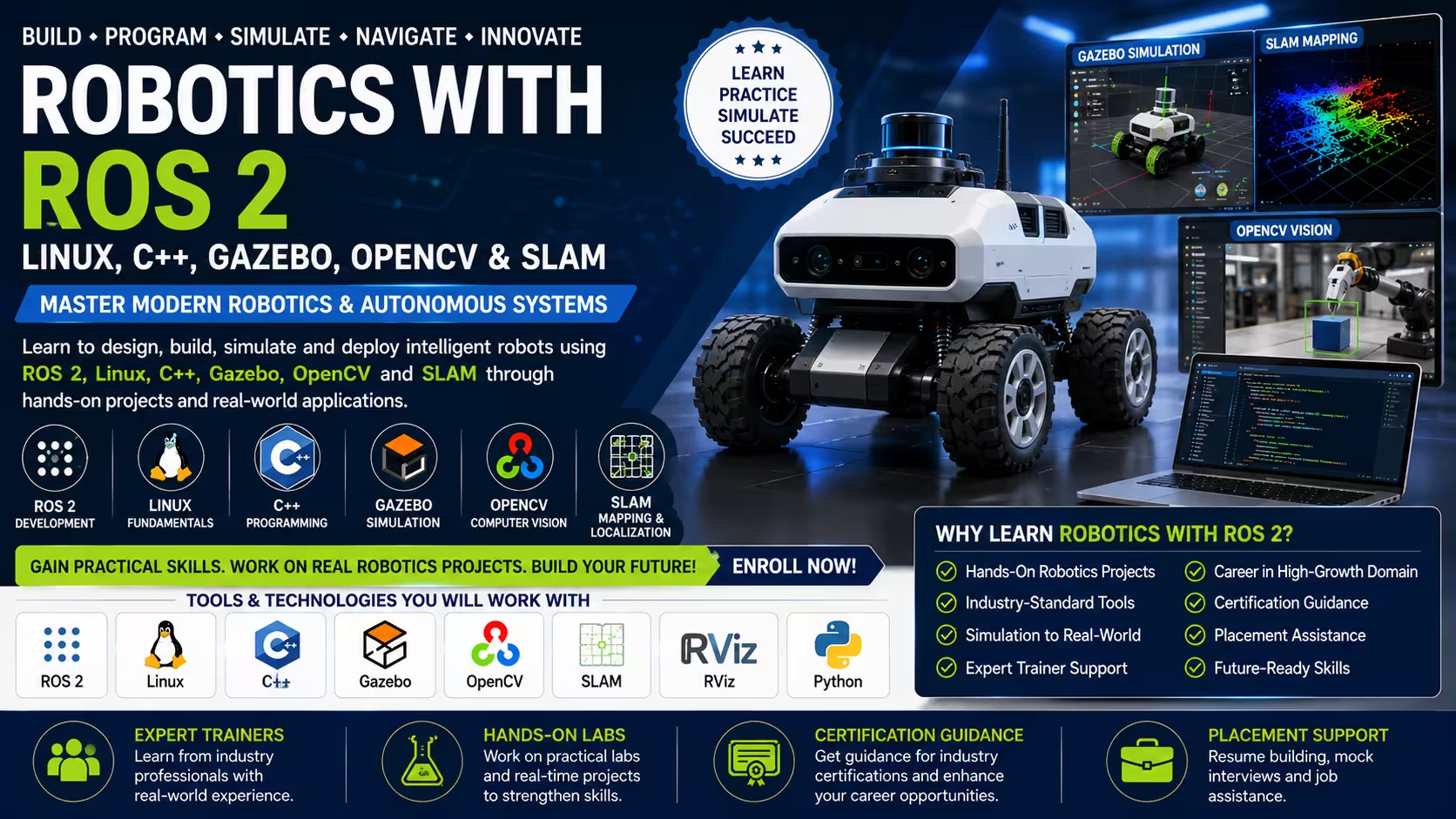
You will learn how to develop intelligent robotic applications using ROS 2, Linux, C++, Gazebo, OpenCV, and SLAM. The course focuses on robot programming, autonomous navigation, computer vision, simulation, sensor integration, and real-world robotics development.
2. Why should I learn Robotics with ROS 2?
ROS 2 has become the standard robotics framework for developing scalable and intelligent robotic systems. Learning ROS 2 helps you gain practical robotics development skills used in automation, autonomous vehicles, industrial robotics, healthcare, logistics, and research.
3. What practical skills will I gain from this course?
You will gain hands-on experience in Linux, C++, ROS 2 programming, Gazebo simulation, robot modeling, OpenCV, SLAM, robot localization, autonomous navigation, motion planning, and robotics software integration through project-based learning.
4. Will I work on real-time robotics projects?
Yes. The course includes practical projects such as autonomous mobile robots, warehouse automation, computer vision applications, SLAM mapping, robot navigation, and complete ROS 2 robotics system development using industry-standard tools.
5. How does this course support my career growth?
This training helps you build practical robotics engineering skills required for automation, AI robotics, embedded systems, industrial robotics, autonomous systems, and research-based robotics projects. Real-world project experience strengthens your technical portfolio and career opportunities.
Popular Techniques Covered in This Course
Linux Administration
C++ Programming
ROS 2 Development
Robot Communication
Robot Modeling
Gazebo Simulation
Sensor Integration
LiDAR Processing
Camera Integration
OpenCV Computer Vision
Image Processing
SLAM Implementation
Robot Localization
Autonomous Navigation
Robotics System Development
Get Hands-on Knowledge about Real-Time Projects
Project 1
Autonomous Mobile Robot Development
Develop an autonomous mobile robot capable of navigating independently within a simulated environment using ROS 2 and Gazebo. Implement obstacle detection, path planning, localization, and autonomous movement using industry-standard robotics practices.
Project 2
Intelligent Warehouse Robot System
Build a warehouse automation robot capable of transporting materials between different locations using autonomous navigation. Learn robotic workflow automation, mapping, navigation, and task execution similar to modern industrial warehouse systems.
Project 3
Computer Vision-Based Robotics Project
Create a robotics application that uses OpenCV for image processing and object detection. Integrate camera input with ROS 2 to enable robots to recognize objects and respond intelligently in real time.
Project 4
SLAM-Based Indoor Navigation Project
Implement Simultaneous Localization and Mapping (SLAM) to allow a robot to generate maps while determining its own position in an unknown environment. Work with LiDAR sensors and localization algorithms used in autonomous robotics.
Project 5
End-to-End Autonomous Robotics Implementation
Develop a complete robotics application integrating ROS 2, Linux, C++, Gazebo, OpenCV, SLAM, sensor communication, autonomous navigation, motion planning, and robot control to simulate a real-world autonomous robotic system.
Key Features
This Robotics with ROS 2 – Linux, C++, Gazebo, OpenCV & SLAM program offers comprehensive hands-on training to prepare you for industry demands.
40 Hours Course Duration
100% Job Oriented Training
Industry Expert Faculties
Free Demo Class Available
Completed 500+ Batches
Certification Guidance
Curriculum
Module 1: Introduction to Robotics and ROS 2
- Fundamentals of Robotics
- Evolution of ROS to ROS 2
- ROS 2 Architecture
- Robotics Applications
- Development Environment Setup
- ROS 2 Ecosystem Overview
Module 2: Linux Essentials for Robotics
- Linux Command Line
- File System Navigation
- User and Permission Management
- Package Installation
- Shell Scripting Basics
- Development Environment Configuration
Module 3: C++ Programming for Robotics
- C++ Fundamentals
- Object-Oriented Programming
- Classes and Objects
- Memory Management
- Standard Template Library (STL)
- C++ Best Practices for ROS 2
Module 4: ROS 2 Core Concepts
- ROS 2 Nodes
- Topics
- Publishers and Subscribers
- Services
- Actions
- Parameters and Launch Files
Module 5: Robot Modeling and Gazebo Simulation
- Gazebo Environment Setup
- Robot Modeling with URDF
- Xacro Basics
- Robot Simulation
- Physics Engine
- Simulation Testing
Module 6: Robot Sensors and Hardware Integration
- LiDAR Integration
- Camera Sensors
- IMU Sensors
- GPS Concepts
- Encoder Integration
- Sensor Communication
Module 7: Computer Vision with OpenCV
- OpenCV Fundamentals
- Image Processing
- Feature Detection
- Object Detection
- Camera Calibration
- Vision-Based Robotics
Module 8: SLAM and Robot Localization
- Introduction to SLAM
- Mapping Algorithms
- Robot Localization
- Occupancy Grid Mapping
- Sensor Fusion
- Navigation Maps
Module 9: Autonomous Navigation and Motion Planning
- Navigation Stack
- Path Planning
- Obstacle Avoidance
- Motion Control
- Autonomous Navigation
- Robot Behavior Design
Module 10: Advanced ROS 2 Development
- Multi-Robot Communication
- ROS 2 Packages
- TF Transformations
- Performance Optimization
- ROS 2 Debugging
- Deployment Strategies
Module 11: Real-Time Robotics Projects
- Autonomous Mobile Robot
- Warehouse Automation Robot
- SLAM Navigation System
- Computer Vision Robot
- Intelligent Obstacle Avoidance
- Complete ROS 2 Robotics Application
Module 12: Robotics Career Preparation
- Robotics Development Best Practices
- Git & Version Control
- Resume Building
- Robotics Interview Preparation
- Project Demonstration
- Career Guidance
Receive Training From Our Skilled and Effective Trainers
Learn from Experienced Robotics with ROS 2 Instructors
Experience in the Industry
Learn from robotics professionals who have contributed to real-world autonomous robotics, industrial automation, robotic vision, AI-powered robotics, mobile robotics, and embedded systems projects. Their industry experience helps bridge the gap between robotics theory and practical implementation.
Backgrounds at the Top
Our instructors have hands-on expertise in ROS 2, Linux, C++, Gazebo, OpenCV, SLAM, autonomous navigation, robot simulation, sensor integration, and robotics software development. They bring practical knowledge from enterprise robotics, research, automation, and intelligent systems projects.
Clear & Effective Teaching
Every concept is explained using live coding sessions, robotics simulations, practical demonstrations, and real-world engineering examples. Complex topics such as ROS 2 communication, robot modeling, computer vision, SLAM, and navigation are presented in a structured and easy-to-understand way.
Hands-On Learning Focus
Build practical experience through guided ROS 2 labs, Gazebo simulations, robot programming exercises, OpenCV projects, SLAM implementation, autonomous navigation, and complete robotics application development. The focus is on creating industry-ready robotics skills through project-based learning.
Up-to-Date Knowledge
Our curriculum is regularly updated to reflect the latest ROS 2 releases, robotics frameworks, AI integration techniques, simulation platforms, computer vision advancements, and modern autonomous systems development practices, ensuring your skills remain relevant to today's robotics industry.
About Our Course Certification*
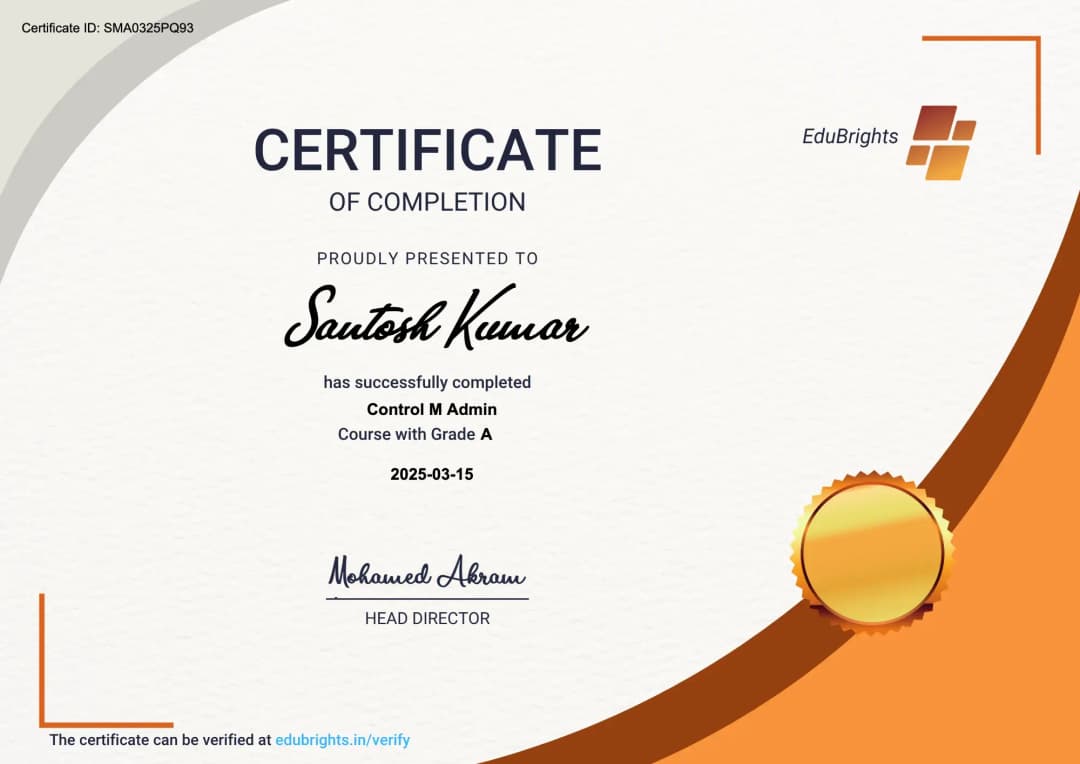
Upon successful completion of the Robotics with ROS 2 – Linux, C++, Gazebo, OpenCV & SLAM Training, learners will receive the Edubrights Course Completion Certificate. The certification validates your practical knowledge of ROS 2 architecture, Linux administration, C++ programming, Gazebo simulation, robot modeling, sensor integration, OpenCV computer vision, SLAM, localization, autonomous navigation, motion planning, and robotics software development. This certification demonstrates your ability to design, simulate, program, integrate, and deploy intelligent robotic systems using industry-standard robotics frameworks and modern autonomous system development practices.
Course FAQs
1. What job roles can I apply for after completing the Robotics with ROS 2 course?
Robotics with ROS 2 Training teaches you how to build intelligent robotic systems using ROS 2, Linux, C++, Gazebo, OpenCV, and SLAM. The course combines robotics theory with hands-on projects, helping learners develop practical skills in robot programming, simulation, navigation, computer vision, and autonomous systems.
2. Who can join the Robotics with ROS 2 course?
Students, freshers, software developers, robotics enthusiasts, embedded engineers, electronics engineers, mechanical engineers, AI professionals, researchers, and working professionals interested in robotics and automation can join this course. It is suitable for both beginners and experienced learners.
3. Are there any prerequisites for learning Robotics with ROS 2?
No prior robotics experience is required. Basic computer knowledge and an interest in programming are helpful. The course starts with Linux, C++, and robotics fundamentals before progressing to advanced ROS 2 development, simulation, computer vision, and autonomous navigation.
4. Is this course suitable for beginners?
Yes. The curriculum is designed to help beginners understand robotics concepts step by step. Each module includes guided practical sessions, simulations, coding exercises, and real-world robotics projects to make learning easier.
5. How long does it take to complete the course?
The course duration depends on the selected learning format, such as weekday, weekend, or fast-track batches. Training includes instructor-led sessions, practical labs, assignments, and real-world robotics projects to provide comprehensive hands-on experience.
6. Will I receive practical hands-on training?
Yes. Learners gain practical experience through ROS 2 programming, Linux administration, Gazebo simulations, robot modeling, OpenCV computer vision, sensor integration, SLAM implementation, and autonomous navigation projects.
7. Are real-time robotics projects included in the course?
Yes. The curriculum includes projects such as autonomous mobile robots, warehouse automation, computer vision systems, SLAM-based mapping, robot navigation, and complete ROS 2 application development using modern robotics technologies.
8. Will I receive a certificate after completing the course?
Yes. Upon successfully completing the training, learners receive the Edubrights Course Completion Certificate, validating their practical skills in ROS 2, Linux, C++, Gazebo, OpenCV, SLAM, and robotics software development.
9. Does Edubrights provide placement assistance?
Yes. Edubrights provides placement assistance, resume building, mock interviews, technical interview preparation, and career guidance to help learners prepare for robotics, automation, embedded systems, and AI-related career opportunities.
10. What career opportunities are available after completing this course?
You can pursue careers as a Robotics Engineer, ROS 2 Developer, Robotics Software Engineer, Embedded Robotics Engineer, Autonomous Systems Engineer, Computer Vision Engineer, SLAM Engineer, Navigation Engineer, Automation Engineer, or Robotics Research Engineer.
11. Why should I choose Edubrights for Robotics with ROS 2 Training?
Edubrights offers experienced robotics instructors, a project-oriented curriculum, live laboratory sessions, real-world robotics simulations, certification guidance, flexible learning options, and career support to help learners build practical robotics development skills.
12. Does the course cover Gazebo simulation and robot modeling?
Yes. You will learn Gazebo simulation, URDF robot modeling, robot dynamics, simulation environments, robot testing, and deployment techniques used by robotics engineers to validate robotic applications before real-world implementation.
13. Will I learn OpenCV and SLAM in this course?
Yes. The course covers OpenCV image processing, feature detection, object recognition, camera integration, SLAM algorithms, localization, mapping, sensor fusion, and autonomous navigation using ROS 2.
14. Can working professionals join this course?
Yes. Flexible online, weekday, weekend, and instructor-led learning options make this course suitable for working professionals who want to enhance their robotics, automation, and AI development skills.
15. Is Robotics with ROS 2 a good career choice?
Yes. Robotics continues to grow across manufacturing, logistics, healthcare, agriculture, aerospace, defense, automotive, and research sectors. Professionals with expertise in ROS 2, autonomous navigation, SLAM, computer vision, and intelligent robotics are well positioned for opportunities in modern robotics development.
Get Training Quote for Free
Testimonials
Hear What Our Students Say
"Transform your life through Education, hear it from our Alumni"

8 LPA
Rahul
Student
Data Scientist
"Transform your life through Education, hear it from our Alumni"

6 LPA
Fathima
Student
Software Engineer
"Transform your life through Education, hear it from our Alumni"

8 LPA
Siddharth
NIELSON IQ
Data Analyst