Course Objectives
1. Transform Data into Business Insights Through Visualization
Learn how to connect, analyze, and visualize data using Power BI. Create interactive dashboards and reports that help stakeholders understand business performance, identify trends, and make data-driven decisions using insights generated from engineered data pipelines.
2. Learn Real-Time Data Streaming and Event Processing
Develop the skills required to build real-time data pipelines using Apache Kafka and modern streaming technologies. Understand how organizations process live data from applications, websites, IoT devices, and business systems to enable real-time analytics, monitoring, and decision-making.
3. Master Azure Data Engineering Fundamentals
Gain a strong understanding of Azure's data ecosystem, including data storage, processing, transformation, and analytics services used in modern enterprise environments.
4. Design and Implement Data Storage Solutions
Learn how to build scalable data storage architectures using Azure Data Lake Storage Gen2, Azure Blob Storage, Azure SQL Database, and Azure Synapse Analytics.
5. Develop and Optimize Data Processing Pipelines
Create, manage, and optimize data integration workflows using Azure Data Factory, Azure Synapse Pipelines, and Azure Databricks for efficient data movement and transformation.
6. Implement Big Data Processing Solutions
Work with large-scale datasets using Apache Spark, Azure Databricks, and Synapse Analytics to process structured and unstructured data efficiently.
Popular Techniques Covered in This Course
1.Azure Data Lake Storage and Blob Storage
2.Azure Synapse Analytics
3.Azure Databricks (Apache Spark)
4.Azure Data Factory and Pipeline Orchestration
5.Azure Event Hubs and Stream Analytics
6.Data security and compliance in Azure
7.SQL and data query design
8.Performance tuning and cost management
9.Monitoring and logging with Azure Monitor
10.Data modeling and transformation techniques
Get Hands-on Knowledge about Real-Time Projects
Project 1
1.End-to-End Data Pipeline:
Build a data pipeline that ingests raw data into Azure Data Lake, transforms data using Azure Databricks, then loads processed data into Azure Synapse Analytics for reporting.
Project 2
2.Real-Time Stream Processing Solution:
Implement a solution that captures streaming data via Azure Event Hubs, processes it with Azure Stream Analytics, and triggers alerts via Azure Functions.
Project 3
3. Real-Time Social Media Analytics Platform
This project focuses on building a real-time analytics platform capable of processing social media data as it is generated. Students will use Apache Kafka to ingest streaming data from various social media feeds and Apache Spark to process and analyze the incoming information in real time.
Project 4
4. Cloud-Based Data Lake and Data Warehouse Solution
In this project, students will design and implement a cloud-based data architecture that consolidates information from multiple business systems into a single analytics platform. Data from applications such as CRM systems, ERP platforms, and external sources will be collected and stored in cloud data lakes using Azure Blob Storage or Amazon S3.
Project 5
5. Healthcare Data Integration and Reporting System
This project simulates a healthcare environment where patient records, appointments, treatments, and billing information are collected from multiple systems. Students will develop ETL pipelines that integrate these datasets into a centralized repository using Python, SQL, PostgreSQL, and MongoDB.
Key Features
Edubrights offers Data Engineering Training in virtual mode with expert trainers. Here are the key features,
40 Hours Course Duration
100% Job Oriented Training
Industry Expert Faculties
Free Demo Class Available
Completed 500+ Batches
Certification Guidance
Curriculum
Module 1: Introduction to Data Engineering
- What is Data Engineering? Roles vs. Data Science
- Data types: Structured, Semi-structured, Unstructured
- The Data Lifecycle: Capture → Store → Process → Analyze → Visualize
- Big Data characteristics (Volume, Velocity, Variety)
- Real-world use cases and career paths
Module 2: Python for Data Engineering
- Python fundamentals: variables, data types, operators
- Control flow (if/else, loops), functions
- Data structures: lists, tuples, dictionaries, sets
- Libraries for data manipulation: NumPy, Pandas
- Writing scripts for data extraction and cleaning
Module 3: SQL & Relational Databases
- SQL fundamentals: SELECT, INSERT, UPDATE, DELETE
- JOIN operations (INNER, LEFT, RIGHT, FULL)
- WHERE clauses, filtering, aggregation
- Database design: normalization, primary/foreign keys
- Hands-on with MySQL or PostgreSQL
Module 4: NoSQL Databases
- SQL vs. NoSQL: when to use each
- MongoDB: document-oriented database
- CRUD operations in MongoDB
- JSON data format, querying with MongoDB Query Language
- Hands-on with MongoDB Compass
Module 5: Big Data Technologies
- Introduction to distributed computing
- Apache Hadoop ecosystem (HDFS, YARN, MapReduce – high level)
- Apache Spark for large-scale data processing
- Spark basics: RDDs, DataFrames, Spark SQL
- Batch vs. real-time processing
Module 6: Data Warehousing & ETL/ELT
- What is a Data Warehouse? vs. Data Lake
- ETL/ELT processes and workflows
- Dimensional modeling, star/snowflake schemas
- Tools: Apache Airflow for workflow orchestration
- Building simple ETL pipelines
Module 7: Cloud Platforms for Data Engineering
- Cloud benefits for data engineering
- Introduction to Microsoft Azure and AWS
- Cloud storage, compute, and networking basics
- Azure Data Services
- Azure Data Factory (ETL/ELT orchestration)
- Azure Synapse Analytics (data warehousing)
- Azure Blob Storage
- Azure Databricks (Spark-based processing)
- Azure SQL Database
- AWS Data Services
- Amazon S3 (object storage)
- Amazon Redshift (data warehousing)
- AWS Glue (ETL jobs)
- Amazon EMR (Hadoop/Spark)
Module 8: Real-Time Data Streaming
- Introduction to Apache Kafka
- Producers, consumers, topics, partitions
- Real-time data ingestion use cases
- High-level overview of streaming pipelines
- Module 9: Data Visualization
- Introduction to Power BI
- Connecting Power BI to data sources
- Creating reports and interactive dashboards
- Sharing insights with stakeholders
Module 10: Advanced Topics (Optional)
- Snowflake (cloud data warehouse)
- Informatica (enterprise ETL)
- Apache Hive (data warehouse on Hadoop)
- Machine Learning fundamentals for Data Engineers (supervised/unsupervised)
Module 11: Capstone Project
- Build an end-to-end data pipeline:
- Extract data from APIs/files
- Clean and transform using Python/SQL
- Store in SQL/NoSQL or data lake
- Orchestrate with Airflow or Data Factory
- Visualize insights in Power BI
Receive Training From Our Skilled and Effective Trainers
Experience in the Industry Gain knowledge from experts with practical Data Engineering project experience in a variety of sectors.
Backgrounds at the Top Prominent corporations such as hcl, tcs , accenture and cognizant employ trainers.
Clear & Effective Teaching Excellent communication and real-world examples simplify complex subjects.
Hands-On Learning Focus Students can apply their abilities in real-world situations with the use of case studies and real-time projects.
Up-to-Date Knowledge Trainers stay current with the latest tools, techniques and best practices.
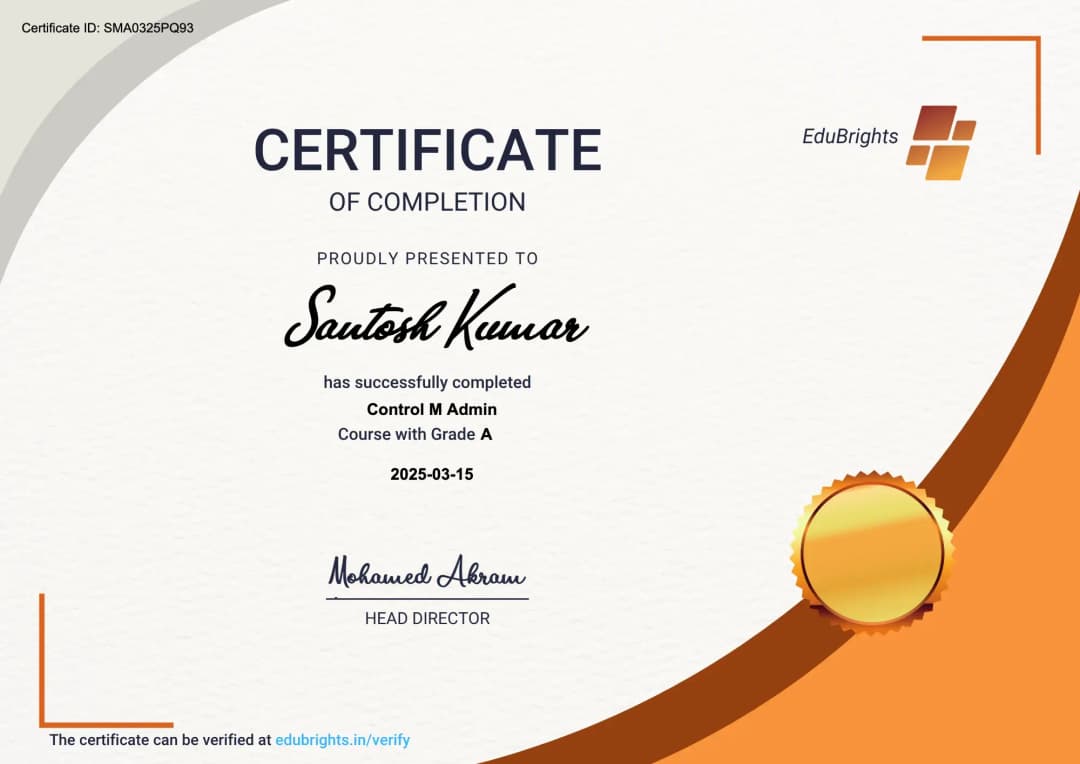
Certified Data Engineering Professional
Our institution offers a certified Data Engineering program validating your ability to design, build, and maintain complex data solutions. The certification equips you with practical skills in data storage, batch and real-time processing, workflow orchestration, and securing data pipelines—all essential for modern data engineering roles.
Course FAQs
1. What does a Data Engineer do?
A Data Engineer designs, develops, and maintains data pipelines that collect, transform, and store data for analytics, reporting, and business decision-making.
2. Is Data Engineering a good career in 2026?
Yes. Data Engineering continues to be one of the fastest-growing technology careers as organizations increasingly rely on big data, cloud platforms, and analytics.
3. What is the average salary of a Data Engineer in India?
Data Engineers are among the highest-paid professionals in the data domain. Salaries vary based on experience, skills, certifications, cloud expertise, and project exposure.
4. Can freshers become Data Engineers?
Yes. Freshers can start a career in Data Engineering by learning Python, SQL, databases, cloud technologies, and data pipeline development through structured training and projects.
5. Which companies hire Data Engineers?
Data Engineers are hired by IT services companies, product-based organizations, banks, healthcare companies, e-commerce businesses, consulting firms, and cloud service providers.
6. Is Python mandatory for Data Engineering?
Python is one of the most widely used programming languages in Data Engineering and is highly recommended for data processing, automation, and pipeline development.
7. What is the difference between a Data Engineer and a Data Scientist?
Data Engineers build and manage data infrastructure, while Data Scientists analyze data and create predictive models to generate business insights.
8. What tools will I learn in this Data Engineering Course?
You will learn Python, SQL, MongoDB, Hadoop, Spark, Airflow, Kafka, Azure Data Factory, Azure Databricks, AWS Glue, Amazon Redshift, Power BI, and other industry-standard tools.
9. Does the course include real-time projects?
Yes. The course includes hands-on projects involving data ingestion, ETL pipelines, cloud data platforms, data warehousing, and dashboard development using real-world datasets.
10. Do I need coding experience to learn Data Engineering?
No prior coding experience is required. The course starts with Python fundamentals and gradually progresses to advanced data engineering concepts and tools.
11. What Azure services are covered?
Azure Synapse Analytics, Azure Databricks, Azure Data Factory, Azure Data Lake Storage, Event Hubs, Cosmos DB, and SQL Database.
12. Do I need programming skills?
Yes, knowledge of SQL, Python, or Scala is recommended.
13. Is experience with big data required?
Understanding big data concepts and architectures helps, though some foundational topics are covered.
14. How long is the exam?
Around 120 minutes with 40-60 questions.
15. What types of questions are on the exam?
Multiple choice, drag-and-drop, case studies, and scenario-based questions.
Get Training Quote for Free
Testimonials
Hear What Our Students Say
"Transform your life through Education, hear it from our Alumni"

6 LPA
Fathima
Student
Software Engineer
"Transform your life through Education, hear it from our Alumni"

8 LPA
Siddharth
NIELSON IQ
Data Analyst
"Transform your life through Education, hear it from our Alumni"

8 LPA
Rahul
Student
Data Scientist