Popular
SAP Training Cost in India: How Much Should I Invest?
Akram
July 1, 2026
5 min read
Learn how much SAP training costs in India, what influences course fees, certification expenses, and how to choose the right SAP training program for your career goals.
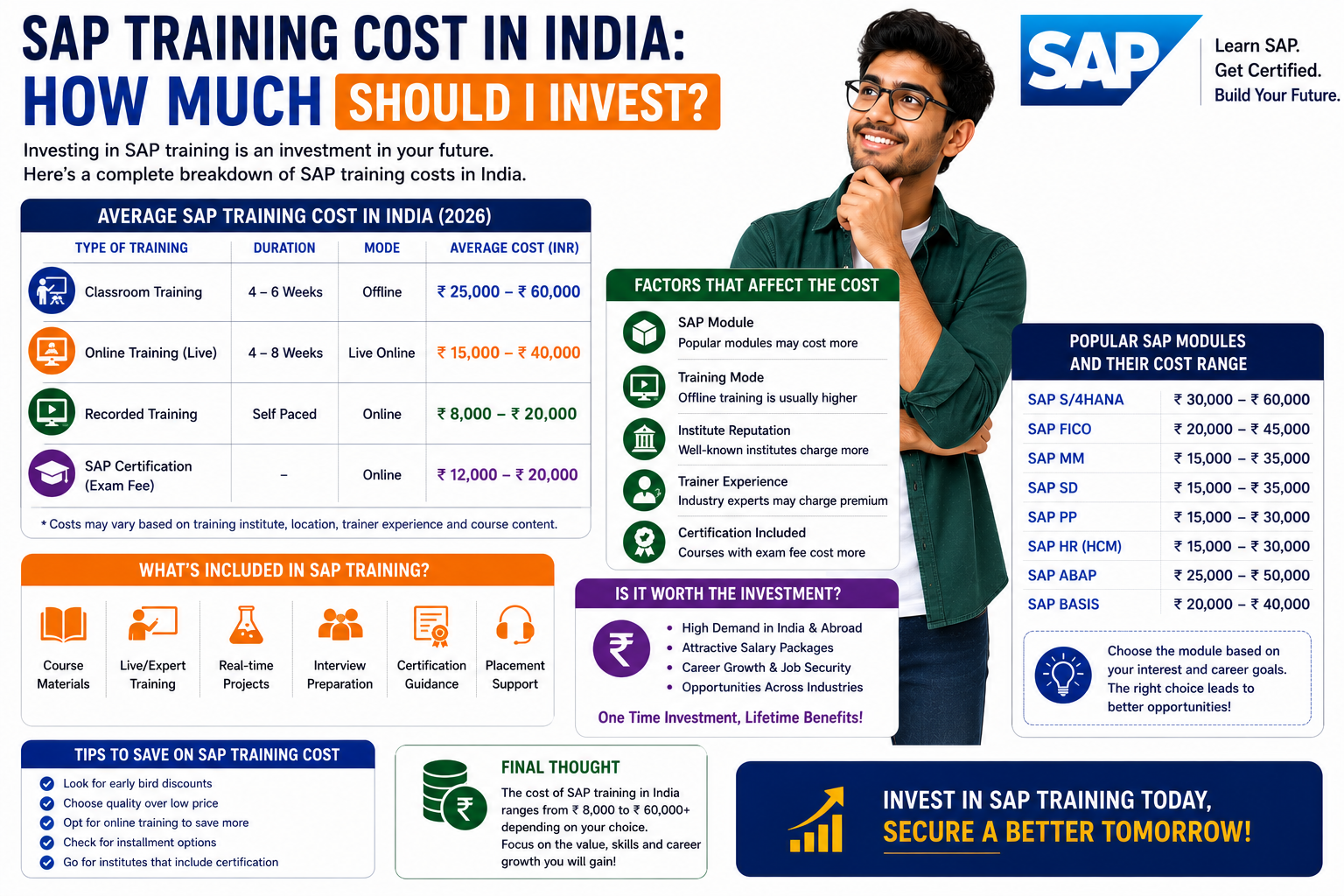
Introduction
SAP is one of the most popular Enterprise Resource Planning (ERP) platforms used by organizations worldwide to manage finance, procurement, supply chain, sales, human resources, and other business operations. As demand for skilled SAP professionals continues to grow in India, many students and working professionals are considering SAP training to improve their career prospects.
One of the first questions most learners ask is:
"How much does SAP training cost in India?"
"Is SAP training worth the investment?"
The cost of SAP training varies depending on several factors, including the training provider, SAP module, learning mode, certification, and practical project exposure. This guide explains the typical SAP training costs in India and helps you decide how much you should invest to build a successful SAP career.
Why Do People Invest in SAP Training?
SAP training provides learners with the knowledge and practical skills required to work on enterprise business applications used by organizations around the world.
Professionals invest in SAP training to:
- Improve career opportunities
- Switch to higher-paying roles
- Gain ERP knowledge
- Learn business process automation
- Prepare for SAP certifications
- Increase earning potential
A structured training program helps learners understand both SAP software and real-world business processes.
Average SAP Training Cost in India
SAP course fees vary depending on the institute and course structure.
Typical price ranges include:
- Basic SAP courses: ₹20,000 – ₹40,000
- Professional SAP training: ₹40,000 – ₹80,000
- Advanced SAP programs with projects: ₹80,000 – ₹1,50,000+
Premium programs often include live projects, placement assistance, certification guidance, and interview preparation.
Factors That Affect SAP Training Fees
Several factors influence the total cost of SAP training.
These include:
- SAP module selection
- Classroom or online learning
- Duration of the course
- Trainer experience
- Live project availability
- Study materials
- Placement support
- Certification preparation
Courses offering practical exposure and career support generally cost more than theory-based programs.
SAP Module Selection and Cost
Some SAP modules require specialized training because of their complexity or market demand.
Popular SAP modules include:
The course fee may vary depending on the depth of the curriculum and practical training included.
Online vs Classroom SAP Training
Both online and classroom learning have their own advantages.
Online Training
- Flexible schedule
- Learn from anywhere
- Lower travel costs
- Recorded sessions
- Suitable for working professionals
Classroom Training
- Face-to-face interaction
- Immediate doubt clarification
- Collaborative learning
- Better networking opportunities
- Structured classroom environment
Choose the learning mode that best matches your schedule and learning style.
Should You Pay Extra for Live Projects?
Yes. Practical experience is one of the most valuable parts of SAP learning.
Courses with live projects usually help you:
- Understand business scenarios
- Practice SAP transactions
- Gain implementation knowledge
- Build confidence
- Prepare for interviews
Employers often prefer candidates who have worked on practical SAP projects.
Is SAP Certification Included?
Not every training program includes SAP certification.
Some institutes offer:
- Certification guidance
- Mock exams
- Practice tests
- Interview preparation
Before enrolling, confirm whether certification fees are included in the course price or need to be paid separately.
How to Choose the Right SAP Training Institute
When comparing institutes, consider more than just the course fee.
Look for:
- Updated curriculum
- Experienced trainers
- Live project exposure
- Placement assistance
- Industry-oriented training
- Positive student reviews
- Interview preparation
- Flexible learning options
A quality training program provides better long-term value than simply choosing the lowest-priced course.
Is SAP Training Worth the Investment?
For many learners, the answer is yes.
SAP professionals continue to enjoy:
- High industry demand
- Competitive salaries
- Global career opportunities
- Long-term job stability
- Career growth across industries
The return on investment depends on the quality of training, practical skills developed, and your commitment to continuous learning.
Tips Before Investing in SAP Training
Before joining a course:
- Research different SAP modules.
- Compare training institutes.
- Understand the complete syllabus.
- Ask about live projects.
- Verify placement support.
- Check trainer experience.
- Review student feedback.
- Plan your career goals.
Making an informed decision helps you maximize the value of your investment.
Frequently Asked Questions (FAQs)
Q1. How much does SAP training cost in India?
SAP training typically costs between ₹20,000 and ₹1,50,000+, depending on the module, institute, and course features.
Q2. Why do SAP course fees vary?
Course fees depend on factors such as the SAP module, trainer expertise, learning mode, live projects, placement assistance, and certification support.
Q3. Is SAP certification included in every course?
No. Some institutes include certification guidance, while the official certification exam fee may be separate.
Q4. Is online SAP training effective?
Yes. Online SAP training can be highly effective when it includes live instructor sessions, practical exercises, and project-based learning.
Q5. Is SAP training a good investment?
Yes. With strong industry demand, attractive salaries, and excellent career opportunities, SAP training can provide a valuable return on investment when combined with practical experience and continuous learning.
Conclusion
SAP training is an investment in a career that offers long-term growth and opportunities across multiple industries. While course fees vary depending on the institute, module, and learning format, choosing a program that emphasizes practical training, live projects, and career support can significantly improve your chances of success.
Rather than focusing only on the lowest price, invest in quality training that builds real-world SAP skills. With the right preparation and dedication, SAP can open the door to rewarding careers in consulting, implementation, support, and enterprise technology.
SAP Training Cost
SAP Course Fees
SAP Certification
SAP Training India
SAP Career
SAP S/4HANA
SAP Consultant
SAP Learning
SAP Course
SAP Jobs


