Course Objectives
1. What exactly Web Application Security (OWASP Top 10) training cover?
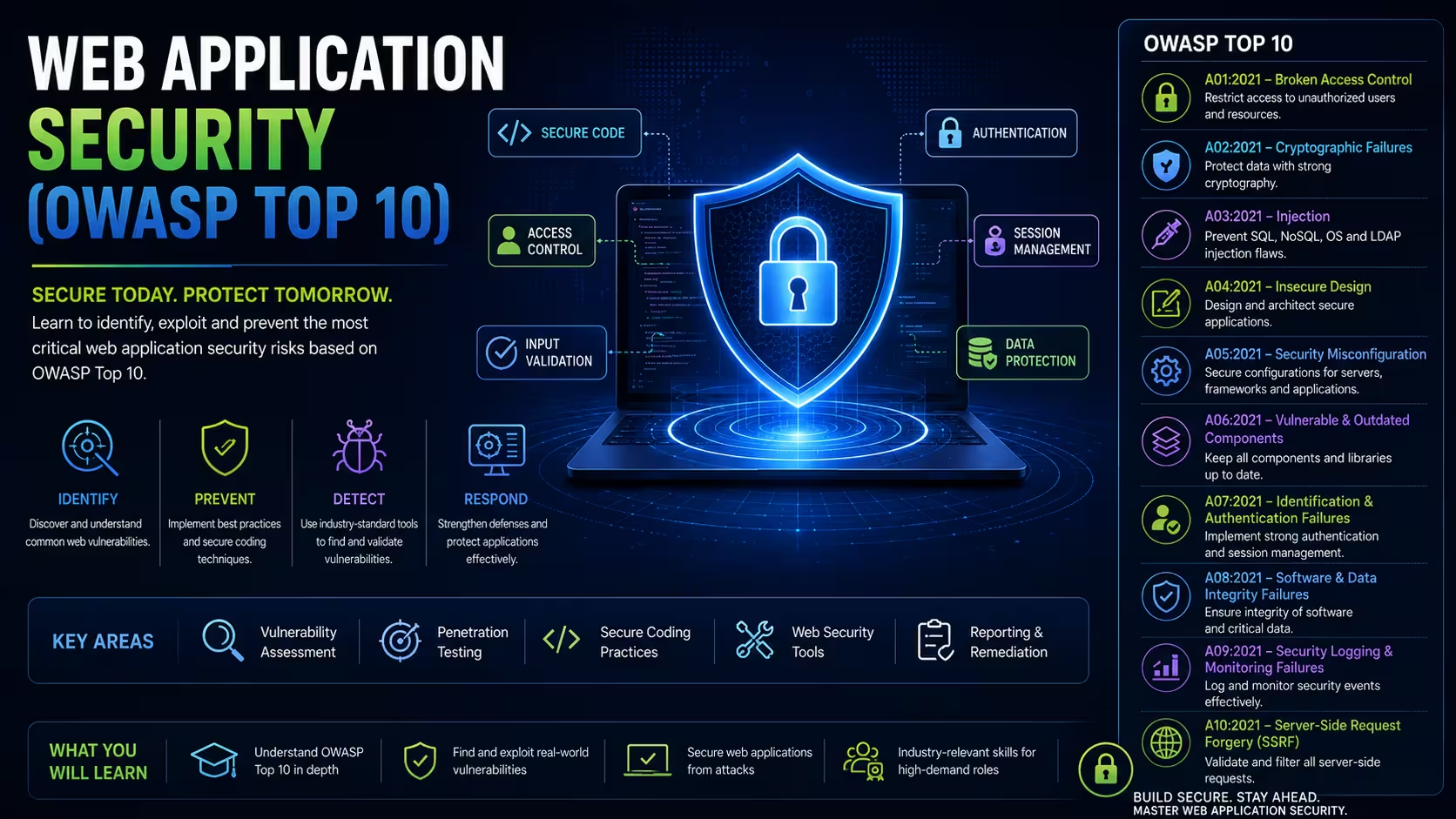
This training covers the top web application security risks and how to identify, prevent, and remediate them using industry best practices.
2. What are the main objectives of the Web Application Security course for my development skills?
To equip learners with knowledge and skills to secure web applications by addressing OWASP Top 10 vulnerabilities effectively.
3. How do you secure an enterprise HR portal?
You will apply security controls to prevent sensitive data exposure, security misconfiguration, and broken authentication in internal company systems.
4. How do you strengthen a healthcare booking system?
Strengthen a patient booking web application by implementing cryptographic best practices, input sanitization, and secure API design to prevent data breaches.
Popular Techniques Covered in This Course
1.Network Security
2.Risk Management and Assessment
3.Incident Response and Security Operations
4.Ethical Hacking and Penetration Testing
5.Programming and Scripting
6.Cloud Security
7.Operating Systems and System Administration
8.Security Tools and Technologies
9.Communication and Documentation
10.Emerging Technologies
Get Hands-on Knowledge about Real-Time Projects
Project 1
1. Vulnerability Assessment and Remediation
- Identify OWASP Top 10 vulnerabilities in web apps - Apply fixes and re-test security
Project 2
2. Secure Development Lifecycle Integration
- Implement security checks during coding and deployment - Automate vulnerability scanning
Project 3
3: Enterprise HR Portal Protection
An IT company wants to secure its employee portal. You fix security misconfigurations, sensitive data exposure, and access control issues to protect confidential employee records.
Project 4
4: Healthcare Appointment System Security
Strengthen a patient booking web application by implementing cryptographic best practices, input sanitization, and secure API design to prevent data breaches.
Project 5
5: Modern Web Application Security Implementation
Take a vulnerable React/Node.js application and apply OWASP Top 10 mitigations across the full stack, including logging, rate limiting, and secure headers.
Key Features
Edubrights offers Web Application Security (OWASP Top 10) training in virtual mode with expert trainers. Here are the key features.
40 Hours Course Duration
100% Job Oriented Training
Industry Expert Faculties
Free Demo Class Available
Completed 500+ Batches
Certification Guidance
Curriculum
Module 1: Introduction to Web Application Security
- Overview of web app security
- Importance of OWASP Top 10
Module 2: Injection Attacks
- SQL injection, Command injection
- Prevention and mitigation techniques
Module 3: Broken Authentication and Session Management
- Risks of improper authentication
- Secure session handling
Module 4: Cross-Site Scripting (XSS)
- Types of XSS attacks
- Prevention methods
Module 5: Insecure Direct Object References (IDOR)
- Understanding and protecting against IDOR
Module 6: Security Misconfiguration
- Common misconfigurations
- Hardening techniques
Module 7: Sensitive Data Exposure
- Protecting data at rest and in transit
- Encryption and tokenization
Module 8: Insufficient Logging and Monitoring
- Importance of logging
- Setting up effective monitoring
Module 9: Cross-Site Request Forgery (CSRF)
- CSRF attack mechanics
- Prevention strategies
Module 10: Using Components with Known Vulnerabilities & Other Risks
- Managing third-party components securely
- Secure development lifecycle (SDLC) integration
Module 11: Practical Labs and Case Studies
- Hands-on identifying and fixing OWASP vulnerabilities
- Real-world security incident analysis
Receive Training From Our Skilled and Effective Trainers
Learn from Experienced Web Application Security Instructors
Experience in the Industry
Learn from cybersecurity professionals with practical experience in Web Application Security and OWASP Top 10 across diverse business and technology environments. Their industry exposure helps learners understand how common web application vulnerabilities are identified, analyzed, and addressed in real-world security scenarios.
Industry-Experienced Backgrounds
Our instructors bring experience from leading organizations and enterprise environments, with exposure to web security, vulnerability assessment, application security testing, secure coding practices, and cybersecurity operations. Their practical perspective helps learners connect security concepts with real-world application security requirements.
Clear & Effective Teaching
Complex web application security concepts are explained in a simple and structured manner using real-world examples, vulnerability demonstrations, security scenarios, and practical explanations. Learners gain a clear understanding of OWASP Top 10 vulnerabilities and the security practices used to identify and mitigate them.
Hands-On Learning Focus
Build practical skills through case studies, guided security exercises, vulnerability analysis, web application security testing, and real-time project scenarios. The hands-on approach helps learners understand how security weaknesses can be identified, assessed, documented, and addressed in web applications.
Up-to-Date Knowledge
Our instructors continuously update their knowledge of OWASP security practices, emerging web application vulnerabilities, testing methodologies, security tools, and industry best practices. This helps learners develop security knowledge aligned with evolving application security requirements and modern cybersecurity environments.
Succeed Our Resourceful Certification
Our certification validates your expertise in securing web applications against the OWASP Top 10 risks. Gain practical skills in vulnerability detection, prevention, and secure coding practices. Ideal for developers, testers, and security professionals.

Course FAQs
1. What is web application security?
Web application security is the practice of protecting websites, web applications and their data from security threats and vulnerabilities. It involves identifying weaknesses, applying security controls, testing applications and following secure development practices to reduce the risk of unauthorized access, data exposure and other security incidents.
2. Why is web application security important?
Web applications often handle sensitive information, user accounts and business data, making them a common target for cyber attacks. Web application security helps organizations identify and reduce vulnerabilities, protect user data and improve the overall security of applications and online services.
3. How can I learn web application security in Chennai?
You can learn web application security through structured training that combines web technology fundamentals with security concepts and practical labs. A good learning path can begin with HTTP, HTTPS, web requests and authentication before progressing to common vulnerabilities, security testing tools and secure development practices.
4. Is web application security suitable for beginners?
Yes. Beginners can learn web application security by first understanding how websites and web applications work. Basic knowledge of web technologies, networking and operating systems can be helpful, while structured training can gradually introduce security concepts, common vulnerabilities and practical testing methods.
5. What is the OWASP Top 10?
The OWASP Top 10 is a widely recognized awareness resource that highlights major security risks commonly found in web applications. It helps developers, testers and security professionals understand important categories of vulnerabilities and improve application security practices.
6. Which OWASP Top 10 topics are covered?
The course can cover major web application security risks and vulnerability categories based on the OWASP Top 10 framework. Topics may include broken access control, cryptographic failures, injection-related risks, insecure design, security misconfiguration, vulnerable components, authentication weaknesses and other important web security concepts.
7. Do I need programming knowledge to learn web security?
Basic programming knowledge can be helpful for understanding how web applications are developed and how certain vulnerabilities occur, but it is not always necessary to begin learning web application security. Learners can start with web fundamentals and gradually build their understanding of application behavior, vulnerabilities and secure coding concepts.
8. Do I need networking knowledge before joining?
Basic networking knowledge can be helpful because web applications communicate through networks and use protocols such as HTTP and HTTPS. Understanding IP addresses, ports, client-server communication and basic network concepts can make web security topics easier to understand.
9. Does the course cover HTTP and HTTPS?
Yes. Understanding HTTP and HTTPS is important for web application security. Learners can study how web requests and responses work, how data is exchanged between clients and servers and why secure communication is important for protecting web applications.
10. Will I learn authentication security?
Yes. Authentication security is an important part of web application protection. Learners can understand common authentication mechanisms, potential weaknesses and security practices used to protect login processes and user identities.
11. Does the course cover session management?
Yes. Session management concepts help learners understand how web applications maintain user sessions after authentication. Training can cover common session-related risks and security practices used to protect session information and reduce the risk of unauthorized access.
12. Will I learn authorisation and access control?
Yes. Authorization and access control are important web security concepts. Learners can understand how applications control access to resources, how access-control weaknesses can occur and why proper authorization checks are necessary to protect sensitive functions and data.
13. Does the course include API security?
API security concepts can be included to help learners understand how application interfaces communicate and how APIs can be protected. Topics may include authentication, authorization, input handling and common security risks associated with APIs.
14. Which web security tools are covered?
Web application security training can introduce tools used for analyzing web traffic and identifying security issues in authorized environments. Depending on the course structure, learners may work with tools such as Burp Suite, OWASP ZAP and other relevant web security or testing utilities.
15. Will I learn Burp Suite?
Burp Suite may be used as part of practical web application security learning. It can help learners understand web requests and responses, analyze application behavior and perform authorized security testing in controlled lab environments.
16. Does the course include secure coding concepts?
Yes. Secure coding concepts can help learners understand how security issues can be prevented during application development. Training may introduce practices related to input validation, authentication, authorization, error handling and other principles used to reduce common application vulnerabilities.
17. Are practical web security labs included?
Practical web security labs can help learners apply concepts in controlled and authorized environments. Depending on the course structure, learners may analyze web requests, identify common vulnerabilities, understand security weaknesses and practice recommended mitigation approaches.
18. Will I learn how to document vulnerabilities?
Yes. Vulnerability documentation is an important part of web security work. Learners can understand how to clearly record security findings, explain potential impact, assign appropriate severity and communicate remediation recommendations to technical teams and stakeholders.
19. What projects are included in the course?
Practical projects may involve web application security assessment, vulnerability analysis, access-control testing, authentication and session security review, API security concepts and security reporting. The exact projects can vary depending on the current course structure and practical training approach.
20. What are the web application security course batch timings in Chennai?
Web application security course batch timings in Chennai can vary based on the current training schedule and available batches. For the latest information about upcoming batches, course duration, training mode and available timings, learners should confirm the current schedule directly with Edubrights.
Get Training Quote for Free
Testimonials
Hear What Our Students Say
"Transform your life through Education, hear it from our Alumni"

6 LPA
Fathima
Student
Software Engineer
"Transform your life through Education, hear it from our Alumni"

8 LPA
Rahul
Student
Data Scientist
"Transform your life through Education, hear it from our Alumni"

8 LPA
Siddharth
NIELSON IQ
Data Analyst