Course Objectives
1. Map Advanced Warehouse Topology & Structures
Learn to translate physical multi-tier facility layouts into structured digital schemas using storage types, storage sections, picking areas, and individualized coordinate-mapped storage bins.
2. Automate Complex Inbound & Outbound Logistics
Master the setup of process-oriented storage controls (POSC) and layout-oriented storage controls (LOSC) to orchestrate multi-step product receipts, de-consolidation tasks, and wave picking configurations smoothly.
3. Implement Intelligent Resource & Labor Tracking
Gain the functional expertise to define warehouse employee teams, map equipment resource groups, deploy mobile Radio Frequency (RF) framework tools, and monitor operational labor execution standards.
4. Synchronize Extended Inventory Environments
Learn to seamlessly integrate localized warehouse operations with external business tracks, combining actions across core SAP MM (Materials Management), PP (Production Planning), and TM (Transportation Management) modules.
Popular Techniques Covered in This Course
1: Storage Location & Organizational Mapping
2: Handling Unit Management (HUM) Implementation
3: Warehouse Process Type (WPT) Customization
4: Process-Oriented Storage Control (POSC) Engineering
5: Slotting & Automated Product Rearrangement
6: Wave Management & Batch Order Allocation
7: Resource Management & Active Load Distribution
8: Radio Frequency (RF) Framework Screen Tuning
9: Physical Inventory Counting & Discrepancy Tracking
10: Warehouse Management Monitor Cockpit Configuration
Get Hands-on Knowledge about Real-Time Projects
Project 1
Project 1: High-Volume Auto Parts Warehouse Structural Blueprint
Architect an extensive digital warehouse landscape for a major simulated automotive supplier in Chennai, structuring deep-lane pallet racks, setting up fast-picking sections, and mapping thousands of physical storage bins with custom capacity limits.
Project 2
Project 2: Multi-Stage Inbound De-Consolidation & Quality Inspection Pipeline
Configure a multi-tier POSC flow that intercepts a mixed-palette container drop, automatically creates tasks to break down individual boxes, routes hazardous materials through a quality screening station, and generates final secure putaway paths.
Project 3
Project 3: Route-Optimized E-Commerce Wave Picking & Packing Grid
Design an integrated outbound fulfillment wave engine that aggregates hundred of single-item digital sales orders, groups them into optimized picking paths for mobile RF scanner field teams, and schedules real-time delivery handoffs.
Project 4
Project 4: Counter-Balanced Production Integration for Material Replenishment
Coordinate an active staging system that links production line demands to the central warehouse, automatically generating high-priority replenishment orders to move raw materials into manufacturing spaces the moment shop-floor levels drop too low.
Project 5
Project 5: Intermittent System Exception Handling & Inventory Discrepancy Matrix
Construct a resilient exception management framework within the Warehouse Monitor to catch picking discrepancies, automatically locking damaged storage bins, updating material levels, and routing error reports to supervisor dashboards.
Key Features
Edubrights offers SAP EWM (Extended Warehouse Management) Training in virtual mode with expert trainers. Here are the key features,
40 Hours Course Duration
100% Job Oriented Training
Free Demo Class Available
Completed 500+ Batches
Industry Expert Faculties
Certification Guidance
Curriculum
Module 1: Introduction to SAP EWM
- Overview of Extended Warehouse Management
- EWM vs. WM: Key differences and migration path
- EWM integration with SD, MM, PP, and TM
- EWM deployment options: Embedded and decentralized
Module 2: Organizational Structure in EWM
- Warehouse number and warehouse structure
- Storage types, sections, and storage bins
- Activity areas and work centers
- Staging areas and dock door management
Module 3: Master Data in SAP EWM
- Product master in EWM
- Storage type and storage section search
- Warehouse product and packaging specifications
- Storage unit type and handling unit management
- Batch and serial number management in EWM
Module 4: Inbound Processing
- Expected goods receipt (EGR) and inbound delivery order
- Unloading, goods receipt posting
- Putaway strategies: Fixed bin, open storage, near picking bin
- Deconsolidation and quality inspection integration
- Cross-docking in inbound
Module 5: Outbound Processing
- Outbound delivery order and wave management
- Picking strategies: FIFO, FEFO, LIFO, largest quantity
- Packing and loading
- Goods issue posting
- Returns processing
Module 6: Internal Warehouse Movements
- Warehouse tasks and warehouse orders
- Stock transfers and replenishment
- Physical inventory (cycle counting)
- Posting changes and reclassification
Module 7: Slotting and Rearrangement
- Product slotting rules
- Storage bin type determination
- Rearrangement runs
- ABC classification for warehouse optimization
Module 8: Labor Management
- Work center and labor standards
- Direct and indirect activity reporting
- Performance management reports
- Queue management and workload balancing
Module 9: Yard Management
- Yard structure and check-in/check-out
- Transportation unit management in yard
- Door and resource assignment
Module 10: RF Framework and Mobile Data Entry
- RF monitor and queue assignment
- User-based queue determination
- Handling units and RFID integration
- Exception handling in RF environment
Module 11: EWM in S/4HANA
- Embedded EWM architecture
- Integration with SAP TM and SAP IBP
- Fiori apps for warehouse operations
- Real-time inventory visibility
Module 12: Real-Time Projects and Case Studies
- Retail and e-commerce warehouse scenarios
- Pharmaceutical cold-chain warehouse management
- End-to-end EWM cycle implementation
- Certification and interview preparation
Receive Training From Our Skilled and Effective Trainers
Experience in the Industry Gain knowledge from experts with practical SAP EWM project experience in retail, pharma, and logistics sectors.
Backgrounds at the Top Prominent corporations such as HCL, TCS, Accenture, and DHL employ our SAP EWM trainers.
Clear & Effective Teaching Excellent communication and real-world examples simplify complex warehouse management configurations.
Hands-On Learning Focus Students apply skills using live SAP systems with real warehouse operation case studies.
Up-to-Date Knowledge Trainers stay current with SAP S/4HANA Embedded EWM and latest warehousing best practices.
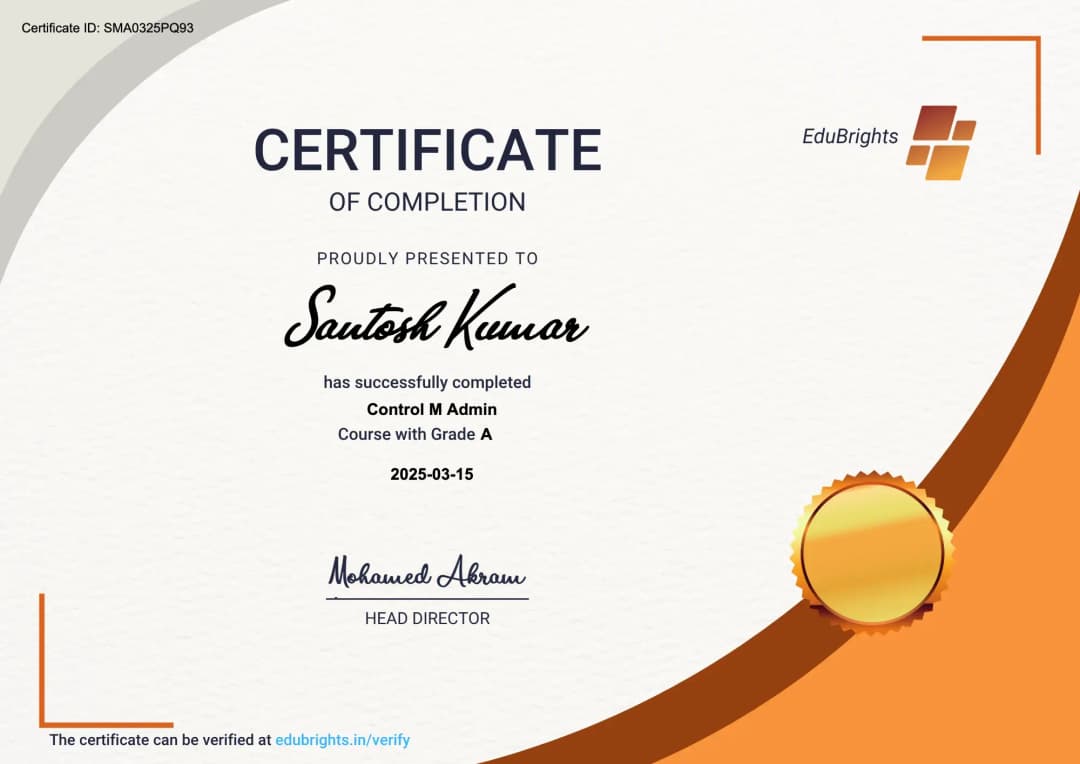
About Our Course Certification*
Our institution offers a recognized SAP EWM (Extended Warehouse Management) certification that validates your ability to design and prototype professional user interfaces efficiently. This certification enhances your design portfolio and prepares you for collaborative projects in real-world environments. Gain practical skills through hands-on training and assessments.
Course FAQs
1. What is SAP EWM?
SAP Extended Warehouse Management (EWM) is a warehouse management solution used to control inventory and warehouse operations at a detailed level. It supports goods receipt, putaway, picking, packing, shipping, internal stock movements, and warehouse monitoring.
2. What is the difference between SAP EWM and SAP WM?
SAP Warehouse Management (WM) provides warehouse stock and storage-bin management, while SAP EWM offers broader capabilities for complex warehouse execution. EWM supports advanced functions such as wave management, resource management, warehouse order creation rules, and warehouse automation integration.
3. What are the main components of SAP EWM architecture?
SAP EWM includes warehouse organizational structures, master data, inbound and outbound processing, warehouse task execution, inventory management, and monitoring. Its architecture can be embedded in SAP S/4HANA or deployed as a decentralized solution, depending on the system landscape.
4. What is the difference between embedded and decentralized SAP EWM?
Embedded EWM runs within the SAP S/4HANA system, supporting close integration with relevant business processes. Decentralized EWM operates in a separate system connected to an ERP or S/4HANA backend, which can be useful when warehouse operations require greater system separation.
5. What is a warehouse number in SAP EWM?
A warehouse number is the highest-level organizational unit representing a warehouse complex in EWM. It groups storage areas and related warehouse structures used to manage inventory and execute warehouse activities.
6. What are storage types, storage sections, and storage bins?
A storage type represents a warehouse area with particular storage characteristics, such as racks, bulk storage, or picking areas. Storage sections divide storage types into logical areas, while storage bins identify specific locations where products or handling units can be stored.
7. What is an activity area in SAP EWM?
An activity area groups storage bins for warehouse activities such as picking, putaway, or physical inventory. It helps organize warehouse work and determine which bins are relevant for particular operational tasks.
8. What are work centers in SAP EWM?
Work centers are warehouse locations used to perform activities such as packing, deconsolidation, quality-related processing, or value-added services. Their configuration can include layouts, process settings, and handling-unit-related functions.
9. What are staging areas and door management in SAP EWM?
Staging areas are locations where goods are temporarily held before activities such as loading, shipping, or production supply. Door management supports the assignment of inbound or outbound deliveries to suitable warehouse doors based on configured operational requirements.
10. What master data is required for SAP EWM implementation?
Important master data includes product master data, warehouse product data, storage bins, packaging specifications, handling-unit settings, and resource information. Depending on the integration design, business partners and other ERP master data may also be required.
11. What is warehouse product master data?
Warehouse product data contains warehouse-specific settings for a product. These settings can influence storage, putaway, stock removal, replenishment, packaging, and other warehouse execution processes.
12. What are packaging specifications in SAP EWM?
Packaging specifications define how products should be packed into cartons, containers, or other handling units. They can support consistent packing operations and influence product handling during inbound, outbound, and internal warehouse processes.
13. What is a handling unit (HU) in SAP EWM?
A handling unit represents a physical package or group of products with a unique identification. It allows EWM to track packaged stock through receiving, storage, picking, packing, movement, and shipping activities.
14. How does SAP EWM manage batch and serial numbers?
Batch management tracks products belonging to a particular batch, while serial-number management identifies individual product units. EWM can use these identifiers during goods receipt, stock movements, picking, and goods issue according to the configured requirements.
15. What is inbound delivery processing in SAP EWM?
Inbound delivery processing manages the receipt of products from suppliers or other supplying locations. The process can include delivery creation or replication, unloading, goods receipt, inspection, putaway, and warehouse task confirmation.
16. How is goods receipt processed in SAP EWM?
Goods receipt records the arrival of products and updates the relevant inventory and delivery statuses. Depending on the process, warehouse staff may unload the goods, check quantities, perform quality-related activities, and trigger putaway.
17. What is putaway in SAP EWM?
Putaway is the process of moving received products to suitable storage bins. EWM can determine destinations using configured putaway strategies, product data, storage characteristics, and available warehouse capacity.
18. What are the main putaway strategies in SAP EWM?
Putaway strategies help determine where incoming stock should be stored. Depending on the warehouse design and release, options can include fixed-bin, open-storage, addition-to-existing-stock, and other configured bin-determination approaches.
19. What is outbound delivery processing in SAP EWM?
Outbound delivery processing manages the warehouse activities required to fulfill a delivery. It can include order preparation, wave planning, picking, packing, staging, loading, and goods issue.
20. What is stock removal in SAP EWM?
Stock removal is the process of selecting and retrieving inventory from warehouse storage locations. EWM uses configured stock-removal strategies and relevant stock attributes to determine which stock and bins should supply the required quantity.
21. What is wave management in SAP EWM?
Wave management groups warehouse demand into batches for coordinated processing. Waves can help schedule picking and other warehouse activities based on criteria such as delivery requirements, routes, priorities, or planned processing times.
22. What is a wave template?
A wave template defines criteria and rules for creating waves from eligible warehouse requests. It can support the structured grouping and release of outbound demand according to warehouse scheduling requirements.
23. What is a warehouse task (WT) in SAP EWM?
A warehouse task is an execution document that specifies a warehouse movement or activity, such as picking, putaway, or internal stock transfer. It identifies relevant source and destination information and is confirmed when the required activity is completed. <Cite refs={["turn241936search0","turn241936search3"]}/>
24. What is a warehouse order (WO) in SAP EWM?
A warehouse order groups warehouse tasks into a work package for execution by a warehouse worker or resource. Grouping tasks helps organize warehouse activities according to configured rules and operational requirements. <Cite refs={["turn241936search0","turn241936search1"]}/>
25. What are Warehouse Order Creation Rules (WOCR)?
Warehouse Order Creation Rules determine how warehouse tasks are grouped into warehouse orders. The rules can use configured criteria such as activity, task characteristics, limits, and operational requirements to organize work efficiently.
26. What is the difference between a warehouse task and a warehouse order?
A warehouse task represents an individual movement or warehouse activity, whereas a warehouse order groups one or more tasks into a work package. For example, several picking tasks may be combined into a warehouse order assigned to a worker.
27. What is Process-Oriented Storage Control (POSC)?
POSC manages warehouse activities through a sequence of configured process steps. It is useful when products must pass through multiple stages, such as unloading, deconsolidation, quality inspection, packing, or final putaway.
28. What is Layout-Oriented Storage Control (LOSC)?
LOSC supports warehouse movements that are required because of the physical layout of the facility. It can introduce intermediate storage or movement steps when products need to pass through particular warehouse areas.
29. What is the difference between POSC and LOSC?
POSC determines the sequence of warehouse process steps, while LOSC addresses movements required by the warehouse's physical layout. Depending on the design, both approaches can work together to support a complete warehouse movement.
30. What is replenishment in SAP EWM?
Replenishment moves stock into picking locations when available quantities fall below defined requirements. It helps ensure that warehouse staff have sufficient stock to fulfill outbound demand or other operational needs.
31. What is slotting in SAP EWM?
Slotting analyzes product and warehouse characteristics to determine suitable storage locations. It can help optimize bin assignments based on factors such as product dimensions, demand patterns, storage conditions, and picking frequency.
32. What is rearrangement in SAP EWM?
Rearrangement supports the relocation of stock to more suitable warehouse bins. It can be used after slotting analysis or when warehouse conditions and operational requirements change.
33. What is cross-docking in SAP EWM?
Cross-docking moves eligible incoming products toward outbound requirements with reduced or no conventional long-term storage. It can help shorten handling time when incoming stock can satisfy outbound demand under the configured process.
34. What is the RF framework in SAP EWM?
The Radio Frequency (RF) framework supports warehouse execution through mobile or handheld devices. Workers can use RF screens to perform activities such as unloading, putaway, picking, packing, stock transfers, and warehouse task confirmation.
35. How is the RF menu configured in SAP EWM?
RF configuration defines the menu structure, logical transactions, screen sequences, and warehouse activities available to workers. The setup can be tailored to user roles, warehouse processes, and device requirements.
36. What is resource management in SAP EWM?
Resource management organizes the resources used to perform warehouse work, including workers and equipment. It can support resource assignment, work distribution, and execution of warehouse tasks according to operational rules.
37. What is task interleaving in SAP EWM?
Task interleaving combines different warehouse activities into a resource's work sequence to reduce unnecessary travel. For example, a resource completing one movement may receive another suitable task near its current location.
38. What is two-step picking in SAP EWM?
Two-step picking separates picking into an initial collection stage and a subsequent distribution stage. It can improve efficiency when several orders share products that can be collected together before quantities are allocated to individual deliveries.
39. How does SAP EWM support physical inventory?
SAP EWM supports inventory counting and comparison of counted quantities with recorded stock. Organizations can use physical inventory procedures to identify discrepancies, investigate differences, and post approved inventory adjustments.
40. What is cycle counting in SAP EWM?
Cycle counting is a recurring inventory verification method in which selected products or bins are counted at planned intervals. It helps maintain inventory accuracy without requiring every item in the warehouse to be counted at the same time.
41. What is the Warehouse Management Monitor in SAP EWM?
The Warehouse Management Monitor provides a central view of warehouse documents, stock, tasks, orders, and operational statuses. It helps users investigate processing issues and monitor warehouse activities.
42. How are warehouse exceptions handled in SAP EWM?
Exception handling manages situations in which a warehouse activity cannot be completed as planned, such as a stock shortage or quantity discrepancy. Depending on the configuration, exception codes can trigger follow-up actions and update relevant process statuses.
43. What is yard management in SAP EWM?
Yard management supports the handling of transportation units and vehicles in the yard area associated with warehouse operations. Depending on the system configuration, it can include check-in, check-out, yard locations, door assignments, and movement coordination.
44. What is Material Flow System (MFS) integration in SAP EWM?
Material Flow System integration connects EWM with supported automated material-handling equipment and control systems. It can coordinate movements involving conveyors, automated storage and retrieval systems, and other warehouse automation components, depending on the solution design.
45. How does SAP EWM integrate with SAP Materials Management (MM)?
EWM integrates with procurement and inventory processes to support inbound deliveries, goods receipt, and stock-related updates. The integration helps connect purchasing and inventory activities with warehouse-level execution.
46. How does SAP EWM integrate with SAP Sales and Distribution (SD)?
EWM integrates with sales and delivery processes to support outbound warehouse execution. Delivery information can drive picking, packing, staging, loading, and goods issue activities.
47. How does SAP EWM support production supply and SAP PP integration?
EWM can support the staging and movement of materials required for manufacturing operations. Depending on the configuration, production material requests and related processes help coordinate warehouse stock movements with production requirements.
48. How does SAP EWM integrate with SAP Transportation Management (TM)?
EWM and SAP TM can exchange relevant logistics information to coordinate warehouse execution with transportation planning. The integration can support activities such as loading, shipment coordination, and transportation-related warehouse processes, depending on the system landscape.
49. What practical projects can be covered in SAP EWM training in Chennai?
Practical projects can include Distribution Center Warehouse Configuration, Inbound Delivery and Putaway Processing, Outbound Picking and Shipping, Inventory Accuracy and Replenishment, and Warehouse Performance Dashboard Development. These scenarios help learners practice warehouse structure setup, stock movements, delivery execution, monitoring, and operational reporting.
50. What technical skills can I gain from SAP EWM training in Chennai?
SAP EWM training can help develop skills in warehouse structure configuration, product and packaging master data, handling units, inbound and outbound processing, putaway, stock removal, wave management, warehouse tasks and orders, POSC, LOSC, replenishment, slotting, RF operations, resource management, physical inventory, yard management, automation integration, and SAP MM, SD, PP, and TM integration.
Get Training Quote for Free
Testimonials
Hear What our Students say
"Transform your life through Education, hear it from our Alumni"

8 LPA
Rahul
Student
Data Scientist
"Transform your life through Education, hear it from our Alumni"

6 LPA
Fathima
Student
Software Engineer
"Transform your life through Education, hear it from our Alumni"

8 LPA
Siddharth
NIELSON IQ
Data Analyst