Course Objectives
1. What will I learn by taking the SAP Automation Testing course in Bangalore?
You'll build a solid understanding of the core concepts, terminology, and fundamentals of SAP Automation Testing, giving you a strong foundation to build on.
2. What hands-on skills will I gain from the SAP Automation Testing training?
You'll get hands-on experience with industry-relevant SAP Automation Testing tools and workflows through guided exercises, so you learn by doing rather than just reading theory.
3. How does the SAP Automation Testing course prepare me for real-world work?
The SAP Automation Testing course is designed around how SAP Automation Testing is actually applied to solve real-world problems in professional settings, not just textbook scenarios.
4. What practical, job-ready skills will I build during SAP Automation Testing training in Bangalore?
You'll develop the practical skills needed to confidently work with SAP Automation Testing on the job, so you're ready to contribute from day one in a SAP Automation Testing role.
5. Will I work on real projects during the SAP Automation Testing course?
Yes, the SAP Automation Testing course includes real-time projects and case studies that reinforce concepts through practice, giving you portfolio-ready work by the end.
6. How does the SAP Automation Testing course help with certification and job interviews?
The SAP Automation Testing course is structured to help you prepare for relevant certifications and interviews, covering the concepts and terminology employers and exam boards expect.
Popular Techniques Covered in This Course
SAP Solution Manager Integration
Test Data Management
Defect Tracking and Reporting
SAP Fiori Application Testing
Regression Testing Automation
Test Case Design and Execution
SAP TAO Framework
Tricentis Tosca Automation
SAP CBTA Testing
SAP Automation Testing Fundamentals
Get Hands-on Knowledge about Real-Time Projects
Project 1
Project 1: SAP S/4HANA Regression Automation
Develop an automated regression testing framework for SAP S/4HANA business processes to improve testing efficiency and reduce execution time.
Project 2
Project 2: SAP Fiori Application Testing
Automate testing scenarios for SAP Fiori applications, including navigation, transactions, validations, and user workflows.
Project 3
Project 3: Procure-to-Pay Process Automation Testing
Create automated test scripts for SAP MM procurement workflows, purchase orders, goods receipts, and invoice verification.
Project 4
Project 4: Order-to-Cash Business Process Testing
Design and execute automated test cases for SAP SD processes, including sales orders, deliveries, billing, and customer transactions.
Project 5
Project 5: SAP CBTA Test Automation Framework
Implement a reusable SAP CBTA-based automation framework integrated with SAP Solution Manager for enterprise testing requirements.
Key Features
Edubrights offers SAP Automation Testing in virtual mode with expert trainers. Here are the key features,
40 Hours Course Duration
100% Job Oriented Training
Industry Expert Faculties
Free Demo Class Available
Completed 500+ Batches
Certification Guidance
Curriculum
Module 1: Introduction to SAP Automation Testing
- Overview of test automation in SAP landscapes
- Test automation strategy for SAP S/4HANA and cloud
- Test automation tools: CBTA, Tricentis Tosca, Selenium
- ROI of test automation for SAP
- Test automation implementation methodology
Module 2: SAP Component-Based Test Automation (CBTA)
- CBTA framework in SAP Solution Manager
- Test component creation and management
- Reusable test components
- CBTA test configuration
- CBTA execution and reporting
Module 3: Tricentis Tosca for SAP
- Tosca architecture and modules
- SAP Engine for Tosca
- Test case design in Tosca
- SAP GUI automation
- Fiori app automation with Tosca
Module 4: Selenium and WebDriver for SAP Fiori
- Selenium setup for Fiori testing
- Page Object Model (POM)
- Fiori element locators
- TestNG and JUnit integration
- Selenium Grid for parallel testing
Module 5: wdi5 for SAPUI5 Testing
- wdi5 framework overview
- SAPUI5 test recorder
- Test script generation
- Integration with CI/CD pipelines
- Cross-browser Fiori testing
Module 6: OPA5 Integration Testing
- OPA5 framework in SAPUI5
- Page objects in OPA5
- Asynchronous testing
- OPA5 test execution
- Integration with QUnit
Module 7: SAP Test Data Management
- Test data strategy for SAP
- TDMS for test data provision
- Anonymization and masking
- Golden client management
- Test data refresh automation
Module 8: SAP Cloud ALM Test Management
- Test plan creation in Cloud ALM
- Manual test execution and sign-off
- Automated test integration in Cloud ALM
- Defect tracking and resolution
- Test coverage reporting
Module 9: Performance and Load Testing
- Performance testing concepts
- HP LoadRunner for SAP
- SAP ECATT for performance scripts
- Response time benchmarks
- Bottleneck identification
Module 10: Test Automation in CI/CD
- Automated test trigger in CI/CD pipelines
- Test result reporting
- Quality gates based on test results
- Regression test suite management
- Flaky test management
Module 11: AI in SAP Test Automation
- AI-driven test case generation
- Self-healing test scripts
- Intelligent test selection
- Joule for test recommendations
- Continuous testing with AI
Module 12: Real-Time Projects and Case Studies
- S/4HANA regression test automation
- Fiori app test automation suite
- End-to-end automation testing project
- Certification and interview preparation
Receive Training From Our Skilled and Effective Trainers
Experience in the Industry Gain expertise from SAP Automation Testing professionals training in Bangalore who have applied their skills on live projects across corporate, product, and consulting environments, bringing practical, real-world context into every SAP Automation Testing session.
Backgrounds at the Top Our SAP Automation Testing trainers in Bangalore bring hands-on industry experience, having worked on real SAP Automation Testing projects for organizations across various industries before moving into training.
Clear & Effective Teaching Core SAP Automation Testing concepts, tools, and workflows are explained using real project examples and practical scenarios, so you understand not just the theory but how SAP Automation Testing is actually used on the job.
Hands-On Learning Focus Students get structured, hands-on practice with SAP Automation Testing through guided exercises, mini-projects, and lab work designed to build practical, job-ready skills.
Up-to-Date Knowledge Trainers keep the SAP Automation Testing curriculum current with the latest tools, versions, and industry best practices, so what you learn stays relevant to how SAP Automation Testing is used today in Bangalore and beyond.
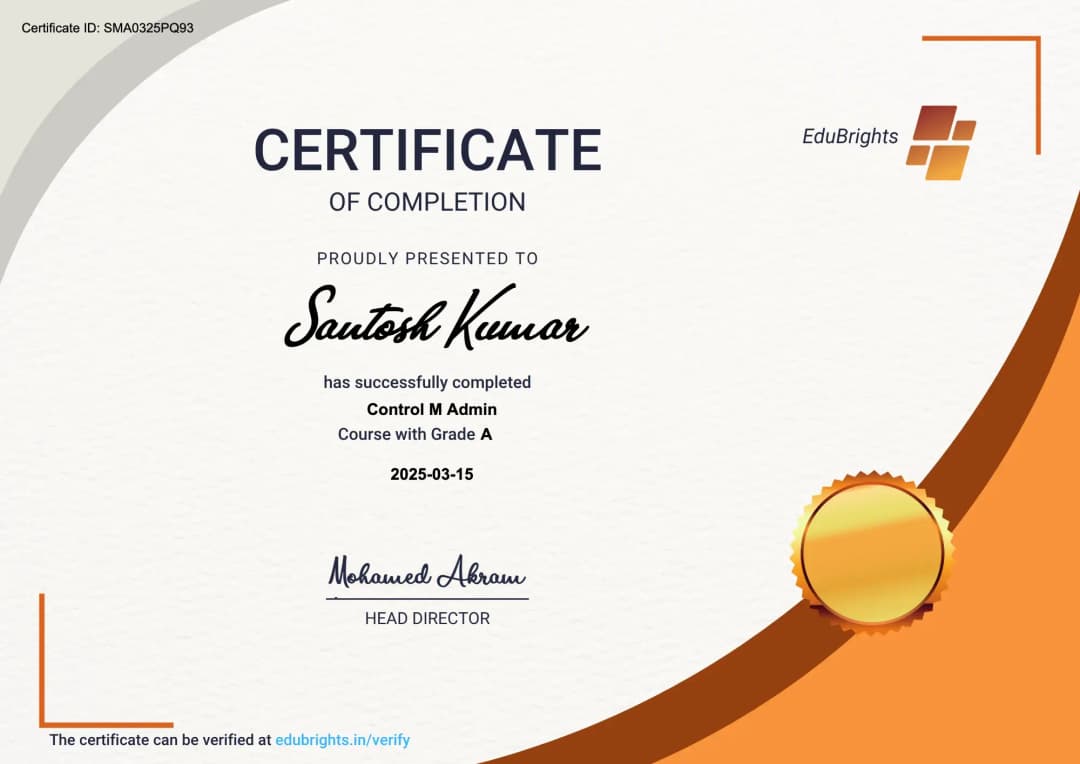
SAP Automation Testing Professional certification
The Certified SAP Automation Testing Professional certification validates expertise in automated testing of SAP applications, business processes, and enterprise systems. It demonstrates proficiency in SAP CBTA, Tricentis Tosca, regression testing, SAP Fiori testing, and test automation frameworks. This certification helps professionals build careers in SAP quality assurance, software testing, and enterprise application validation.
Course FAQs
1. What is SAP Automation Testing?
SAP Automation Testing is the process of using automated testing tools and frameworks to validate SAP applications, business processes, integrations, and user workflows. It helps reduce repetitive manual testing and supports faster and more consistent regression testing.
2. Why is automation testing important for SAP projects?
SAP implementations and upgrades involve complex business processes that often require repeated testing. Automation can improve test execution efficiency, increase test coverage, and make regression testing more repeatable across SAP environments.
3. What is SAP Component-Based Test Automation (CBTA)?
CBTA is an SAP Solution Manager-based framework for creating automated tests using reusable components. It supports automated testing of supported SAP business processes and can use test components, configurations, test data, and system data containers.
4. What are reusable test components in CBTA?
Reusable test components represent individual testing actions or functional parts that can be reused across multiple automated tests. Reusing components helps reduce duplication and simplifies maintenance when common testing steps change.
5. How are CBTA test configurations created?
A CBTA test configuration combines the required executable, test script, system information, test data, and execution-related settings. It provides the structure needed to execute an automated SAP test scenario.
6. What is Tricentis Tosca in SAP Automation Testing?
Tricentis Tosca is a test automation platform used for automating SAP and other enterprise applications. The Edubrights course covers Tosca architecture, SAP Engine for Tosca, SAP GUI automation, test-case design, and Fiori application automation.
7. What is the SAP Engine in Tricentis Tosca?
The SAP Engine enables Tosca to interact with supported SAP application objects for automation. It helps testers create automated workflows for SAP interfaces and business processes without relying entirely on traditional code-based automation.
8. How is SAP GUI testing automated with Tosca?
SAP GUI automation involves identifying application controls and creating automated actions such as entering values, selecting options, navigating screens, and validating results. Tosca can use SAP-specific automation capabilities to create reusable test flows.
9. How can Tricentis Tosca automate SAP Fiori applications?
Tosca can automate supported browser-based SAP applications such as Fiori by identifying UI elements and executing defined test actions. SAP Cloud ALM can also integrate with Tricentis Test Automation for SAP for test orchestration, execution monitoring, and reporting.
10. What is Selenium WebDriver in SAP Fiori testing?
Selenium WebDriver is a browser automation framework that can be used to automate web-based SAP Fiori testing. It allows test scripts to interact with browser elements, execute workflows, and validate expected application behavior.
11. What is the Page Object Model (POM) in Selenium?
The Page Object Model is a design pattern that separates page-specific UI elements and actions from the test logic. It improves test maintainability by allowing commonly used page objects and locators to be reused across test cases.
12. What are locators in Selenium-based SAP Fiori automation?
Locators identify UI elements that Selenium needs to interact with, such as buttons, input fields, links, or controls. Reliable locators are important because unstable element identification can cause automated tests to fail unnecessarily.
13. How can TestNG and JUnit be used in SAP automation?
TestNG and JUnit provide test execution and organization capabilities for Selenium-based automation. They can support test grouping, assertions, setup and teardown operations, reporting, and integration with automated build pipelines.
14. What is Selenium Grid?
Selenium Grid allows automated browser tests to execute across multiple machines, browsers, or environments. This can support parallel test execution and help reduce the overall execution time of large regression suites.
15. What is wdi5 in SAPUI5 testing?
wdi5 is a testing framework designed for SAPUI5 applications and provides mechanisms for interacting with UI5 controls during automated tests. It can be integrated into automated development and testing workflows for SAPUI5 applications.
16. How is the SAPUI5 Test Recorder used?
A test recorder can help capture application interactions and support the creation of automated test scripts. It can reduce the amount of manual scripting required when building initial test scenarios.
17. What is OPA5 testing in SAPUI5?
OPA5 is a framework used for integration and acceptance testing of SAPUI5 applications. It supports testing UI interactions, navigation, asynchronous behavior, and application workflows.
18. What is asynchronous testing in OPA5?
Asynchronous testing allows the test framework to wait for application conditions or UI states before continuing with the next validation. This is important for SAPUI5 applications where data and controls may load dynamically.
19. How is QUnit related to OPA5?
QUnit is a JavaScript unit-testing framework that can be used alongside OPA5 for testing SAPUI5 applications. OPA5 focuses more on application integration and UI interactions, while QUnit can support lower-level JavaScript testing.
20. What is regression testing in SAP?
Regression testing verifies that existing business processes continue to work after SAP changes such as upgrades, enhancements, configuration changes, or new implementations. Automation is particularly useful because the same regression scenarios may need to be executed repeatedly.
21. How can SAP S/4HANA regression testing be automated?
S/4HANA regression testing can be automated by identifying critical business processes, creating reusable automated test cases, preparing appropriate test data, and executing the tests against the required system landscape. The Edubrights course includes an S/4HANA regression automation project.
22. What is end-to-end automation testing in SAP?
End-to-end automation validates a complete business process across multiple steps and potentially multiple SAP applications or systems. Examples include procure-to-pay and order-to-cash workflows where several transactions must work together correctly.
23. How can Procure-to-Pay processes be automated?
A Procure-to-Pay automation scenario can cover activities such as purchase requisitions, purchase orders, goods receipts, and invoice verification. Automated tests can validate the complete workflow and expected business outcomes.
24. How can Order-to-Cash processes be automated?
Order-to-Cash automation can cover sales order creation, delivery processing, billing, and related customer transactions. Test automation can validate whether the complete business flow behaves as expected after SAP changes.
25. What is SAP test data management?
SAP test data management involves preparing, maintaining, refreshing, masking, and supplying the data required for test execution. Good test data management helps automated tests run consistently across different environments.
26. What is TDMS in SAP testing?
Test Data Migration Server (TDMS) is an SAP technology used for providing relevant test data to non-production environments. It can help create test environments with appropriate business data while supporting data-volume and privacy requirements.
27. Why is data masking important in SAP testing?
Data masking helps protect sensitive information when data is used in development, testing, or training environments. Sensitive business or personal information can be transformed so that testers can work with realistic datasets without unnecessarily exposing original values.
28. What is Golden Client management in SAP testing?
A Golden Client can serve as a controlled source environment containing the required configuration and data structure for testing activities. Managing it properly helps maintain consistency when test environments or test datasets need to be refreshed.
29. What is SAP Cloud ALM Test Management?
SAP Cloud ALM Test Management provides capabilities for preparing, organizing, executing, and monitoring test activities. It includes concepts such as test cases, test plans, test execution, assignments, and test results.
30. What is a test plan in SAP Cloud ALM?
A test plan groups test cases within a defined execution context and test cycle. SAP Cloud ALM allows test cases and testers to be assigned to test plans and supports releasing prepared tests for execution.
31. How are automated testing providers integrated with SAP Cloud ALM?
SAP Cloud ALM can integrate SAP and third-party test automation providers through supported integration mechanisms and APIs. This enables test orchestration, execution monitoring, and reporting while the automation provider performs the actual automated testing.
32. How does Tricentis Test Automation integrate with SAP Cloud ALM?
Tricentis Test Automation for SAP can be integrated with SAP Cloud ALM to combine automation capabilities with test management and orchestration. SAP documentation describes integration with Tricentis Tosca Cloud for designing automated functional end-to-end tests and managing execution and reporting.
33. What is defect tracking in SAP test management?
Defect tracking records problems identified during test execution and follows them through investigation and resolution. Test teams can associate defects with relevant test scenarios and monitor their status until they are addressed.
34. How is test coverage measured in SAP automation?
Test coverage measures how much of the targeted application, requirements, business processes, or functionality is validated by the test suite. Coverage reports can help teams identify areas that require additional test cases or automation.
36. What is LoadRunner in SAP performance testing?
HP LoadRunner is a performance-testing tool that can be used to simulate workloads and measure application performance. SAP testing environments can use performance scripts to evaluate response times and identify potential bottlenecks.
37. What is eCATT in SAP testing?
Extended Computer Aided Test Tool (eCATT) is an SAP testing framework used to automate and execute test scenarios. SAP documentation also describes CBTA tests as compatible with the eCATT framework.
38. How can response-time benchmarks be used in SAP testing?
Response-time benchmarks provide reference values for evaluating application performance under defined conditions. Comparing test results against these benchmarks can help identify performance degradation or potential bottlenecks.
39. What is bottleneck identification in SAP performance testing?
Bottleneck identification involves analyzing performance results to determine which application, database, infrastructure, or processing component is limiting system performance. Test measurements can help technical teams investigate areas that require optimization.
40. How does SAP automation testing integrate with CI/CD pipelines?
Automated SAP tests can be triggered as part of CI/CD workflows after code, configuration, or application changes. Test results can then be reported back to the pipeline so teams can use automated validation as part of their quality process.
41. What are quality gates in automated SAP testing?
Quality gates are conditions that determine whether a software or configuration change can proceed to the next stage. For example, a pipeline can require critical automated tests to pass before allowing a deployment to continue.
42. What is regression test suite management?
Regression test suite management involves organizing, maintaining, prioritizing, and executing reusable test cases for repeated validation. Effective management helps teams keep automated suites relevant as SAP applications and business processes evolve.
43. What are flaky tests in SAP automation?
Flaky tests are automated tests that sometimes pass and sometimes fail without a meaningful change in the application under test. Common causes can include timing issues, unstable test data, synchronization problems, or unreliable locators.
44. How can flaky automated tests be managed?
Flaky tests should be identified, analyzed, and corrected instead of being repeatedly ignored. Teams can investigate synchronization, test-data dependencies, application stability, locator reliability, and environmental conditions to improve test consistency.
45. What is AI-driven test case generation?
AI-driven test case generation uses artificial intelligence techniques to assist with identifying or creating potential test scenarios from application, process, or requirement information. The Edubrights curriculum includes AI-driven test case generation as part of its SAP test automation module.
46. What are self-healing test scripts?
Self-healing automation attempts to maintain test execution when certain application elements or properties change. Instead of immediately failing because an element identifier has changed, supported automation technologies may use alternative identification information to continue execution.
47. What is intelligent test selection?
Intelligent test selection identifies the most relevant tests to execute based on changes, risk, dependencies, or historical information. It can help reduce unnecessary execution while maintaining appropriate validation coverage.
48. What is shift-left testing in SAP projects?
Shift-left testing means moving testing and quality activities earlier in the development or implementation lifecycle. SAP's Cloud ALM documentation describes shift-left as performing quality-related activities as early as possible so issues can be identified and addressed sooner.
49. What practical projects are included in SAP Automation Testing training in Bangalore?
The course page includes projects covering SAP S/4HANA regression automation, SAP Fiori application testing, Procure-to-Pay automation, Order-to-Cash testing, and a SAP CBTA automation framework. These projects provide practical exposure to different SAP business processes and automation approaches.
50. What technical skills can I gain from SAP Automation Testing training in Bangalore?
The training can help develop skills in SAP CBTA, Tricentis Tosca, Selenium WebDriver, SAP Fiori testing, SAPUI5 wdi5, OPA5, test data management, SAP Cloud ALM, defect tracking, performance testing, CI/CD automation, regression testing, and AI-assisted test automation. These skills align with the technical modules and tools listed in the Edubrights SAP Automation Testing curriculum.
Get Training Quote for Free
Testimonials
Hear What our Students say
"Transform your life through Education, hear it from our Alumni"

8 LPA
Rahul
Student
Data Scientist
"Transform your life through Education, hear it from our Alumni"

6 LPA
Fathima
Student
Software Engineer
"Transform your life through Education, hear it from our Alumni"

8 LPA
Siddharth
NIELSON IQ
Data Analyst
