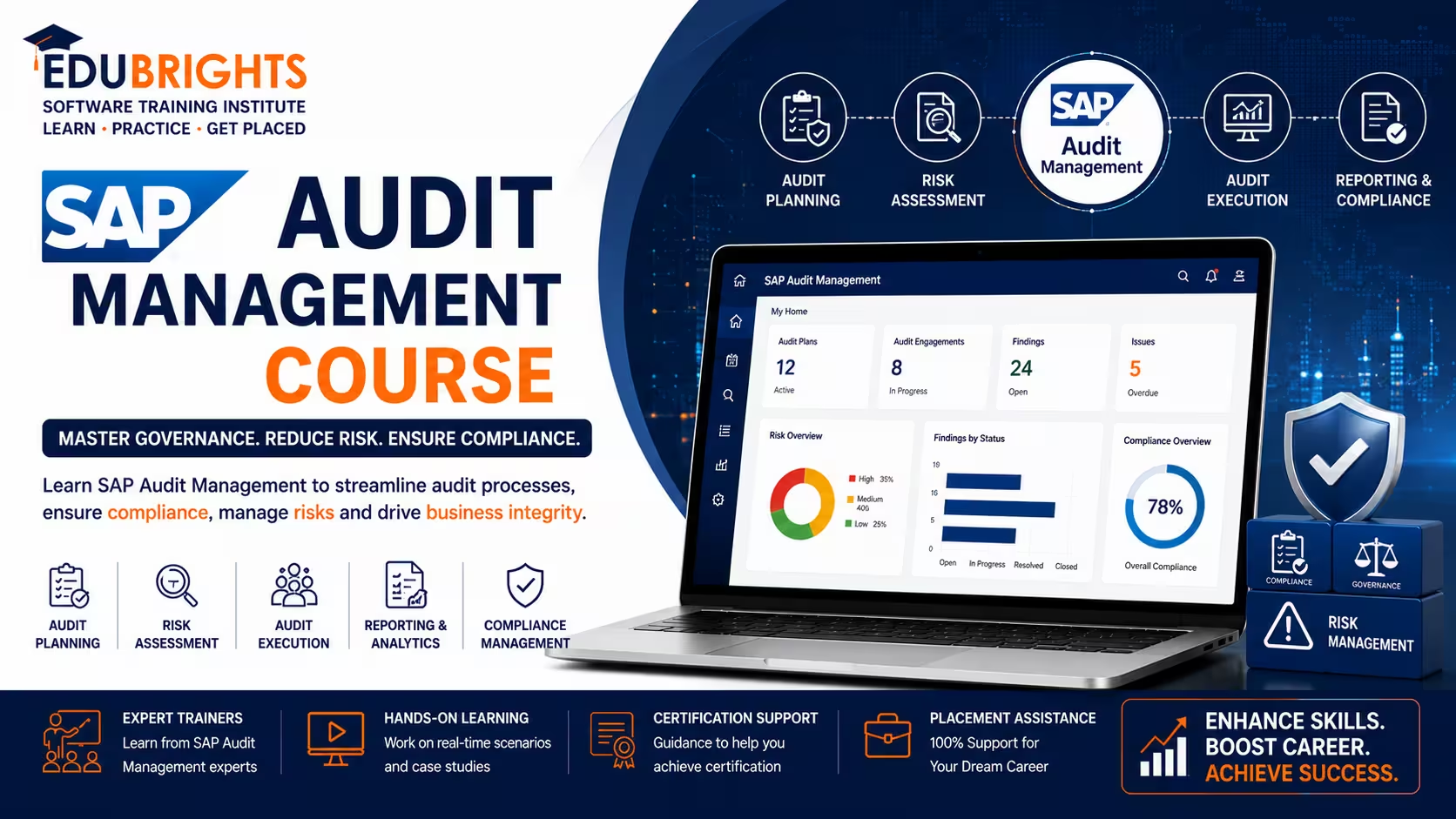
Course Objectives
1. What will I learn by taking the SAP Audit Management course in Bangalore?
You'll build a solid understanding of the core concepts, terminology, and fundamentals of SAP Audit Management, giving you a strong foundation to build on.
2. What hands-on skills will I gain from the SAP Audit Management training?
You'll get hands-on experience with industry-relevant SAP Audit Management tools and workflows through guided exercises, so you learn by doing rather than just reading theory.
3. How does the SAP Audit Management course prepare me for real-world work?
The SAP Audit Management course is designed around how SAP Audit Management is actually applied to solve real-world problems in professional settings, not just textbook scenarios.
4. What practical, job-ready skills will I build during SAP Audit Management training in Bangalore?
You'll develop the practical skills needed to confidently work with SAP Audit Management on the job, so you're ready to contribute from day one in a SAP Audit Management role.
5. Will I work on real projects during the SAP Audit Management course?
Yes, the SAP Audit Management course includes real-time projects and case studies that reinforce concepts through practice, giving you portfolio-ready work by the end.
6. How does the SAP Audit Management course help with certification and job interviews?
The SAP Audit Management course is structured to help you prepare for relevant certifications and interviews, covering the concepts and terminology employers and exam boards expect.
Popular Techniques Covered in This Course
Governance, Risk & Compliance (GRC)
Internal Control Evaluation
Audit Reporting
Audit Workflow Management
Compliance Monitoring
Findings Management
SAP Audit Management Fundamentals
Audit Planning
Risk Assessment
Audit Execution Techniques
Get Hands-on Knowledge about Real-Time Projects
Project 1
1. Internal Audit Planning and Execution Project
Develop a complete internal audit plan for a business department using SAP Audit Management. The project covers audit scheduling, resource allocation, audit scope definition, execution tracking, and audit documentation. Learners gain practical experience in managing the entire audit lifecycle.
Project 2
2. Risk-Based Audit Assessment Project
Develop a complete internal audit plan for a business department using SAP Audit Management. The project covers audit scheduling, resource allocation, audit scope definition, execution tracking, and audit documentation. Learners gain practical experience in managing the entire audit lifecycle.
Project 3
3. Audit Findings and Corrective Action Management Project
Design and manage audit findings generated during audit activities. The project involves documenting observations, assigning corrective actions, tracking remediation status, and generating follow-up reports. This helps learners understand issue resolution and compliance monitoring processes.
Project 4
4. Regulatory Compliance Audit Project
Conduct a compliance audit to evaluate adherence to organizational policies and industry regulations. The project includes compliance checks, evidence collection, control validation, audit reporting, and recommendations for improvement. Learners gain hands-on experience in regulatory audit management.
Project 5
5. Enterprise Audit Reporting Dashboard Project
Build an audit reporting and analytics dashboard using SAP Audit Management data. The project focuses on audit status tracking, risk visualization, findings analysis, compliance metrics, and executive-level reporting. Participants learn how audit insights support business decision-making and governance initiatives.
Key Features
Edubrights offers SAP Audit Management in virtual mode with expert trainers. Here are the key features
100% Job Oriented Training
Industry Expert Faculties
Free Demo Class Available
Completed 500+ Batches
Certification Guidance
40 Hours Course Duration
Curriculum
Module 1: Introduction to SAP Audit Management
- Overview of SAP Audit Management
- Audit management within SAP GRC suite
- Internal audit standards: IIA, ISO 19011
- Integration with Risk Management and Process Control
- SAP Audit Management architecture
Module 2: Audit Universe and Planning
- Audit universe setup
- Auditable entity configuration
- Annual audit plan creation
- Risk-based audit prioritization
- Audit plan approval workflow
Module 3: Audit Engagement Management
- Audit engagement creation
- Engagement team assignment
- Audit scope and objectives definition
- Opening meeting and kickoff
- Audit timeline and milestone management
Module 4: Audit Fieldwork
- Audit program and work program steps
- Working papers and evidence management
- Interview and observation documentation
- Control testing in fieldwork
- Issue identification and documentation
Module 5: Audit Issue Management
- Issue classification and rating
- Root cause analysis
- Recommendation creation
- Management response tracking
- Issue escalation workflow
Module 6: Audit Reporting
- Draft report generation
- Review and approval workflow
- Final audit report issuance
- Executive summary and findings
- Distribution list management
Module 7: Follow-Up and Remediation
- Remediation action assignment
- Action due date monitoring
- Evidence upload for closed actions
- Follow-up audit planning
- Overdue action escalation
Module 8: Continuous Auditing
- Automated control monitoring
- Data analytics integration
- Continuous monitoring dashboards
- Exception-based audit triggering
- Integration with SAP HANA analytics
Module 9: Audit Analytics and Reporting
- Audit KPIs and metrics
- Audit completion rates
- Issue aging and resolution reports
- Trend analysis dashboards
- Board-level audit reporting
Module 10: Configuration and Administration
- Audit Management SPRO configuration
- Custom fields and forms
- Workflow configuration (BRF+)
- Authorization management
- System integration setup
Module 11: SAP Audit Management in Cloud
- Cloud-based audit management
- Integration with SAP BTP
- Mobile audit execution
- Collaboration with external auditors
Module 12: Real-Time Projects and Case Studies
- Internal audit department implementation
- Financial audit scenarios
- End-to-end Audit Management cycle
- Certification and interview preparation
Receive Training From Our Skilled and Effective Trainers
Learn from Experienced SAP Audit Management Consultants
Gain practical expertise from experienced SAP Audit Management consultants who have successfully delivered enterprise SAP Audit Management implementation, governance, risk, compliance (GRC), internal audit, regulatory compliance, and audit transformation projects across corporate, consulting, product-based, and multinational organizations. Learn real-world audit methodologies, risk assessment techniques, compliance processes, and best practices used by global enterprises.
Industry Exposure with Enterprise Governance, Risk & Compliance Projects
Our SAP Audit Management trainers have worked on real-world implementations across banking, financial services, manufacturing, retail, healthcare, energy, telecommunications, public sector, logistics, and pharmaceutical industries. Learn industry best practices for Internal Audit, Risk Management, Compliance Management, Audit Planning, Audit Execution, Control Testing, Issue Management, Corrective Actions, Audit Reporting, and enterprise governance frameworks.
Simple, Practical & Business-Oriented Teaching Approach
Core SAP Audit Management concepts are explained through structured lessons, live demonstrations, audit lifecycle scenarios, compliance workflows, risk assessment exercises, audit planning, control evaluation, findings management, and real-world business case studies. This practical approach helps both beginners and working professionals understand how SAP Audit Management supports enterprise governance and regulatory compliance.
Hands-On Real-Time SAP Audit Management Projects
Develop job-ready expertise through guided labs, practical assignments, and enterprise projects covering SAP Audit Management configuration, audit planning, audit universe management, audit scheduling, risk assessment, workpapers, control testing, findings management, issue tracking, corrective action management, audit reporting, compliance monitoring, SAP GRC integration, analytics, dashboards, and end-to-end SAP Audit Management implementation projects.
Updated with the Latest SAP Governance & Compliance Technologies
Our curriculum is continuously updated with the latest SAP Audit Management, SAP Governance, Risk & Compliance (SAP GRC), SAP S/4HANA, enterprise risk management frameworks, regulatory compliance standards, internal control methodologies, AI-powered audit analytics, continuous auditing, governance best practices, and digital audit transformation strategies. This ensures learners develop practical, certification-ready, and industry-relevant SAP Audit Management skills that are highly valued by organizations worldwide.
Succeed Our Resourceful Certification
The SAP Audit Management Certification validates your skills in audit planning, risk assessment, compliance monitoring, and audit reporting using SAP solutions. It demonstrates your ability to support governance, risk, and compliance (GRC) processes in organizations. This certification enhances your professional credibility and prepares you for audit and compliance-related SAP roles.
Course FAQs
1. What is SAP Audit Management?
SAP Audit Management is an SAP solution for managing internal audit processes throughout the audit lifecycle. It supports audit planning, preparation, execution, findings management, reporting, and follow-up activities.
2. What are the main phases of SAP Audit Management?
The main audit lifecycle includes planning, preparation, execution, reporting, and follow-up. SAP Audit Management provides functions for managing activities and information across these phases.
3. What is the Audit Universe in SAP Audit Management?
The Audit Universe is a repository of auditable items within an organization. Auditable items can represent processes, activities, organizational areas, programs, or other entities that can be subject to audit.
4. What is an auditable item in SAP Audit Management?
An auditable item represents an entity that can be audited. It can be associated with risks and dimensions and can subsequently be assigned to audits or audit plans after the required lifecycle processing.
5. What is risk-based auditing in SAP Audit Management?
Risk-based auditing prioritizes audit activities according to identified risks and their significance. SAP Audit Management supports associating risks with auditable items and using them when developing audit plans and determining audit scope.
6. What are risks in SAP Audit Management?
Risks represent potential events or conditions that may negatively affect organizational objectives. Risk information can be used during audit planning and risk-based audit prioritization.
7. What are controls in SAP Audit Management?
Controls represent mechanisms or activities designed to reduce or manage identified risks. SAP Audit Management maintains control information that can be used during risk-based auditing and control testing.
8. What are dimensions in SAP Audit Management?
Dimensions provide additional organizational or classification information for audit planning and analysis. They can help categorize and structure auditable items, risks, audits, and other audit information.
9. What is an audit plan?
An audit plan defines the audit scope for a particular period and can include risks, auditable items, processes, organizations, and other dimensions. It also supports determining resources, budget, and timelines for planned audits.
10. What is the difference between rolling and non-rolling audit plans?
A rolling audit plan can be continuously adapted to changing audit requirements and can carry unfinished audits into a successor plan. A non-rolling plan generally has a fixed period and scope.
11. What is an audit plan group?
An audit plan group provides a higher-level structure for organizing audit plans. In a two-level planning approach, risks can be selected at the group level and then distributed into individual audit plans.
12. What is one-level and two-level audit planning?
In one-level planning, audit plans are created directly. In two-level planning, an audit plan group is created first and then divided into individual audit plans.
13. How is an audit plan submitted and released?
An audit plan can be submitted for review through the configured workflow and subsequently released when it is ready for execution. SAP provides workflow-based status processing for audit plans.
14. What is audit prioritization?
Audit prioritization determines which risks, processes, or auditable items should receive audit attention first. Risk information, organizational importance, audit history, and defined planning criteria can be considered when establishing priorities.
15. What is an audit engagement?
An audit engagement represents a specific audit activity created to examine a defined scope, process, risk, or organizational area. It contains information needed to execute and document the audit.
16. How is an audit created in SAP Audit Management?
An audit can be created from an audit plan or directly without an audit plan. The audit is then prepared and initiated according to the configured audit lifecycle and workflow.
17. What is audit initiation?
Audit initiation starts the execution lifecycle of a specific audit. After an audit is initiated, it proceeds into the preparation phase where detailed audit activities and work programs can be prepared.
18. What is an audit scope?
Audit scope defines the boundaries and areas that will be examined during an audit. It can include specific processes, organizational units, risks, controls, periods, or other auditable dimensions.
19. What is an audit objective?
An audit objective describes what the audit is intended to evaluate or verify. Objectives help auditors define the purpose, scope, procedures, evidence requirements, and expected audit results.
20. What is an audit work program?
An audit work program defines the detailed procedures and activities that auditors perform during fieldwork. It can contain work program steps, assignments, responsibilities, and documentation requirements.
21. What are work packages in SAP Audit Management?
Work packages divide audit work into specific tasks or areas of responsibility. They can be assigned to responsible users so that individual audit activities can be planned, performed, and reviewed.
22. What is audit fieldwork?
Audit fieldwork is the execution stage where auditors perform audit procedures and collect supporting evidence. It can include interviews, observations, control testing, document reviews, and other audit activities.
23. What are working papers in SAP Audit Management?
Working papers contain documentation supporting the audit procedures and conclusions. SAP Audit Management supports creating, editing, reviewing, and managing working papers throughout the audit lifecycle.
24. How is audit evidence managed in SAP Audit Management?
Audit evidence can be documented and associated with audit activities or working papers. Evidence supports the auditor's evaluation, findings, conclusions, and final audit report.
25. What is control testing in SAP Audit Management?
Control testing evaluates whether defined controls are designed and operating as expected. Auditors can document testing procedures, evidence, observations, and results as part of audit fieldwork.
26. What is a control test result?
A control test result records the outcome of testing a particular control. The result can contribute to identifying deficiencies, generating findings, and determining required corrective actions.
27. What is an audit finding?
An audit finding documents an issue, deficiency, or observation identified during audit work. Findings can contain information such as criteria, condition, cause, consequence, and recommendation.
28. What is finding classification?
Finding classification organizes audit findings according to configured categories or types. Classification helps auditors analyze findings consistently and supports reporting and follow-up activities.
29. What is finding rating in SAP Audit Management?
Finding rating represents the assessed significance or severity of an identified audit issue according to configured organizational criteria. Ratings can help prioritize remediation and management attention.
30. What is an action plan in SAP Audit Management?
An action plan defines the corrective activities required to address an audit finding. It can include action details, responsibilities, deadlines, status information, and follow-up requirements.
31. What are action plan workflows?
Action plan workflows control the lifecycle of corrective actions from creation and submission through processing and completion. SAP provides predefined action-plan statuses such as Draft, Submitted, Open, In Process, Completed, and Follow-Up Required.
32. What is audit issue management?
Audit issue management involves documenting identified issues, assigning responsibility, defining corrective actions, tracking progress, and monitoring remediation. It helps connect audit findings with follow-up activities.
33. How does SAP Audit Management support remediation tracking?
Remediation tracking monitors the progress of corrective actions associated with findings. Auditors and responsible users can follow action-plan statuses and determine whether additional follow-up is required.
34. What is audit follow-up?
Audit follow-up verifies whether findings and associated action plans have been adequately addressed. It helps auditors determine whether corrective actions are completed and whether additional audit activity is required.
35. What is audit reporting in SAP Audit Management?
Audit reporting converts audit results, findings, action plans, and supporting information into formal audit reports. SAP provides predefined report templates for generating audit reports in formats such as Word and PDF.
36. What information can be included in an audit report?
An audit report can contain audit information, executive summaries, findings, recommendations, action plans, and other configured audit results. Interactive report templates can also support editing findings and action plans before synchronization with the SAP system.
37. What are audit report templates?
Audit report templates provide predefined structures for generating standardized audit reports. SAP Audit Management includes templates for online report generation and interactive report scenarios.
38. What is an interactive audit report?
An interactive audit report allows authorized users to work with draft findings and action plans outside the core application and synchronize supported changes back to SAP Audit Management. This can support offline review and editing activities.
39. How does SAP Audit Management support audit workflow?
SAP Audit Management uses configurable status schemas and workflows for activities such as audit plans, preparation, findings, reports, and action plans. Workflow processing helps control review, approval, release, and completion steps.
40. What are audit statuses in SAP Audit Management?
Audit statuses represent the current state of an audit or related audit object within its lifecycle. Statuses help control which activities can be performed and indicate progress from planning through completion and follow-up.
41. How does authorization work in SAP Audit Management?
Authorization controls access to audit information and activities according to user roles and permissions. For example, access to the Audit Universe and the ability to maintain auditable items requires the appropriate authorizations.
42. What is SAP Audit Management architecture?
SAP Audit Management consists of application functions for audit planning, preparation, execution, reporting, and follow-up together with master data such as risks, controls, dimensions, and organizational information. Its architecture can integrate with SAP governance, risk, and compliance environments.
43. How does SAP Audit Management integrate with SAP GRC?
SAP Audit Management can work with SAP GRC-related risk and control processes to support risk-based auditing and governance activities. Integration can help auditors use relevant risk and control information during audit planning and execution.
44. How does SAP Audit Management integrate with Risk Management?
Risk information can be used to support risk-based audit planning and prioritization. SAP Audit Management can associate auditable items with risks so that audit coverage can be planned according to organizational risk exposure.
45. How does SAP Audit Management integrate with Process Control?
Process Control manages business controls and compliance-related activities, while Audit Management focuses on audit planning and execution. Integration between governance and audit processes can provide auditors with relevant control information for audit activities.
46. What is audit resource management?
Audit resource management involves planning and assigning people and other resources required for audit activities. Resource planning can consider auditor availability, workload, required skills, timelines, and planned audit scope.
47. How does SAP Audit Management support audit scheduling?
Audit scheduling helps organizations plan when audits should be performed and how they fit within an audit period. Audit plans can define timelines, scope, resources, and budget requirements for planned audit activities.
48. What technical configuration areas are important in SAP Audit Management?
Important configuration areas include audit plan types, workflows, status schemas, roles and authorizations, master data, audit dimensions, risks, controls, report templates, and audit lifecycle settings. Proper configuration determines how audit processes operate within the SAP environment.
49. What practical projects can be covered in SAP Audit Management training?
Practical projects can include Audit Universe and Annual Audit Planning, Risk-Based Audit Planning, Audit Engagement and Fieldwork Management, Audit Findings and Corrective Action Management, Regulatory Compliance Auditing, and Enterprise Audit Reporting Dashboard development. These projects reflect the planning, execution, findings, compliance, and reporting areas included in the Edubrights curriculum.
50. What technical skills can I gain from SAP Audit Management training in Bangalore?
SAP Audit Management training can help develop skills in Audit Universe management, risk-based auditing, audit planning, audit scheduling, audit engagement management, work programs, working papers, evidence management, control testing, findings management, action plans, remediation tracking, audit reporting, workflow management, SAP GRC integration, and governance and compliance processes.
Get Training Quote for Free
Testimonials
Hear What our Students say
"Transform your life through Education, hear it from our Alumni"

8 LPA
Rahul
Student
Data Scientist
"Transform your life through Education, hear it from our Alumni"

6 LPA
Fathima
Student
Software Engineer
"Transform your life through Education, hear it from our Alumni"

8 LPA
Siddharth
NIELSON IQ
Data Analyst