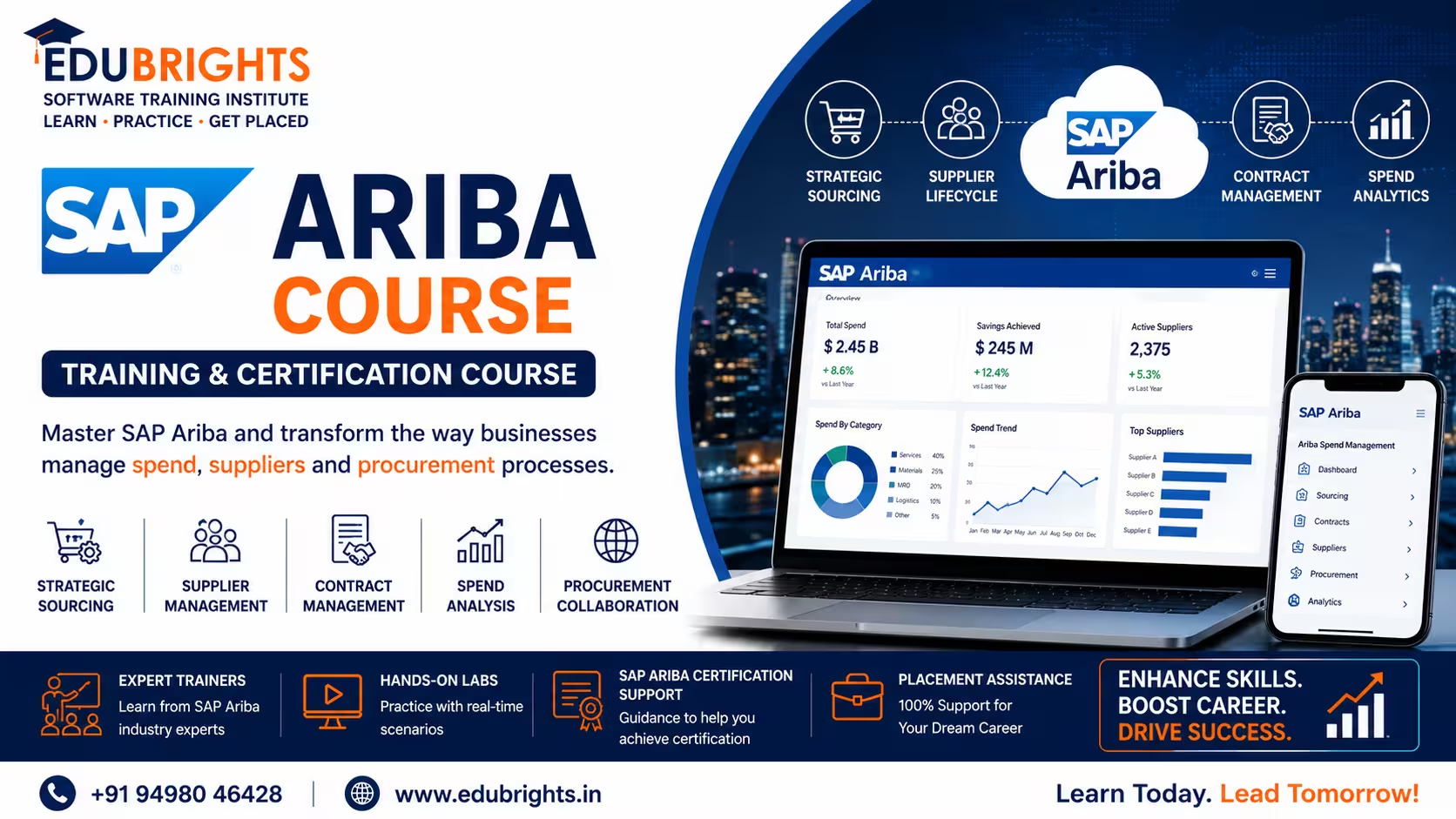
Course Objectives
1. What will I learn by taking the SAP Ariba course in Bangalore?
You'll build a solid understanding of the core concepts, terminology, and fundamentals of SAP Ariba, giving you a strong foundation to build on.
2. What hands-on skills will I gain from the SAP Ariba training?
You'll get hands-on experience with industry-relevant SAP Ariba tools and workflows through guided exercises, so you learn by doing rather than just reading theory.
3. How does the SAP Ariba course prepare me for real-world work?
The SAP Ariba course is designed around how SAP Ariba is actually applied to solve real-world problems in professional settings, not just textbook scenarios.
4. What practical, job-ready skills will I build during SAP Ariba training in Bangalore?
You'll develop the practical skills needed to confidently work with SAP Ariba on the job, so you're ready to contribute from day one in a SAP Ariba role.
5. Will I work on real projects during the SAP Ariba course?
Yes, the SAP Ariba course includes real-time projects and case studies that reinforce concepts through practice, giving you portfolio-ready work by the end.
6. How does the SAP Ariba course help with certification and job interviews?
The SAP Ariba course is structured to help you prepare for relevant certifications and interviews, covering the concepts and terminology employers and exam boards expect.
Popular Techniques Covered in This Course
Strategic Sourcing and Supplier Collaboration
SAP Ariba Integration with SAP ERP/S4HANA
SAP Ariba Network Management
Procurement Process Automation
Spend Analysis and Reporting
Supplier Onboarding and Qualification
Contract Management
Supplier Lifecycle and Performance (SLP)
SAP Ariba Buying and Invoicing
SAP Ariba Sourcing
Get Hands-on Knowledge about Real-Time Projects
Project 1
Project 1: Digital Procurement Automation
Implement SAP Ariba Buying and Invoicing to automate procurement requests, approvals, purchase orders, and invoices.
Project 2
Project 2: Supplier Onboarding and Qualification System
Configure Supplier Lifecycle and Performance (SLP) to streamline supplier registration, qualification, and compliance management.
Project 3
Project 3: Strategic Sourcing and Supplier Selection
Develop sourcing events, RFQs, and supplier bidding processes to improve vendor selection and reduce procurement costs.
Project 4
Project 4: Contract Lifecycle Management
Implement SAP Ariba Contracts to manage contract creation, approvals, renewals, and compliance monitoring.
Project 5
Project 5: SAP Ariba and SAP S/4HANA Integration
Configure integration between SAP Ariba and SAP S/4HANA for seamless procurement, supplier, and financial data synchronization.
Key Features
Edubrights offers SAP Ariba in virtual mode with expert trainers. Here are the key features,
40 Hours Course Duration
100% Job Oriented Training
Industry Expert Faculties
Free Demo Class Available
Completed 500+ Batches
Certification Guidance
Curriculum
Module 1: Introduction to SAP Ariba
- Overview of SAP Ariba procurement suite
- Ariba Network and its ecosystem
- Ariba modules: Sourcing, Procurement, Contracts, Supplier Management
- Integration with SAP S/4HANA and ECC
- Ariba implementation methodology and SAP Activate
Module 2: Ariba Procurement (Buying)
- Guided buying and self-service procurement
- Purchase requisition creation
- Shopping cart and catalog ordering
- Approval workflow configuration
- Purchase order creation and transmission
Module 3: Ariba Catalog Management
- Supplier catalog types: CIF, PunchOut (OCI)
- Catalog upload and validation
- Catalog approval and publishing
- Category-based catalog management
- Hosted catalog vs. PunchOut catalog
Module 4: Ariba Sourcing
- RFI, RFP, RFQ creation and management
- Event templates and configuration
- Supplier invitation and participation
- Bid evaluation and comparison
- Award scenarios and optimization
Module 5: Ariba Contract Management
- Contract workspace creation
- Contract templates and clauses
- Contract negotiation workflow
- Contract compliance monitoring
- Contract renewal and expiry management
Module 6: Ariba Invoice Management
- Invoice submission by suppliers
- Invoice matching: 2-way and 3-way
- Invoice approval workflow
- Exception handling and dispute management
- Integration with FI accounts payable
Module 7: Ariba Supplier Management
- Supplier registration and qualification
- Supplier profile and scorecard
- Supplier risk assessment
- Preferred supplier management
- Supplier performance evaluation
Module 8: Ariba Network
- Ariba Network connectivity
- Supplier enablement and onboarding
- Transaction processing on Ariba Network
- Network transaction fees and billing
- Ariba Network integration with S/4HANA
Module 9: Spend Analysis
- Spend data aggregation and cleansing
- Spend classification and categorization
- Spend visibility dashboards
- Maverick spend identification
- Category spend analysis
Module 10: Ariba Integration with S/4HANA
- SAP Ariba integration framework
- Integration scenarios: PR, PO, GR, Invoice
- Integration middleware: CIG (Cloud Integration Gateway)
- Master data synchronization
- Error handling and monitoring
Module 11: Ariba Analytics and Reporting
- Standard Ariba reports
- Procurement KPI dashboards
- Savings tracking and reporting
- Supplier performance reports
- Integration with SAP Analytics Cloud
Module 12: Real-Time Projects and Case Studies
- Enterprise-wide procurement transformation
- Supplier onboarding and network enablement
- End-to-end Ariba procurement cycle
- Certification and interview preparation
Receive Training From Our Skilled and Effective Trainers
Experience in the Industry Gain expertise from SAP Ariba professionals training in Bangalore who have applied their skills on live projects across corporate, product, and consulting environments, bringing practical, real-world context into every SAP Ariba session.
Backgrounds at the Top Our SAP Ariba trainers in Bangalore bring hands-on industry experience, having worked on real SAP Ariba projects for organizations across various industries before moving into training.
Clear & Effective Teaching Core SAP Ariba concepts, tools, and workflows are explained using real project examples and practical scenarios, so you understand not just the theory but how SAP Ariba is actually used on the job.
Hands-On Learning Focus Students get structured, hands-on practice with SAP Ariba through guided exercises, mini-projects, and lab work designed to build practical, job-ready skills.
Up-to-Date Knowledge Trainers keep the SAP Ariba curriculum current with the latest tools, versions, and industry best practices, so what you learn stays relevant to how SAP Ariba is used today in Bangalore and beyond.
Succeed Our Resourceful Certification
Our institution provides a recognized SAP Ariba certification program designed to confirm your skills in managing digital procurement processes and enabling effective collaboration across supply chains. This certification helps strengthen your professional credentials and prepares you to handle procurement, sourcing, and supplier management tasks in real business environments. The course emphasizes practical learning through hands-on training sessions and industry-focused assessments. Throughout the program, you will gain in-depth knowledge of procurement workflows, supplier lifecycle management, and cloud-based sourcing solutions within SAP Ariba. Training is centered on real-world use cases, allowing you to practice configuring processes, managing supplier relationships, and interpreting procurement data. By completing this course, you will be well prepared to help organizations streamline purchasing operations and enhance visibility across their supply chains.

Course FAQs
1. What is SAP Ariba?
SAP Ariba is a cloud-based procurement and spend management platform that supports purchasing, sourcing, supplier management, contracts, invoicing, and supplier collaboration. It connects procurement organizations with suppliers through SAP Business Network.
2. What are the main components of SAP Ariba?
The major SAP Ariba solution areas include SAP Ariba Buying, SAP Ariba Sourcing, SAP Ariba Contracts, SAP Ariba Supplier Lifecycle and Performance, SAP Ariba Spend Analysis, SAP Ariba Invoice Management, and SAP Business Network.
3. What is SAP Ariba Buying?
SAP Ariba Buying supports operational procurement processes such as purchase requisitions, catalog shopping, approvals, purchase orders, receiving, and invoice-related activities. It helps organizations implement controlled and policy-driven purchasing processes.
4. What is Guided Buying in SAP Ariba?
Guided Buying provides a user-friendly procurement interface that directs employees toward approved catalogs, suppliers, forms, and purchasing channels. It can help organizations improve compliance with procurement policies.
5. What is self-service procurement in SAP Ariba?
Self-service procurement allows employees to search for goods or services, select approved purchasing options, create requests, and submit them for approval. The process can be controlled through configurable procurement rules and workflows.
6. What is a purchase requisition in SAP Ariba?
A purchase requisition represents a request to procure goods or services. Depending on configuration, it can contain accounting information, line items, supplier information, pricing, and other purchasing details before proceeding through approval and ordering processes.
7. What is a shopping cart in SAP Ariba?
A shopping cart contains products or services selected by a requester for procurement. Users can add catalog items and other permitted items before submitting the cart for validation and approval.
8. How do approval workflows work in SAP Ariba?
Approval workflows route procurement documents to designated approvers based on configured business rules. Conditions can include amount, commodity, requester, cost center, purchasing organization, accounting information, or other document attributes.
9. What is SAP Ariba Catalog?
SAP Ariba Catalog provides structured product and service information for procurement users. Catalog records can contain supplier details, descriptions, prices, units of measure, categories, and other purchasing information.
10. What is the difference between hosted and PunchOut catalogs?
A hosted catalog contains catalog information maintained within the procurement environment, while a PunchOut catalog connects the buyer to a supplier's external catalog or e-commerce system. PunchOut enables users to shop on the supplier site and return the selected cart to SAP Ariba.
11. What is a PunchOut catalog?
A PunchOut catalog provides a connection between the procurement application and a supplier-hosted shopping environment. The user shops on the supplier site and returns the selected items to SAP Ariba for procurement processing.
12. What is catalog validation?
Catalog validation checks whether catalog data meets required formatting, field, value, pricing, and procurement rules. It helps prevent incomplete or invalid catalog information from being used during purchasing.
13. What is SAP Ariba Sourcing?
SAP Ariba Sourcing supports strategic sourcing activities such as supplier discovery, RFI, RFP, RFQ, auctions, bid evaluation, negotiation, and supplier awards. It helps procurement teams manage competitive sourcing events electronically.
14. What is an RFI in SAP Ariba Sourcing?
A Request for Information (RFI) is used to collect information from potential suppliers. It can be used to evaluate supplier capabilities, products, services, technical information, and other requirements before a formal sourcing event.
15. What is an RFP in SAP Ariba Sourcing?
A Request for Proposal (RFP) requests detailed supplier proposals for a specific procurement requirement. Supplier responses can contain commercial, technical, service, and other information that buyers can evaluate.
16. What is an RFQ in SAP Ariba Sourcing?
A Request for Quote (RFQ) is used to request pricing and commercial information from suppliers. Buyers can compare supplier quotations and use the results during supplier selection and award processes.
17. What are sourcing event templates?
Sourcing event templates provide reusable configurations for creating sourcing events. Templates can contain predefined questions, requirements, rules, terms, scoring criteria, and other event settings.
18. How does supplier bidding work in SAP Ariba Sourcing?
Suppliers invited to a sourcing event can submit responses through the configured bidding process. Buyers can review, compare, score, and evaluate responses according to the event configuration.
19. What is bid evaluation in SAP Ariba?
Bid evaluation involves analyzing supplier responses against predefined commercial, technical, quality, or other sourcing criteria. Evaluation results can support the supplier award decision.
20. What is supplier award in SAP Ariba Sourcing?
A supplier award identifies the supplier or suppliers selected after evaluating sourcing-event responses. Award information can subsequently support contract creation or procurement processes.
21. What is SAP Ariba Contracts?
SAP Ariba Contracts supports contract lifecycle activities including contract creation, review, negotiation, approval, execution, compliance, renewal, and expiration management.
22. What is a contract workspace?
A contract workspace provides a structured environment for managing contract documents, metadata, tasks, approvals, team members, and related contract activities.
23. What are contract templates in SAP Ariba?
Contract templates provide predefined structures for creating contracts. They can include standardized fields, document structures, clauses, approval requirements, and other contract information.
24. What are clauses in SAP Ariba Contracts?
Clauses are reusable contractual terms that can be included in contract documents. Organizations can maintain standardized clauses to improve consistency during contract creation and negotiation.
25. How does contract approval work in SAP Ariba?
Contract approval routes documents through configured review and authorization steps. Approval rules can consider factors such as contract value, category, business unit, risk, or other organizational requirements.
26. What is contract compliance in SAP Ariba?
Contract compliance involves monitoring procurement activity against negotiated contract terms. It can help organizations determine whether purchases follow approved suppliers, pricing, quantities, and other contractual conditions.
27. What is SAP Ariba Supplier Lifecycle and Performance?
SAP Ariba Supplier Lifecycle and Performance (SLP) supports supplier registration, qualification, lifecycle management, evaluation, and performance processes. It helps procurement organizations manage supplier information and relationships systematically.
28. What is supplier registration in SAP Ariba?
Supplier registration is the process of collecting and establishing supplier information in the procurement environment. It can involve registration questionnaires, validation, approvals, and supplier data management.
29. What is supplier qualification?
Supplier qualification evaluates whether a supplier satisfies defined organizational, commercial, technical, compliance, or category-specific requirements. Qualification can use questionnaires, assessments, and approval processes.
30. What is supplier performance management?
Supplier performance management evaluates suppliers against defined performance indicators and assessment criteria. Procurement teams can use these results to monitor supplier relationships and identify performance issues.
31. What is supplier risk management?
Supplier risk management involves identifying, evaluating, and monitoring risks associated with suppliers. Risk information can be used alongside supplier lifecycle and procurement processes when assessing supplier relationships.
32. What is SAP Business Network?
SAP Business Network is a cloud-based business network that connects buyers and suppliers for collaboration and electronic transactions. It supports processes involving purchase orders, order confirmations, shipping notifications, invoices, and supplier relationships.
33. How does supplier onboarding work in SAP Business Network?
Supplier onboarding establishes the required relationship between buyers and suppliers. It can include supplier invitations, account setup, registration, trading relationships, transaction configuration, and enablement activities.
34. What is supplier enablement in SAP Ariba?
Supplier enablement prepares suppliers to conduct electronic transactions with buyers. Activities can include account configuration, catalog setup, document routing, transaction methods, and testing.
35. What is cXML in SAP Ariba?
cXML, or Commerce extensible Markup Language, is a structured document format used for exchanging procurement and business transaction information. SAP Business Network can receive, validate, route, and exchange supported cXML documents between trading partners.
36. What is SAP Ariba Invoice Management?
SAP Ariba Invoice Management supports electronic invoice processing, validation, matching, approval, reconciliation, and exception handling. Invoice workflows can connect suppliers, SAP Ariba applications, and backend systems.
37. What is two-way matching?
Two-way matching compares invoice information with purchase order information. The system can validate values such as quantities and prices according to configured matching rules.
38. What is three-way matching?
Three-way matching compares the purchase order, goods or service receipt, and supplier invoice. It helps determine whether the invoiced quantity and value correspond with what was ordered and received.
39. How are invoice exceptions handled in SAP Ariba?
Invoice exceptions occur when invoice information fails configured validation or matching rules. Depending on the workflow, the invoice can be routed for review, correction, approval, or exception resolution.
40. How does SAP Ariba integrate with SAP S/4HANA?
SAP Ariba can integrate with SAP S/4HANA for procurement, sourcing, supplier, contract, and invoice-related processes. Current SAP documentation includes integration scenarios for Guided Buying, SAP Ariba Buying and Invoicing, SAP Ariba Sourcing, and other procurement processes.
41. What is SAP Integration Suite, managed gateway for spend management and SAP Business Network?
It is SAP's managed integration capability for connecting SAP ERP and SAP S/4HANA environments with SAP Ariba solutions and SAP Business Network. It supports integration scenarios across procurement, sourcing, contracts, supplier management, catalogs, and invoicing.
42. What is the relationship between CIG and SAP Integration Suite, managed gateway?
SAP Ariba Cloud Integration Gateway (CIG) is the older terminology commonly used for SAP's managed integration capability. Current SAP documentation uses the name SAP Integration Suite, managed gateway for spend management and SAP Business Network for the relevant integration technology.
43. What master data can be integrated with SAP Ariba?
Depending on the integration scenario, master data can include suppliers, organizational information, purchasing data, and other procurement-related information. SAP also provides master-data integration mechanisms for SAP S/4HANA Cloud and SAP Ariba applications.
44. How are purchase orders exchanged through SAP Business Network?
A buyer's procurement system can generate an electronic purchase order and send it through SAP Business Network. The network can authenticate, validate, and route the document to the supplier according to the configured trading relationship and routing method.
45. How does SAP Ariba support spend analysis?
SAP Ariba Spend Analysis provides visibility into procurement spending by organizing and analyzing spend information. Procurement teams can use this information to examine categories, suppliers, purchasing patterns, and potential sourcing opportunities.
46. What is spend classification in SAP Ariba?
Spend classification organizes procurement transactions into standardized categories or classification structures. This makes it easier to analyze spending by commodity, supplier, category, business unit, or other dimensions.
47. What is maverick spend?
Maverick spend refers to purchasing outside approved procurement channels, contracts, catalogs, or supplier agreements. Spend analysis can help organizations identify these purchasing patterns and improve procurement compliance.
48. How does SAP Ariba support procurement analytics?
SAP Ariba provides analytical capabilities across areas such as procurement spend, sourcing, suppliers, contracts, purchasing, and performance. The available analytical content depends on the SAP Ariba solutions and configuration used by the organization.
49. How can SAP Ariba integration issues be monitored?
Integration monitoring helps identify failed messages, document-routing problems, synchronization issues, mapping problems, and other transaction errors. Administrators can investigate message status, validate configuration, and reprocess supported transactions where applicable. SAP provides integration and monitoring capabilities for connected SAP Ariba environments.
50. What technical skills can I gain from SAP Ariba training in Bangalore?
SAP Ariba training can help develop skills in Guided Buying, procurement workflows, catalog management, strategic sourcing, RFI/RFP/RFQ processes, supplier onboarding, Supplier Lifecycle and Performance, contract management, invoice matching, SAP Business Network, cXML, spend analysis, SAP S/4HANA integration, integration monitoring, and procurement analytics. These topics align with the technical and practical areas listed in the Edubrights SAP Ariba Bangalore curriculum.
Get Training Quote for Free
Testimonials
Hear What Our Students Say
"Transform your life through Education, hear it from our Alumni"

6 LPA
Fathima
Student
Software Engineer
"Transform your life through Education, hear it from our Alumni"

8 LPA
Rahul
Student
Data Scientist
"Transform your life through Education, hear it from our Alumni"

8 LPA
Siddharth
NIELSON IQ
Data Analyst