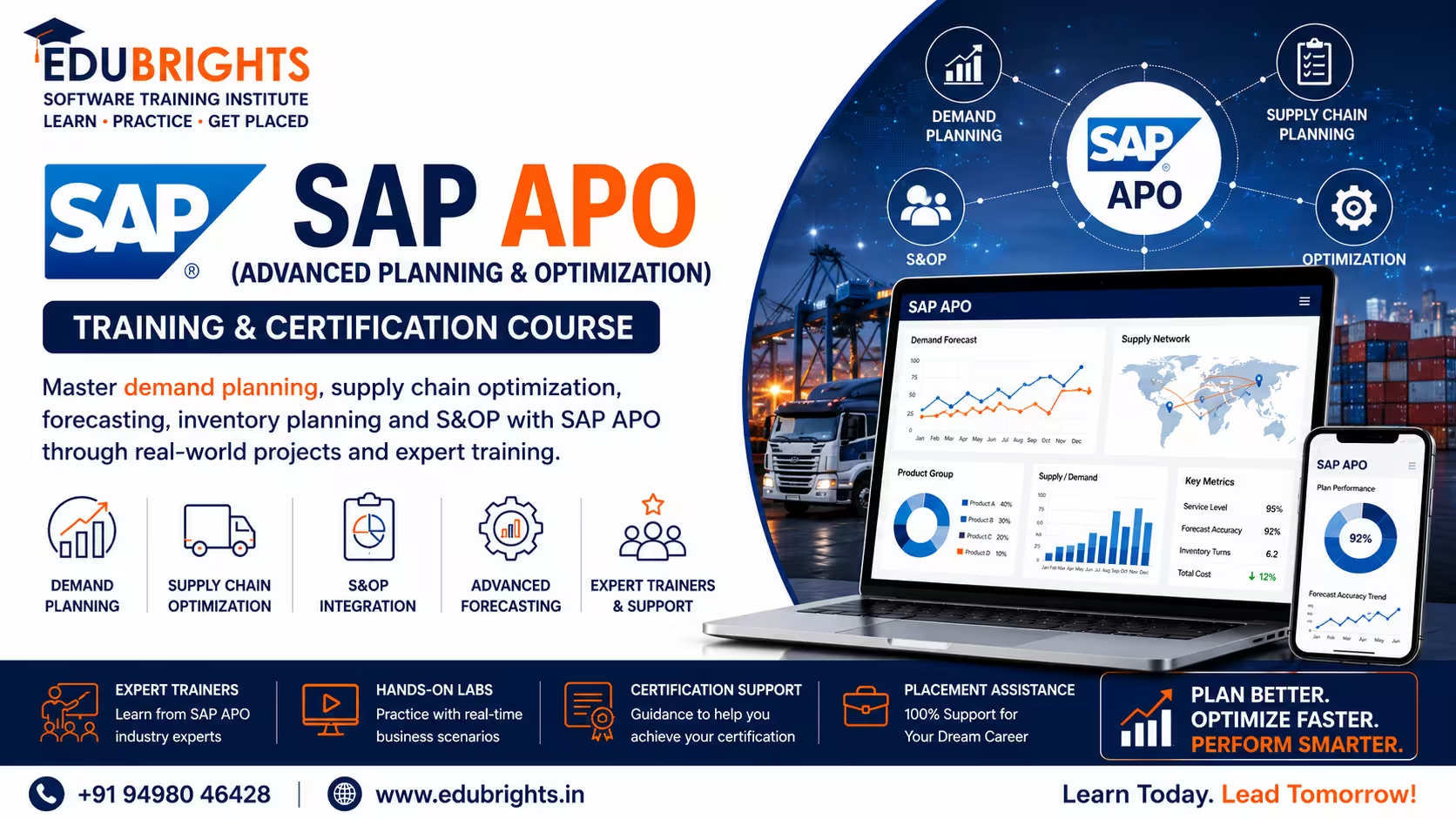
Course Objectives
1. What will I learn by taking the SAP APO (Advanced Planning & Optimization) course in Bangalore?
You'll build a solid understanding of the core concepts, terminology, and fundamentals of SAP APO (Advanced Planning & Optimization), giving you a strong foundation to build on.
2. What hands-on skills will I gain from the SAP APO (Advanced Planning & Optimization) training?
You'll get hands-on experience with industry-relevant SAP APO (Advanced Planning & Optimization) tools and workflows through guided exercises, so you learn by doing rather than just reading theory.
3. How does the SAP APO (Advanced Planning & Optimization) course prepare me for real-world work?
The SAP APO (Advanced Planning & Optimization) course is designed around how SAP APO (Advanced Planning & Optimization) is actually applied to solve real-world problems in professional settings, not just textbook scenarios.
4. What practical, job-ready skills will I build during SAP APO (Advanced Planning & Optimization) training in Bangalore?
You'll develop the practical skills needed to confidently work with SAP APO (Advanced Planning & Optimization) on the job, so you're ready to contribute from day one in a SAP APO (Advanced Planning & Optimization) role.
5. Will I work on real projects during the SAP APO (Advanced Planning & Optimization) course?
Yes, the SAP APO (Advanced Planning & Optimization) course includes real-time projects and case studies that reinforce concepts through practice, giving you portfolio-ready work by the end.
6. How does the SAP APO (Advanced Planning & Optimization) course help with certification and job interviews?
The SAP APO (Advanced Planning & Optimization) course is structured to help you prepare for relevant certifications and interviews, covering the concepts and terminology employers and exam boards expect.
Popular Techniques Covered in This Course
SAP ERP and APO Integration
Master Data Management
Capacity Planning and Scheduling
Forecasting Techniques
Supply Chain Optimization
Core Interface (CIF) Configuration
Global Available-to-Promise (GATP)
Production Planning & Detailed Scheduling (PP/DS)
Supply Network Planning (SNP)
SAP APO Demand Planning (DP)
Get Hands-on Knowledge about Real-Time Projects
Project 1
Project 1: Retail Demand Forecasting Solution
Implement SAP APO Demand Planning to forecast product demand across multiple retail locations and improve inventory availability.
Project 2
Project 2: Manufacturing Production Scheduling
Configure PP/DS to optimize production schedules, machine utilization, and manufacturing throughput.
Project 3
Project 3: Global Supply Network Optimization
Design SNP planning processes for multi-location supply chains to reduce transportation and inventory costs.
Project 4
Project 4: Inventory Reduction and Replenishment Planning
Develop planning models that maintain service levels while minimizing excess stock and warehouse expenses.
Project 5
Project 5: SAP APO Integration with SAP ERP
Configure CIF integration between SAP ERP and APO for seamless master data and transaction synchronization.
Key Features
Edubrights offers SAP APO (Advanced Planning & Optimization) in virtual mode with expert trainers. Here are the key features,
40 Hours Course Duration
100% Job Oriented Training
Industry Expert Faculties
Free Demo Class Available
Completed 500+ Batches
Certification Guidance
Curriculum
Module 1: Introduction to SAP APO
- Overview of SAP Advanced Planning and Optimization
- APO architecture and liveCache technology
- APO components: DP, SNP, PP/DS, GATP, TP/VS
- Integration with SAP R/3 and ECC via CIF
- APO vs. IBP: Transition and coexistence
Module 2: Core Interface (CIF)
- CIF architecture and data flow
- Integration models: Material, BOM, work center, order
- CIF monitoring and error handling
- Initial load and delta transfer
- Queue management in CIF
Module 3: Demand Planning (DP)
- Planning area and planning book setup
- Statistical forecasting: Exponential smoothing, Holt-Winters
- Consensus demand planning process
- Lifecycle planning and phase-in/phase-out
- Promotions and event management
- DP macros and background jobs
Module 4: Supply Network Planning (SNP)
- Supply network model and resources
- SNP heuristic planning
- SNP optimization (linear programming)
- Capable-to-match (CTM) planning
- Deployment heuristic
- Transport load builder (TLB)
Module 5: Production Planning / Detailed Scheduling (PP/DS)
- PP/DS data model: Orders, resources, operations
- PP/DS heuristics and algorithms
- Finite scheduling and sequencing
- Pegging and exception messages
- Planning board and alert monitor
- Integration with R/3 production orders
Module 6: Global Available-to-Promise (GATP)
- GATP architecture and check methods
- Product availability check (PAC)
- Rules-based ATP and product substitution
- Capable-to-promise (CTP)
- Multilevel ATP check
- Backorder processing in GATP
Module 7: Transportation and Vehicle Scheduling (TP/VS)
- Transportation planning overview in APO
- Vehicle scheduling optimization
- Routes and loading points
- Integration with R/3 shipment documents
Module 8: Alert Monitor
- Alert categories and configuration
- Alert monitor navigation
- Automated alert generation
- Alert response and resolution workflows
Module 9: Safety Stock Planning
- Safety stock methods in SNP
- Statistical and range-of-coverage methods
- Safety stock optimization
- Integration with MRP
Module 10: Reporting and Analytics in APO
- Interactive planning books
- Key figure analysis
- Forecast accuracy reports
- Supply chain cockpit
Module 11: APO Administration
- liveCache administration and monitoring
- APO system landscape
- Performance tuning
- Background job scheduling
Module 12: Real-Time Projects and Case Studies
- Consumer goods demand and supply planning
- Automotive supply network optimization
- End-to-end APO cycle implementation
- Migration planning to SAP IBP
- Certification and interview preparation
Receive Training From Our Skilled and Effective Trainers
Learn from Experienced SAP APO (Advanced Planning & Optimization) Consultants
Gain practical expertise from experienced SAP APO consultants with hands-on experience delivering SAP APO implementation, migration, rollout, support, and optimization projects for global enterprises. Learn industry best practices in Demand Planning (DP), Supply Network Planning (SNP), Production Planning and Detailed Scheduling (PP/DS), Global Available-to-Promise (GATP), Transportation Planning, Inventory Planning, Demand Forecasting, and enterprise Supply Chain Management (SCM) across manufacturing, retail, automotive, pharmaceuticals, consumer goods, and logistics industries.
Industry Exposure with Enterprise Supply Chain Projects
Our SAP APO trainers have successfully delivered enterprise SAP SCM APO solutions for organizations worldwide. Gain practical knowledge of Supply Chain Planning, procurement planning, capacity planning, production scheduling, inventory optimization, logistics execution, warehouse planning, distribution planning, forecasting, and end-to-end supply chain transformation using SAP APO.
Simple, Practical & Business-Oriented Teaching Approach
Complex SAP APO concepts are explained using step-by-step demonstrations, live system exercises, real business scenarios, interactive planning simulations, and enterprise use cases. Learn how leading organizations optimize demand forecasting, production planning, inventory management, supply network planning, procurement, logistics, and manufacturing operations using SAP APO.
Hands-On Real-Time SAP APO Projects
Build job-ready expertise through practical labs and enterprise projects covering SAP APO configuration, master data management, Demand Planning (DP), Supply Network Planning (SNP), Production Planning and Detailed Scheduling (PP/DS), Global Available-to-Promise (GATP), forecasting, inventory optimization, capacity planning, alert monitoring, CIF integration, reporting, supply chain analytics, and end-to-end SAP APO implementation projects.
Updated with the Latest SAP Supply Chain Technologies
Our curriculum is continuously updated with the latest SAP Supply Chain Management (SCM) innovations, SAP S/4HANA Supply Chain, SAP Integrated Business Planning (SAP IBP) concepts, digital supply chain strategies, AI-powered demand forecasting, advanced planning techniques, manufacturing optimization, logistics best practices, cloud-based supply chain solutions, and enterprise implementation standards. This ensures learners develop practical, industry-relevant, certification-ready, and job-oriented SAP APO skills that are highly valued by organizations worldwide.
You will succeed with our recognized certification
The Certified SAP APO (Advanced Planning & Optimization) Professional certification validates expertise in demand planning, supply network planning, production planning, scheduling, and supply chain optimization. It demonstrates the ability to configure SAP APO modules, integrate planning processes with SAP ERP systems, and implement real-world supply chain solutions. This certification enhances career opportunities in SAP consulting, logistics, manufacturing, and enterprise supply chain management.

Course FAQs
1. What is SAP APO?
SAP Advanced Planning and Optimization (SAP APO) is a supply-chain planning solution that supports demand planning, supply network planning, production planning and detailed scheduling, and global available-to-promise. It helps organizations coordinate demand, supply, production, inventory, and fulfillment processes.
2. What are the main components of SAP APO?
The major SAP APO components are Demand Planning (DP), Supply Network Planning (SNP), Production Planning and Detailed Scheduling (PP/DS), and Global Available-to-Promise (GATP). Each component addresses a different stage of supply-chain planning and execution.
3. What is Demand Planning (DP) in SAP APO?
Demand Planning is used to forecast future product demand based on historical demand and other relevant business factors. The resulting demand plan can be transferred to SNP or PP/DS for supply and production planning.
4. What is Supply Network Planning (SNP) in SAP APO?
Supply Network Planning is used to balance demand and supply across the entire supply network. It considers inventory, procurement, production, distribution, transportation, capacity, and sourcing relationships to create medium- and long-term supply plans.
5. What is PP/DS in SAP APO?
Production Planning and Detailed Scheduling (PP/DS) is used for detailed production planning and scheduling. It considers requirements, resources, components, order dates, and production constraints to create executable production plans.
6. What is Global Available-to-Promise (GATP) in SAP APO?
Global ATP performs availability checks to determine whether a requested product can be confirmed for a particular quantity and date. It supports methods such as Capable-to-Promise, Multilevel ATP, and Rules-Based ATP.
7. What is the difference between SAP APO DP and SNP?
DP primarily focuses on forecasting and demand planning, while SNP focuses on balancing supply and demand across the supply network. The demand plan created in DP can become an input for subsequent SNP planning.
8. How does Demand Planning integrate with Supply Network Planning?
Demand Planning generates planned demand, which can be released to downstream planning applications. SNP uses this demand together with supply, inventory, transportation, and capacity information to generate supply plans.
9. What is a planning area in SAP APO?
A planning area defines the data structure and scope used for planning activities. It provides the foundation for storing and processing planning information such as characteristics and key figures.
10. What are planning objects in SAP APO?
Planning objects represent combinations of characteristics used to organize planning data. Examples include product, location, customer, region, and other supply-chain dimensions.
11. What are key figures in SAP APO?
Key figures store quantitative planning information such as forecast, demand, inventory, receipts, capacity, and sales quantities. They are used in planning books, data views, forecasting, and planning calculations.
12. What is a planning book in SAP APO?
A planning book provides an interactive interface for viewing and maintaining planning data. Planners can work with characteristics, key figures, time buckets, and planning functions through planning books.
13. What are time buckets in SAP APO?
Time buckets divide the planning horizon into periods such as days, weeks, months, or other defined intervals. They allow planners to analyze and maintain planning data at different time levels.
14. What is statistical forecasting in SAP APO DP?
Statistical forecasting uses historical demand information and forecasting algorithms to estimate future demand. Forecast results can be reviewed and adjusted before being used in downstream planning.
15. What is forecast consumption in SAP APO?
Forecast consumption links actual customer requirements with forecast quantities. It helps prevent actual demand from being counted separately from the forecast when both represent the same expected demand.
16. What is forecast release in SAP APO?
Forecast release makes demand-planning results available to subsequent planning processes. Released planned independent requirements can be transferred to SNP or PP/DS according to the configured planning scenario.
17. What is an SNP planning run?
An SNP planning run calculates supply requirements using demand, inventory, sourcing, capacity, and other planning parameters. Depending on the planning method, it can generate procurement, production, distribution, or stock-transfer proposals.
18. What are heuristics in SAP APO?
Heuristics are planning algorithms used to generate or modify supply and production proposals according to predefined rules. They are commonly used in SNP and PP/DS planning scenarios.
19. What is optimization in SAP APO SNP?
SNP optimization evaluates possible supply plans against defined objectives and constraints. It can consider factors such as transportation costs, capacity, inventory, and supply-chain penalties.
20. What is deployment in SAP APO SNP?
Deployment determines how available supply should be distributed across locations or demand areas. It helps allocate available inventory or supply according to configured planning rules.
21. What is safety stock planning in SAP APO?
Safety stock planning determines inventory quantities required to protect against demand and supply uncertainty. It supports inventory planning by considering factors such as demand variability and replenishment requirements.
22. What is a transportation lane in SAP APO?
A transportation lane represents a possible movement of a product between two locations. It can contain information about source location, destination location, transportation mode, and planning-related parameters.
23. What is master data in SAP APO?
APO master data includes products, locations, resources, transportation lanes, production structures, and supply relationships. Correct master data is essential because planning algorithms depend on this information.
24. What is the SAP APO product master?
The APO product master contains planning-relevant information about products. It can include product identifiers, units of measure, planning parameters, and other attributes used by APO applications.
25. What is a location master in SAP APO?
A location represents a supply-chain entity such as a plant, warehouse, distribution center, supplier, or customer. Location master data contains information required for planning activities involving that location.
26. What is a resource in SAP APO?
A resource represents capacity used for production or other planning activities. Examples include machines, production lines, labor resources, and bottleneck capacities.
27. What is a Production Process Model (PPM) in SAP APO?
A Production Process Model defines production-related information used by APO planning. It can describe activities, components, resources, and production relationships needed for planning.
28. What is a Production Data Structure (PDS) in SAP APO?
A Production Data Structure contains production-related master data used as a source of supply in APO planning applications. PDS can support scenarios involving DP, SNP, CTM, and PP/DS.
29. What is detailed scheduling in SAP APO PP/DS?
Detailed scheduling determines the sequence and timing of production orders on resources. It considers resource availability, component availability, order dates, setup requirements, and other scheduling constraints.
30. What are PP/DS heuristics?
PP/DS heuristics are planning algorithms used to create or modify procurement and production proposals. They can be used to plan critical products and constrained production resources.
31. What is the PP/DS planning run?
The PP/DS planning run executes selected planning functions for products and resources. Depending on the configuration, it can use heuristics, scheduling functions, and other planning methods to create detailed production plans.
32. What is pegging in SAP APO PP/DS?
Pegging establishes relationships between requirements and corresponding receipts or stock elements. It helps planners understand which supply elements are associated with particular demand requirements.
33. What is Capable-to-Promise (CTP) in SAP APO?
Capable-to-Promise determines whether a requested quantity can be supplied by considering production and capacity capabilities. In relevant scenarios, PP/DS can be called to create or adjust supply to cover the requirement.
34. What is Multilevel ATP in SAP APO?
Multilevel ATP performs availability checking across multiple levels of a product structure or supply chain. It can evaluate component availability and related supply requirements when determining whether an order can be confirmed.
35. What is Rules-Based ATP in SAP APO?
Rules-Based ATP uses configured rules to determine alternative ways to fulfill a requirement. It can support substitution and alternative sourcing scenarios during availability checking.
36. What is Product Allocation in SAP APO?
Product allocation controls how available quantities are committed to defined demand segments such as customers, regions, channels, or other business categories. It helps manage limited supply according to predefined allocation rules.
37. What is Backorder Processing (BOP) in SAP APO?
Backorder Processing re-evaluates existing confirmations when supply or demand conditions change. It can reset and reallocate confirmations according to configured rules and priorities.
38. What is the Core Interface (CIF) in SAP APO?
The Core Interface (CIF) is used to integrate APO with connected ERP systems and transfer relevant master and transaction data. It is a key integration mechanism for SAP APO landscapes.
39. What data can be transferred between SAP ERP and APO?
Depending on the scenario, integration can transfer products, locations, resources, production structures, stocks, requirements, orders, and other planning-relevant information. PP/DS can receive requirements and receipts from ERP and other APO applications.
40. What is the difference between master data and transaction data in APO integration?
Master data includes relatively stable information such as products, locations, resources, and production structures. Transaction data includes business and planning events such as sales orders, stock changes, requirements, receipts, and procurement orders.
41. How does SAP APO integrate with SAP ERP?
SAP APO can integrate with SAP ERP through CIF and related integration mechanisms. This allows planning-relevant master and transactional information to move between the planning and execution environments.
42. What is the Alert Monitor in SAP APO?
The Alert Monitor helps planners identify exceptions and potential supply-chain problems. Alerts can highlight issues such as shortages, capacity problems, scheduling conflicts, and other planning exceptions.
43. What is interactive planning in SAP APO?
Interactive planning allows planners to review and manually adjust planning results. Planning tables, planning boards, and product planning views can be used to analyze and resolve supply-chain issues.
44. What is the difference between heuristic and optimization planning?
Heuristic planning applies predefined algorithms and rules to generate practical planning results. Optimization evaluates possible solutions against defined objectives and constraints to identify a solution that best satisfies the configured optimization criteria.
45. How does SAP APO support demand forecasting?
SAP APO Demand Planning uses historical demand and relevant business information to generate forecasts. These forecasts can subsequently support supply and production planning activities.
46. How does SAP APO support production planning?
PP/DS supports production planning by considering requirements, resources, components, production structures, and scheduling constraints. It can create procurement proposals and executable production schedules for detailed planning.
47. How do DP, SNP, and PP/DS work together?
DP creates the demand plan, SNP performs medium-term supply-network planning, and PP/DS handles detailed short-term production planning and scheduling. Demand from DP can be transferred to SNP or PP/DS, while SNP proposals can be further processed in PP/DS.
48. What technical knowledge is useful for learning SAP APO?
Knowledge of supply-chain processes, SAP ERP or SAP S/4HANA, logistics, procurement, inventory, production planning, and basic SAP integration is useful. Technical learners should also understand APO master data, CIF, planning areas, key figures, planning runs, and configuration concepts.
49. What practical topics can be covered in SAP APO training?
Practical topics can include demand forecasting, planning books, SNP planning runs, heuristics, deployment, safety-stock planning, PP/DS scheduling, PDS, pegging, ATP checks, CIF integration, master-data management, and supply-chain exception analysis.
50. What skills can I gain from SAP APO training in Bangalore?
SAP APO training in Bangalore can help you develop skills in Demand Planning, Supply Network Planning, PP/DS, Global ATP, forecasting, planning books, master-data management, heuristics, optimization, deployment, detailed scheduling, pegging, CIF integration, ATP strategies, and end-to-end supply-chain planning.
Get Training Quote for Free
Testimonials
Hear What our Students say
"Transform your life through Education, hear it from our Alumni"

8 LPA
Rahul
Student
Data Scientist
"Transform your life through Education, hear it from our Alumni"

6 LPA
Fathima
Student
Software Engineer
"Transform your life through Education, hear it from our Alumni"

8 LPA
Siddharth
NIELSON IQ
Data Analyst