Course Objectives
What will I learn in the Oracle Revenue Management Cloud course?
You'll build a solid, practical understanding of Oracle Revenue Management Cloud, covering the core concepts and terminology needed for running core business processes end to end.
What hands-on skills will I gain from Oracle Revenue Management Cloud training?
You'll get hands-on experience with the tools and workflows used in real Oracle Revenue Management Cloud projects, so you learn by doing rather than just reading theory.
How does this course prepare me for real-world Oracle Revenue Management Cloud work?
The course is built around how Oracle Revenue Management Cloud is actually used in professional settings, not just textbook scenarios, so you understand the reasoning behind each step.
Will I work on real projects during the Oracle Revenue Management Cloud course?
Yes, you'll work through real-time projects and case studies that reinforce Oracle Revenue Management Cloud concepts, leaving you with portfolio-ready work by the end.
What will I be able to do after completing Oracle Revenue Management Cloud training?
You'll be able to confidently apply Oracle Revenue Management Cloud to practical tasks relevant to running core business processes end to end, and speak to your hands-on experience in interviews.
Does the course cover certification exam topics for Oracle Revenue Management Cloud?
Yes, the curriculum is aligned with the terminology and concepts typically covered in Oracle Revenue Management Cloud-related certification exams, where applicable.
Will this course help me switch careers into a Oracle Revenue Management Cloud-related role?
Yes, the course is designed to take you from fundamentals to job-ready skills, which is especially useful if you're transitioning into Oracle Revenue Management Cloud from a different field.
How is the Oracle Revenue Management Cloud course structured to build my skills progressively?
The course is organized into modules that build on each other, starting with fundamentals and moving toward advanced, real-world Oracle Revenue Management Cloud scenarios by the end.
Popular Techniques Covered in This Course
Get Hands-on Knowledge about Real-Time Projects
Curriculum
Module 1: Introduction to Oracle Revenue Management Cloud
- Overview of Oracle Revenue Management Cloud (RMC)
- ASC 606 and IFRS 15 compliance
- RMC architecture on Oracle Cloud
- Revenue management challenges and solutions
- RMC implementation methodology
Module 2: Revenue Contract Management
- Customer contract identification
- Contract creation and modification
- Contract combination rules
- Contract lifecycle management
- Multi-element arrangements
Module 3: Performance Obligations
- Identifying performance obligations
- Standalone selling price (SSP)
- SSP allocation methods
- Bundled vs. distinct obligations
- Contract modification impact on obligations
Module 4: Transaction Price Allocation
- Transaction price determination
- Variable consideration
- Transaction price allocation to obligations
- Constraint on variable consideration
- Significant financing components
Module 5: Revenue Recognition
- Point-in-time vs. over-time recognition
- Input and output methods
- Milestone-based recognition
- Revenue recognition schedule
- Revenue catch-up adjustments
Module 6: Contract Assets and Liabilities
- Deferred revenue management
- Contract assets (unbilled receivables)
- Contract liability (deferred revenue) tracking
- Balance sheet presentation
- Contract asset impairment
Module 7: RMC Integration
- Integration with Oracle AR
- Integration with Oracle OM (Order Management)
- Integration with Oracle Billing
- OIC for RMC data feeds
- ERP reconciliation for revenue
Module 8: Revenue Reporting and Disclosure
- Revenue disaggregation reports
- Remaining performance obligations (RPO)
- Contract balances reporting
- Revenue waterfall report
- OTBI for revenue analytics
Module 9: Revenue Audit and Controls
- Revenue audit trail
- Revenue adjustment approval workflow
- Period-end revenue close process
- Revenue reconciliation to GL
- SOX controls for revenue
Module 10: RMC Administration
- RMC setup and configuration
- Revenue basis and satisfaction events
- Revenue policy setup
- Security and data access
- RMC performance monitoring
Module 11: RMC Advanced Scenarios
- SaaS subscription revenue recognition
- Professional services revenue
- Hardware and services bundles
- Renewable contract scenarios
- Multi-currency revenue management
Module 12: Real-Time Projects and Case Studies
- ASC 606 compliance implementation
- SaaS company revenue automation
- End-to-end RMC project
- Certification and interview preparation
Receive Training From Our Skilled and Effective Trainers
Experience in the Industry Gain knowledge from experts with hands-on Oracle Revenue Management Cloud project experience in ASC 606 and IFRS 15 compliance.
Backgrounds at the Top Prominent corporations such as HCL, TCS, Deloitte, and Oracle Consulting employ our RMC trainers.
Clear & Effective Teaching Excellent communication and real-world examples simplify complex revenue recognition standards and RMC configuration.
Hands-On Learning Focus Students apply skills using live Oracle RMC Cloud environments with real revenue contract and recognition projects.
Up-to-Date Knowledge Trainers stay current with latest Oracle RMC releases, ASC 606 updates, and cloud revenue management trends.
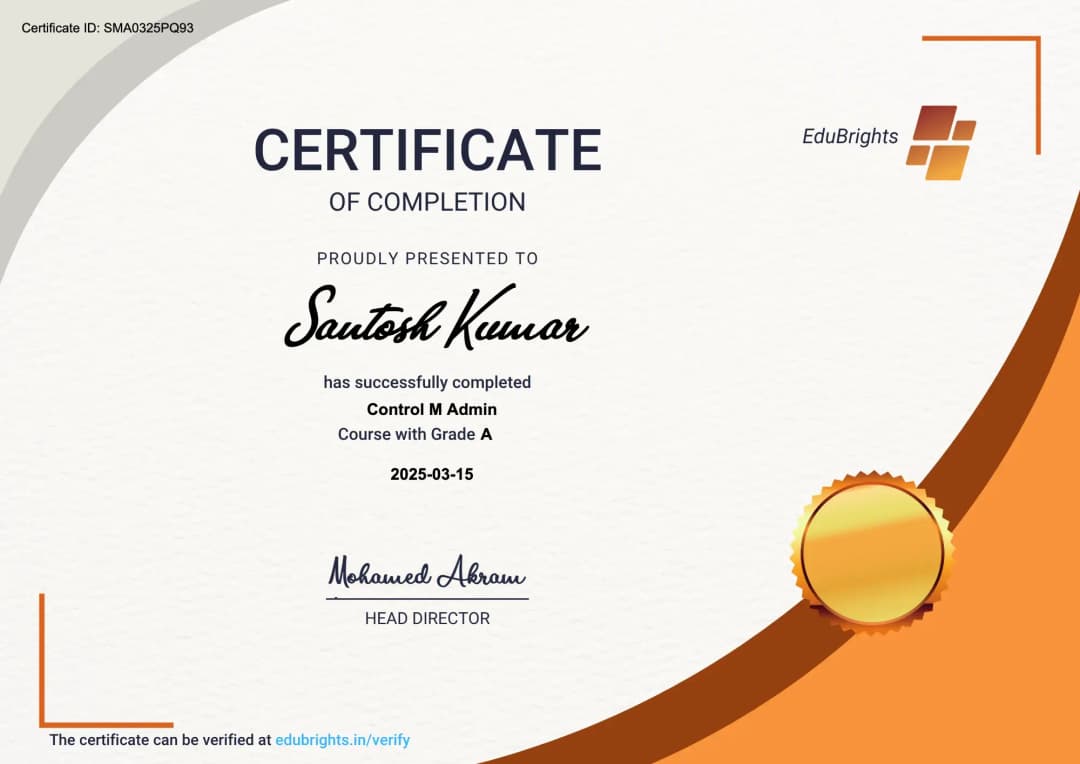
Certified Oracle Revenue Management Cloud Professional
Our certification validates your expertise in Oracle Revenue Management Cloud. Gain practical skills to apply Oracle Revenue Management Cloud confidently in real-world projects. Ideal for professionals and freshers looking to strengthen their Oracle Revenue Management Cloud career profile.
Course FAQs
What is Oracle Revenue Management Cloud used for?
Oracle Revenue Management Cloud is used to help organizations manage core business processes such as finance, HR, procurement, and operations within a connected system. It gives teams a standardized way to work instead of relying on scattered spreadsheets, manual scripts, or one-off processes. Most organizations invest in Oracle Revenue Management Cloud specifically because it reduces errors and speeds up day-to-day operations.
What is the duration of Oracle Revenue Management Cloud training?
Oracle Revenue Management Cloud training typically runs from a few weeks up to a couple of months, depending on whether you choose a weekday, weekend, or fast-track batch. The exact duration also depends on how deep the course goes into advanced topics versus just the fundamentals. Most learners can expect a structured path with clear milestones rather than an open-ended timeline.
Who can enroll in Oracle Revenue Management Cloud training?
Freshers, graduates, working professionals, and career switchers can all enroll in Oracle Revenue Management Cloud training. Most programs don't require prior experience, though basic computer familiarity helps you move faster through the early modules. If you're coming from a related field, you'll likely find the transition easier since many core concepts carry over.
Is Oracle Revenue Management Cloud training available online?
Yes, Oracle Revenue Management Cloud training is available in online, classroom, and hybrid formats, so you can choose the mode that fits your schedule and learning style best. Online batches typically include live instructor sessions plus recordings, so you don't lose access if you miss a class. Classroom and hybrid options add in-person practice time for learners who prefer hands-on guidance.
What topics are covered in Oracle Revenue Management Cloud training?
Oracle Revenue Management Cloud training covers core concepts, key tools, hands-on practice, and practical, real-world exercises, building from fundamentals up to advanced application. The syllabus is usually structured in modules, so you build one skill on top of the previous one instead of jumping around. By the end, you should be comfortable handling the kind of tasks that come up in an actual job role.
Will I receive a certificate after completing Oracle Revenue Management Cloud training?
Yes, learners receive a course-completion certificate after finishing Oracle Revenue Management Cloud training, which can be added to your resume and LinkedIn profile. The certificate signals to employers that you've completed a structured program, not just watched a few videos. Some institutes also help you prepare for official vendor or industry certification exams on top of the completion certificate.
Does Oracle Revenue Management Cloud training include placement assistance?
Many Oracle Revenue Management Cloud training providers offer placement support such as resume reviews, mock interviews, and introductions to hiring partners. This support usually kicks in toward the end of the course, once you have enough hands-on skills to speak to in an interview. It's worth asking upfront exactly what placement support includes, since it varies a lot between institutes.
What career opportunities are available after Oracle Revenue Management Cloud training?
Completing Oracle Revenue Management Cloud training can open up roles across organizations that rely on Oracle Revenue Management Cloud for their day-to-day operations, spanning IT services, product companies, and consulting firms. Depending on your background, you could move into an associate, specialist, or analyst-level role in this area. Demand tends to be steady because organizations that have already adopted Oracle Revenue Management Cloud need people who can support and extend it.
How is structured Oracle Revenue Management Cloud training different from free online resources?
Structured Oracle Revenue Management Cloud training offers guided instruction, hands-on projects, doubt-clearing sessions, and mentor support — elements that are hard to replicate through scattered, free resources alone. Free tutorials are useful for a quick overview, but they rarely follow a coherent path from beginner to job-ready. A structured course also gives you feedback on your work, which self-study generally can't.
Do I need a technical background to learn Oracle Revenue Management Cloud?
A technical background can help but usually isn't mandatory for Oracle Revenue Management Cloud training. Beginner-friendly batches start from the basics, so motivated learners from non-technical backgrounds can also follow along. That said, being comfortable with computers and logical thinking will make the learning curve noticeably smoother.
How do I choose the right institute for Oracle Revenue Management Cloud training?
When choosing a Oracle Revenue Management Cloud training institute, look at trainer experience, how current the curriculum is, the amount of hands-on project work, batch sizes, and post-training support. It also helps to ask for a syllabus in advance and compare it against what you actually need for your target role. Smaller batch sizes generally mean more individual attention from the trainer.
Are weekend batches available for Oracle Revenue Management Cloud training?
Yes, most Oracle Revenue Management Cloud training providers run dedicated weekend batches alongside weekday and fast-track options for working professionals. Weekend batches usually run a bit longer in total duration since there's less class time per week. This makes it a practical option if you're currently employed and can't commit to weekday evenings.
Will I work on real-time projects during Oracle Revenue Management Cloud training?
Reputable Oracle Revenue Management Cloud training programs include real-time projects and case studies alongside theory, so you leave with practical, portfolio-ready experience. These projects are usually modeled on situations you'd actually encounter on the job, not simplified textbook examples. Having project work to talk about also makes a real difference in interviews.
What is the typical batch size for Oracle Revenue Management Cloud training?
Most Oracle Revenue Management Cloud training providers keep batch sizes small so trainers can give individual attention and adapt the pace of the course to the group's progress. Smaller groups also make it easier to get your specific questions answered rather than getting lost in a large virtual classroom. If batch size matters to you, it's worth asking directly before enrolling, since it isn't always advertised.
Who typically teaches Oracle Revenue Management Cloud training?
Oracle Revenue Management Cloud training is usually delivered by trainers with hands-on industry experience, so lessons reflect current tools and practices rather than purely academic material. Many trainers continue working in the field alongside teaching, which keeps the content grounded in what employers actually expect. It's reasonable to ask about a trainer's background before committing to a batch.
Is prior experience required for Oracle Revenue Management Cloud training?
Depending on the specific program, some Oracle Revenue Management Cloud training assumes basic familiarity with related concepts, while others are fully beginner-friendly. It's worth checking the prerequisites for your chosen batch before enrolling so you're not starting from behind. If you're unsure, most institutes are happy to advise on whether a course fits your current skill level.
Can I attend a demo class before enrolling in Oracle Revenue Management Cloud training?
Many Oracle Revenue Management Cloud training institutes offer a free demo or trial session, letting you evaluate the trainer's teaching style and course structure before committing. This is a good way to check whether the pace and depth of the class actually match what you're looking for. Use the demo to ask questions about the syllabus, project work, and placement support too.
How much does Oracle Revenue Management Cloud training cost?
Fees for Oracle Revenue Management Cloud training vary by institute, course depth, and format, so it's best to compare a few providers directly and check what's included, such as materials, projects, and placement support. Online batches are often priced lower than in-person classroom training, though the content covered can be just as thorough. Always confirm whether the quoted fee covers the full course or just a portion of it.
Is Oracle Revenue Management Cloud training suitable for corporate or group training?
Yes, several Oracle Revenue Management Cloud training providers offer customized corporate batches for teams, with schedules and content adjusted to match an organization's specific tools and workflows. Corporate training often includes tailored case studies drawn from the company's actual systems and processes. This makes it easier for teams to apply what they've learned immediately after the training ends.
What support is available after completing this training?
Beyond the course itself, many institutes offer post-training support such as doubt-clearing sessions, access to updated materials, and continued placement assistance. Some also give alumni access to updated course content as the tool or platform evolves, so your knowledge doesn't go stale. It's worth asking what post-course support looks like before you enroll, since it varies significantly between providers.
Is Oracle Revenue Management Cloud in high demand for jobs right now?
Demand for Oracle Revenue Management Cloud skills tends to track how widely the tool or platform is used across industries, and organizations that have already adopted it consistently need people who can support and extend it. That said, demand can vary by region, sector, and role level, so it's worth researching current job postings in your target location. Combining Oracle Revenue Management Cloud with a related, complementary skill often makes candidates more competitive.
What is the salary range after Oracle Revenue Management Cloud training?
Salary after Oracle Revenue Management Cloud training depends heavily on your prior experience, the city you're working in, and the specific role you land, so it's hard to quote a single figure that applies to everyone. Entry-level roles typically pay less than mid-level or specialist positions that require deeper Oracle Revenue Management Cloud expertise. Checking current job listings on platforms like Naukri or LinkedIn for your target city gives a more accurate, up-to-date picture than any general estimate.
What are common Oracle Revenue Management Cloud interview questions I should prepare for?
Interviews for Oracle Revenue Management Cloud roles typically mix conceptual questions (explaining core terminology and workflows) with practical, scenario-based questions about how you'd handle a specific task or problem. Employers often also ask about any real projects you've worked on, so being able to walk through your training projects in detail matters. A good training program will usually include interview preparation as part of the placement support.
Is Oracle Revenue Management Cloud certification worth it for my career?
A Oracle Revenue Management Cloud certification is generally worth pursuing if the role you're targeting explicitly lists it as a requirement or preferred qualification, since it signals verified, structured knowledge to employers. Even where it's not mandatory, it can help your resume stand out among candidates with similar experience levels. That said, practical project experience alongside the certification tends to matter just as much as the certificate itself.
Can I learn Oracle Revenue Management Cloud without a technical degree?
Yes, many learners without a technical degree successfully complete Oracle Revenue Management Cloud training, especially when the course is structured to start from fundamentals. What matters more than your degree is your willingness to practice hands-on and work through the material consistently. Some roles may have specific requirements depending on the employer, so it's worth checking job descriptions for your target roles.
How does Oracle Revenue Management Cloud compare to other similar tools in the market?
Every tool in this space has its own strengths, typical use cases, and ecosystem, so the right choice usually depends on what a specific employer or project already uses. Oracle Revenue Management Cloud has its own particular strengths that make it a good fit for certain organizations and use cases, which is part of why demand for it persists even alongside competing tools. If you're deciding between multiple tools to learn, it often makes sense to check which ones are most commonly requested in job postings for your target region.
What software or tools do I need before starting Oracle Revenue Management Cloud training?
Most Oracle Revenue Management Cloud training programs will tell you the exact setup requirements before your batch starts, but a working laptop with a stable internet connection is the baseline requirement for online training. Some courses provide access to cloud-based lab environments so you don't need to install everything locally. It's worth asking the institute directly about system requirements before your first class.
Can I get a copy of the Oracle Revenue Management Cloud course syllabus before enrolling?
Yes, reputable Oracle Revenue Management Cloud training institutes will share a detailed syllabus before you enroll, so you can see exactly what's covered module by module. This is worth reviewing carefully and comparing against your specific learning goals or job requirements. If an institute is reluctant to share a syllabus upfront, that's generally a signal to ask more questions before committing.
Do you offer Oracle Revenue Management Cloud training in both Chennai and Bangalore?
Yes, Oracle Revenue Management Cloud training is available for learners based in both Chennai and Bangalore, along with online batches for those in other locations. Online training gives you access to the same curriculum and instructor-led sessions regardless of which city you're in. It's worth checking whether classroom or hybrid options are specifically available in your city if that's your preference.
What's the best way to prepare for a Oracle Revenue Management Cloud job role after training?
Beyond finishing the course, building a small portfolio of real projects you can walk through in interviews makes a significant difference. Practicing mock interviews and reviewing common Oracle Revenue Management Cloud interview questions ahead of time also helps you feel more confident. Staying active in relevant online communities or forums can help you keep up with how the tool or platform is evolving in real deployments.
Get Training Quote for Free
Testimonials
Hear What our Students say
"Transform your life through Education, hear it from our Alumni"

8 LPA
Rahul
Student
Data Scientist
"Transform your life through Education, hear it from our Alumni"

6 LPA
Fathima
Student
Software Engineer
"Transform your life through Education, hear it from our Alumni"

8 LPA
Siddharth
NIELSON IQ
Data Analyst
