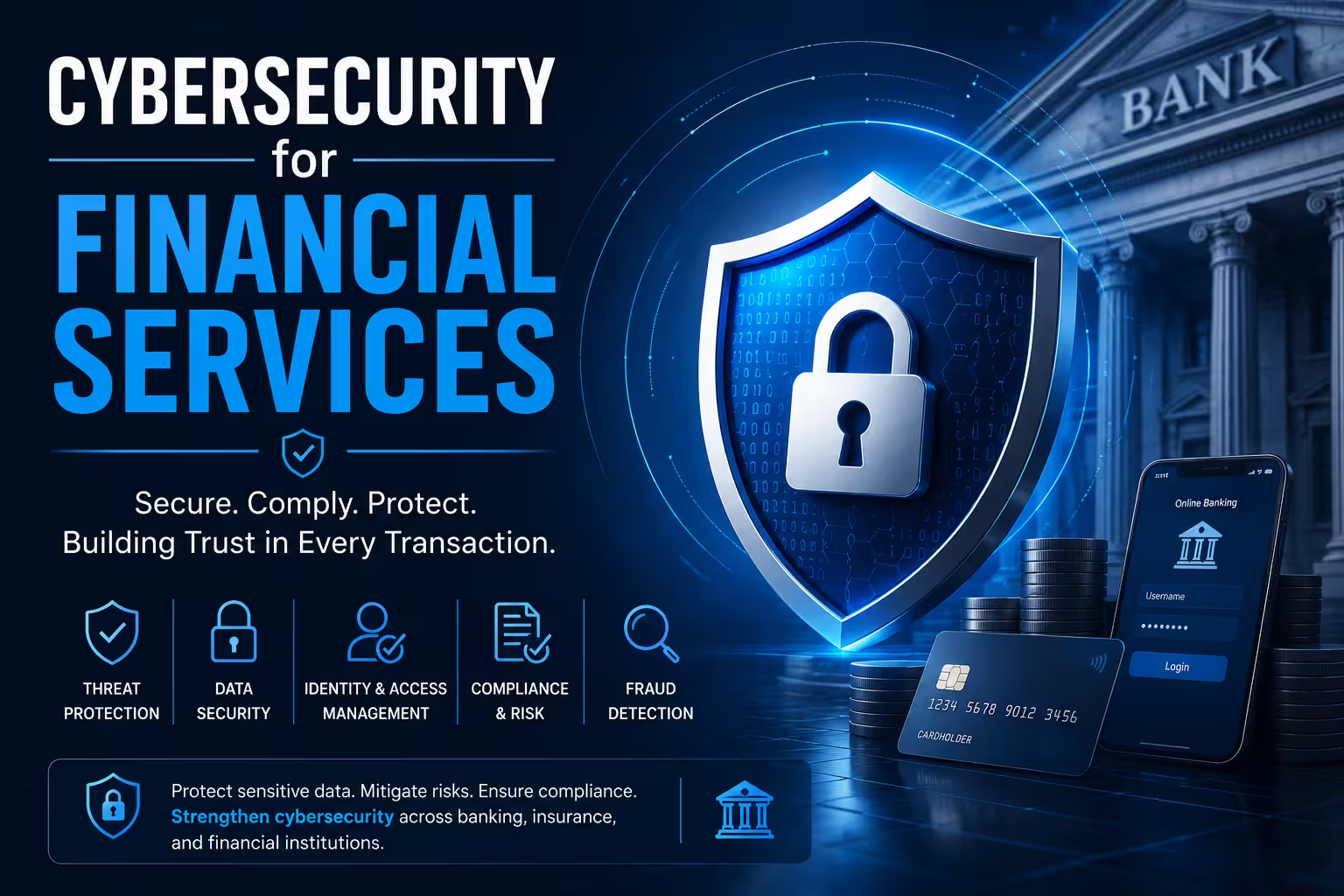
Course Objectives
1. What will I learn by taking the Cybersecurity for Financial Services course in Bangalore?
You'll build a solid understanding of the core concepts, terminology, and fundamentals of Cybersecurity for Financial Services, giving you a strong foundation to build on.
2. What hands-on skills will I gain from the Cybersecurity for Financial Services training?
You'll get hands-on experience with industry-relevant Cybersecurity for Financial Services tools and workflows through guided exercises, so you learn by doing rather than just reading theory.
3. How does the Cybersecurity for Financial Services course prepare me for real-world work?
The Cybersecurity for Financial Services course is designed around how Cybersecurity for Financial Services is actually applied to solve real-world problems in professional settings, not just textbook scenarios.
4. What practical, job-ready skills will I build during Cybersecurity for Financial Services training in Bangalore?
You'll develop the practical skills needed to confidently work with Cybersecurity for Financial Services on the job, so you're ready to contribute from day one in a Cybersecurity for Financial Services role.
5. Will I work on real projects during the Cybersecurity for Financial Services course?
Yes, the Cybersecurity for Financial Services course includes real-time projects and case studies that reinforce concepts through practice, giving you portfolio-ready work by the end.
6. How does the Cybersecurity for Financial Services course help with certification and job interviews?
The Cybersecurity for Financial Services course is structured to help you prepare for relevant certifications and interviews, covering the concepts and terminology employers and exam boards expect.
Popular Techniques Covered in This Course
1. Banking Cybersecurity
2. Financial Risk Management
3. Fraud Detection and Prevention
4. Payment Security
5. Identity and Access Management
6. Security Monitoring
7. Incident Response
8. Data Protection
9. Regulatory Compliance
10. Security Awareness
Get Hands-on Knowledge about Real-Time Projects
Project 1
Project 1: Banking Cyber Risk Assessment
Conduct a cybersecurity risk assessment for a banking environment by identifying vulnerabilities and recommending mitigation strategies.
Project 2
Project 2: Online Banking Security Implementation
Design security controls for an online banking application, including authentication, encryption, and transaction monitoring.
Project 3
Project 3: Payment Gateway Security Assessment
Evaluate the security of a digital payment platform and recommend improvements to protect financial transactions.
Project 4
Project 4: Financial Fraud Detection Case Study
Analyze transaction data to identify suspicious activities and develop fraud prevention recommendations.
Project 5
Project 5: Financial Institution Incident Response Plan
Develop a comprehensive incident response plan for handling cyber attacks, ransomware incidents, and financial data breaches.
Key Features
Edubrights offers Cybersecurity for Financial Services Training in virtual mode with expert trainers. Here are the key features,
40 Hours Course Duration
100% Job Oriented Training
Industry Expert Faculties
Free Demo Class Available
Completed 500+ Batches
Certification Guidance
Curriculum
Module 1: Financial Services Threat Landscape
- Cyber threats targeting BFSI: APT groups, ransomware, fraud
- High-profile banking breach case studies
- Financial sector attack vectors: SWIFT fraud, card skimming, mobile banking
- Threat intelligence specific to financial services
- RBI, SEBI, IRDAI cybersecurity mandates in India
Module 2: Regulatory Compliance for BFSI
- RBI Master Direction on IT (2021) and cyber security framework
- SEBI cybersecurity circular for brokers and exchanges
- PCI DSS v4.0 for payment card environments
- SWIFT Customer Security Programme (CSP)
- Global standards: DORA (EU), FFIEC (US), FCA (UK)
Module 3: Core Banking Security
- Core banking solution (CBS) security architecture
- Database security for Finacle, Flexcube, BaNCS
- API security for banking integrations
- Session management and transaction signing
- Privileged access management in core banking
Module 4: Payment Systems Security
- SWIFT network security controls
- UPI, IMPS, RTGS/NEFT security controls
- Payment gateway and POS security
- Card-not-present (CNP) fraud prevention
- 3D Secure and tokenisation
Module 5: Internet and Mobile Banking Security
- Web application security for internet banking
- Mobile banking app security: Certificate pinning, jailbreak detection
- OTP bypass risks and prevention
- Session hijacking and MITM prevention
- Fraud analytics in digital banking
Module 6: Fraud Detection and Prevention
- Transaction monitoring systems
- Rules-based vs. ML-based fraud detection
- Account takeover (ATO) detection
- Money mule detection
- Fraud analytics platforms: NICE Actimize, SAS Fraud Management
Module 7: Incident Response in Financial Services
- RBI breach reporting requirements
- CERT-In incident reporting (6-hour rule)
- Financial sector ISAC (FS-ISAC) threat sharing
- Ransomware response for banks
- Crisis communication during cyber incidents
Module 8: Third-Party and Vendor Risk in BFSI
- Third-party risk management (TPRM) for financial services
- Outsourcing and cloud risk under RBI guidelines
- Vendor due diligence questionnaires
- Continuous monitoring of third parties
- Concentration risk in BFSI outsourcing
Module 9: Cloud Security for Financial Services
- RBI cloud adoption guidelines
- Multi-cloud security architecture for banks
- Data residency and sovereignty requirements
- Cloud encryption and key management for financial data
- Financial services cloud compliance: AWS, Azure, GCP financial zones
Module 10: Cyber Resilience and BCP for BFSI
- Financial sector cyber resilience frameworks
- RTO/RPO for critical banking applications
- Cyber war games and exercises for banks
- Business continuity testing in financial services
- DORA operational resilience requirements
Module 11: Security Architecture for BFSI
- Zero Trust architecture for financial services
- Network segmentation for banking environments
- SOC setup for financial institutions
- Privileged access workstations (PAWs) in banks
- Security by design for fintech products
Module 12: Capstone Projects
- BFSI cybersecurity programme assessment
- PCI DSS gap analysis for a sample bank
- Fraud detection rule design
- RBI cyber security framework compliance review
- Career paths: BFSI cybersecurity analyst, fintech security engineer
Receive Training From Our Skilled and Effective Trainers
Experience in the Industry Gain expertise from Cybersecurity for Financial Services professionals training in Bangalore who have applied their skills on live projects across corporate, product, and consulting environments, bringing practical, real-world context into every Cybersecurity for Financial Services session.
Backgrounds at the Top Our Cybersecurity for Financial Services trainers in Bangalore bring hands-on industry experience, having worked on real Cybersecurity for Financial Services projects for organizations across various industries before moving into training.
Clear & Effective Teaching Core Cybersecurity for Financial Services concepts, tools, and workflows are explained using real project examples and practical scenarios, so you understand not just the theory but how Cybersecurity for Financial Services is actually used on the job.
Hands-On Learning Focus Students get structured, hands-on practice with Cybersecurity for Financial Services through guided exercises, mini-projects, and lab work designed to build practical, job-ready skills.
Up-to-Date Knowledge Trainers keep the Cybersecurity for Financial Services curriculum current with the latest tools, versions, and industry best practices, so what you learn stays relevant to how Cybersecurity for Financial Services is used today in Bangalore and beyond.
Certified Financial Services Cybersecurity Professional (CFSCP)
Our institution offers a recognized Cybersecurity for Financial Services certification. This certification enhances your portfolio and prepares you for collaborative projects in real-world environments. Gain practical skills through hands-on training and assessments.

Course FAQs
Q1: Why is specialized cybersecurity training crucial for IT professionals in Bangalore’s fintech sector?
A: Bangalore is the undisputed fintech capital of India, hosting hundreds of digital lending platforms, payment aggregators, and neo-banks that handle massive volumes of sensitive financial data daily. Specialized training is crucial because these agile organizations require security professionals who understand not just general hacking techniques, but also the unique architecture of cloud-native financial applications, API security, and the rapid deployment cycles of modern software development. This course bridges the gap between general IT knowledge and the high-stakes, fast-paced environment of financial cybersecurity specific to Bangalore’s tech ecosystem.
Q2: Does the course cover the Reserve Bank of India cybersecurity framework and compliance guidelines?
A: Yes, a significant portion of our curriculum is dedicated to the RBI’s comprehensive cybersecurity framework, which is strictly enforced across all digital lending apps, payment system operators, and regulated entities operating out of Bangalore. You will learn how to map technical security controls to RBI mandates, conduct gap analyses, and prepare fintech organizations for regulatory audits. Understanding these specific compliance requirements is essential for any cybersecurity professional seeking to work with Indian financial technology companies.
Q3: How does the training address API security for modern payment gateways and lending apps?
A: API security is a central pillar of our fintech-focused curriculum, as APIs form the backbone of modern digital wallets, neo-banks, and instant lending applications. You will learn how to identify and remediate critical API vulnerabilities such as Broken Object Level Authorization, excessive data exposure, and lack of rate limiting. We provide hands-on training using industry-standard tools to test and secure the REST and GraphQL APIs that power Bangalore’s dynamic financial services ecosystem.
Q4: Are there specific modules focused on securing cloud infrastructure for financial workloads?
A: Yes, since most Bangalore-based fintechs operate entirely on cloud infrastructure, we provide extensive training on securing AWS and Azure environments specifically for financial workloads. You will learn how to implement strict Identity and Access Management policies, encrypt data at rest and in transit, configure secure cloud storage, and continuously monitor cloud environments for misconfigurations that could lead to massive financial data leaks or regulatory penalties.
Q5: Does the course prepare students for global compliance standards like PCI-DSS and SOC 2 relevant to Bangalore GCCs?
A: Absolutely, many Global Capability Centers in Bangalore handle financial data and payment processing for international markets, making global compliance knowledge mandatory. We provide comprehensive training on frameworks including the Payment Card Industry Data Security Standard and SOC 2 Type II. You will learn how to design systems that inherently comply with these strict regulations, making you a highly valuable asset to multinational financial institutions operating out of the city.
Q6: How is DevSecOps and secure software development lifecycle integrated into the training?
A: In Bangalore’s agile fintech environment, security cannot be a bottleneck, which is why we teach DevSecOps principles extensively. You will learn how to integrate automated security testing, such as Static Application Security Testing and Dynamic Application Security Testing, directly into the Continuous Integration and Continuous Deployment pipelines. This ensures that vulnerabilities are caught and fixed during the development phase, enabling fintech startups to release secure features rapidly without compromising on safety.
Q7: What specific financial fraud prevention techniques are taught in this program?
A: The course covers advanced financial fraud prevention techniques tailored for digital platforms, including the analysis of synthetic identity fraud, detection of account takeover attempts, and mitigation of automated bot attacks on payment portals. You will learn how to configure transaction monitoring rules, implement multi-factor authentication effectively, and establish incident response playbooks specifically designed to freeze fraudulent activities and minimize financial loss in real-time.
Q8: How does the program help software developers in Bangalore transition into fintech security roles?
A: We offer a specialized transition pathway for software developers who want to pivot into cybersecurity, leveraging Bangalore’s large pool of coding talent. The curriculum builds upon your existing programming knowledge, teaching you how to think like an attacker to find flaws in your own code. You will learn secure coding practices for financial applications, how to review code for security vulnerabilities, and how to build security automation tools, making the transition to an Application Security Engineer role smooth and logical.
Q9: Are there case studies based on real Indian fintech and banking cyber incidents?
A: Yes, our training is heavily grounded in reality, featuring detailed case studies of actual cyber incidents that have impacted Indian financial technology companies and digital payment platforms. We analyze the attack vectors used, the API vulnerabilities exploited, and the subsequent remediation steps taken by the affected organizations. This practical, retrospective learning approach ensures you understand the real-world consequences of security lapses and how to prevent similar breaches in your own organization.
Q10: Does the training include data privacy and localization norms as per the Digital Personal Data Protection Act?
A: Yes, data sovereignty and privacy are critical aspects of financial cybersecurity in India, and we cover the data localization norms mandated by Indian regulators. You will learn how to ensure that sensitive financial and personal data remains within domestic borders and how to implement technical controls to ensure customer data privacy in alignment with the Digital Personal Data Protection Act, which is a major focus area for compliance teams in Bangalore.
Q11: What kind of placement opportunities exist in Bangalore’s financial cybersecurity sector?
A: Bangalore offers robust placement opportunities in the cybersecurity divisions of major fintech unicorns, digital payment gateways, neo-banks, insurance technology companies, and Global Capability Centers. Our placement support is tailored to connect you with these specific employers in tech hubs like Whitefield, Electronic City, and Koramangala, helping you position your specialized financial cybersecurity skills to secure roles such as Application Security Engineer, Cloud Security Architect, or Threat Intelligence Analyst.
Q12: Do students get hands-on virtual lab access tailored for financial security scenarios?
A: Yes, theoretical knowledge is insufficient for mastering financial cybersecurity, which is why we provide every student with dedicated access to real-time, cloud-based virtual lab environments. This hands-on access allows you to practice simulating attacks on mock neo-banking applications, configuring web application firewalls for financial portals, and analyzing transaction logs in a safe, sandboxed environment without risking real financial data or violating any legal boundaries.
Q13: Is prior coding or programming knowledge required for this financial cybersecurity course?
A: While prior coding knowledge is helpful, it is not strictly mandatory as we cover the essential scripting languages required for financial security automation from the ground up. We focus on teaching Python and Bash scripting specifically tailored for log analysis, automating compliance checks, and basic exploit understanding, ensuring that you can write custom scripts to enhance security operations without needing an advanced computer science degree.
Q14: Does the course cover Vulnerability Assessment and Penetration Testing specifically for fintech applications?
A: Yes, VAPT is a core component of our curriculum, and we teach you industry-standard methodologies tailored for the financial technology sector. You will learn the complete lifecycle of a penetration test on digital lending portals and mobile payment apps, from reconnaissance and scanning to exploitation and reporting, ensuring you can conduct thorough and professional security assessments that meet the strict standards of both regulators and startup founders.
Q15: Will I learn how to write professional penetration testing reports for fintech clients and stakeholders?
A: Yes, reporting is a critical deliverable in any financial security engagement, and we dedicate specific training to writing professional VAPT reports. You will learn how to document vulnerabilities clearly, calculate risk scores using the Common Vulnerability Scoring System, provide actionable remediation steps for developers, and present technical findings to both technical engineering teams and non-technical business executives.
Q16: How does the course prepare students for Security Operations Center roles in financial institutions?
A: We provide specialized training tailored for SOC analyst roles within fintech companies and banking GCCs, focusing on log management, financial threat intelligence, and incident triage. You will learn how to monitor security alerts, differentiate between false positives and genuine financial threats, and execute standard operating procedures to contain and eradicate cyber incidents, making you immediately productive in a high-volume financial SOC environment.
Q17: Are there weekend or fast-track batches available for working professionals in Bangalore?
A: Yes, we understand the demanding schedules of working professionals in Bangalore’s IT and corporate sectors, which is why we offer dedicated weekend batches as well as fast-track weekday options. The curriculum, virtual lab access, and quality of training remain exactly the same across all batch types, ensuring you can upskill and transition into a financial cybersecurity career without disrupting your current job responsibilities.
Q18: Is a free demo class available before enrolling in the Bangalore financial cybersecurity batch?
A: Absolutely, we offer a free demo class where you can experience our teaching methodology, interact with our expert trainers, and get a clear glimpse of the curriculum structure and virtual lab environment. This session is designed to help you evaluate the quality of our training and ensure it aligns perfectly with your learning goals and career expectations before you make any enrollment commitment.
Q19: What is the typical duration of the cybersecurity for financial services course?
A: The standard duration of our specialized course is approximately three to four months, covering around 60 to 80 hours of intensive, structured live training and hands-on lab practice. This timeline is carefully designed to give you ample time to grasp complex financial security concepts, practice extensively on the virtual servers, and complete substantial real-time projects without feeling rushed.
Q20: Will I receive a certification upon completing the financial cybersecurity training?
A: Yes, upon successful completion of the course and the final capstone project, you will receive an industry-recognized training certificate. While this certificate validates your comprehensive training in financial security, we place equal emphasis on helping you build a strong portfolio of security assessments and real-time projects, which together significantly boost your credibility during job interviews in Bangalore’s competitive tech market.
Q21: Does the training prepare students for global certifications relevant to financial security?
A: Yes, our curriculum is explicitly aligned with the objectives of major industry certifications that are highly valued in the financial sector, such as the Certified Information Systems Security Professional, Certified Ethical Hacker, and CompTIA Security Plus exams. We provide dedicated exam preparation modules, practice tests, and strategic guidance to help you confidently navigate and pass these globally recognized certification exams.
Q22: How deeply is cryptography covered for secure financial transactions?
A: Cryptography is a foundational pillar of our curriculum that we cover extensively in the context of finance. You will learn how to implement and audit encryption algorithms like AES and RSA used in financial data transmission, understand public key infrastructure, and analyze network traffic for cryptographic weaknesses, ensuring you can protect organizational data both in transit and at rest across digital payment networks.
Q23: Is social engineering and phishing simulation part of the financial cybersecurity curriculum?
A: Yes, human error remains a significant vector in financial cybersecurity, which is why we cover social engineering tactics in detail. You will learn how attackers manipulate human psychology through phishing, pretexting, and baiting targeted at fintech employees and customers, and more importantly, you will learn how to design and execute simulated phishing campaigns to train employees and strengthen a financial institution’s human firewall.
Q24: Do you teach web application penetration testing and the OWASP Top 10 for digital banking?
A: Yes, web application security is a critical focus area, and we provide deep, hands-on training on the OWASP Top 10 vulnerabilities as they apply to financial web portals. You will learn how to identify, exploit, and remediate common web flaws such as SQL Injection, Cross-Site Scripting, Broken Access Control, and Insecure Deserialization, making you highly effective in securing digital banking and lending interfaces.
Q25: Will I learn about Security Information and Event Management tools in a fintech context?
A: Absolutely, SIEM tools are the backbone of modern financial Security Operations Centers, and we provide dedicated hands-on training on platforms like Splunk. You will learn how to ingest logs from core banking systems and payment gateways, write complex search queries to detect fraudulent transactions, create real-time dashboards, and set up automated alerts to detect and respond to cyber threats proactively.
Q26: How does the course address mobile application security for banking and fintech apps?
A: We include a specialized module on mobile application security, teaching you how to assess the security of both Android and iOS financial applications. You will learn static and dynamic analysis techniques, how to intercept mobile traffic, and how to identify vulnerabilities like insecure data storage and improper session management, which is highly relevant for Bangalore’s mobile-first digital banking and wallet initiatives.
Q27: Is incident response and digital forensics covered for financial data breaches?
A: Yes, we cover the critical phases of incident response and digital forensics to prepare you for post-breach scenarios in financial institutions. You will learn how to contain security incidents, preserve digital evidence legally, analyze memory dumps and disk images from compromised servers, and write comprehensive incident reports to help organizations recover swiftly and meet strict regulatory reporting deadlines.
Q28: Can non-IT professionals or commerce graduates successfully transition into financial cybersecurity?
A: Yes, non-IT professionals and commerce graduates can successfully transition into cybersecurity, especially in roles like Governance, Risk, and Compliance or SOC analysis within fintech companies and banks. Our course provides the necessary technical foundation while leveraging your existing analytical and process-oriented skills, giving you a unique advantage in understanding business risk and financial regulatory compliance.
Q29: Does the curriculum include training on Linux operating systems and command line for security?
A: Yes, proficiency in Linux is mandatory for any cybersecurity professional, and we start with a comprehensive Linux command-line training module. You will learn file system navigation, permission management, process control, and bash scripting, ensuring you are completely comfortable working in Kali Linux and other security-focused distributions used to audit financial networks and cloud environments.
Q30: How are mock interviews conducted to prepare students for financial cybersecurity job interviews?
A: We conduct rigorous, multi-stage mock interviews that simulate real technical and behavioral rounds conducted by top fintech companies and banking GCCs. These sessions include scenario-based questions on vulnerability exploitation, financial log analysis, and incident handling, with our trainers providing detailed, constructive feedback to help you refine your technical communication and problem-solving skills under pressure.
Q31: Are study materials, cheat sheets, and recorded sessions provided for the course?
A: Yes, we provide a rich repository of learning resources, including detailed presentation slides, step-by-step lab guides, command cheat sheets, and recorded sessions of all live classes. All these materials are accessible via our Learning Management System, allowing you to review complex financial security topics and replicate lab exercises at your own pace long after the live sessions have ended.
Q32: Does the course cover compliance frameworks like ISO 27001 for financial organizations?
A: Yes, understanding regulatory compliance is vital for enterprise financial security, and we cover major frameworks such as ISO 27001 alongside PCI-DSS. You will learn how to map technical security controls to these compliance requirements, conduct gap analyses, and prepare financial organizations for successful security audits, which is a highly valued skill in corporate environments and Global Capability Centers.
Q33: Does the training include malware analysis specific to financial threats?
A: Yes, we introduce you to the fundamentals of malware analysis with a focus on financial threats. You will learn how to set up a safe, isolated sandbox environment, analyze suspicious files like banking trojans and ransomware using static and dynamic analysis tools, and understand basic assembly language to decipher how malware operates, which is a highly specialized and sought-after skill in financial threat intelligence.
Q34: Are there opportunities for live internships or industry exposure in Bangalore’s fintech sector?
A: Yes, we actively facilitate internship opportunities for deserving students with our partner organizations in Bangalore’s financial and technology sectors. These internships provide invaluable real-world experience, allowing you to work alongside seasoned security professionals on live projects, which significantly enhances your resume and increases your chances of securing a full-time role in the city’s competitive market.
Q35: How does the course keep up with the latest cyber threats targeting the Indian fintech sector?
A: Our curriculum is continuously reviewed and updated by our expert trainers who are actively working on live security projects in the financial industry. We regularly incorporate new threat intelligence, zero-day vulnerability case studies targeting digital lending infrastructure, and updated regulatory mitigation strategies, ensuring that the skills you learn are exactly what top employers are currently seeking to defend against modern attacks.
Q36: Is soft skills and client communication training included for aspiring financial security consultants?
A: Absolutely, technical expertise must be paired with strong communication skills to succeed as a security consultant in the fintech sector. We integrate soft skills training into the curriculum, focusing on requirement gathering, vulnerability presentation, professional report writing, and effective stakeholder management, which are essential for conducting security workshops and managing client expectations professionally.
Q37: Can I connect with past students who have successfully placed in Bangalore’s fintech companies?
A: Yes, we can connect you with our active alumni network so you can hear firsthand about their learning experience and career progression. Speaking with former students who have successfully secured financial cybersecurity roles provides valuable, realistic insights into how the course helped them and what to expect from our training and placement process in the local market.
Q38: How is the integration of AI and machine learning in financial fraud detection addressed?
A: We dedicate a module to the intersection of artificial intelligence and financial cybersecurity, exploring how machine learning is used by defenders to detect anomalies. You will learn about AI-driven threat hunting, behavioral analytics for transaction monitoring, and the emerging risks of adversarial machine learning, preparing you for the future of automated security operations in modern fintech companies.
Q39: Will I learn about Identity and Access Management and Zero Trust architectures for banks?
A: Yes, securing identities is the new perimeter in financial cybersecurity, and we cover Identity and Access Management and Zero Trust architectures in depth. You will learn how to configure group policies, detect and prevent lateral movement attacks, and implement Multi-Factor Authentication to protect enterprise financial networks from insider threats and compromised credentials.
Q40: Are there group projects or Capture The Flag competitions focused on financial scenarios?
A: Yes, we encourage competitive and collaborative learning by organizing regular Capture The Flag challenges and group security projects with financial themes. These activities simulate real-world attack scenarios where you must work together to find hidden flags, exploit vulnerabilities in mock banking apps, and defend systems, building essential teamwork and rapid problem-solving skills highly valued by hiring managers.
Q41: Is training provided on endpoint security and antivirus evasion techniques in corporate environments?
A: Yes, we cover endpoint security from both offensive and defensive perspectives. You will learn how modern Endpoint Detection and Response solutions work in corporate environments, and conversely, how attackers use techniques like obfuscation and living-off-the-land binaries to evade traditional antivirus software, giving you a comprehensive understanding of endpoint threats targeting financial workstations.
Q42: Do you offer customized corporate cybersecurity training for financial companies in Bangalore?
A: Yes, we offer customized corporate training programs tailored to the specific security maturity and requirements of financial companies in Bangalore. If your organization needs to upskill its engineering team on secure coding, API vulnerability assessment, or cloud security awareness, we can design a bespoke curriculum and schedule flexible batches to meet your corporate security goals efficiently.
Q43: What is the expected salary trajectory for cybersecurity professionals in Bangalore’s financial sector?
A: While salaries vary based on individual performance, prior experience, and the hiring company, entry-level financial cybersecurity professionals in Bangalore typically start with highly competitive packages that grow rapidly with experience and certifications. With the advanced competencies in API security, cloud security, and regulatory compliance that you gain from our course, you are well-positioned to negotiate strong starting offers in the city’s premium job market.
Q44: How can I register and start my learning journey for the financial cybersecurity batch in Bangalore?
A: You can easily register by visiting our website and filling out the inquiry form, or by calling our admissions team directly. Our dedicated counselors will guide you through the enrollment process, explain the available batch schedules, and help you choose the learning mode that best fits your personal and professional schedule, ensuring a smooth start to your cybersecurity career.
Q45: Does the course cover Internet of Things security as it relates to smart point-of-sale devices?
A: Yes, as connected devices become ubiquitous in retail and finance, we include a module on Internet of Things security with a focus on financial endpoints like smart point-of-sale terminals and payment kiosks. You will learn about the unique attack surfaces of these devices, common vulnerabilities like default credentials and unencrypted communications, and how to perform basic hardware and firmware analysis to secure connected financial environments.
Q46: Will I learn how to secure microservices architectures in digital banking?
A: Yes, microservices security is a critical modern requirement for digital banking, and we teach you how to identify and remediate vulnerabilities specific to distributed architectures. You will learn how to test internal service communications and implement security controls like mutual TLS and service mesh policies to protect the complex microservices architectures that power modern mobile banking applications.
Q47: Is there guidance provided on building a freelance career in bug bounty hunting for financial apps?
A: Yes, for students interested in independent security research, we provide guidance on how to start a career in bug bounty hunting, specifically targeting financial applications. We cover how to select suitable targets on platforms like HackerOne and Bugcrowd, how to write effective vulnerability reports for financial institutions, and the ethical and legal boundaries of responsible disclosure.
Q48: How does the course address the ethical and legal aspects of hacking and financial cybersecurity?
A: Ethics and legality are foundational to our program, and we dedicate specific sessions to the legal frameworks governing cybersecurity in India, such as the Information Technology Act. We emphasize the importance of obtaining proper written authorization before testing any financial system and instill a strong code of ethics, ensuring you understand the severe legal consequences of unauthorized access to financial infrastructure.
Q49: How does the course help students build a strong portfolio for financial cybersecurity roles?
A: We guide you in building a professional portfolio that showcases your practical skills, such as writing detailed walkthroughs of financial Capture The Flag challenges, documenting your vulnerability assessment project findings, and contributing to open-source security tools. A well-maintained portfolio serves as tangible proof of your capabilities to potential fintech employers who value practical, hands-on expertise over theoretical knowledge.
Q50: What makes Edubrights the preferred choice for financial cybersecurity training in Bangalore?
A: Edubrights stands out due to our comprehensive curriculum covering both offensive and defensive security tailored specifically for the fintech and banking sector, experienced industry trainers, and intense focus on real-world, hands-on projects. Our personalized career support, including portfolio building and dedicated placement assistance with Bangalore’s top financial technology partners, ensures you are not just certified but genuinely job-ready. We prioritize practical skill development and mentorship over mass enrollment, making us the preferred choice for serious cybersecurity aspirants in the city.
Get Training Quote for Free
Testimonials
Hear What Our Students Say
"Transform your life through Education, hear it from our Alumni"

8 LPA
Rahul
Student
Data Scientist
"Transform your life through Education, hear it from our Alumni"

8 LPA
Siddharth
NIELSON IQ
Data Analyst
"Transform your life through Education, hear it from our Alumni"

6 LPA
Fathima
Student
Software Engineer