What's the Difference Between Murex Certification Levels?
Trying to choose the right Murex training level? Here is a clear comparison of Functional, Technical, and Module-Specific certification tracks to guide your learning path.
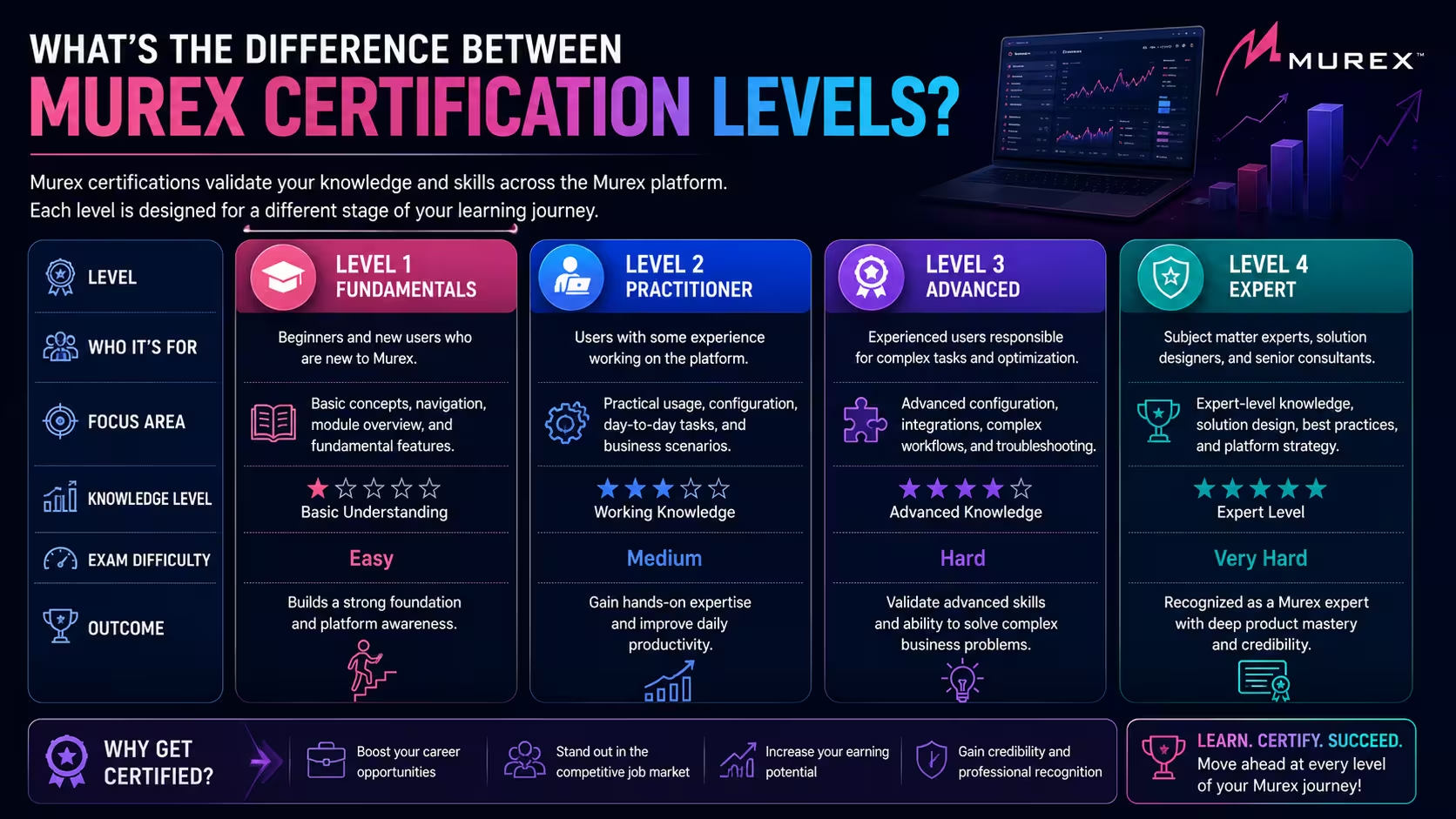
What's the Difference Between Murex Certification Levels?
As you plan your training in Murex MX.3, choosing the right certification level and specialization stream is critical to matching your career background and job goals. Murex training is broadly divided into Functional, Technical, and Advanced Module tracks.
Here is a clear breakdown of each certification path to help you choose the right fit.
1. Functional Stream Certifications (Business & Operations Focus)
The Functional track focuses on business workflows, trade pricing, risk analytics, and post-trade processing:
- Foundational Level: Covers platform navigation, static data setup, and basic trade booking across FX, Fixed Income, and Money Market instruments.
- Advanced Module Level: Focuses on Market Risk (VaR, FRTB), Counterparty Credit Risk, Collateral Management, or Back-Office accounting workflows.
- Best Suited For: Business Analysts, Treasury Specialists, Risk Analysts, and Finance Graduates.
2. Technical Stream Certifications (Development & Integration Focus)
The Technical track focuses on system architecture, data exchange, reporting, and automated testing:
- MxML Exchange Specialist: Covers XML data mapping, interface creation, and real-time connectivity with SWIFT, Bloomberg, or Reuters.
- Datamart & SQL Reporting Specialist: Covers database schema, dynamic tables, and SQL query optimization for regulatory reporting.
- Onyx (MxTest) Automation Specialist: Focuses on automated functional and performance testing script setup.
- Best Suited For: Software Developers, Database Engineers, Integration Specialists, and QA Testers.
Comparison Summary Table
| Certification Track | Core Skills Taught | Primary Software Tools | Target Job Roles |
|---|---|---|---|
| Functional | Trade Capture, Risk Metrics, Accounting | MX.3 GUI, Risk Engines | Business Analyst, Risk Analyst |
| Technical Integration | XML Mapping, Workflows, APIs | MxML, XSLT, SWIFT Interfaces | MXML Developer, Integration Engineer |
| Technical Reporting | SQL Queries, Data Extraction, Marts | SQL, Oracle, Datamart Engine | Datamart Engineer, Data Analyst |
Final Word
Choosing between Functional and Technical Murex certification streams depends on whether you prefer business workflow design or technical systems integration.
Whether you're selecting your certification path, evaluating Murex MX.3 courses in Chennai, or building specialized capital markets skills, practical hands-on application remains the single best predictor of job readiness.
Explore Murex MX.3 Training in Chennai at EduBrights →
EduBrights is a leading IT training institute offering hands-on Murex courses across capital markets and treasury specializations. View all courses.
Get Training Quote for Free
Related Blogs

Top Interview Questions for Java Backend Developers
This blog covers top Java backend interview questions with clear answers, focusing on Spring Boot, REST APIs, Hibernate, security, and performance to help freshers and professionals prepare confidently.

What You Will Learn in a Professional MySQL Course – Curriculum Explained
In today’s data-driven world, databases play a critical role in almost every application, from small websites to large enterprise systems. Among all database technologies, MySQL continues to be one of the most widely used and trusted solutions across industries. If you are planning to build a career in database management, web development, or data-related roles, enrolling in professional mysql courses can be a smart and future-proof decision. This blog explains in detail what you will learn in a professional MySQL course, how the curriculum is structured, and why choosing the best mysql course can make a real difference in your career growth.

How Can You Get Ready for a Data Science Interview After Finishing a Course?
Preparing for a data science interview is an important step after completing a data science course. While training helps you learn key concepts, interviews require you to demonstrate practical knowledge, problem-solving ability, and clear communication. This blog explains how reviewing core data science concepts, practicing real-world projects, strengthening programming skills, and preparing common interview questions can help candidates succeed. It also highlights the importance of building a strong portfolio, improving communication skills, and staying updated with industry trends to increase your chances of starting a successful career in data science.

Java Courses: The Smart Way to Build a Strong Programming Career
This blog explains why Java remains a top programming language, highlights the benefits of Java courses and online training, and shows how certification and hands-on learning can boost career growth.