What's a Murex Consultant and How Do They Get Started?
Curious about high-demand Murex consulting roles in investment banking? Here is a clear breakdown of what Murex consultants do, core responsibilities, and how to get started.
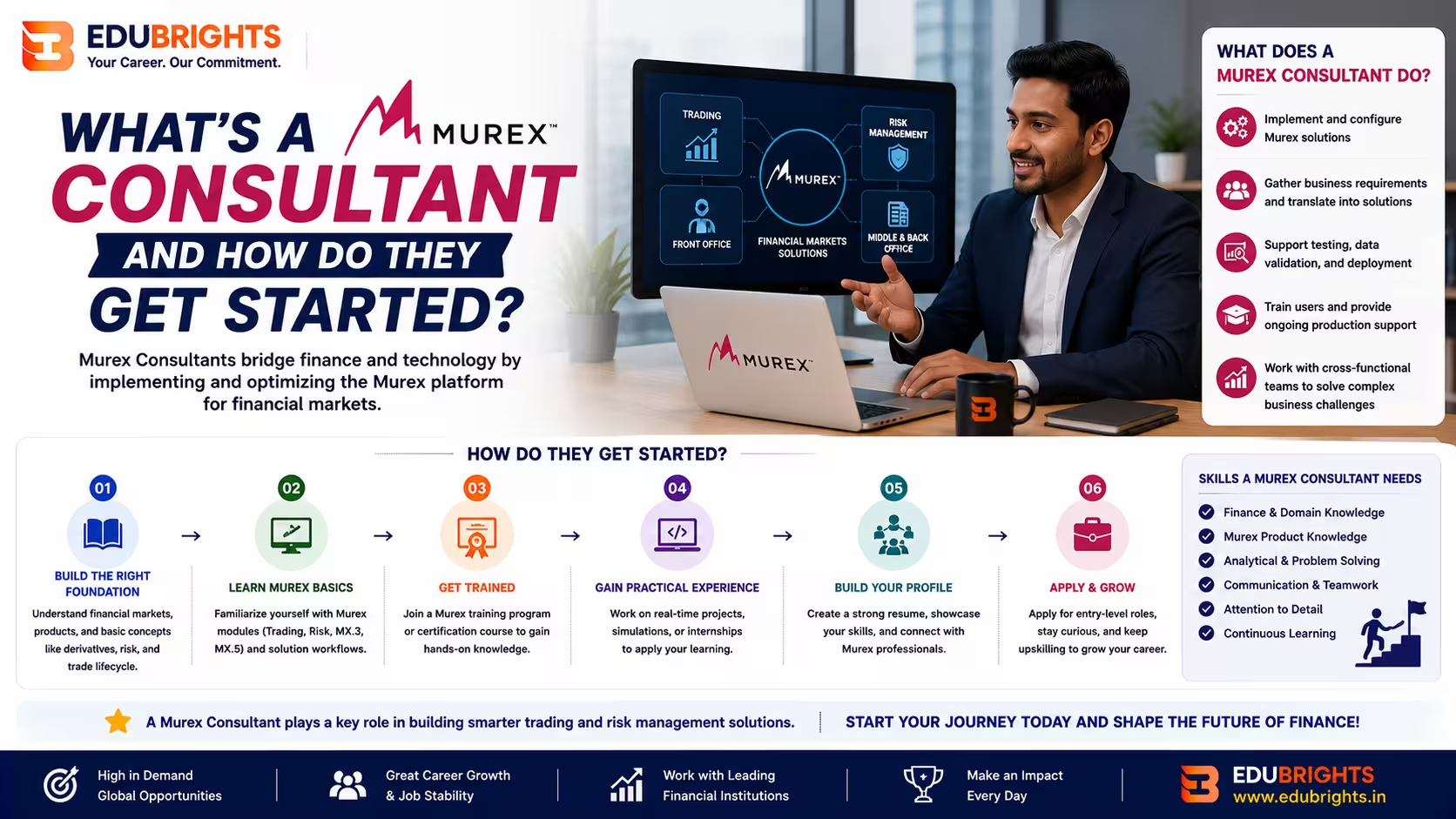
What's a Murex Consultant and How Do They Get Started?
If you explore careers in capital markets technology, you will quickly notice that "Murex Consultant" is one of the most sought-after and well-compensated titles across FinTech and IT consulting. But what does a Murex consultant actually do on a daily basis, and how do you break into this specialized field?
Here is an insider look at the Murex consultant role and the step-by-step roadmap to launch your career.
What Does a Murex Consultant Do?
A Murex consultant works as a subject matter expert hired by investment banks, central banks, or asset managers to deploy, customize, optimize, or support the Murex MX.3 platform.
Consultants typically specialize in one of two distinct streams:
- Functional Murex Consultants: Work directly with bank traders, risk managers, and back-office teams to gather requirements, configure financial products (FX, Swaps, Bonds), and validate regulatory compliance (FRTB, VaR).
- Technical Murex Consultants: Focus on system integration, building MxML workflows, writing complex SQL queries for Datamart reports, and automating test scripts using Onyx (MxTest).
How to Get Started as a Murex Consultant
Step 1: Master Front-to-Back Trade Lifecycles
Understanding trade mechanics is foundational. Learn how a trade flows from initial deal capture (Front Office) to risk management (Middle Office) and final settlement/accounting (Back Office).
Step 2: Build Domain Technical Competencies
Depending on your path, build technical fluency in:
- For Technical Roles: SQL, UNIX Shell scripting, XML/XSLT data mapping, and MxML workflow engines.
- For Functional Roles: Financial instrument mechanics, Market Risk metrics, and accounting rules.
Step 3: Complete Structured Hands-On Murex Training
Because Murex is proprietary software, self-study using manuals alone is difficult. Completing guided, hands-on training with configured lab environments gives you practical platform experience.
Step 4: Apply to Global System Integrators
Global consulting firms like Accenture, Capgemini, Cognizant, Wipro, and TCS actively recruit trained junior and lateral Murex consultants for international bank implementation projects.
Final Word
Becoming a Murex consultant offers a clear path into high-paying, globally mobile capital markets technology roles across leading investment banks and IT consultancies.
Whether you're exploring FinTech consulting careers, evaluating Murex MX.3 courses in Chennai, or building specialized capital markets skills, practical platform practice remains the single best predictor of job readiness.
Explore Murex MX.3 Training in Chennai at EduBrights →
EduBrights is a leading IT training institute offering hands-on Murex courses across capital markets and treasury specializations. View all courses.
Get Training Quote for Free
Related Blogs

Top Interview Questions for Java Backend Developers
This blog covers top Java backend interview questions with clear answers, focusing on Spring Boot, REST APIs, Hibernate, security, and performance to help freshers and professionals prepare confidently.

What You Will Learn in a Professional MySQL Course – Curriculum Explained
In today’s data-driven world, databases play a critical role in almost every application, from small websites to large enterprise systems. Among all database technologies, MySQL continues to be one of the most widely used and trusted solutions across industries. If you are planning to build a career in database management, web development, or data-related roles, enrolling in professional mysql courses can be a smart and future-proof decision. This blog explains in detail what you will learn in a professional MySQL course, how the curriculum is structured, and why choosing the best mysql course can make a real difference in your career growth.

How Can You Get Ready for a Data Science Interview After Finishing a Course?
Preparing for a data science interview is an important step after completing a data science course. While training helps you learn key concepts, interviews require you to demonstrate practical knowledge, problem-solving ability, and clear communication. This blog explains how reviewing core data science concepts, practicing real-world projects, strengthening programming skills, and preparing common interview questions can help candidates succeed. It also highlights the importance of building a strong portfolio, improving communication skills, and staying updated with industry trends to increase your chances of starting a successful career in data science.

Java Courses: The Smart Way to Build a Strong Programming Career
This blog explains why Java remains a top programming language, highlights the benefits of Java courses and online training, and shows how certification and hands-on learning can boost career growth.