What Does Murex Software Actually Do? A Beginner's Guide
Curious about Murex software and why top investment banks rely on it? Here is an accessible, comprehensive breakdown of Murex MX.3 functionality across the front-to-back trade lifecycle.
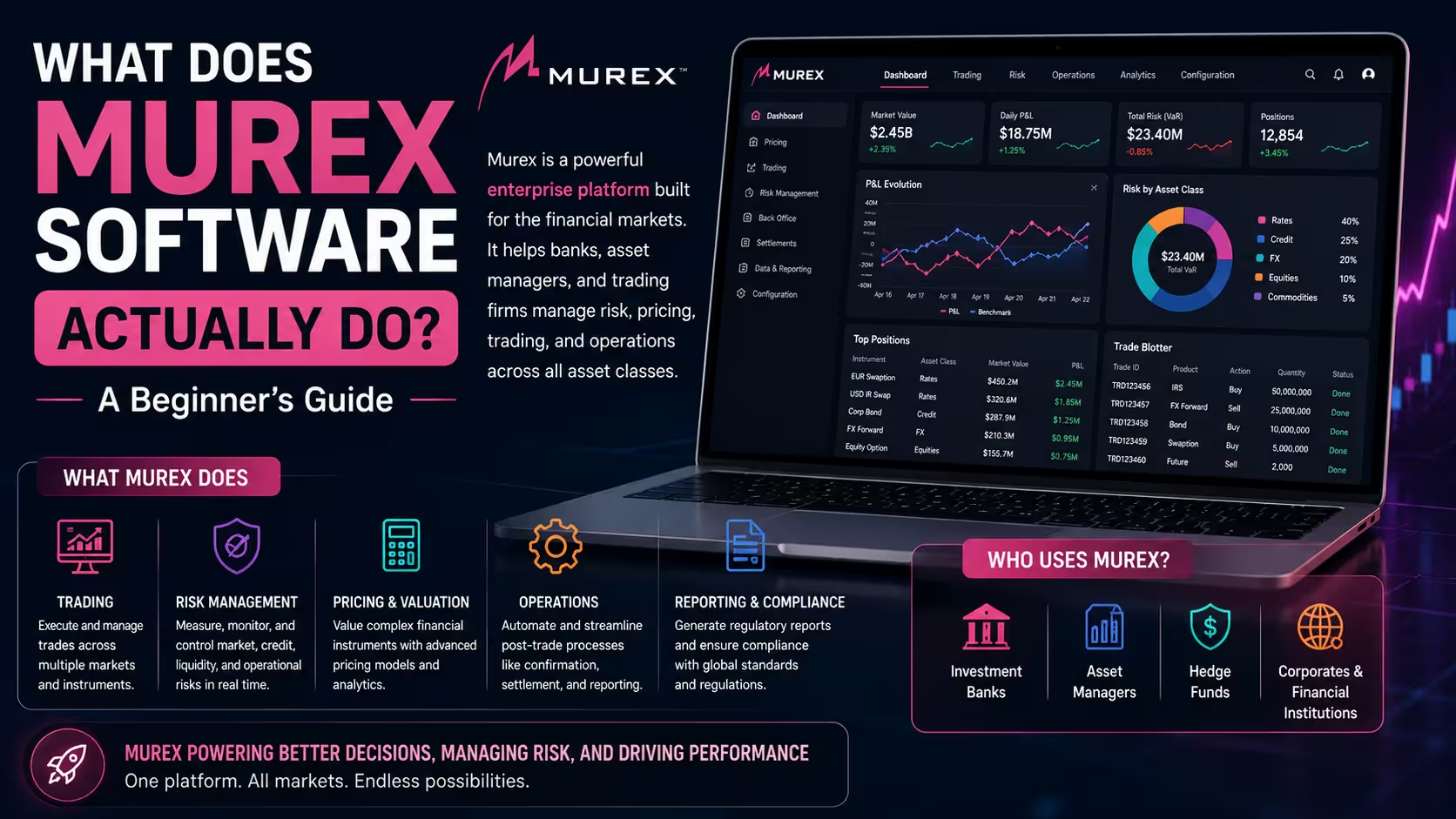
What Does Murex Software Actually Do? A Beginner's Guide
If you work or plan to work in financial technology, investment banking, or capital markets, you have likely heard the name "Murex" mentioned alongside high-paying consulting and support roles. But for newcomers, understanding what Murex actually does behind the scenes can feel confusing. Here is a clear, plain-English guide to the core platform and its everyday applications.
The Core Concept: An Integrated Capital Markets Platform
At its simplest, Murex (specifically its flagship platform, MX.3) is an enterprise software solution used by global investment banks, central banks, asset managers, and energy trading firms to manage the entire lifecycle of financial trades.
Before unified platforms like Murex, banks used separate, disconnected software systems for booking trades, calculating risk, and settling payments. Murex brings all of these functions into a single "front-to-back-to-risk" enterprise ecosystem.
1. Front Office: Trade Capture & Structuring
In the front office, traders and sales desks use Murex to price complex financial products and execute transactions in real time:
- Product Coverage: Handles Foreign Exchange (FX), Fixed Income, Interest Rate Derivatives, Equities, Commodities, and Credit Default Swaps.
- Real-Time Pricing: Calculates fair market values, yield curves, and Greek sensitivities instantly.
- Deal Capture: Records deal terms and automatically pushes transactions into down-stream processing workflows.
2. Middle Office: Enterprise Risk & Collateral Management
Risk managers rely on Murex MX.3 to monitor financial exposures and comply with strict global regulatory frameworks:
- Market Risk: Calculates Value at Risk (VaR), Stress Testing, and Fundamental Review of the Trading Book (FRTB) compliance.
- Counterparty Credit Risk: Tracks real-time credit limits, CVA/XVA exposure, and pre-deal limit checks.
- Collateral Management: Automates margin calls and tracks collateral movements for cleared and uncleared derivative trades.
3. Back Office: Operations, Accounting & Settlement
Back-office teams use Murex to handle post-trade administrative and regulatory fulfillment:
- Straight-Through Processing (STP): Automates trade validation, clearing, and SWIFT payment generation without manual intervention.
- Accounting & General Ledger: Generates real-time accounting entries and multi-entity P&L reporting.
- Confirmation & Reconciliation: Matches trade details against external clearing houses and counterparties.
Why Murex Dominates Investment Banking
Banks choose Murex MX.3 because replacing fragmented legacy systems with a single platform reduces operational risk, ensures regulatory compliance, and slashes maintenance overhead across global trading hubs.
Final Word
Murex MX.3 acts as the central technological engine powering trading, risk analytics, and post-trade settlements for major financial institutions worldwide.
Whether you're exploring financial technology options, evaluating Murex training programs, or preparing for capital markets consulting roles, hands-on platform practice remains the single best predictor of real job readiness.
Explore Murex MX.3 Training in Chennai at EduBrights →
EduBrights is a leading IT training institute offering hands-on Murex courses across capital markets and treasury specializations. View all courses.
Get Training Quote for Free
Related Blogs

Top Interview Questions for Java Backend Developers
This blog covers top Java backend interview questions with clear answers, focusing on Spring Boot, REST APIs, Hibernate, security, and performance to help freshers and professionals prepare confidently.

What You Will Learn in a Professional MySQL Course – Curriculum Explained
In today’s data-driven world, databases play a critical role in almost every application, from small websites to large enterprise systems. Among all database technologies, MySQL continues to be one of the most widely used and trusted solutions across industries. If you are planning to build a career in database management, web development, or data-related roles, enrolling in professional mysql courses can be a smart and future-proof decision. This blog explains in detail what you will learn in a professional MySQL course, how the curriculum is structured, and why choosing the best mysql course can make a real difference in your career growth.

How Can You Get Ready for a Data Science Interview After Finishing a Course?
Preparing for a data science interview is an important step after completing a data science course. While training helps you learn key concepts, interviews require you to demonstrate practical knowledge, problem-solving ability, and clear communication. This blog explains how reviewing core data science concepts, practicing real-world projects, strengthening programming skills, and preparing common interview questions can help candidates succeed. It also highlights the importance of building a strong portfolio, improving communication skills, and staying updated with industry trends to increase your chances of starting a successful career in data science.

Java Courses: The Smart Way to Build a Strong Programming Career
This blog explains why Java remains a top programming language, highlights the benefits of Java courses and online training, and shows how certification and hands-on learning can boost career growth.