Popular
How to Implement Collibra Without Breaking Your Workflow
Akram
June 29, 2026
5 min read
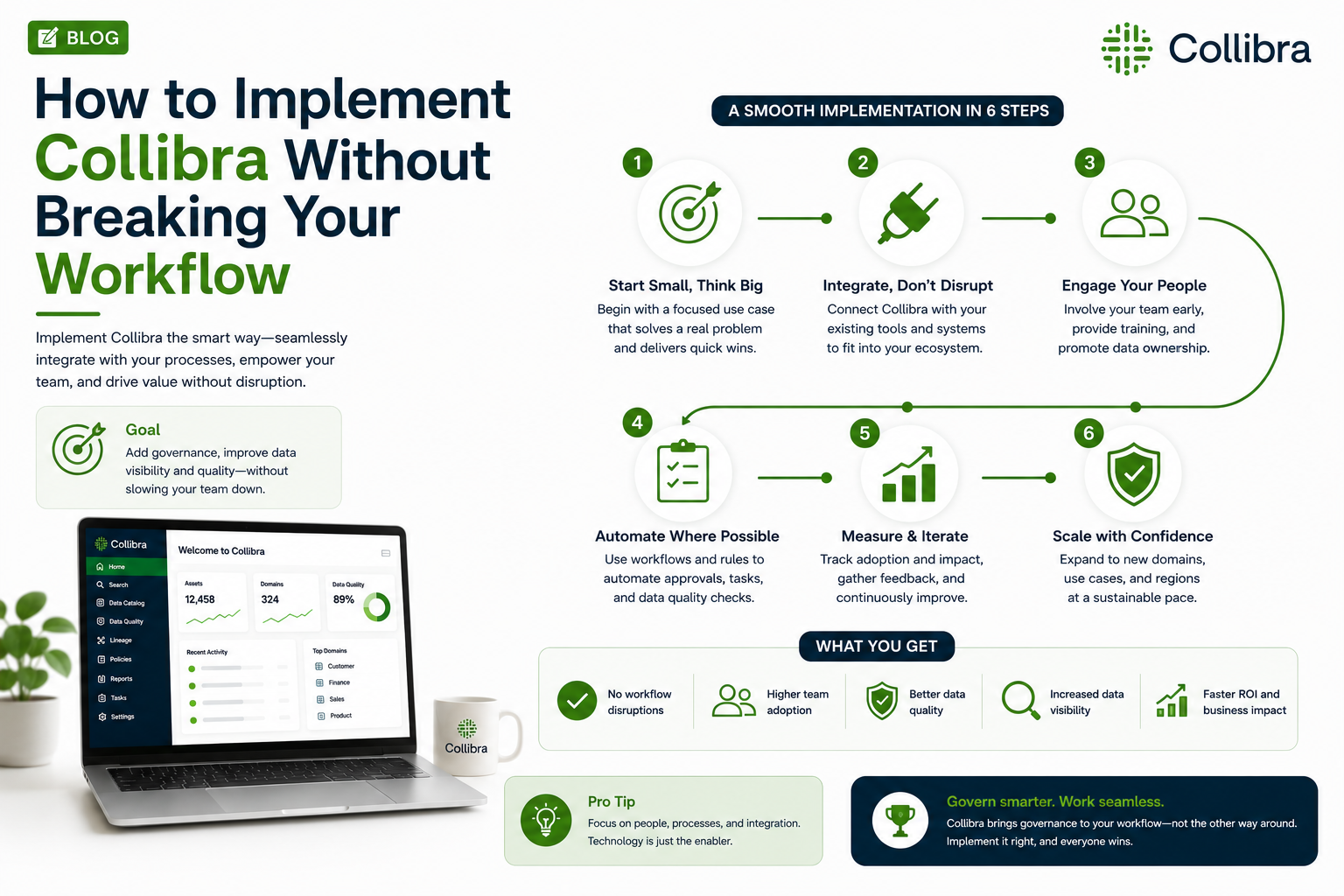
Discover how to implement Collibra without disrupting your existing business processes. This guide covers planning, implementation steps, workflow integration, challenges, and best practices for successful Collibra adoption.
Introduction
Organizations are generating more data than ever before. As businesses expand their applications, databases, and cloud environments, managing data effectively becomes a major challenge.
Many companies adopt Collibra to improve data governance, create trusted data environments, and manage enterprise information.
However, implementing a new data governance platform can create concerns:
- Will existing workflows be affected?
- How will teams adapt?
- Will implementation slow down business operations?
- How can organizations ensure smooth adoption?
The key to successful Collibra implementation is careful planning, gradual adoption, and alignment with existing business processes.
This guide explains how organizations can implement Collibra without disrupting their workflow.
What Is Collibra Implementation?
Collibra implementation is the process of configuring and integrating the Collibra platform into an organization's existing data environment.
It includes:
- Setting governance objectives
- Configuring data assets
- Connecting data sources
- Creating workflows
- Assigning responsibilities
- Training users
Why Do Organizations Implement Collibra?
Companies implement Collibra to:
- Improve data visibility
- Create a centralized data catalog
- Manage metadata
- Improve data quality
- Establish data ownership
- Support compliance requirements
Steps to Implement Collibra Successfully
1. Define Your Data Governance Goals
Before implementation, organizations should clearly define their objectives.
Examples:
- Improve data discovery
- Create data ownership models
- Improve compliance
- Manage data quality
- Standardize business definitions
A clear goal helps teams avoid unnecessary complexity.
2. Understand Existing Workflows
Before changing processes, analyze current workflows.
Identify:
- How teams currently manage data
- Existing approval processes
- Data ownership responsibilities
- Current tools and systems
This helps integrate Collibra without interrupting daily operations.
3. Create an Implementation Strategy
A phased implementation approach works better than changing everything at once.
A typical approach includes:
Phase 1: Planning
- Define objectives
- Identify stakeholders
- Create governance strategy
Phase 2: Setup
- Configure Collibra environment
- Create domains and communities
- Define roles
Phase 3: Data Integration
- Connect data sources
- Import metadata
- Organize data assets
Phase 4: Adoption
- Train users
- Collect feedback
- Improve workflows
4. Start With a Pilot Project
Instead of implementing Collibra across the entire organization immediately, start with a small project.
Benefits include:
- Identifying challenges early
- Testing workflows
- Improving user experience
- Reducing implementation risks
5. Configure Workflows Carefully
Workflows are an important part of Collibra implementation.
Organizations should design workflows for:
- Data approvals
- Ownership assignments
- Policy reviews
- Data changes
Well-designed workflows improve efficiency without creating unnecessary delays.
6. Integrate With Existing Systems
Collibra should work with existing enterprise systems.
Common integrations include:
- Databases
- Cloud platforms
- Business intelligence tools
- Data warehouses
- Analytics platforms
Proper integration helps teams continue their existing work smoothly.
7. Train Users Before Full Adoption
User adoption is one of the biggest factors in implementation success.
Training should cover:
- Collibra basics
- Data governance concepts
- User responsibilities
- Workflow processes
Common Challenges During Collibra Implementation
1. Lack of Clear Ownership
Without defined data owners, governance processes may become difficult.
Solution:
Assign clear responsibilities to data owners and stewards.
2. User Adoption Issues
Teams may resist new processes.
Solution:
Provide training and explain business benefits.
3. Poor Data Preparation
Unorganized data can make implementation harder.
Solution:
Clean and classify important data before migration.
4. Overcomplicated Workflows
Too many approval steps can slow teams.
Solution:
Create simple workflows aligned with business needs.
Best Practices for Collibra Implementation
Follow these practices for better results:
- Start small and scale gradually
- Involve business and technical teams
- Define clear governance roles
- Focus on user experience
- Monitor adoption regularly
- Improve processes continuously
Benefits of Successful Collibra Implementation
A successful implementation helps organizations:
- Find data faster
- Improve data trust
- Reduce manual processes
- Improve collaboration
- Support compliance
- Create better analytics
Career Opportunities With Collibra Implementation Skills
Professionals with Collibra implementation knowledge can explore roles such as:
- Collibra Developer
- Data Governance Consultant
- Data Governance Analyst
- Data Steward
- Metadata Analyst
- Data Management Specialist
Why Learn Collibra Implementation?
Organizations are investing in data governance because trusted data is essential for:
- Artificial Intelligence
- Analytics
- Cloud transformation
- Regulatory compliance
Professionals who understand Collibra implementation can build valuable expertise in enterprise data management.
Why Choose Edubrights for Collibra Training?
Edubrights provides practical Collibra training designed for students, freshers, and working professionals.
The training focuses on:
- Collibra fundamentals
- Data governance concepts
- Implementation practices
- Real-world scenarios
- Career-oriented skills
Frequently Asked Questions (FAQs)
Q1. How long does Collibra implementation take?
Implementation time depends on organization size, data complexity, integrations, and governance requirements.
Q2. Can Collibra be implemented without disrupting business operations?
Yes, phased implementation and proper planning help organizations adopt Collibra without affecting existing workflows.
Q3. What skills are needed for Collibra implementation?
Knowledge of data governance, metadata management, workflows, and enterprise systems is helpful.
Q4. Is Collibra difficult to implement?
Collibra requires planning and expertise, but a structured approach makes implementation manageable.
Q5. Why do companies use Collibra?
Companies use Collibra to improve data governance, data quality, metadata management, and data visibility.
Conclusion
Implementing Collibra successfully requires more than technology setup. Organizations need proper planning, workflow alignment, user training, and continuous improvement.
A gradual implementation approach helps businesses improve data governance without disrupting daily operations.
Learning Collibra implementation skills can help IT professionals build expertise in one of the most important areas of modern data management.
Start your Collibra learning journey with Edubrights and gain practical skills for enterprise data governance.
Contact us to know more about upcoming batches and get a free career counseling session.
Click Here to Join in Edubrights | Collibra Course
WhatsApp: +91-9498046428 / +91-9498055428 | EduBrights Software Training Institue | Chennai.

Collibra
Collibra Implementation
Collibra Deployment
Collibra Workflow
Data Governance Implementation
Data Catalog
Metadata Management
Data Governance
Data Intelligence Platform
Enterprise Data Management
Collibra Training
Data Quality


