Popular
How to Get Started with Collibra (Step-by-Step)
Akram
June 30, 2026
5 min read
Learn how to get started with Collibra through this step-by-step guide. Discover the essential skills, platform fundamentals, practical learning tips, and career opportunities in enterprise data governance.
Introduction
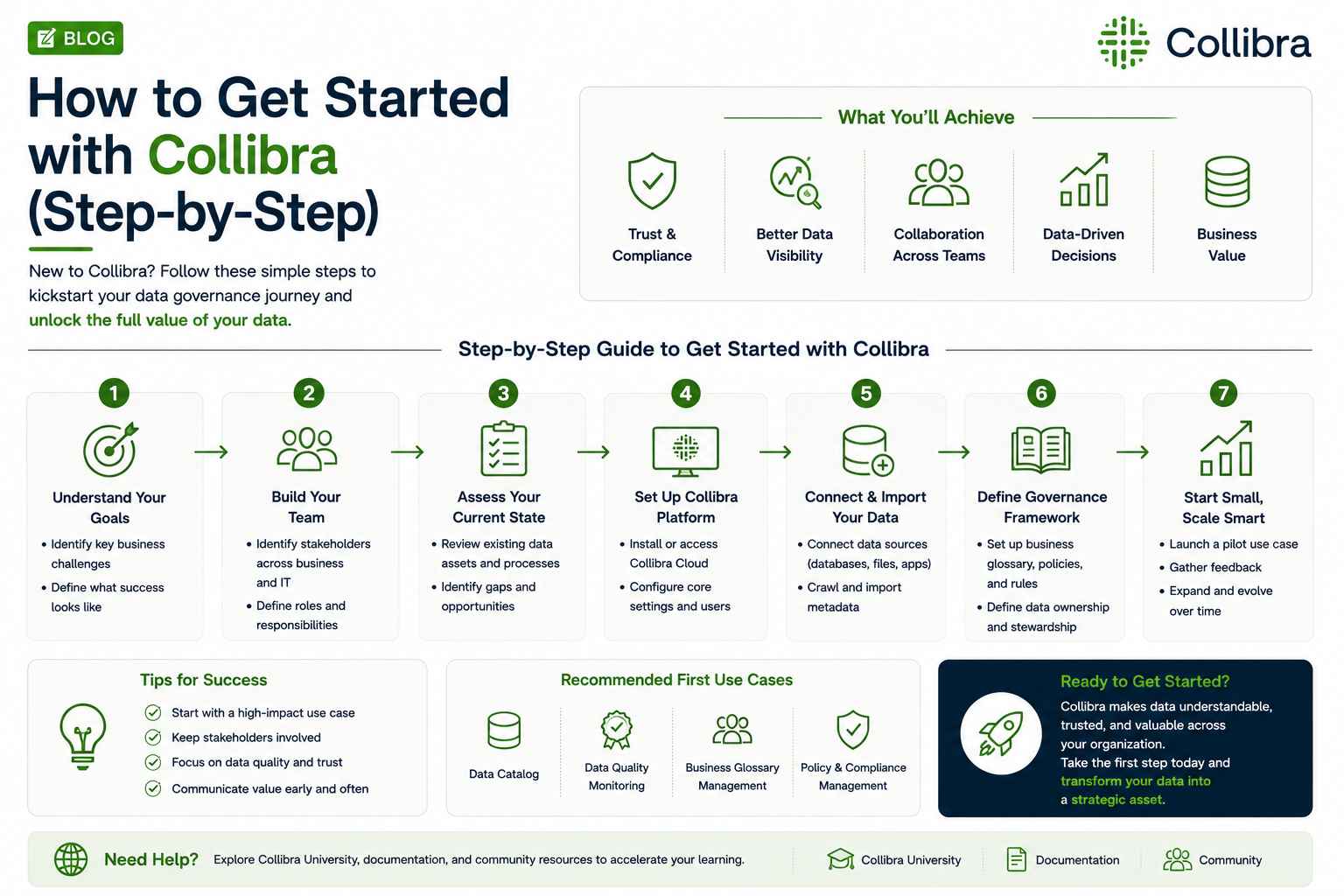
As organizations increasingly rely on data-driven decision-making, the demand for effective data governance has grown significantly. Collibra is one of the leading enterprise data governance platforms, helping businesses organize, manage, and trust their data through metadata management, data catalogs, business glossaries, and governance workflows.
If you're new to Collibra, getting started may seem overwhelming. Fortunately, learning the platform becomes much easier when you follow a structured approach. This guide explains how to get started with Collibra step by step, whether you're a beginner, data analyst, or IT professional.
Step 1: Understand the Basics of Data Governance
Before learning Collibra, it's important to understand why data governance matters. Data governance ensures that business data is accurate, secure, consistent, and accessible across the organization.
Key concepts to learn include:
- Data Governance
- Metadata Management
- Data Stewardship
- Data Catalog
- Data Lineage
- Business Glossary
- Data Quality
A strong understanding of these concepts will make it easier to work with Collibra.
Step 2: Learn Collibra Fundamentals
Start by familiarizing yourself with the core components of the Collibra platform.
Focus on learning:
- Navigation and user interface
- Communities and domains
- Assets and asset types
- Business glossary
- Data catalog
- Roles and responsibilities
- Workflows
Understanding these building blocks provides a solid foundation before exploring advanced features.
Step 3: Practice with Metadata Management
Metadata is at the heart of Collibra. Learn how to organize and manage metadata effectively by creating business terms, assigning ownership, and documenting data assets.
Practical experience with metadata management helps you understand how organizations maintain trusted and well-documented data.
Step 4: Explore Data Lineage and Data Catalog
Data lineage shows how data moves across systems, while the data catalog helps users discover and understand available data assets.
Practice:
- Searching for data assets
- Viewing lineage diagrams
- Understanding relationships between datasets
- Documenting business definitions
These skills are essential for enterprise data governance.
Step 5: Learn Governance Workflows
Collibra allows organizations to automate governance processes through workflows.
Examples include:
- Data approval requests
- Stewardship assignments
- Policy reviews
- Change management
- Governance notifications
Learning how workflows operate helps improve governance efficiency.
Step 6: Understand Integrations
Collibra works with many enterprise technologies.
Common integrations include:
- Cloud platforms
- Databases
- Data warehouses
- ETL tools
- Business Intelligence platforms
- Data quality solutions
Understanding integrations helps you see how Collibra fits into an enterprise data ecosystem.
Step 7: Work on Real-World Projects
The best way to build confidence is through practical experience.
Try projects such as:
- Creating a business glossary
- Cataloging enterprise data assets
- Configuring governance workflows
- Managing metadata
- Documenting data lineage
Hands-on projects prepare you for real implementation scenarios and job interviews.
Skills You'll Gain
By following these steps, you'll develop skills in:
- Data Governance
- Metadata Management
- Data Catalog Management
- Business Glossary Creation
- Data Lineage Analysis
- Governance Workflow Configuration
- Compliance Support
- Enterprise Collaboration
Career Opportunities After Learning Collibra
Professionals with Collibra knowledge are increasingly sought after across industries.
Popular career paths include:
- Data Governance Analyst
- Data Steward
- Metadata Analyst
- Collibra Developer
- Data Governance Consultant
- Data Quality Analyst
- Data Architect
- Master Data Management Consultant
Frequently Asked Questions (FAQs)
Q1. Is Collibra suitable for beginners?
Yes. Beginners with a basic understanding of databases and data governance concepts can learn Collibra effectively through structured training and hands-on practice.
Q2. Do I need programming knowledge?
Not necessarily. Most governance tasks require minimal coding, although SQL and data management knowledge can be beneficial.
Q3. How long does it take to learn Collibra?
Most learners can understand the fundamentals within 6–8 weeks with regular practice.
Q4. Is certification necessary?
Certification is optional but can strengthen your resume and validate your expertise.
Q5. Can I get a job after learning Collibra?
Yes. Organizations across banking, healthcare, retail, insurance, and technology actively hire professionals with Collibra and data governance skills.
Conclusion
Getting started with Collibra doesn't have to be complicated. By first understanding data governance concepts, learning the platform fundamentals, practicing metadata management, and working on real-world projects, you can quickly build practical skills that employers value.
As businesses continue investing in trusted data and governance, Collibra expertise offers excellent career opportunities. Whether you're beginning your data governance journey or enhancing your existing skills, following these step-by-step recommendations will help you become confident in using one of the industry's leading data governance platforms.
Contact us to know more about upcoming batches and get a free career counseling session.
Click Here to Join in Edubrights | Collibra Course
WhatsApp: +91-9498046428 / +91-9498055428 | EduBrights Software Training Institue | Chennai.
Learn Collibra - Collibra Tutorial - Collibra for Beginners - Collibra Data Governance - Collibra Learning Guide


