Can You Learn SAP for Free?
Wondering if free SAP learning resources genuinely exist? Here's an honest guide to what's genuinely available, what its real limitations are, and how to use it effectively as part of a broader learning strategy.
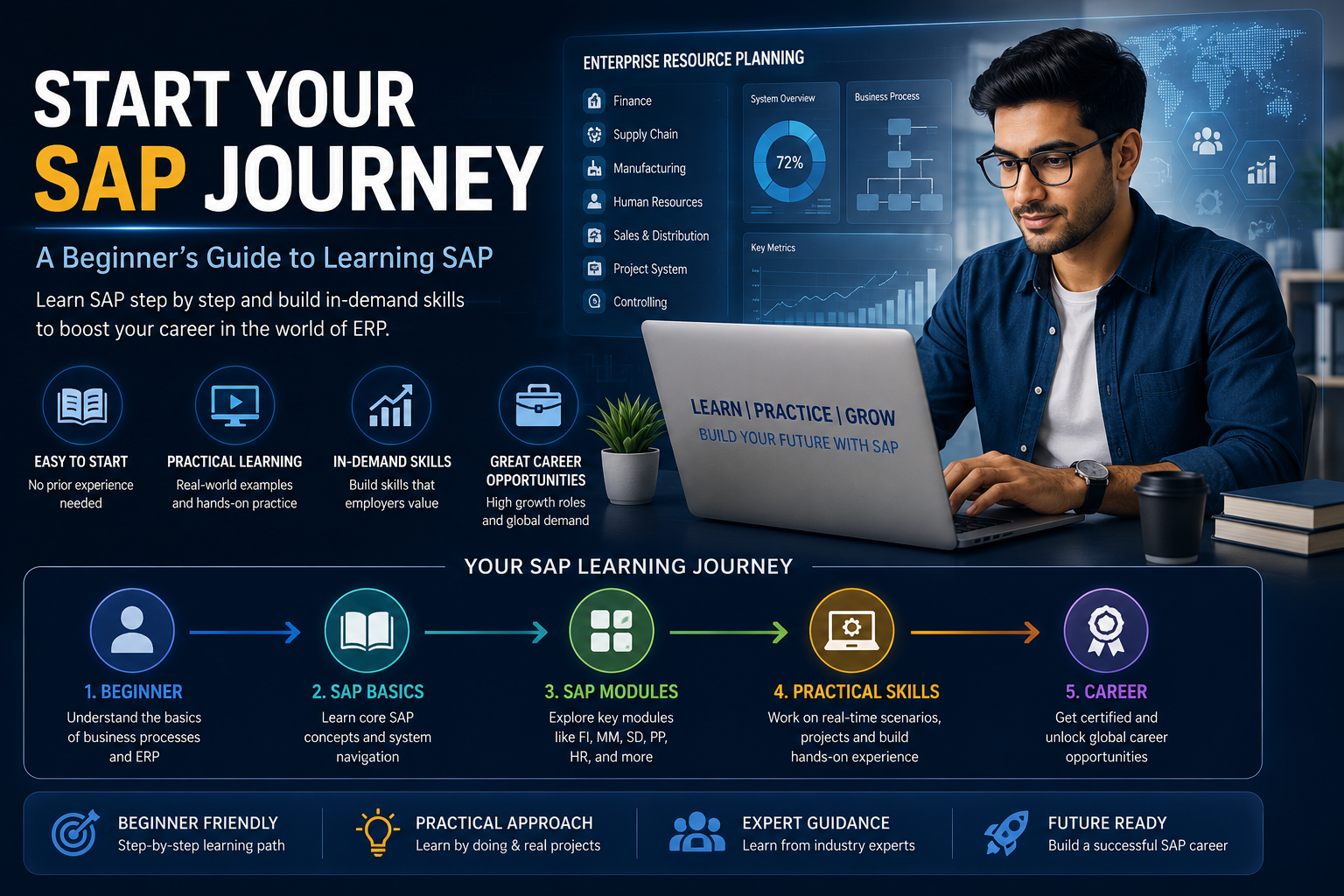
Can You Learn SAP for Free?
If cost is a genuine barrier, it's worth knowing that meaningful free SAP learning resources do exist — though it's important to understand their real limitations compared to structured, paid training.
SAP's Own Free Learning Platform
SAP offers its own official learning platform with free courses covering foundational ERP concepts across various modules. This is genuinely one of the best starting points for free learning, since content comes directly from SAP itself and stays current with the actual product.
Free Trial and Learning System Access
SAP offers trial and learning system access in some contexts, letting you explore the interface and basic navigation without needing a full enterprise license — genuinely useful for confirming interest before committing further.
Community Resources
Communities like r/SAP and various SAP-focused forums and content creators offer substantial free content, troubleshooting help, and honest career advice from working professionals.
The Genuine Limitations of Free Resources
- Lack of structured, module-specific progression — SAP's breadth (FICO, MM, PM, PPM, TM, Basis, and more) means free resources are often scattered without a clear learning path for your specific target module
- Limited hands-on system access — genuine, extended hands-on practice in a realistic SAP environment is harder to access for free compared to a paid course with dedicated system access
- No personalized feedback — nobody is reviewing your practice work to confirm whether your approach reflects genuine best practices
- Harder to build a cohesive, job-ready portfolio — without structured project guidance, free learning often produces disconnected knowledge rather than demonstrable skill
A Practical Strategy for Using Free Resources Well
Consider using SAP's official learning platform as your foundational curriculum for understanding core concepts, supplemented by community resources for career context and troubleshooting, while recognizing that genuine hands-on system practice is harder to fully replicate for free.
When It Makes Sense to Invest in Paid Training Instead
Given SAP's genuine complexity and the importance of hands-on system practice for building real, job-ready skills, most learners find that investing in structured, instructor-led training — with dedicated system access — meaningfully accelerates their path to genuine competency compared to free resources alone.
Final Word
Genuinely useful free SAP learning resources exist, particularly SAP's own official learning content — but given the platform's complexity and the importance of hands-on system access, they work best as a starting point or supplement rather than a complete substitute for structured, hands-on training.
Whether you're comparing SAP training options, evaluating a specific SAP course for a career switch, exploring SAP certification paths, or looking into SAP corporate training for your team, hands-on practice remains the single best predictor of real job readiness.
Explore SAP FICO Training at EduBrights →
EduBrights offers hands-on SAP training across FICO, MM, PM, PPM, TM, Basis Administration, and Concur, in Chennai and Bangalore. View all courses.
Get Training Quote for Free
Related Blogs
Master Your Future with the Best.NET Courses: A Complete Guide by Edubrights
In today’s rapidly evolving technology landscape, choosing the right skill can significantly shape your career path. This blog provides a complete guide to mastering .NET courses, one of the most in-demand technologies backed by Microsoft. It covers everything from understanding the fundamentals of .NET training to exploring advanced topics like ASP.NET, C#, cloud integration, and database management. The blog also highlights the benefits of enrolling in a .NET developer course, including career opportunities, certification value, and industry demand. Additionally, it explains why Edubrights stands out as a trusted training provider with expert trainers, hands-on projects, and career support. Whether you are a beginner or a professional, this guide helps you choose the right .NET certification course and build a successful future in software development.
Master Your Future with the Best.NET Courses: A Complete Guide by Edubrights
This blog provides a complete guide to choosing the right .NET course and building a successful career in software development. It explains what .NET courses are, what you will learn, and the benefits of enrolling in a .NET certification course. The article also highlights career opportunities, industry demand, and the importance of structured .NET training. With insights into Edubrights’ expert-led programs, learners can understand how to gain practical skills, work on real-time projects, and become job-ready. Whether you are a beginner or a working professional, this guide helps you take the right step toward becoming a successful .NET developer.
Why PHP Courses Are Still the Smartest Choice for Aspiring Developers in 2026
This blog provides a complete introduction to PHP courses and their importance in today’s web development industry. It explains why PHP remains a relevant and in-demand programming language in 2026, what learners can expect from a structured PHP course, and the advantages of online PHP training. The article also highlights career opportunities, essential skills, and tips to succeed as a PHP developer. With a focus on practical learning and industry-relevant training, Edubrights helps students gain real-world experience and build a strong foundation in web development. Whether you are a beginner or a professional, this guide will help you choose the right PHP course and start your journey in the tech field.

Looking for the Flask Course in Chennai? Here’s Why Edubrights is Your Top Choice!
This blog provides a complete guide for learners who are searching for the best Flask course in Chennai. It explains what Flask is, why it is an essential Python framework for web development, and how it helps build scalable web applications. The article highlights the growing demand for Flask developers in Chennai’s IT industry and the importance of choosing the right training institute. It also covers the key features of Flask courses, including hands-on projects, real-time training, and career opportunities after completing a Flask training course in Chennai. Additionally, the blog showcases why Edubrights stands out as a top choice by offering industry-oriented curriculum, expert trainers, flexible learning options, and placement support. Overall, this blog is designed to help beginners, students, and professionals make an informed decision about enrolling in Flask courses and building a successful career in web development.