Course Objectives
1. What is SAP GRC?
Answer: SAP GRC (Governance, Risk, and Compliance) is an SAP solution that helps organizations manage security, control user access, reduce business risks, maintain compliance, and support audit requirements.
2. What are the main components of SAP GRC?
Answer: SAP GRC mainly includes Access Control, Process Control, Risk Management, Audit Management, and Business Integrity Screening.
3. What is Segregation of Duties (SoD)?
Answer: Segregation of Duties (SoD) is a security principle that prevents one user from performing conflicting business activities that could lead to fraud or errors.
4. What is Segregation of Duties (SoD)?
Answer: Segregation of Duties (SoD) is a security principle that prevents one user from performing conflicting business activities that could lead to fraud or errors.
5. Is coding required for SAP GRC?
Answer: No. SAP GRC Functional Consultant roles generally do not require programming. Basic SAP Security knowledge and business process understanding are sufficient.
6. What career opportunities are available after learning SAP GRC?
Answer: You can work as an SAP GRC Consultant, SAP Security Consultant, SAP Access Control Consultant, Compliance Analyst, Risk Consultant, or SAP Support Consultant.
Popular Techniques Covered in This Course
SoD Rule Customization
Access Risk Analysis (ARA)
Access Request Management (ARM)
Emergency Access Management (EAM)
User Access Review (UAR)
Business Role Management (BRM
Continuous Control Monitoring (CCM
Mitigating Control Assignment
MSMP Workflow Engineering
Fiori Security Integration
Get Hands-on Knowledge about Real-Time Projects
Project 1
Project 1: Enterprise Segregation of Duties (SoD) Remediation
Analyze a chaotic security landscape for a multi-national firm. You will build a customized global SoD risk matrix, run system-wide analysis scans to discover user authorization conflicts, and apply mitigating controls to fix security gaps.
Project 2
Project 2: Automated Employee Onboarding Access Workflow
Construct an automated, hands-free user provisioning setup via the MSMP Workflow engine. The configuration will automatically route user access requests based on department, request safety level, and risk thresholds to specific data owners for electronic approval.
Project 3
Project 3: Compliant Emergency Firefighter Framework
Design a secure Emergency Access Management setup for a core banking client in Chennai. You will build highly audited administrative Firefighter IDs, map them to specific technical engineers, and test automated review workflows that deliver usage logs directly to security auditors.
Project 4
Project 4: Continuous Process Control Compliance Monitor
Deploy a real-time compliance checkpoint using SAP GRC Process Control. You will design automated tracking rules that monitor general ledger changes, flag unauthorized manual modifications, and forward early warning flags to control owners.
Project 5
Project 5: Automated Role Lifecycle & Security Audit Design
Configure a multi-tier Business Role Management pipeline. You will design standardized role definitions, run test checks to prove the roles are free from inherent SoD conflicts, and execute automated periodic User Access Reviews (UAR) for management validation.
Key Features
Edubrights offers SAP GRC Training in virtual mode with expert trainers. Here are the key features,
40 Hours Course Duration
100% Job Oriented Training
Industry Expert Faculties
Free Demo Class Available
Completed 500+ Batches
Certification Guidance
Curriculum
Module 1: Introduction to SAP GRC
- Overview of SAP Governance, Risk & Compliance
- GRC components: Access Control, Process Control, Risk Management
- GRC 10.x and 12.x architecture
- Integration with SAP ECC, S/4HANA, and non-SAP systems
- GRC implementation methodology
Module 2: SAP GRC Access Control
- Access Risk Analysis (ARA): SoD conflicts
- Business Role Management (BRM)
- Access Request Management (ARM)
- Emergency Access Management (EAM / Firefighter)
- User Access Review (UAR)
Module 3: Access Risk Analysis (ARA)
- Ruleset configuration: Global, custom rules
- Risk levels and mitigation controls
- SoD conflict reports
- Batch risk analysis
- Organizational-level risk analysis
Module 4: Business Role Management
- Role design and methodology
- Role mining and generation
- Role comparison and cleanup
- Role certification workflow
- Mass role assignment
Module 5: Access Request Management
- Access request workflow configuration
- Approver determination: Role owner, manager
- Provisioning to SAP and non-SAP systems
- Self-service access requests
- Request history and audit trail
Module 6: Emergency Access Management (Firefighter)
- Firefighter ID management
- Controller and owner assignment
- Firefighter session logging
- Log review and sign-off workflow
- Firefighter reporting
Module 7: SAP GRC Process Control
- Control framework setup
- Automated and manual controls
- Control testing and assessment
- Deficiency management
- SOX compliance reporting
Module 8: SAP GRC Risk Management
- Risk universe and risk catalog
- Risk assessment and scoring
- Risk response and treatment
- Key risk indicators (KRIs)
- Risk reporting and dashboards
Module 9: GRC Configuration and Administration
- GRC system and plug-in installation
- SPRO configuration for GRC
- Connector framework for non-SAP systems
- Workflow customization (BRF+)
- User and role management in GRC
Module 10: GRC Reporting and Dashboards
- Compliance dashboards
- SoD conflict summary reports
- Risk heat maps
- Audit-ready reports
- Integration with SAP Analytics Cloud
Module 11: GRC in S/4HANA
- GRC integration with S/4HANA
- Fiori apps for GRC
- SAP Cloud Identity Access Governance (IAG)
- Integration with SAP BTP
Module 12: Real-Time Projects and Case Studies
- SOX compliance GRC implementation
- SoD remediation project
- End-to-end GRC Access Control cycle
- Certification and interview preparation
Receive Training From Our Skilled and Effective Trainers
Experience in the Industry Gain knowledge from experts with hands-on SAP GRC project experience in banking, manufacturing, and public sector.
Backgrounds at the Top Prominent corporations such as HCL, TCS, Deloitte, and EY employ our SAP GRC trainers.
Clear & Effective Teaching Excellent communication and real-world examples simplify complex governance, risk, and compliance configurations.
Hands-On Learning Focus Students apply skills using live SAP GRC systems with real SoD analysis and access control projects.
Up-to-Date Knowledge Trainers stay current with SAP GRC 12.0, Cloud IAG, and latest regulatory compliance requirements.
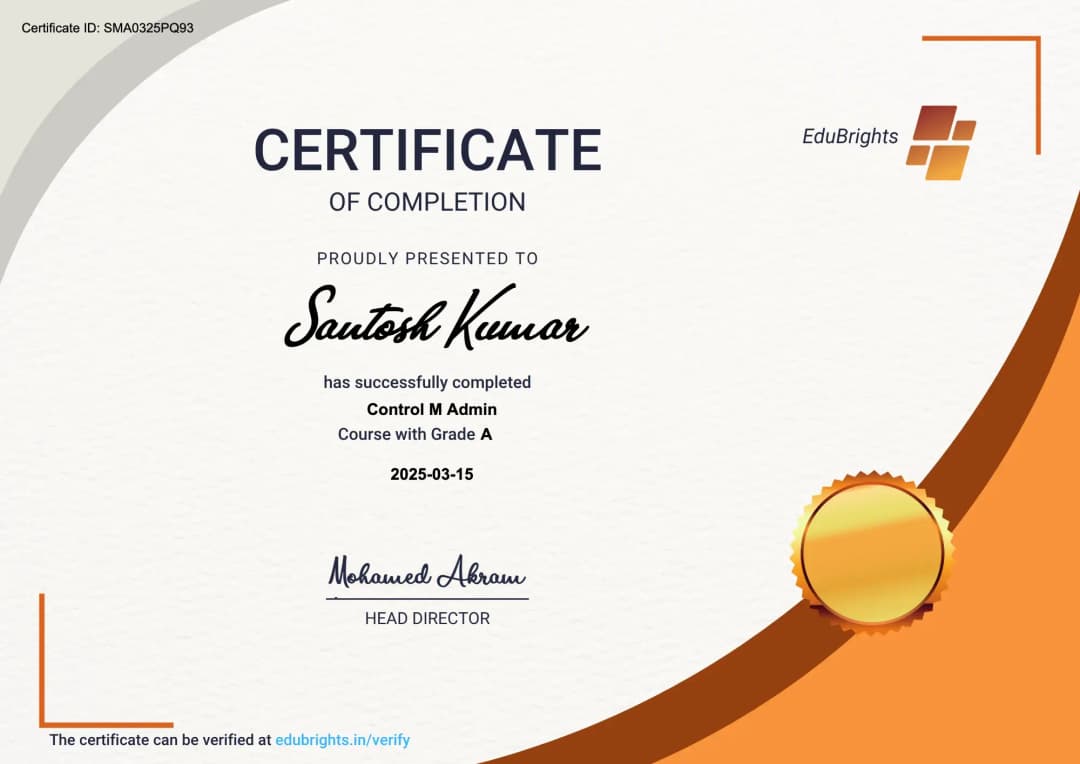
About Our Course Certification*
Our institution offers a recognized SAP GRC certification that validates your ability to design and prototype professional user interfaces efficiently. This certification enhances your design portfolio and prepares you for collaborative projects in real-world environments. Gain practical skills through hands-on training and assessments.
Course FAQs
1. What is SAP GRC?
SAP GRC stands for Governance, Risk, and Compliance. It provides tools and processes that help organizations manage user access, identify business risks, monitor internal controls, and support regulatory compliance.
2. What are the main components of SAP GRC?
Key SAP GRC components include Access Control, Process Control, and Risk Management. Depending on the solution landscape, organizations may also use related capabilities for audit management, fraud detection, and compliance monitoring.
3. What is SAP GRC Access Control?
SAP GRC Access Control helps organizations manage user access and reduce risks associated with inappropriate permissions. It supports access risk analysis, access requests, business role management, emergency access, and periodic access reviews.
4. What is Access Risk Analysis (ARA) in SAP GRC?
Access Risk Analysis identifies access-related risks associated with users, roles, and authorizations. It evaluates assigned permissions against configured rules to detect conflicts, sensitive access, and potential compliance violations.
5. What is Segregation of Duties (SoD) in SAP GRC?
Segregation of Duties ensures that conflicting responsibilities are not improperly assigned to the same user. For example, separating vendor creation from payment approval can reduce the risk of unauthorized transactions or fraud.
6. What is an SoD risk in SAP GRC?
An SoD risk occurs when a user has access to two or more functions that should be separated according to organizational control policies. SAP GRC can identify these conflicts using configured risk rules and functions.
7. What is an SAP GRC ruleset?
A ruleset contains definitions used to identify access risks and conflicts. It typically includes functions, permissions, risk definitions, and relationships between transactions or authorization objects, depending on the configured rule model.
8. What is a risk definition in SAP GRC Access Control?
A risk definition describes a specific access conflict or sensitive authorization scenario that needs monitoring. It can include a risk ID, description, risk level, associated functions, and mitigation guidance.
9. What is a function in SAP GRC Access Control?
A function represents a business activity or capability used in access risk analysis. Functions can be mapped to relevant transactions and authorization requirements to help identify conflicts between incompatible activities.
10. What is a critical action in SAP GRC?
A critical action is an individual activity or permission considered sensitive from a security or compliance perspective. Access to such actions can be evaluated to identify whether users hold permissions that require additional review or control.
11. What is a critical permission in SAP GRC?
A critical permission is an authorization or permission combination that may create a security or compliance risk. Rules can be configured to identify users whose access includes these sensitive permissions.
12. What is User-Level Risk Analysis?
User-Level Risk Analysis evaluates the risks associated with the permissions assigned to an individual user. It helps administrators identify SoD conflicts and critical access resulting from the user's roles and authorizations.
13. What is Role-Level Risk Analysis?
Role-Level Risk Analysis evaluates whether a role contains conflicting or sensitive access before it is assigned to users. It helps role designers identify potential risks during role creation, modification, and maintenance.
14. What is a mitigating control in SAP GRC?
A mitigating control is an additional control used to address a risk that cannot immediately be eliminated. It may involve independent review, transaction monitoring, approval procedures, or other documented activities that reduce the likelihood or impact of the risk.
15. What is risk mitigation in SAP GRC?
Risk mitigation is the process of reducing identified access or compliance risks through corrective actions or additional controls. Common approaches include removing conflicting access, redesigning roles, restricting permissions, or assigning approved mitigating controls.
16. What is Access Request Management (ARM) in SAP GRC?
Access Request Management supports the controlled request, review, approval, and provisioning of user access. It helps organizations ensure that access changes follow defined workflows and authorization policies.
17. What is an access request in SAP GRC?
An access request is a formal request to create or modify a user's access, such as assigning a role or requesting additional permissions. The request can pass through configured approval steps and risk checks before access is provisioned.
18. How does the SAP GRC access request workflow work?
An access request is submitted and routed through the configured approval process. Depending on the workflow, it may undergo manager approval, role-owner approval, risk analysis, security review, and provisioning before the request is completed.
19. What is role provisioning in SAP GRC?
Role provisioning is the process of assigning approved roles or access permissions to a user in the relevant target system. The process depends on system connectivity, provisioning configuration, and the organization's approval requirements.
20. What is Business Role Management (BRM) in SAP GRC?
Business Role Management helps organizations design, maintain, and govern business roles. It can support role definition, role approval, risk analysis, and the relationship between business responsibilities and technical system access.
21. What is Emergency Access Management (EAM) in SAP GRC?
Emergency Access Management provides a controlled way for authorized users to obtain elevated access for urgent tasks. It supports accountability through access assignment controls, activity logging, and review processes.
22. What is a Firefighter ID in SAP GRC?
A Firefighter ID is a specially configured emergency account used to perform approved activities requiring elevated permissions. Its use is governed by access controls and review procedures to maintain accountability.
23. What is a Firefighter controller?
A Firefighter controller is responsible for reviewing emergency access activity and associated logs. The controller checks whether the recorded actions were appropriate and whether follow-up or corrective action is required.
24. What is Firefighter log review?
Firefighter log review is the examination of activities performed during emergency access sessions. Reviewers can investigate executed transactions, recorded actions, and exceptions to verify that emergency access was used appropriately.
25. What is periodic access review in SAP GRC?
Periodic access review evaluates whether users still require their assigned roles and permissions. Reviewers can confirm, modify, or revoke access based on current job responsibilities and organizational policies.
26. What is SAP GRC Process Control?
SAP GRC Process Control helps organizations document, assess, test, and monitor internal controls. It supports control ownership, assessments, issue management, automated monitoring, and compliance reporting. <Cite refs={["turn652601search0","turn652601search2"]}/>
27. What is an internal control in SAP GRC?
An internal control is a procedure or activity designed to reduce risk and support business objectives, regulatory compliance, or reliable reporting. Controls can be preventive or detective and may be performed manually or supported by automated monitoring.
28. What is control testing in SAP GRC Process Control?
Control testing evaluates whether a control is designed appropriately and operates effectively. Testing can involve manual evidence review, structured test plans, automated monitoring, and documented results.
29. What is automated control monitoring in SAP GRC?
Automated control monitoring uses configured rules and data to identify exceptions or control failures. It can reduce manual effort by detecting selected issues systematically and supporting investigation and remediation.
30. What is a control assessment in SAP GRC?
A control assessment records the evaluation of a control's design or operating effectiveness. It may include assessment questions, evidence, test results, findings, and approvals according to the configured process.
31. What is issue management in SAP GRC Process Control?
Issue management tracks problems identified during control assessments, testing, or monitoring. Issues can be assigned to owners, prioritized, investigated, and followed through remediation and closure.
32. What is SAP GRC Risk Management?
SAP GRC Risk Management helps organizations identify, assess, analyze, respond to, and monitor business risks. It supports risk ownership, risk classification, mitigation planning, key risk indicators, and risk reporting. <Cite refs={["turn652601search4","turn652601search2"]}/>
33. What is a risk assessment in SAP GRC?
A risk assessment evaluates the likelihood and potential impact of a risk. The results help organizations prioritize risks and determine suitable responses, controls, and monitoring activities.
34. What is a Key Risk Indicator (KRI)?
A Key Risk Indicator is a measurable value used to monitor changes in risk exposure. KRIs can be assigned thresholds so that unusual trends or threshold breaches prompt investigation or management action.
35. What is a risk response in SAP GRC Risk Management?
A risk response defines how an organization intends to address an identified risk. Typical strategies include reducing the risk through controls, avoiding the activity, transferring part of the exposure, or accepting the risk through an authorized decision.
36. What is a risk heat map in SAP GRC?
A risk heat map visually represents risks according to dimensions such as likelihood and impact. It helps stakeholders compare risk levels and prioritize attention, although the precise scoring method depends on the organization's configured risk model.
37. What is workflow configuration in SAP GRC?
Workflow configuration defines how requests, approvals, reviews, and related tasks move between users or responsible roles. It includes routing rules, approval stages, agent determination, and notification behavior, depending on the application and version.
38. How does SAP GRC integrate with SAP ERP or SAP S/4HANA?
SAP GRC can connect to supported SAP systems to retrieve user, role, authorization, and transaction-related information for access analysis and governance. Integration and provisioning capabilities depend on the product version, connector setup, and target-system configuration.
39. What is repository synchronization in SAP GRC?
Repository synchronization updates SAP GRC with relevant user, role, profile, and authorization information from connected systems. Keeping this information current is important for reliable access analysis and governance activities.
40. What is user provisioning integration in SAP GRC?
User provisioning integration supports the creation or modification of access in connected target systems after required approvals. The exact process depends on the selected provisioning method, connector configuration, and organizational workflow.
41. What is the difference between SAP GRC Access Control and Process Control?
Access Control focuses on managing user permissions, access risks, SoD conflicts, access requests, and emergency access. Process Control focuses on documenting, assessing, testing, and monitoring internal business controls.
42. What is the difference between SAP GRC Access Control and Risk Management?
Access Control focuses on access-related risks arising from users, roles, and authorizations. Risk Management covers broader enterprise risks, including their identification, assessment, ownership, response planning, and ongoing monitoring.
43. How does SAP GRC support audit and compliance activities?
SAP GRC helps maintain records of access decisions, control assessments, risk evaluations, and remediation activities. These records can support audit evidence gathering and demonstrate how governance and compliance processes are managed.
44. What is role redesign in SAP GRC?
Role redesign modifies roles to better align permissions with job responsibilities and security policies. It can involve removing unnecessary access, separating conflicting functions, reducing excessive permissions, and retesting the revised roles for risk.
45. How are false positives handled in SAP GRC risk analysis?
False positives can occur when configured rules identify a potential conflict that does not represent a meaningful business risk in a particular context. Administrators should validate the rule mapping, authorization data, business process, and approved exception or mitigation procedures before deciding on corrective action.
46. How can SAP GRC access risk analysis be troubleshot?
Troubleshooting commonly involves checking repository synchronization, user and role assignments, ruleset configuration, function mapping, authorization data, and analysis settings. Re-running the analysis after correcting these issues can help verify whether the risk results are accurate.
47. What authorizations are needed to administer SAP GRC?
SAP GRC administration requires appropriate application roles and underlying system authorizations for the tasks being performed. Access should be granted according to least-privilege principles, with separate responsibilities for configuration, approvals, provisioning, and reviews wherever appropriate. <Cite refs={["turn652601search6","turn652601search25"]}/>
48. What practical exercises can be included in SAP GRC training?
Practical exercises can include configuring an SoD ruleset, running user- and role-level risk analysis, processing an access request, setting up an emergency access review, and testing an internal control. These exercises help learners understand how GRC governance activities work together in an SAP environment.
49. What technical skills can I gain from SAP GRC training in Chennai?
You can develop skills in access risk analysis, SoD management, ruleset concepts, access request workflows, role governance, emergency access, control testing, risk assessment, repository synchronization, and GRC troubleshooting. The specific hands-on tools and configuration activities covered should match the SAP GRC version used in training.
50. How can SAP GRC skills be applied in real-world projects?
SAP GRC skills can support access governance, role design, risk remediation, emergency access reviews, internal control testing, and compliance monitoring. These capabilities are relevant to SAP security, GRC consulting, IT audit, risk management, and compliance-related project work.
Get Training Quote for Free
Testimonials
Hear What our Students say
"Transform your life through Education, hear it from our Alumni"

8 LPA
Rahul
Student
Data Scientist
"Transform your life through Education, hear it from our Alumni"

6 LPA
Fathima
Student
Software Engineer
"Transform your life through Education, hear it from our Alumni"

8 LPA
Siddharth
NIELSON IQ
Data Analyst