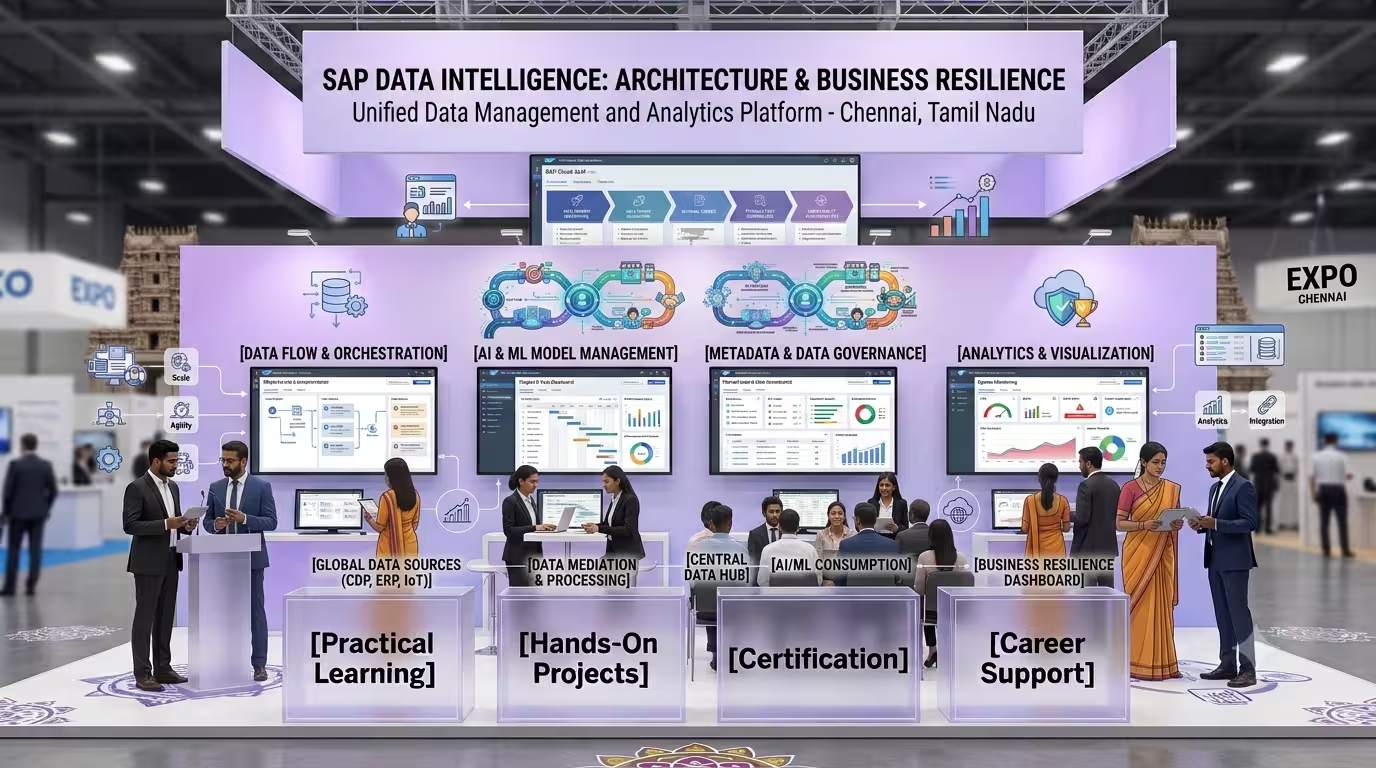
Course Objectives
1. What will I learn by taking the SAP Data Intelligence course in Bangalore?
You'll build a solid understanding of the core concepts, terminology, and fundamentals of SAP Data Intelligence, giving you a strong foundation to build on.
2. What hands-on skills will I gain from the SAP Data Intelligence training?
You'll get hands-on experience with industry-relevant SAP Data Intelligence tools and workflows through guided exercises, so you learn by doing rather than just reading theory.
3. How does the SAP Data Intelligence course prepare me for real-world work?
The SAP Data Intelligence course is designed around how SAP Data Intelligence is actually applied to solve real-world problems in professional settings, not just textbook scenarios.
4. What practical, job-ready skills will I build during SAP Data Intelligence training in Bangalore?
You'll develop the practical skills needed to confidently work with SAP Data Intelligence on the job, so you're ready to contribute from day one in a SAP Data Intelligence role.
5. Will I work on real projects during the SAP Data Intelligence course?
Yes, the SAP Data Intelligence course includes real-time projects and case studies that reinforce concepts through practice, giving you portfolio-ready work by the end.
6. How does the SAP Data Intelligence course help with certification and job interviews?
The SAP Data Intelligence course is structured to help you prepare for relevant certifications and interviews, covering the concepts and terminology employers and exam boards expect.
Popular Techniques Covered in This Course
SAP Data Intelligence Architecture
Data Pipeline Development
Data Integration Concepts
Metadata Management
Data Orchestration
Workflow Design and Execution
Data Quality Management
Enterprise Data Connectivity
Data Monitoring and Administration
Cloud Data Integration
Get Hands-on Knowledge about Real-Time Projects
Project 1
Project 1: Enterprise Data Integration Platform
Create a solution that connects multiple business systems and centralizes data for reporting and analytics purposes.
Project 2
Project 2: Automated Data Pipeline Development
Design and deploy data pipelines that automate data extraction, transformation, and loading processes.
Project 3
Project 3: Customer Data Consolidation System
Integrate customer information from multiple sources into a unified platform for better business insights.
Project 4
Project 4: Data Quality Monitoring Solution
Develop workflows to identify data inconsistencies, monitor quality metrics, and improve data reliability.
Project 5
Project 5: Business Analytics Data Preparation
Build data processing pipelines that prepare and transform raw business data for reporting and analytics teams.
Key Features
Edubrights offers SAP Data Intelligence in virtual mode with expert trainers. Here are the key features,
40 Hours Course Duration
100% Job Oriented Training
Industry Expert Faculties
Free Demo Class Available
Completed 500+ Batches
Certification Guidance
Curriculum
Module 1: Introduction to SAP Data Intelligence
- Overview of SAP Data Intelligence (DI)
- DI architecture: Modeler, Metadata Explorer, Connection Management
- SAP DI vs. SAP Data Services
- Use cases: Data integration, ML pipelines, data governance
- SAP DI on BTP and on-premise deployment
Module 2: SAP DI System Architecture
- Kubernetes-based architecture
- Tenant management and system landscape
- Connection management: SAP and non-SAP sources
- Repository and version management
- User management and authorization
Module 3: Data Pipeline Modeler
- Pipeline (graph) concepts
- Operators: Source, target, processing
- SAP-specific operators: ABAP, HANA, S/4HANA
- Custom operators using Python and JavaScript
- Pipeline groups and multiplexing
Module 4: Data Integration with SAP Sources
- SAP HANA integration
- S/4HANA and ECC data extraction (SLT, ABAP)
- BW/4HANA integration
- SuccessFactors and Ariba connectors
- SAP Landscape Transformation Replication Server (SLT)
Module 5: Non-SAP and Cloud Integration
- AWS S3, Azure Blob, GCP connectors
- Hadoop and Spark integration
- REST and OData connectors
- Kafka and message queue integration
- On-premise data source connectivity
Module 6: Data Transformation
- Data transform operator
- SQL-based transformations
- Python-based data processing
- Data quality rules and cleansing
- Aggregation and join operations
Module 7: Machine Learning Pipelines
- ML pipeline design in DI Modeler
- Model training operators
- ML scenario manager
- Model deployment and serving
- Integration with SAP AI Core
Module 8: Metadata Explorer
- Data catalog and metadata management
- Data profiling and quality scoring
- Business glossary management
- Data lineage tracking
- Rule-based data quality monitoring
Module 9: Data Governance
- Data governance framework in DI
- Personal data management (GDPR)
- Data classification and tagging
- Policy enforcement
- Audit and compliance reporting
Module 10: Monitoring and Operations
- Pipeline monitoring and logs
- Error handling and retry logic
- System monitoring dashboard
- Performance optimization
- Alert configuration
Module 11: SAP DI in S/4HANA and BTP Context
- Integration with SAP Datasphere
- Migration from SAP Data Services to DI
- Hybrid data management scenarios
- SAP Business Data Cloud overview
Module 12: Real-Time Projects and Case Studies
- Enterprise data lake integration
- Real-time IoT data pipeline
- End-to-end DI implementation
- Certification and interview preparation
Receive Training From Our Skilled and Effective Trainers
Experience in the Industry Gain expertise from SAP Data Intelligence professionals training in Bangalore who have applied their skills on live projects across corporate, product, and consulting environments, bringing practical, real-world context into every SAP Data Intelligence session.
Backgrounds at the Top Our SAP Data Intelligence trainers in Bangalore bring hands-on industry experience, having worked on real SAP Data Intelligence projects for organizations across various industries before moving into training.
Clear & Effective Teaching Core SAP Data Intelligence concepts, tools, and workflows are explained using real project examples and practical scenarios, so you understand not just the theory but how SAP Data Intelligence is actually used on the job.
Hands-On Learning Focus Students get structured, hands-on practice with SAP Data Intelligence through guided exercises, mini-projects, and lab work designed to build practical, job-ready skills.
Up-to-Date Knowledge Trainers keep the SAP Data Intelligence curriculum current with the latest tools, versions, and industry best practices, so what you learn stays relevant to how SAP Data Intelligence is used today in Bangalore and beyond.
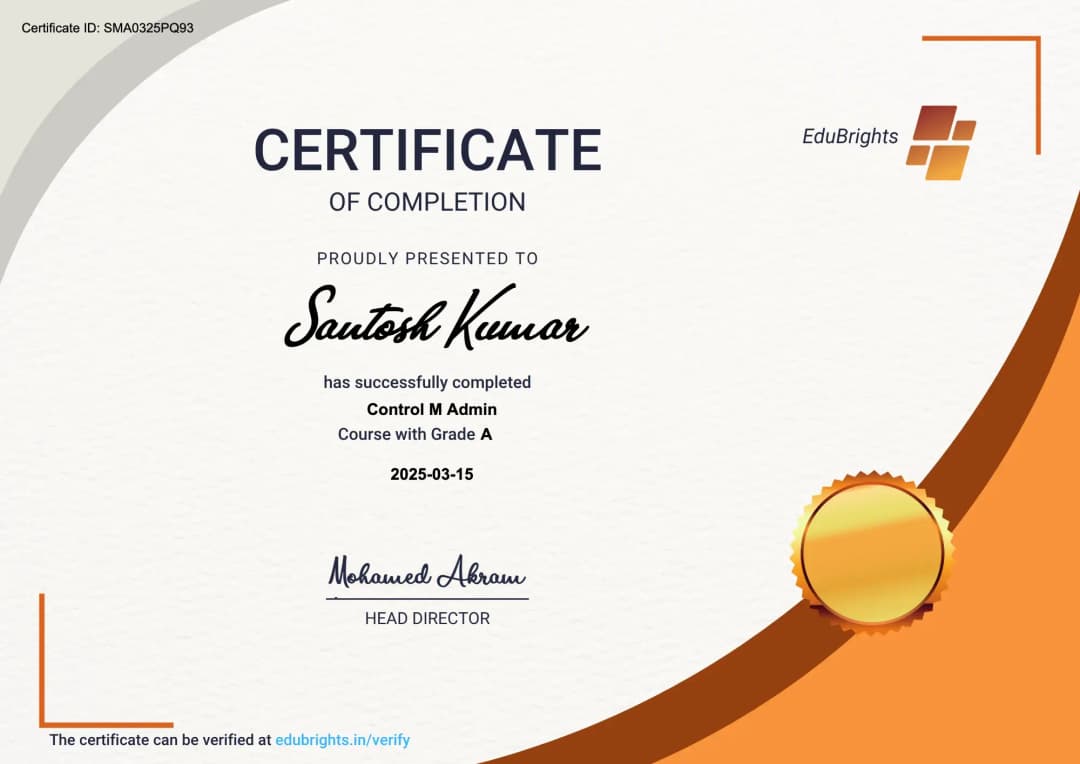
About Our Course Certification*
This training program helps learners understand SAP Data Intelligence concepts, data integration techniques, workflow management, and implementation practices. Practical exercises, assignments, and project-based learning help participants strengthen their technical skills and improve certification readiness.
Course FAQs
1. What is SAP Data Intelligence?
SAP Data Intelligence is an enterprise data management and orchestration solution that helps organizations connect, discover, process, and manage data across distributed systems. It supports data integration, pipeline development, metadata management, and machine learning-related workflows.
2. What are the main components of SAP Data Intelligence?
Key components include SAP Data Intelligence Modeler, Connection Management, Metadata Explorer, Monitoring, Diagnostics, and System Management. Together, these tools support data pipeline development, source connectivity, metadata discovery, execution monitoring, and administration. citeturn130021search3
3. What is SAP Data Intelligence Modeler?
SAP Data Intelligence Modeler is a graphical environment for designing and executing data processing pipelines. Developers connect operators and configure their properties to define how data is extracted, processed, transformed, and delivered.
4. What is a pipeline or graph in SAP Data Intelligence?
A pipeline, also called a graph, represents a sequence or network of data-processing operations. It contains connected operators that exchange data through defined input and output ports. citeturn130021search5
5. What are operators in SAP Data Intelligence?
Operators are individual processing components used to perform tasks within a pipeline. Depending on the use case, they can read data, transform records, execute scripts, connect to external systems, or write results to target destinations.
6. What is the difference between Generation 1 and Generation 2 operators?
SAP Data Intelligence supports different operator generations with distinct capabilities and execution characteristics. A graph must use a consistent generation rather than combining Generation 1 and Generation 2 operators in the same pipeline. citeturn130021search5
7. What are input and output ports in a pipeline?
Input and output ports define how operators receive and send data or control signals. Connecting compatible ports allows developers to build a complete processing flow and determine how information moves between pipeline components.
8. What is SAP Data Intelligence Connection Management?
Connection Management is used to create, maintain, and check connections to remote systems and data sources. Administrators configure connection details and verify connectivity before using the connections in relevant pipelines. citeturn130021search1
9. What types of data sources can SAP Data Intelligence connect to?
Depending on the supported connection type and environment, SAP Data Intelligence can connect to databases, SAP applications, file storage, cloud storage, messaging systems, and other enterprise sources. The available connectors depend on the product version, deployment, and configuration. citeturn130021search7turn130021search8
10. How are database connections configured in SAP Data Intelligence?
Database connections are configured using the relevant connection type and required connection details, such as endpoint, database, and authentication information. Users should verify connectivity and permissions before designing pipelines that access the database.
11. What is SAP HANA integration in SAP Data Intelligence?
SAP HANA integration enables data to be accessed, processed, or transferred between supported SAP Data Intelligence pipelines and SAP HANA environments. It can support data transformation, analytical processing, and enterprise data integration scenarios.
12. How does SAP Data Intelligence support cloud data integration?
SAP Data Intelligence can connect and orchestrate data across supported cloud and on-premises environments. The integration design depends on source connectivity, network access, authentication, data formats, and the target system's capabilities.
13. What is data orchestration in SAP Data Intelligence?
Data orchestration coordinates multiple data-processing activities across systems and services. It helps organize ingestion, transformation, validation, and delivery steps into repeatable workflows.
14. What is data ingestion?
Data ingestion is the process of bringing data from source systems into a processing or storage environment. Depending on the requirement, ingestion may use files, database connections, message streams, or other supported interfaces.
15. What is data transformation in SAP Data Intelligence?
Data transformation changes data into a structure or format suitable for its target use. Common tasks include filtering records, mapping fields, converting data types, standardizing values, and preparing information for analytics.
16. How can data quality be managed using SAP Data Intelligence?
Data quality can be improved by incorporating validation, cleansing, standardization, and exception-handling steps into data pipelines. Rules should be designed to identify incomplete, inconsistent, duplicated, or invalid records before they reach downstream systems.
17. What is metadata management in SAP Data Intelligence?
Metadata management involves collecting and organizing information about data assets, such as their structure, technical attributes, and relationships. It helps teams understand data sources and improve discovery, governance, and integration planning.
18. What is SAP Data Intelligence Metadata Explorer?
Metadata Explorer helps users browse, discover, profile, and organize technical metadata from connected systems. It can support data discovery and provide information useful for designing data integration processes. citeturn130021search3
19. What is data profiling?
Data profiling examines the structure, content, and quality characteristics of datasets. It can reveal missing values, duplicate records, inconsistent formats, and unexpected patterns before data is used in reports or applications.
20. What is a data catalog?
A data catalog organizes information about available data assets so users can discover and understand them. In enterprise environments, cataloging can improve data accessibility and help teams identify suitable sources for analytical and operational requirements.
21. How is Python used in SAP Data Intelligence?
Python can be used in supported pipeline operators to implement custom data-processing logic. Developers may use it for tasks such as data validation, transformation, specialized calculations, and integration with compatible libraries.
22. What are custom operators in SAP Data Intelligence?
Custom operators extend pipeline functionality when predefined operators do not meet a specific requirement. Creating and maintaining them may require programming knowledge, compatible runtime dependencies, and an understanding of the platform's operator interfaces. citeturn130021search2
23. What is a data workflow in SAP Data Intelligence?
A data workflow coordinates a series of tasks that run in a defined order. Workflow operators can trigger processing, manage branching or merging, execute pipelines, and signal completion or errors. citeturn130021search4
24. What is the difference between a pipeline and a data workflow?
A pipeline generally describes connected data-processing operators that may process data continuously or as configured. A data workflow coordinates finite tasks through control signals, allowing one task to start after another completes.
25. What are workflow trigger and terminator operators?
A workflow trigger initiates execution of a data workflow, while a workflow terminator marks the end of its control flow. These operators help define the starting and ending points of a workflow. citeturn130021search4
26. How is error handling implemented in SAP Data Intelligence?
Error handling can be designed using error ports, validation steps, logging, and appropriate recovery procedures. The pipeline should define how failures are reported and whether affected records or tasks should be retried, isolated, or stopped.
27. How can SAP Data Intelligence pipelines be monitored?
Pipeline monitoring helps users review execution status and investigate operational issues. Depending on the environment, users can examine execution information, statistics, logs, and error details to identify failed or slow-running components. citeturn130021search5
28. What is SAP Data Intelligence Diagnostics?
Diagnostics provides tools for investigating issues within the SAP Data Intelligence environment and its underlying infrastructure. It can help administrators access relevant logs, traces, and metrics when troubleshooting operational problems. citeturn130021search3
29. What is pipeline validation?
Pipeline validation checks whether a graph's structure and components are configured correctly. It can help identify issues involving operators, connections, ports, and configuration before the pipeline is executed. citeturn130021search5
30. How can pipeline performance be optimized?
Performance optimization begins by identifying bottlenecks in data extraction, transformation, resource usage, and target-system writes. Appropriate improvements may include reducing unnecessary processing, improving data filtering, reviewing resource requirements, and designing efficient execution flows.
31. What is Change Data Capture (CDC)?
Change Data Capture identifies and processes data changes rather than repeatedly transferring an entire dataset. Where supported by the source connection and configuration, CDC can help maintain downstream data with less unnecessary processing. citeturn130021search2
32. What is batch processing in SAP Data Intelligence?
Batch processing handles data in defined groups or scheduled runs rather than processing every event continuously. It is suitable for use cases such as periodic data loads, scheduled transformations, and recurring data preparation tasks.
33. What is stream processing?
Stream processing handles data that arrives continuously or as a sequence of events. In supported scenarios, SAP Data Intelligence can orchestrate pipelines involving streaming sources and messaging systems for ongoing data processing. citeturn130021search7
34. How can SAP Data Intelligence work with Apache Kafka?
SAP Data Intelligence can support pipeline scenarios involving Apache Kafka where the required connectivity and operators are available. These scenarios can include reading messages, transforming event data, and delivering processed information to supported destinations.
35. How does SAP Data Intelligence support big data processing?
SAP Data Intelligence helps orchestrate data-processing tasks across distributed enterprise environments. It can support ingestion and transformation scenarios involving large datasets and diverse data sources, subject to the configured infrastructure and workload requirements.
36. What is machine learning orchestration in SAP Data Intelligence?
Machine learning orchestration involves coordinating data preparation and related processing steps used in machine learning workflows. Depending on the available services and architecture, data pipelines can help prepare datasets and connect data processing with compatible machine learning environments.
37. How can SAP Data Intelligence integrate with SAP Data Services?
SAP Data Intelligence can orchestrate supported SAP Data Services jobs in compatible environments. This allows organizations to incorporate existing ETL jobs into broader data-processing workflows where the necessary connection and version requirements are met. citeturn130021search24
38. How does SAP Data Intelligence support SAP BW integration?
\SAP Data Intelligence can work with supported SAP BW connections and data-transfer scenarios. The exact pipeline design depends on the source and target configuration, available operators, authentication, and data-transfer requirements.
39. How can SAP Data Intelligence integrate with SAP S/4HANA?
Integration with SAP S/4HANA depends on supported connectivity methods, interfaces, and the landscape configuration. Data integration scenarios can involve transferring or processing business data for downstream analytics and other enterprise applications.
40. What security considerations are important in SAP Data Intelligence?
Important considerations include access control, secure credential management, network configuration, and protection of data in transit. Administrators should grant users only the permissions needed for their roles and configure trusted connections according to organizational security policies.
41. How are credentials and remote connections managed?
Remote connections are configured through Connection Management using the required connection properties and authentication details. Access should be restricted to authorized users, and credentials must be maintained securely according to organizational policies. citeturn130021search1
42. What is data governance in SAP Data Intelligence?
Data governance establishes processes and controls for managing data access, quality, metadata, and usage. SAP Data Intelligence can contribute to data governance through metadata discovery, data orchestration, and integration with the wider enterprise data landscape.
43. How can SAP Data Intelligence support data migration?
SAP Data Intelligence can be used to orchestrate supported data extraction, transformation, validation, and loading steps. A migration workflow should include source analysis, field mapping, data-quality checks, reconciliation, and exception handling.
44. What is reconciliation in a data pipeline?
Reconciliation compares source and target data to confirm that a transfer or transformation produced the expected results. Common checks include record counts, totals, key-field comparisons, and validation of rejected or missing records.
45. How can scheduled data workflows be automated?
Scheduled processing can be implemented using supported workflow triggers, scheduling capabilities, or external orchestration mechanisms available in the environment. The design should include execution dependencies, monitoring, failure notifications, and recovery procedures.
46. What common problems occur when executing SAP Data Intelligence pipelines?
Common issues include incorrect connection details, insufficient permissions, incompatible data types, invalid operator settings, unavailable source systems, and resource limitations. Troubleshooting should begin with execution status, logs, connection checks, and the configuration of the affected operators.
47. What practical projects can be covered in SAP Data Intelligence training in Bangalore?
Practical exercises can include building a data ingestion and transformation pipeline, integrating data from multiple sources, validating and cleansing records, orchestrating scheduled workflows, and monitoring pipeline execution. Project scope should reflect the available SAP Data Intelligence environment and supported connections.
48. What technical skills can learners develop through SAP Data Intelligence training?
Learners can develop skills in pipeline modeling, operator configuration, data ingestion, transformation, metadata discovery, connection management, workflow orchestration, monitoring, and error handling. Additional practice may include Python-based processing, CDC concepts, data integration, and enterprise data governance.
49. How does SAP Data Intelligence training in Bangalore help with implementation work?
Training can help learners understand how to design data workflows, connect supported systems, configure pipeline operators, and troubleshoot execution problems. Practicing end-to-end scenarios can build a foundation for contributing to enterprise data integration and orchestration projects.
50. What should learners practice to prepare for SAP Data Intelligence projects?
Learners should practice creating and validating graphs, configuring connections, transforming datasets, handling errors, monitoring executions, and documenting pipeline results. They should also learn to verify source-to-target data consistency and understand the security and operational requirements of enterprise data workflows.
Get Training Quote for Free
Testimonials
Hear What our Students say
"Transform your life through Education, hear it from our Alumni"

6 LPA
Fathima
Student
Software Engineer
"Transform your life through Education, hear it from our Alumni"

8 LPA
Rahul
Student
Data Scientist
"Transform your life through Education, hear it from our Alumni"

8 LPA
Siddharth
NIELSON IQ
Data Analyst