Course Objectives
1. What will I learn by taking the SAP CRM course in Bangalore?
You'll build a solid understanding of the core concepts, terminology, and fundamentals of SAP CRM, giving you a strong foundation to build on.
2. What hands-on skills will I gain from the SAP CRM training?
You'll get hands-on experience with industry-relevant SAP CRM tools and workflows through guided exercises, so you learn by doing rather than just reading theory.
3. How does the SAP CRM course prepare me for real-world work?
The SAP CRM course is designed around how SAP CRM is actually applied to solve real-world problems in professional settings, not just textbook scenarios.
4. What practical, job-ready skills will I build during SAP CRM training in Bangalore?
You'll develop the practical skills needed to confidently work with SAP CRM on the job, so you're ready to contribute from day one in a SAP CRM role.
5. Will I work on real projects during the SAP CRM course?
Yes, the SAP CRM course includes real-time projects and case studies that reinforce concepts through practice, giving you portfolio-ready work by the end.
6. How does the SAP CRM course help with certification and job interviews?
The SAP CRM course is structured to help you prepare for relevant certifications and interviews, covering the concepts and terminology employers and exam boards expect.
Popular Techniques Covered in This Course
SAP CRM Fundamentals
Customer Data Management
Sales Process Management
Lead and Opportunity Management
Customer Service Management
Marketing Campaign Management
Business Activity Management
CRM Reporting and Analytics
Customer Interaction Tracking
SAP CRM Integration
Get Hands-on Knowledge about Real-Time Projects
Project 1
Project 1: Customer Lead Management System
Build a solution that captures customer leads, tracks sales opportunities, and improves conversion rates.
Project 2
Project 2: Customer Service Request Portal
Create a customer support system that allows users to submit service requests and track issue resolution.
Project 3
Project 3: Sales Performance Dashboard
Develop a dashboard that helps managers monitor sales activities, revenue trends, and team performance.
Project 4
Project 4: Marketing Campaign Management Solution
Design a system to manage customer campaigns, track responses, and measure marketing effectiveness.
Project 5
Project 5: Customer Interaction Tracking Platform
Implement a CRM solution that records customer communications, meetings, and service history for better relationship management.
Key Features
Edubrights offers SAP CRM in virtual mode with expert trainers. Here are the key features,
40 Hours Course Duration
100% Job Oriented Training
Industry Expert Faculties
Free Demo Class Available
Completed 500+ Batches
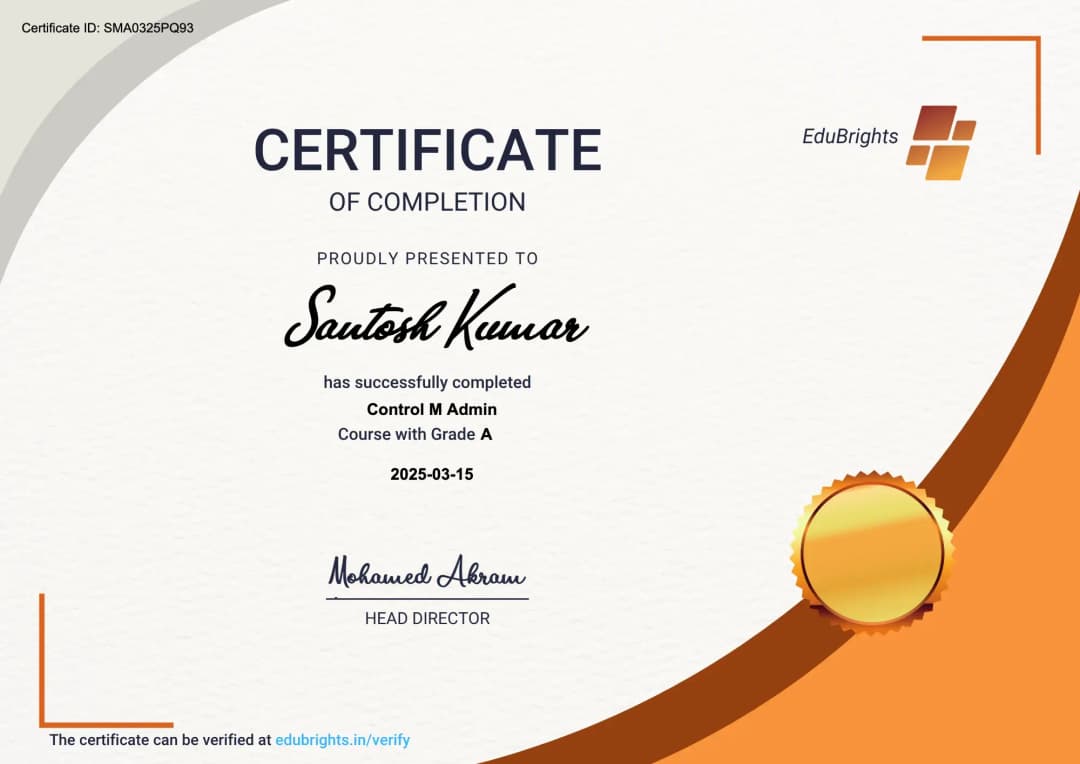
Certification Guidance
Curriculum
Module 1: Introduction to SAP CRM
- Overview of SAP Customer Relationship Management
- SAP CRM architecture: CRM Server, middleware, channel integration
- CRM integration with SAP ECC: SD, MM, FI
- CRM business processes: Marketing, Sales, Service
- SAP CRM vs. SAP C/4HANA evolution
Module 2: CRM Organizational Structures
- Sales organization and distribution channel
- Service organization and service team
- Marketing organization
- Territory management setup
- Org model and position management in CRM
Module 3: Master Data in SAP CRM
- Business partner concept and roles
- Account and contact management
- Product master in CRM
- Customer hierarchy
- Installed base and iObject management
Module 4: Activity Management
- Activity types: Calls, visits, emails, tasks
- Activity journal and history
- Groupware integration (Outlook, Lotus Notes)
- Activity survey integration
- Calendar and resource planning
Module 5: CRM Sales
- Opportunity management
- Quotation and order processing in CRM
- Sales pipeline and funnel
- Lead and prospect management
- Territory and account assignment
Module 6: CRM Marketing
- Campaign management
- Target group creation and segmentation
- Marketing plan and budget
- Lead generation from campaigns
- Response tracking and success analysis
Module 7: CRM Service
- Service order and service contract management
- Complaint and case management
- Installed base service
- Resource planning for field service
- SLA monitoring and escalation
Module 8: CRM Interaction Center (IC)
- IC WebClient architecture
- Inbound and outbound call handling
- IC agent and supervisor functions
- CTI integration for telephony
- IC reporting and monitoring
Module 9: CRM Middleware
- CRM middleware architecture
- Replication of master and transaction data
- Queued RFC and BDoc processing
- Middleware monitoring and error handling
- Adapter objects configuration
Module 10: CRM WebClient UI
- WebClient UI framework
- Navigation bar and work area
- Assignment blocks and views
- UI configuration and personalization
- Custom enhancements to WebClient
Module 11: CRM Analytics
- CRM InfoSets and reports
- Pipeline analysis and forecast
- Service performance dashboards
- Integration with SAP BW for CRM analytics
- KPI monitoring in CRM
Module 12: Real-Time Projects and Case Studies
- Sales force automation implementation
- Service center CRM rollout
- End-to-end CRM cycle
- Certification and interview preparation
Receive Training From Our Skilled and Effective Trainers
Experience in the Industry Gain expertise from SAP CRM professionals training in Bangalore who have applied their skills on live projects across corporate, product, and consulting environments, bringing practical, real-world context into every SAP CRM session.
Backgrounds at the Top Our SAP CRM trainers in Bangalore bring hands-on industry experience, having worked on real SAP CRM projects for organizations across various industries before moving into training.
Clear & Effective Teaching Core SAP CRM concepts, tools, and workflows are explained using real project examples and practical scenarios, so you understand not just the theory but how SAP CRM is actually used on the job.
Hands-On Learning Focus Students get structured, hands-on practice with SAP CRM through guided exercises, mini-projects, and lab work designed to build practical, job-ready skills.
Up-to-Date Knowledge Trainers keep the SAP CRM curriculum current with the latest tools, versions, and industry best practices, so what you learn stays relevant to how SAP CRM is used today in Bangalore and beyond.
You will succeed with our recognized certification
The SAP CRM Professional Certification validates your skills in customer relationship management, sales automation, customer service, and marketing processes. It demonstrates your ability to manage customer interactions and improve business performance using SAP CRM solutions. This certification can help you build a successful career in sales management, customer service, and SAP consulting.
Course FAQs
1. What is SAP CRM?
SAP Customer Relationship Management (SAP CRM) is an enterprise solution for managing customer-related sales, marketing, and service processes. It helps organizations centralize customer information and manage interactions across the customer lifecycle.
2. What are the main functional areas of SAP CRM?
The major SAP CRM areas include Sales, Marketing, Service, Interaction Center, Activity Management, Customer Data Management, Middleware, WebClient UI, and CRM Analytics. These components can work together to support end-to-end customer relationship processes.
3. What is SAP CRM architecture?
SAP CRM architecture consists of application components, CRM Server, Middleware, user-interface technologies, and integration channels. The WebClient UI uses a layered architecture that separates the presentation layer, business layer, and underlying business application.
4. How does SAP CRM integrate with SAP ECC?
SAP CRM can exchange master and transactional data with SAP ECC to support integrated business processes. The integration can involve SAP SD, MM, and FI, depending on the configured business scenario.
5. What is SAP CRM Middleware?
SAP CRM Middleware provides the framework for exchanging data between SAP CRM and connected systems. It supports the replication of master and transaction data and includes mechanisms such as BDocs and queued RFC processing.
6. What are BDocs in SAP CRM?
Business Documents, commonly known as BDocs, are structured data containers used in SAP CRM Middleware. They help package and transfer business data between CRM and integrated systems.
7. What is qRFC in SAP CRM?
Queued Remote Function Call (qRFC) is used to transfer data between connected SAP systems while maintaining a controlled processing sequence. It is an important technology used in SAP CRM Middleware data exchange.
8. What is CRM Middleware monitoring?
Middleware monitoring is used to check the processing status of replicated data and identify communication or processing errors. Administrators can analyze failed messages and take corrective actions to restore data synchronization.
9. What are adapter objects in SAP CRM Middleware?
Adapter objects define how specific business objects are replicated between CRM and connected systems. They help control the data flow for master and transactional information within the Middleware framework.
10. What is CRM organizational management?
CRM organizational management defines the organizational structure used by sales, service, and marketing teams. It can include organizational units, positions, relationships, responsibilities, and reporting structures.
11. What is a sales organization in SAP CRM?
A sales organization represents an organizational unit responsible for sales activities. It can be associated with distribution channels, sales teams, territories, and customer assignments.
12. What is service organization management in SAP CRM?
Service organization management defines the organizational structure responsible for customer service activities. It can include service organizations, service teams, positions, and responsibilities.
13. What is territory management in SAP CRM?
Territory management divides customers or markets into defined territories based on geographical, organizational, or business criteria. Territories can then be assigned to appropriate sales employees or teams.
14. What is the SAP CRM Business Partner concept?
The Business Partner represents an organization, person, or group that participates in a business relationship. Business Partner data can be used across sales, service, and marketing processes.
15. What are Business Partner roles in SAP CRM?
Business Partner roles determine how a business partner participates in specific business processes. The same business partner can have different roles depending on whether it is being managed for sales, service, or another business function.
16. What is account and contact management in SAP CRM?
Account management maintains information about customer organizations, while contact management handles individuals associated with those accounts. This information supports sales activities, customer service, marketing, and relationship management.
17. What is product master data in SAP CRM?
Product master data contains information about products and services used in CRM transactions. It can include product identifiers, descriptions, categories, classifications, and other attributes required by business processes.
18. What is customer hierarchy in SAP CRM?
Customer hierarchy represents relationships between customers or accounts at different organizational levels. It can support account management, sales planning, reporting, and customer analysis.
19. What is installed base management in SAP CRM?
An installed base represents products, assets, or equipment associated with a customer or location. It is especially useful in service processes where technicians need to identify customer-installed products and their service history.
20. What is iObject management in SAP CRM?
iObject management supports the identification and management of individual objects associated with customer service processes. It can provide detailed information about products, assets, equipment, or installed objects.
21. What is Activity Management in SAP CRM?
Activity Management records customer-related interactions such as calls, visits, emails, tasks, and meetings. It provides a history of customer activities and helps employees plan and manage follow-up actions.
22. What are activity types in SAP CRM?
Activity types classify customer interactions and business activities. Examples include telephone calls, customer visits, emails, tasks, appointments, and meetings.
23. What is the activity journal in SAP CRM?
The activity journal provides a historical record of customer-related activities. Sales and service users can use it to review previous interactions and understand the communication history associated with a customer.
24. How does groupware integration work in SAP CRM?
Groupware integration can connect CRM activities with applications such as Microsoft Outlook or Lotus Notes. This can support synchronization of calendars, appointments, tasks, and related customer activities.
25. What is Opportunity Management in SAP CRM?
Opportunity Management tracks potential sales opportunities through different stages of the sales cycle. It can capture information such as expected revenue, probability, sales phase, competitors, activities, and expected closing dates.
26. What is Lead Management in SAP CRM?
Lead Management captures and qualifies potential customer interest before it becomes a sales opportunity. Leads can originate from campaigns, inquiries, customer interactions, or other channels.
27. How does quotation and order processing work in SAP CRM?
SAP CRM can support quotation and order processing as part of its sales functionality. Depending on the configured architecture, relevant transactions can be integrated with SAP ECC for fulfillment, logistics, and financial processing.
28. What is sales pipeline management in SAP CRM?
Sales pipeline management provides visibility into opportunities at different stages of the sales process. Managers can use pipeline information to analyze expected revenue, opportunity probability, sales performance, and forecasts.
29. What is CRM Marketing?
CRM Marketing supports marketing processes such as campaign management, target-group creation, segmentation, lead generation, and response tracking. It helps organizations execute targeted customer engagement activities.
30. What is campaign management in SAP CRM?
Campaign Management enables organizations to plan, execute, monitor, and analyze marketing campaigns. Campaigns can target specific customer segments and track responses or leads generated through marketing activities.
31. What is target group segmentation in SAP CRM?
Target group segmentation divides customers or prospects into groups according to selected business criteria. These groups can then be used for targeted campaigns, lead generation, and personalized marketing activities.
32. How does marketing plan and budget management work in SAP CRM?
Marketing planning helps organize campaigns and activities according to business objectives and schedules. Budget management tracks planned and actual marketing expenditure to help control campaign costs.
33. What is response tracking in SAP CRM Marketing?
Response tracking records customer reactions and business outcomes associated with marketing campaigns. Organizations can analyze responses to measure campaign effectiveness and identify successful marketing strategies.
34. What is SAP CRM Service Management?
CRM Service Management supports customer-service processes such as service requests, service orders, complaints, contracts, and service history. It helps service organizations manage customer issues from initial contact through resolution.
35. What is service order management in SAP CRM?
Service order management handles the planning and execution of customer service activities. Service orders can contain customer information, service requirements, products, resources, dates, and other transaction details.
36. What is service contract management in SAP CRM?
Service Contract Management manages agreements between an organization and its customers. Contracts can contain validity periods, service conditions, entitlements, pricing information, and other contractual details.
37. What is complaint and case management in SAP CRM?
Complaint and case management provides a structured process for recording, analyzing, assigning, and resolving customer issues. Cases can be linked with customer data, activities, documents, service transactions, and resolution information.
38. What is SLA monitoring in SAP CRM Service?
Service Level Agreement (SLA) monitoring tracks whether service commitments are fulfilled within defined timeframes. It can support deadline monitoring, escalation procedures, priority handling, and service-performance measurement.
39. What is the SAP CRM Interaction Center?
The Interaction Center provides a centralized environment for customer-facing agents to manage customer interactions. It supports functions such as customer identification, account information, business transactions, inbound and outbound communication, and agent activities.
40. What is IC WebClient architecture?
The IC WebClient is a browser-based interface used by Interaction Center agents. SAP CRM's WebClient framework uses a presentation layer and business layer, with the Business Object Layer (BOL) and Generic Interaction Layer (genIL) connecting the interface with underlying business logic.
41. What are BOL and genIL in SAP CRM WebClient UI?
The Business Object Layer (BOL) manages business object data during a WebClient UI session. The Generic Interaction Layer (genIL) handles data transfer between BOL and the underlying APIs or business engine, providing separation between the UI and business logic.
42. What are assignment blocks in SAP CRM WebClient UI?
Assignment blocks are sections within the WebClient UI that display related business information. They can be configured to show customer, product, sales, service, activity, or other related data.
43. What is UI configuration and personalization in SAP CRM?
UI configuration allows organizations to adapt supported WebClient UI elements to business requirements. Personalization allows individual users to adjust supported interface settings according to their working preferences.
44. How can SAP CRM WebClient UI be enhanced?
The WebClient UI can be extended using supported configuration and development mechanisms such as custom views, fields, navigation, business roles, and Business Add-Ins (BAdIs). SAP documentation also provides enhancement options for customer-specific UI requirements.
45. What is CRM Analytics?
CRM Analytics provides reporting and analytical capabilities for sales, service, and marketing processes. It can help organizations monitor pipeline performance, forecasts, service KPIs, customer activity, and other business metrics.
46. What are CRM InfoSets?
CRM InfoSets provide structures that can be used for reporting and analytical queries on relevant CRM information. They can support reporting requirements across customer, sales, service, and activity-related data.
47. How does SAP CRM integrate with SAP BW?
SAP CRM can integrate with SAP Business Warehouse (BW) to support analytical reporting and historical analysis. CRM information can be transferred into analytical structures for reporting, KPI analysis, pipeline evaluation, and service-performance monitoring.
48. How does SAP CRM support an end-to-end customer lifecycle?
SAP CRM can connect customer master data with activities, leads, opportunities, marketing campaigns, sales transactions, service requests, contracts, and customer interactions. This provides a connected process from customer acquisition through sales and post-sales service.
49. What practical SAP CRM projects are covered in the Bangalore course?
The Edubrights Bangalore course lists projects such as a Customer Lead Management System, Customer Service Request Portal, Sales Performance Dashboard, Marketing Campaign Management Solution, and Customer Interaction Tracking Platform. These projects provide practical exposure to sales, service, marketing, reporting, and customer-interaction workflows.
50. What technical skills can learners develop through SAP CRM training in Bangalore?
Learners can develop skills in SAP CRM architecture, Business Partners, organizational management, customer and product master data, Activity Management, Sales, Marketing, Service, Interaction Center, CRM Middleware, BDocs, qRFC, WebClient UI, BOL, genIL, CRM Analytics, SAP BW integration, and SAP ECC integration. These areas closely match the technical curriculum published for the Edubrights SAP CRM course in Bangalore.
Get Training Quote for Free
Testimonials
Hear What Our Students Say
"Transform your life through Education, hear it from our Alumni"

6 LPA
Fathima
Student
Software Engineer
"Transform your life through Education, hear it from our Alumni"

8 LPA
Rahul
Student
Data Scientist
"Transform your life through Education, hear it from our Alumni"
8 LPA
Siddharth
NIELSON IQ
Data Analyst