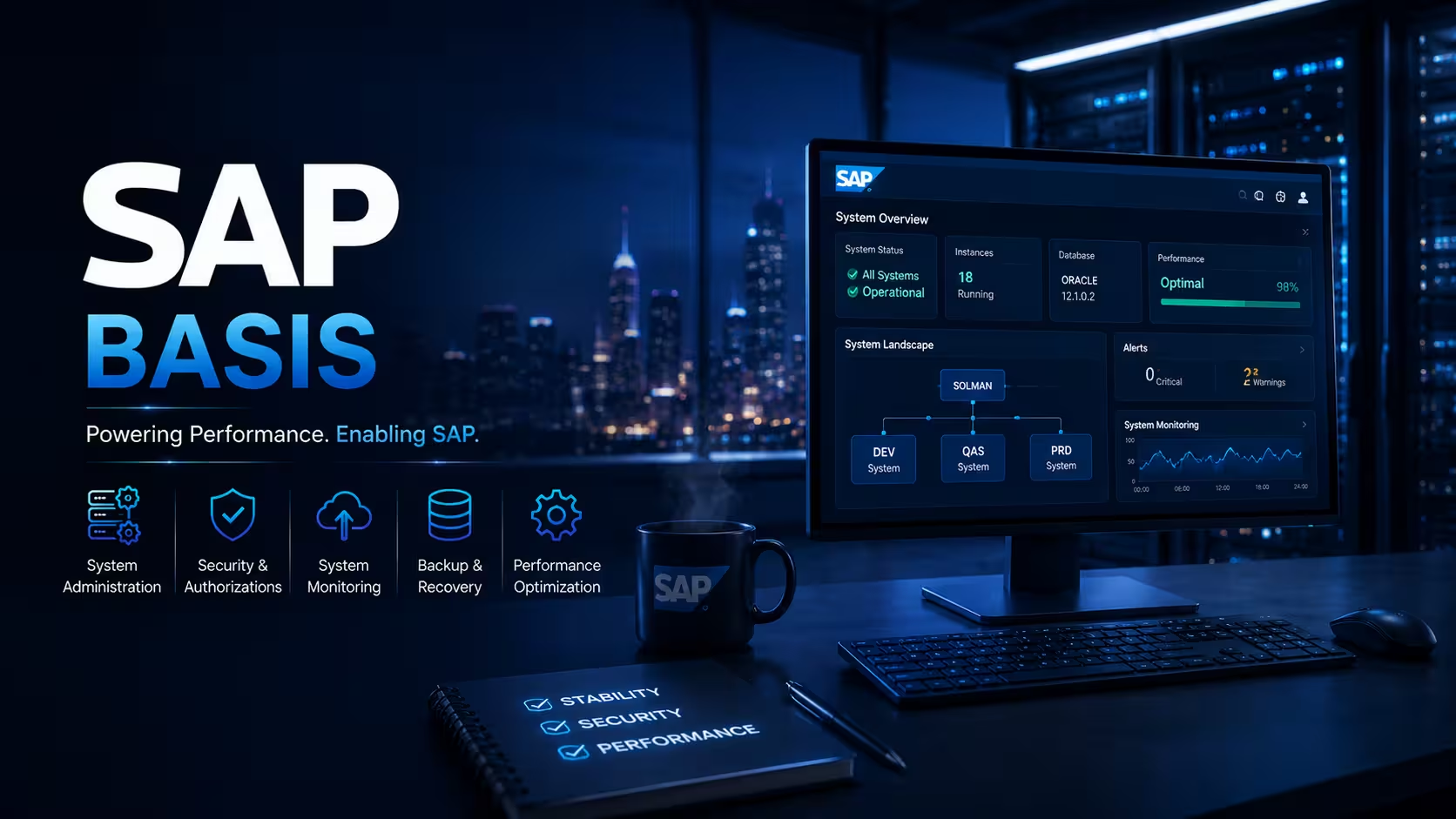
Course Objectives
What will I learn in this SAP Basis course?
You'll learn how organizations configure and use SAP Basis to run core business processes, covering master data, transactions, and reporting so you understand both the how and the why behind each step.
What hands-on skills will I gain from SAP Basis training?
You'll get hands-on experience with industry-relevant SAP Basis tools and workflows through guided exercises, so you learn by doing rather than just reading theory.
How does this course prepare me for real-world SAP Basis work?
The course is designed around how SAP Basis is actually applied to solve real-world problems in professional settings, not just textbook scenarios.
Will I work on real projects during the SAP Basis course?
Yes, the course includes real-time projects and case studies that reinforce SAP Basis concepts through practice, giving you portfolio-ready work by the end.
How does this course help with certification and job interviews?
The course is structured to help you prepare for relevant SAP Basis certifications and interviews, covering the concepts and terminology employers and exam boards expect.
Popular Techniques Covered in This Course
Master data setup and maintenance in SAP Basis
Configuring business processes and transaction workflows
Navigating core modules and transaction screens
Generating and customizing business reports
Managing organizational structures and user roles
Handling period-end and month-end processing
Troubleshooting transactional errors
Integrating SAP Basis with upstream and downstream systems
Supporting user training and change management
Certification-aligned exam preparation
Get Hands-on Knowledge about Real-Time Projects
Project 1
SAP Basis Fundamentals Project
A guided, hands-on project where you apply the core concepts and basic tools of SAP Basis to a simple task — designed to build confidence with the fundamentals before moving on to advanced work.
Project 2
Real-World SAP Basis Case Study
Work through a real-world scenario that mirrors how SAP Basis is used on the job, practicing the workflows, decisions, and troubleshooting professionals rely on day to day.
Project 3
SAP Basis Configuration & Setup Exercise
Configure and set up a working SAP Basis environment from scratch, applying what you've learned in a structured, hands-on format with guidance from your trainer.
Project 4
SAP Basis Integration & Automation Challenge
Tackle a practical, open-ended problem involving SAP Basis integration or automation, working through troubleshooting, optimization, and best practices the way you would in a real professional environment.
Project 5
SAP Basis Capstone Project
Bring together everything you've learned into one comprehensive, portfolio-ready project that demonstrates your end-to-end SAP Basis skills to potential employers.
Key Features
This SAP Basis program offers comprehensive hands-on training to prepare you for industry demands.
40 Hours Course Duration
100% Job Oriented Training
Industry Expert Faculties
Free Demo Class Available
Completed 500+ Batches
Certification Guidance
Curriculum
Module 1: Introduction to SAP Basis
- Overview and evolution of SAP Basis
- Industry landscape, use cases, and business value
- Career paths and job roles related to SAP Basis
Module 2: Core Concepts and Terminology
- Key modules, screens, and terminology in SAP Basis
- Master data structures and organizational hierarchies
- How SAP Basis fits into a broader enterprise systems landscape
Module 3: Environment Setup and Configuration
- Setting up a working SAP Basis environment
- Initial configuration and system requirements
- Navigating the core interface and tools
Module 4: Architecture and Key Components
- Understanding the underlying architecture of SAP Basis
- Key modules, components, and how they interact
- Data flow and system design considerations
Module 5: Hands-On Tools and Techniques
- Practical, hands-on use of core SAP Basis tools
- Step-by-step configuration and customization
- Common workflows used in real projects
Module 6: Data Management and Administration
- Creating and maintaining master and transactional data
- User roles, authorizations, and access management
- Data cleansing, archiving, and housekeeping practices
Module 7: Integration with Related Systems
- Connecting SAP Basis with other enterprise systems
- APIs, interfaces, and data exchange methods
- Common integration patterns and challenges
Module 8: Automation and Workflow Optimization
- Automating repetitive tasks within SAP Basis
- Streamlining workflows for efficiency
- Tools and techniques for process optimization
Module 9: Security, Compliance and Best Practices
- Role-based access control and segregation of duties
- Audit trails and compliance reporting
- Data protection guidelines specific to SAP Basis
Module 10: Troubleshooting and Performance Tuning
- Identifying and resolving common SAP Basis issues
- Performance tuning and optimization techniques
- Monitoring and diagnostic approaches
Module 11: Real-World Case Studies and Projects
- Applying SAP Basis to practical, real-world scenarios
- Working through guided, project-based exercises
- Learning from common industry implementation patterns
Module 12: Certification Preparation and Capstone Project
- Consolidating skills through a capstone project
- Exam-focused review of key SAP Basis concepts
- Interview preparation and next steps for your career
Receive Training From Our Skilled and Effective Trainers
Experience in the Industry Gain expertise from SAP Basis professionals who have applied their skills on live projects across corporate, product, and consulting environments, bringing practical, real-world context into every SAP Basis session.
Backgrounds at the Top Our SAP Basis trainers bring hands-on industry experience, having worked on real SAP Basis projects for organizations across various industries before moving into training.
Clear & Effective Teaching Core SAP Basis concepts, tools, and workflows are explained using real project examples and practical scenarios, so you understand not just the theory but how SAP Basis is actually used on the job.
Hands-On Learning Focus Students get structured, hands-on practice with SAP Basis through guided exercises, mini-projects, and lab work designed to build practical, job-ready skills.
Up-to-Date Knowledge Trainers keep the SAP Basis curriculum current with the latest tools, versions, and industry best practices, so what you learn stays relevant to how SAP Basis is used today.
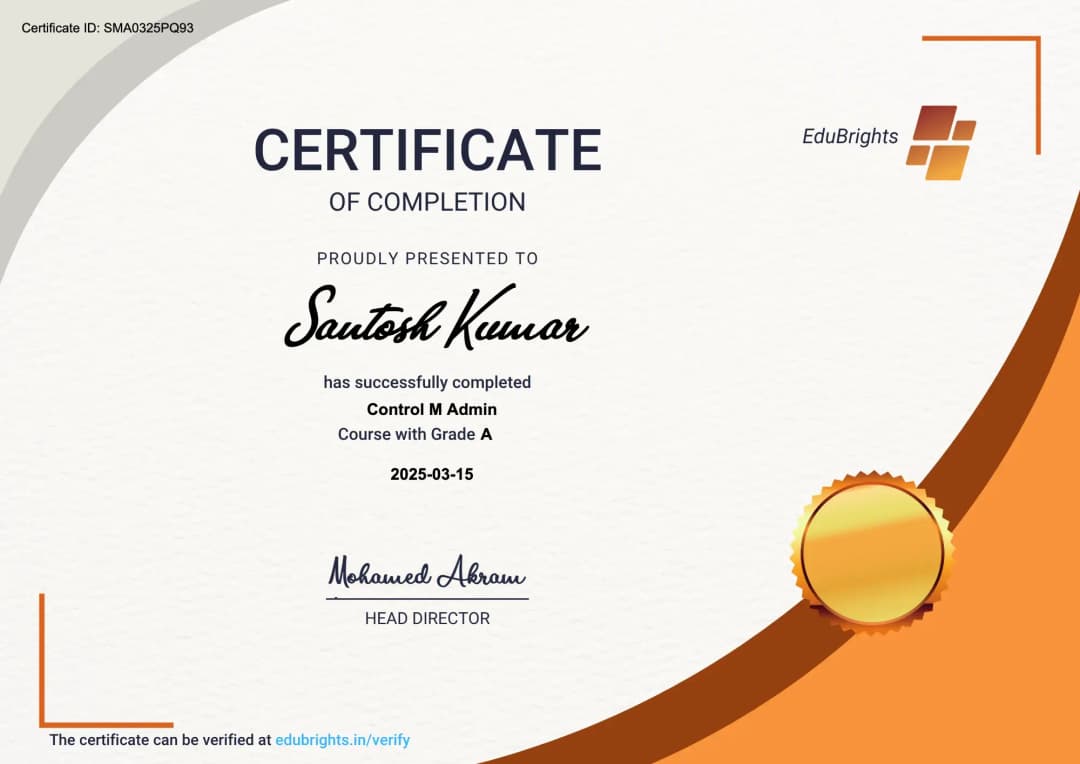
Certified SAP Basis Professional
Our certification validates your expertise in SAP Basis. Gain practical skills to apply SAP Basis confidently in real-world projects. Ideal for professionals and freshers looking to strengthen their SAP Basis career profile.
Course FAQs
1. What is SAP Basis?
SAP Basis is the technical administration layer used to install, configure, monitor, maintain, and operate SAP systems. It covers areas such as system architecture, users and authorizations, transports, background processing, performance, security, and system maintenance.
2. What are the main responsibilities of an SAP Basis Administrator?
An SAP Basis Administrator manages SAP system installation, configuration, monitoring, user administration, transport management, performance, backups, upgrades, and troubleshooting. Basis administration also supports system availability, security, and technical operations.
3. What is SAP system architecture?
SAP system architecture describes how the application, database, and infrastructure components work together. A typical SAP landscape includes the database layer, application server layer, message server, and presentation or client layer.
4. What is an SAP application server?
An SAP application server provides the runtime environment for SAP application processes. It contains work processes and communicates with the database and other SAP components to process user requests and application workloads.
5. What is the SAP Message Server?
The SAP Message Server provides communication between application servers within an SAP system. It also supports logon load balancing by helping distribute user connections across available application servers.
6. What is the SAP Dispatcher?
The SAP Dispatcher distributes incoming requests from users to available work processes. It acts as an interface between communication requests and the work processes running on an application server.
7. What are SAP work processes?
Work processes execute different types of SAP application tasks. Common types include Dialog, Background, Update, Spool, and Enqueue work processes.
8. What is a Dialog Work Process?
A Dialog Work Process handles interactive user requests submitted through SAP transactions. It processes the request and returns the result to the user's SAP session.
9. What is a Background Work Process?
A Background Work Process executes scheduled jobs without requiring continuous user interaction. Background processing is commonly used for long-running or resource-intensive tasks so that dialog processing is not unnecessarily overloaded.
10. What is an Update Work Process?
An Update Work Process processes database updates that are triggered by SAP transactions. Separating update processing from dialog processing helps manage database changes efficiently.
11. What is a Spool Work Process?
A Spool Work Process handles SAP spool requests related to output and printing. SAP documentation describes the spool system as temporarily storing output before it is formatted and transferred for printing.
12. What is an Enqueue Work Process?
The Enqueue Work Process manages SAP's logical locking mechanism. SAP locks help prevent conflicting transactions from changing the same business data simultaneously.
13. What is SAP system installation?
SAP system installation involves preparing the operating system and database, installing the SAP software components, configuring the system, and performing required post-installation activities. Tools and procedures depend on the SAP product and system version.
14. What is SWPM in SAP Basis?
SWPM stands for Software Provisioning Manager. It is used for various SAP software provisioning tasks such as system installation, system copies, and related lifecycle operations depending on the SAP product and supported scenario.
15. What are SAP system profiles?
SAP system profiles contain configuration parameters that control the behavior of SAP instances and systems. Common profile types include the default profile, instance profile, and start profile.
16. What is the difference between the Default Profile and Instance Profile?
The Default Profile contains parameters that can apply across SAP instances in a system. An Instance Profile contains parameters specific to an individual SAP instance and its runtime configuration.
17. What is SAP GUI?
SAP GUI is a client interface used to connect to and interact with SAP systems. Basis administrators commonly use SAP GUI to access administration transactions and perform system-management activities.
18. What is client administration in SAP?
A client is a logically independent organizational unit within an SAP system. Client administration includes activities such as client creation, configuration, copying, deletion, protection, and maintenance.
19. What is a client copy in SAP?
A client copy transfers selected client-dependent data from one SAP client to another. It can be used for activities such as creating test environments or refreshing client data according to the applicable SAP scenario.
20. What is SAP user administration?
SAP user administration involves creating, changing, locking, unlocking, and maintaining user accounts. It also includes assigning appropriate roles and authorizations based on the user's responsibilities.
21. What is transaction SU01?
SU01 is an SAP transaction used for maintaining individual user master records. Administrators can use it for activities such as creating users, changing user information, locking accounts, and assigning roles.
22. What is transaction SU10?
SU10 supports mass maintenance of SAP user master records. It can be useful when administrators need to perform similar user-management actions for multiple users.
23. What is PFCG in SAP Basis?
PFCG is the transaction used for role maintenance in SAP systems. It supports the creation and maintenance of roles, authorization data, and generated authorization profiles.
24. What are authorization objects in SAP?
Authorization objects define the fields and authorization checks used to control access to SAP functions and data. Roles can contain authorization objects with specific field values that determine what users are permitted to perform.
25. What is the difference between a single role and a composite role?
A single role contains authorization and menu information for a particular business or technical requirement. A composite role groups multiple single roles so that related access can be assigned together.
26. What is SAP Transport Management System (TMS)?
SAP Transport Management System (TMS) is used to organize, perform, and monitor transports between SAP systems. It supports transport routes, import queues, quality assurance, transport workflows, and transport monitoring.
27. What is a transport request?
A transport request is a container used to collect changes that need to be moved between SAP systems. Depending on the change type, it can contain workbench objects, customizing changes, or other transportable objects.
28. What is a transport route?
A transport route defines how transport requests move between systems in an SAP landscape. TMS uses configured routes to determine target systems and the flow of transported changes.
29. What is STMS?
STMS is the main transaction used to access the Transport Management System. Administrators can use it to configure transport domains, manage transport routes, monitor import queues, and perform transport activities.
30. What is a transport domain?
A transport domain is a group of SAP systems managed through a common TMS configuration. The domain includes a transport domain controller and defines the communication infrastructure used for transport management.
31. How can SAP transport activities be monitored?
Transport activities can be monitored using import queues, import history, transport logs, TMS alerts, and monitoring tools. SAP documentation also identifies the Job Monitor and Import Monitor as tools for analyzing transport processing.
32. What is SAP background job management?
Background job management involves scheduling, monitoring, releasing, modifying, and troubleshooting jobs that run without direct user interaction. SAP provides transactions such as SM36 for job definition and SM37 for job monitoring.
33. What is SM36?
SM36 is used to define and schedule background jobs in SAP. Administrators can specify job details, steps, scheduling conditions, and other execution parameters.
34. What is SM37?
SM37 is used to monitor and manage background jobs. It provides access to job status, job logs, scheduling information, spool output, and other job-management functions.
35. What are common SAP background job statuses?
Common job statuses include Scheduled, Released, Ready, Active, Finished, and Cancelled. The status helps administrators determine whether a job is waiting for execution, currently running, completed successfully, or terminated.
36. What is SAP system monitoring?
SAP system monitoring involves checking application servers, work processes, system resources, jobs, users, locks, updates, database activity, and system logs. The objective is to identify abnormal conditions and maintain reliable system operation.
37. What is transaction SM50?
SM50 displays work processes on an SAP application server. Administrators can use it to inspect active processes, processing times, process states, and potential work-process problems.
38. What is transaction SM51?
SM51 provides an overview of the SAP application servers in the system. It can be used to view available instances and access administration or monitoring information for individual application servers.
39. What is transaction SM21?
SM21 is used to analyze the SAP system log. Administrators can use system-log information to investigate system events, warnings, errors, and technical problems.
40. What is transaction ST22?
ST22 is used to analyze ABAP runtime errors, commonly known as short dumps. Basis and development teams can use dump information to identify the program, execution context, and technical conditions associated with an error.
41. What is SAP performance monitoring?
SAP performance monitoring evaluates system response times, workload, database activity, memory usage, work-process utilization, and other technical indicators. The goal is to identify bottlenecks and improve system efficiency.
42. What is SAP performance tuning?
SAP performance tuning involves identifying technical bottlenecks and adjusting relevant application, database, operating-system, or SAP configuration parameters. The tuning approach should be based on measured workload and system behavior rather than arbitrary parameter changes.
43. What is SAP memory management?
SAP memory management controls how memory resources are allocated and used by SAP processes. Administrators monitor memory consumption and configure appropriate parameters to support system workload and stability.
44. What is SAP spool administration?
SAP spool administration manages output requests generated by SAP applications. Basis administrators can monitor spool requests, troubleshoot output problems, manage spool data, and maintain printer-related configurations.
45. What is SAP kernel management?
SAP kernel management involves maintaining the executable components that form the technical runtime of an SAP system. Kernel maintenance can include version management, patch application, compatibility checks, and controlled testing before changes are introduced into production.
46. What are SAP Support Packages and patches?
Support Packages deliver corrections and updates for SAP software components. Basis administrators plan, test, import, and monitor these updates according to the organization's maintenance and change-management procedures.
47. What is SAP backup and recovery management?
Backup and recovery management protects SAP data and supports restoration after system failures or data-loss events. It involves coordinating database backups, SAP-related files, recovery procedures, validation, and disaster-recovery planning.
48. What is SAP system security administration?
SAP system security administration includes user management, role and authorization management, password policies, secure configuration, system access controls, and monitoring of security-relevant activities. SAP documentation emphasizes structured user provisioning, role assignment, authentication, and security administration.
49. What practical projects can be covered in SAP Basis training?
Practical projects can include SAP System Installation and Configuration, User and Authorization Management, Transport Management Configuration, Background Job and System Monitoring, and Backup, Recovery, and System Maintenance. These areas align with the technical administration topics published in the Edubrights SAP Basis Administration curriculum.
50. What technical skills can I gain from SAP Basis training?
SAP Basis training can help develop skills in SAP architecture, installation, SWPM, system profiles, client administration, user management, PFCG, authorizations, TMS, transport routes, background jobs, system monitoring, work-process analysis, performance tuning, spool administration, kernel maintenance, patch management, backup and recovery, troubleshooting, and SAP security administration. These skills align with the technical areas covered in the Edubrights SAP Basis Administration and System Management curriculum.
Get Training Quote for Free
Testimonials
Hear What Our Students Say
"Transform your life through Education, hear it from our Alumni"

8 LPA
Rahul
Student
Data Scientist
"Transform your life through Education, hear it from our Alumni"

6 LPA
Fathima
Student
Software Engineer
"Transform your life through Education, hear it from our Alumni"

8 LPA
Siddharth
NIELSON IQ
Data Analyst