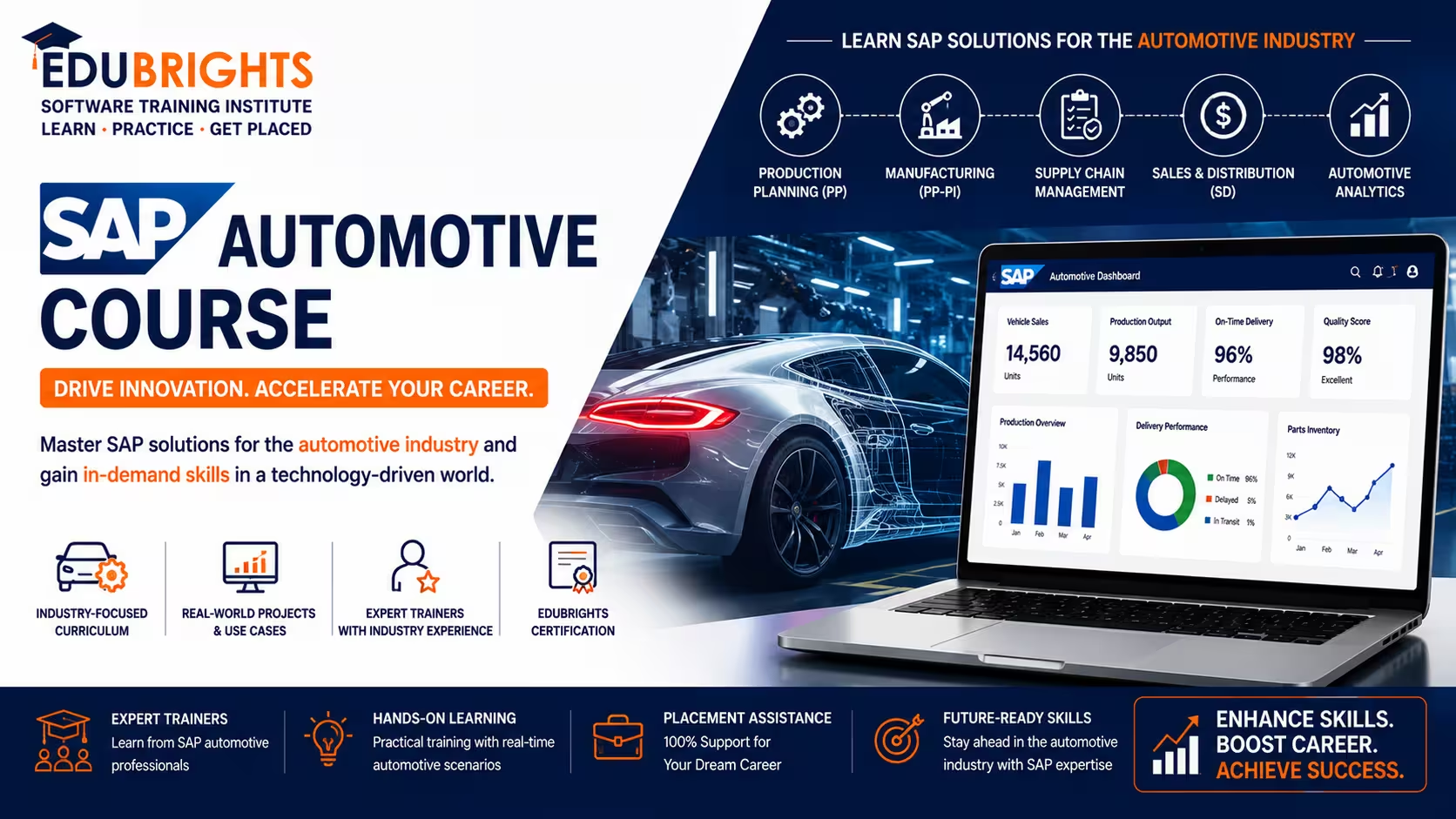
Course Objectives
1. What will I learn by taking the SAP Automotive course in Bangalore?
You'll build a solid understanding of the core concepts, terminology, and fundamentals of SAP Automotive, giving you a strong foundation to build on.
2. What hands-on skills will I gain from the SAP Automotive training?
You'll get hands-on experience with industry-relevant SAP Automotive tools and workflows through guided exercises, so you learn by doing rather than just reading theory.
3. How does the SAP Automotive course prepare me for real-world work?
The SAP Automotive course is designed around how SAP Automotive is actually applied to solve real-world problems in professional settings, not just textbook scenarios.
4. What practical, job-ready skills will I build during SAP Automotive training in Bangalore?
You'll develop the practical skills needed to confidently work with SAP Automotive on the job, so you're ready to contribute from day one in a SAP Automotive role.
5. Will I work on real projects during the SAP Automotive course?
Yes, the SAP Automotive course includes real-time projects and case studies that reinforce concepts through practice, giving you portfolio-ready work by the end.
6. How does the SAP Automotive course help with certification and job interviews?
The SAP Automotive course is structured to help you prepare for relevant certifications and interviews, covering the concepts and terminology employers and exam boards expect.
Popular Techniques Covered in This Course
Automotive Supply Chain Management
SAP Automotive Industry Solutions
Production Planning and Scheduling
Vehicle Order Management
Supplier Collaboration Processes
Inventory and Warehouse Management
Procurement and Vendor Management
Warranty and Service Management
Logistics and Distribution Planning
SAP ERP Integration for Automotive Operations
Get Hands-on Knowledge about Real-Time Projects
Project 1
Project 1: Automotive Production Planning System
Implement SAP-based production planning for vehicle assembly operations to improve manufacturing efficiency and resource utilization.
Project 2
Project 2: Supplier Collaboration and Procurement Management
Develop a supplier integration solution that streamlines procurement, inventory replenishment, and vendor performance tracking.
Project 3
Project 3: Automotive Inventory Optimization
Configure inventory planning and warehouse management processes to reduce stock shortages and excess inventory costs.
Project 4
Project 4: Vehicle Order-to-Delivery Management
Design and implement an end-to-end order management system covering vehicle booking, production scheduling, and dealer delivery.
Project 5
Project 5: Warranty and After-Sales Service Management
Develop a solution for warranty claims processing, service scheduling, customer support, and spare parts management.
Key Features
Edubrights offers SAP Automotive in virtual mode with expert trainers. Here are the key features,
40 Hours Course Duration
100% Job Oriented Training
Industry Expert Faculties
Free Demo Class Available
Completed 500+ Batches
Certification Guidance
Curriculum
Module 1: Introduction to SAP Automotive
- Overview of SAP for Automotive industry
- Automotive industry challenges: OEM, supplier, dealer
- SAP Automotive components: IS-Auto, IPPE, SCM, AFS
- Integration with S/4HANA and SAP Manufacturing
- SAP Automotive implementation methodology
Module 2: SAP IS-Auto (Industry Solution – Automotive)
- IS-Auto architecture and components
- Customer order management for automotive
- Vehicle management system (VMS)
- Dealer portal and network management
- Automotive-specific enhancements
Module 3: Vehicle Management
- Vehicle master data: Model, variant, configuration
- Vehicle identification number (VIN) management
- Vehicle stock and dealer allocation
- Vehicle order tracking
- Vehicle delivery processing
Module 4: Automotive Production Planning
- IPPE for automotive product structures
- Model mix planning
- Just-in-time (JIT) and just-in-sequence (JIS)
- Sequence planning for assembly lines
- Production program management
Module 5: Automotive Supply Chain
- Automotive supply chain collaboration
- EDI messaging: ODETTE, VDA, ANSI X12
- Kanban for automotive suppliers
- Scheduling agreements with releases
- Vendor-managed inventory (VMI)
Module 6: Sales and Order Management
- Vehicle configuration and order entry
- Dealer order management
- Available-to-promise for vehicles
- Order-to-delivery tracking
- Dealer stock and demo vehicle management
Module 7: Warranty Management
- Warranty claim processing
- Warranty policy configuration
- Goodwill claims management
- Recall management
- Warranty cost analytics
Module 8: Aftermarket Parts
- Spare parts planning with SPP
- Aftermarket pricing and catalog
- Parts availability and order fulfillment
- Return parts management
- Supersession and phase-out management
Module 9: Quality Management in Automotive
- IATF 16949 compliance
- APQP and PPAP documentation
- Control plan and FMEA management
- Supplier quality management
- Defect management and 8D reports
Module 10: Connected Vehicle and IoT
- Telematics data integration
- Predictive maintenance for vehicles
- Connected car data analytics
- Remote diagnostics
- EV (electric vehicle) management
Module 11: Automotive Analytics
- Sales and production performance
- Supply chain visibility dashboards
- Warranty cost analysis
- Quality performance by supplier
- SAC integration for automotive KPIs
Module 12: Real-Time Projects and Case Studies
- OEM production planning implementation
- Tier-1 supplier SAP rollout
- End-to-end SAP Automotive cycle
- Certification and interview preparation
Receive Training From Our Skilled and Effective Trainers
Learn from Experienced SAP Automotive Consultants
Gain practical expertise from experienced SAP Automotive consultants who have successfully delivered enterprise SAP Automotive implementation, SAP S/4HANA Automotive, manufacturing, production planning, supply chain, procurement, logistics, and digital transformation projects across OEMs, Tier-1 suppliers, automotive component manufacturers, and multinational automotive organizations. Their real-world implementation experience brings valuable industry knowledge into every SAP Automotive training session.
Industry Exposure with Enterprise Automotive Manufacturing Projects
Our SAP Automotive trainers in Bangalore have worked on real-world SAP Automotive implementations across automotive manufacturing, electric vehicle (EV) production, commercial vehicles, auto components, logistics, dealer networks, and aftermarket operations. Learn industry best practices in Production Planning (PP), Materials Management (MM), Supply Chain Management (SCM), Material Requirements Planning (MRP), procurement, supplier collaboration, inventory management, warehouse operations, quality management, and end-to-end automotive manufacturing processes.
Simple, Practical & Business-Oriented Teaching Approach
Core SAP Automotive concepts are taught through structured lessons, live demonstrations, manufacturing workflows, production planning scenarios, supplier collaboration, procurement processes, logistics operations, inventory optimization, quality management, and interactive business case studies. This practical approach helps both beginners and working professionals confidently understand how SAP Automotive solutions are implemented in enterprise manufacturing environments.
Hands-On Real-Time SAP Automotive Projects
Develop practical expertise through guided labs, real-time assignments, and enterprise projects covering SAP S/4HANA Automotive, SAP PP, SAP MM, SAP SCM, production planning, MRP, procurement, supplier scheduling, inventory management, warehouse operations, logistics execution, quality management, dealer network integration, manufacturing analytics, reporting, and end-to-end SAP Automotive implementation projects.
Updated with the Latest SAP Automotive Technologies
Our SAP Automotive curriculum is continuously updated with the latest SAP S/4HANA Automotive innovations, Industry 4.0 technologies, smart manufacturing, digital supply chain strategies, electric vehicle (EV) manufacturing processes, AI-powered production planning, cloud ERP solutions, manufacturing analytics, sustainability initiatives, and enterprise best practices. This ensures learners develop practical, certification-ready, and job-oriented SAP Automotive skills that are highly valued by automotive manufacturers and global organizations.
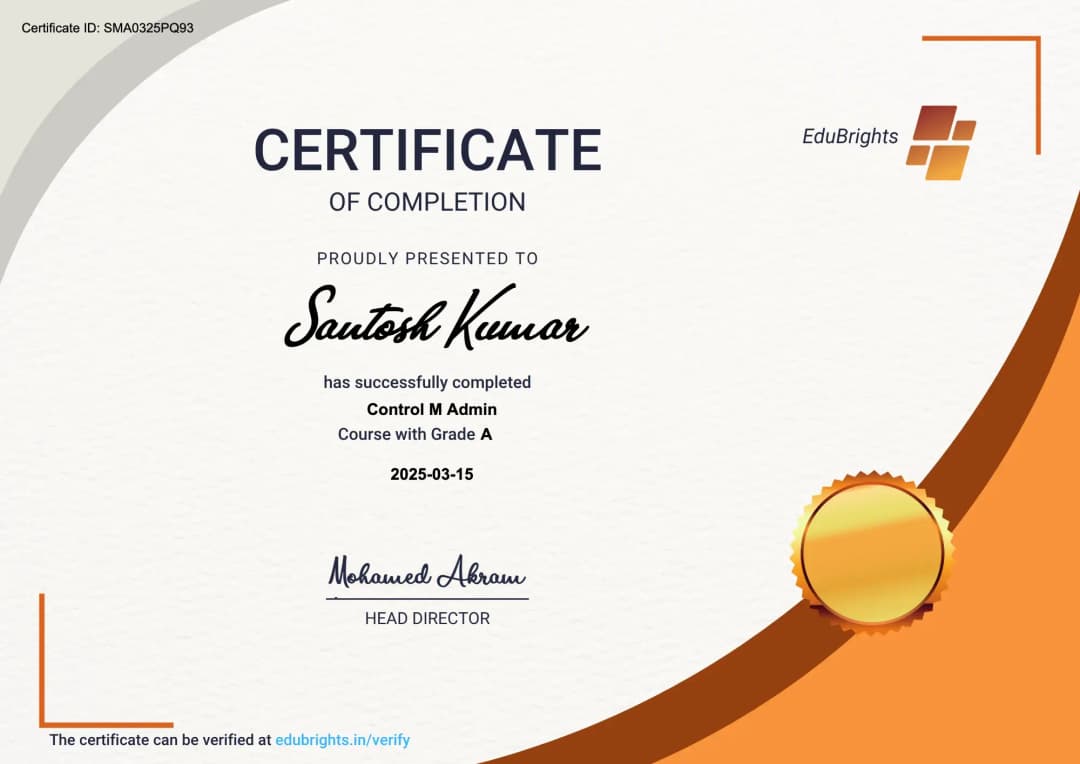
Succeed Our Resourceful Certification
The Certified SAP Automotive Industry Professional certification validates expertise in automotive business processes, production planning, procurement, supply chain management, and logistics operations using SAP solutions. It demonstrates the ability to implement and manage SAP systems tailored for automotive manufacturers, suppliers, and dealer networks. This certification enhances career opportunities in automotive consulting, ERP implementation, and enterprise operations management.
Course FAQs
1. What is SAP Automotive?
SAP Automotive is a set of SAP capabilities designed to support automotive manufacturers, suppliers, distributors, and dealers. It can support processes such as vehicle management, production planning, procurement, supply chain, sales, warranty, aftermarket operations, and analytics.
2. What are the main SAP Automotive components?
The Edubrights curriculum covers automotive components including IS-Auto, IPPE, SCM, and AFS, along with integration with SAP S/4HANA and SAP Manufacturing. These components support different areas of automotive production, supply chain, sales, and aftermarket operations.
3. What is SAP IS-Auto?
SAP IS-Auto is an industry-specific SAP solution area designed to support automotive business processes. It can cover areas such as vehicle management, customer order management, dealer processes, and automotive-specific enhancements.
4. What is the Vehicle Management System (VMS) in SAP?
The Vehicle Management System (IS-A-VMS) supports automotive vehicle-related processes such as procurement, sales, distribution, returns, trade-ins, and service processing. It provides capabilities for managing and tracking vehicle information across relevant business processes.
5. What is vehicle master data in SAP Automotive?
Vehicle master data contains information used to identify and manage a vehicle throughout its lifecycle. Depending on the process, this can include the vehicle model, variant, configuration, identification information, stock status, and related business data.
6. What is VIN management in SAP Automotive?
VIN (Vehicle Identification Number) management is used to identify individual vehicles. SAP automotive processes can associate vehicle information and warranty-related data with the relevant vehicle identification number.
7. What is vehicle configuration in SAP Automotive?
Vehicle configuration represents the selected characteristics and options associated with a vehicle. It allows automotive organizations to manage different models, variants, features, and configuration combinations during ordering and production processes.
8. How does SAP Automotive manage vehicle stock?
Vehicle stock management tracks vehicles available within relevant organizational locations and distribution channels. It can support processes such as vehicle allocation, transfers, dealer stock management, and delivery tracking.
9. What is dealer network management in SAP Automotive?
Dealer network management supports interactions between manufacturers, importers, distributors, and dealers. SAP automotive dealer capabilities can support vehicle sales, spare-parts procurement, warranty processing, and related dealer activities.
10. What is dealer order management?
Dealer order management handles vehicle orders received through the dealer network. It can support order entry, vehicle configuration, availability checks, order tracking, and downstream delivery processes.
11. What is automotive production planning?
Automotive production planning coordinates production requirements with vehicle demand, material availability, capacity, and assembly processes. It helps manufacturers plan production programs and manage vehicle manufacturing schedules.
12. What is IPPE in SAP Automotive?
Integrated Product and Process Engineering (iPPE) is used to represent product structures and production processes in a structured way. In automotive scenarios, it can support model-mix planning, product variants, production structures, and assembly-line planning.
13. What is model-mix planning?
Model-mix planning determines the sequence or mix of different vehicle models and variants that need to be produced. It helps manufacturers balance customer demand with production capacity and assembly-line constraints.
14. What is Just-in-Time (JIT) in automotive manufacturing?
Just-in-Time (JIT) aims to deliver required materials close to the time they are needed in production. In automotive manufacturing, JIT processes help reduce unnecessary inventory while ensuring components are available for planned assembly operations.
15. What is Just-in-Sequence (JIS) in SAP Automotive?
Just-in-Sequence (JIS) extends the just-in-time concept by supplying components in the exact sequence required for production. It is particularly useful when different vehicle configurations are assembled consecutively on the same production line.
16. What is sequence planning in automotive production?
Sequence planning determines the order in which vehicles or production units are processed on an assembly line. The sequence can consider factors such as vehicle configuration, material availability, production capacity, and manufacturing constraints.
17. What is production program management?
Production program management coordinates planned vehicle production with demand, manufacturing capacity, and supply requirements. It helps organizations translate production requirements into executable manufacturing plans.
18. What is automotive supply chain management?
Automotive supply chain management coordinates material procurement, supplier collaboration, inventory, production supply, warehousing, and distribution. SAP solutions can connect these activities across OEMs, Tier-1 suppliers, logistics partners, and dealers.
19. What is supplier collaboration in SAP Automotive?
Supplier collaboration enables manufacturers and suppliers to exchange information related to requirements, schedules, deliveries, and inventory. It can improve visibility between automotive manufacturers and their supplier networks.
20. What are automotive EDI messages?
EDI (Electronic Data Interchange) enables structured business information to be exchanged electronically between organizations. The Edubrights curriculum covers automotive standards and message formats including ODETTE, VDA, and ANSI X12.
21. What is Kanban in automotive supply chains?
Kanban is a pull-based replenishment approach used to trigger material movement or replenishment based on actual consumption. It can help automotive manufacturers and suppliers manage repetitive material requirements efficiently.
22. What are scheduling agreements with releases?
Scheduling agreements define long-term procurement relationships and planned delivery requirements with suppliers. Release information can communicate updated quantities and delivery schedules based on production requirements.
23. What is Vendor-Managed Inventory (VMI)?
Vendor-Managed Inventory (VMI) is a supply-chain model in which the supplier participates in monitoring and replenishing inventory at the customer's location. It can improve replenishment coordination and reduce supply disruptions.
24. How does SAP Automotive support procurement?
SAP Automotive procurement processes can manage purchasing requirements, supplier relationships, purchase orders, deliveries, and inventory replenishment. These processes can be integrated with production planning and supply-chain requirements.
25. What is automotive inventory optimization?
Automotive inventory optimization aims to maintain sufficient material and vehicle stock while avoiding excessive inventory. SAP planning and warehouse capabilities can help monitor demand, supply, stock levels, and replenishment requirements.
26. What is warehouse management in SAP Automotive?
Warehouse management handles activities such as receiving, storage, stock movements, picking, and goods issue. In automotive environments, it can support both production-related materials and aftermarket spare parts.
27. What is Available-to-Promise (ATP) for vehicles?
Available-to-Promise (ATP) checks whether products or vehicles can be confirmed based on available or expected supply. In automotive order management, ATP can support vehicle order confirmation and delivery planning.
28. What is order-to-delivery management in SAP Automotive?
Order-to-delivery management tracks a vehicle order from initial booking through production, allocation, delivery, and related completion activities. It provides visibility into the progress of customer or dealer vehicle orders.
29. What is warranty management in SAP Automotive?
Warranty management supports the administration and processing of vehicle and parts warranty information and claims. SAP automotive warranty capabilities can manage warranty conditions, categories, claims, and related processes.
30. What is warranty claim processing?
Warranty claim processing handles claims submitted for eligible vehicle or parts warranty services. SAP capabilities can support claim information, warranty determination, processing, and related dealer or manufacturer activities.
31. What is a warranty profile?
A warranty profile can contain multiple warranty categories and define warranty conditions such as applicable time periods or mileage limits. SAP can use warranty profiles to determine relevant warranty information for vehicles.
32. What is goodwill claim management?
Goodwill claim management handles customer-service situations where an organization provides support beyond standard contractual warranty conditions. It can be used to manage exceptional service or cost-coverage scenarios.
33. What is recall management in SAP Automotive?
Recall management supports processes related to identifying affected vehicles or components and coordinating required corrective actions. It can involve vehicle identification, dealer communication, service processing, and tracking.
34. What is aftermarket parts management?
Aftermarket parts management handles spare-parts planning, pricing, availability, fulfillment, returns, and related lifecycle activities. SAP automotive processes can support spare-parts operations after the original vehicle sale.
35. What is Spare Parts Planning (SPP)?
Spare Parts Planning (SPP) supports planning and replenishment of aftermarket spare parts. It can help organizations manage demand, stock levels, service requirements, and supply across distribution networks.
36. What is parts supersession in automotive?
Parts supersession occurs when an existing spare part is replaced by a newer or alternative part. Managing supersession helps organizations maintain accurate catalogs and ensure that suitable replacement parts are available.
37. What is quality management in SAP Automotive?
Quality management supports inspection, defect identification, supplier quality, corrective actions, and compliance-related processes. The Edubrights curriculum also covers automotive quality practices such as IATF 16949, APQP, PPAP, FMEA, control plans, and 8D reports.
38. What is IATF 16949 in automotive quality management?
IATF 16949 is an automotive quality-management standard used within the automotive supply chain. SAP quality processes can be configured and used to support organizational quality-management and compliance activities.
39. What are APQP and PPAP?
APQP (Advanced Product Quality Planning) provides a structured approach to quality planning, while PPAP (Production Part Approval Process) supports demonstrating that production processes and parts meet defined requirements. Both are important concepts in automotive supplier and manufacturing quality processes.
40. What is FMEA in SAP Automotive quality management?
Failure Mode and Effects Analysis (FMEA) is used to identify potential failures, their causes, effects, and associated risks. It helps organizations identify preventive or corrective measures before failures affect production or customers.
41. What are 8D reports in automotive quality management?
An 8D report provides a structured method for investigating and resolving quality problems. It typically covers problem definition, containment, root-cause analysis, corrective actions, and prevention of recurrence.
42. How does SAP Automotive support connected vehicles?
Connected-vehicle processes can integrate vehicle-generated information with enterprise systems and analytics platforms. The Edubrights curriculum covers telematics integration, connected-car analytics, remote diagnostics, predictive maintenance, and EV-related processes.
43. What is telematics data integration?
Telematics integration connects vehicle-generated data with backend systems for analysis and business processing. Such data can support monitoring, diagnostics, maintenance, fleet services, and connected-vehicle applications.
44. What is predictive maintenance for vehicles?
Predictive maintenance uses available operational or sensor information to identify conditions that may indicate future maintenance requirements. In connected-vehicle environments, analytics can help organizations plan maintenance before certain failures occur.
45. How can SAP support electric vehicle (EV) processes?
SAP automotive solutions can be used alongside manufacturing, supply-chain, logistics, and analytics capabilities to support EV-related business processes. EV scenarios can involve battery-related supply chains, production planning, vehicle configuration, connected data, and service operations.
46. What is automotive analytics?
Automotive analytics uses operational and business data to monitor production, sales, supply chains, quality, warranty costs, and other performance indicators. Dashboards and KPIs can help organizations analyze trends and support operational decisions.
47. How can SAP Analytics Cloud support automotive KPIs?
SAP Analytics Cloud (SAC) can be used to create dashboards and analytical views for business performance information. In automotive scenarios, analytics can cover areas such as production performance, sales, supply-chain visibility, warranty costs, and supplier quality.
48. How does SAP Automotive integrate with SAP S/4HANA?
SAP Automotive processes can integrate with SAP S/4HANA business functions covering areas such as sales, procurement, inventory, manufacturing, logistics, and finance. The specific integration architecture depends on the SAP products, release, and implementation landscape.
49. What practical projects can be covered in SAP Automotive training in Bangalore?
The Edubrights course includes projects covering Automotive Production Planning, Supplier Collaboration and Procurement Management, Automotive Inventory Optimization, Vehicle Order-to-Delivery Management, and Warranty and After-Sales Service Management. These projects provide practical exposure to automotive manufacturing, supply-chain, vehicle, and service workflows.
50. What technical skills can I gain from SAP Automotive training in Bangalore?
The training can help develop skills in SAP IS-Auto, Vehicle Management System, VIN management, vehicle configuration, IPPE, model-mix planning, JIT/JIS, production planning, automotive supply chain, EDI, supplier collaboration, procurement, inventory, warehouse management, dealer processes, warranty, aftermarket parts, quality management, connected vehicles, EV processes, and automotive analytics. These topics align with the technical curriculum published on the Edubrights SAP Automotive course page.
Get Training Quote for Free
Testimonials
Hear What our Students say
"Transform your life through Education, hear it from our Alumni"

8 LPA
Rahul
Student
Data Scientist
"Transform your life through Education, hear it from our Alumni"

6 LPA
Fathima
Student
Software Engineer
"Transform your life through Education, hear it from our Alumni"

8 LPA
Siddharth
NIELSON IQ
Data Analyst