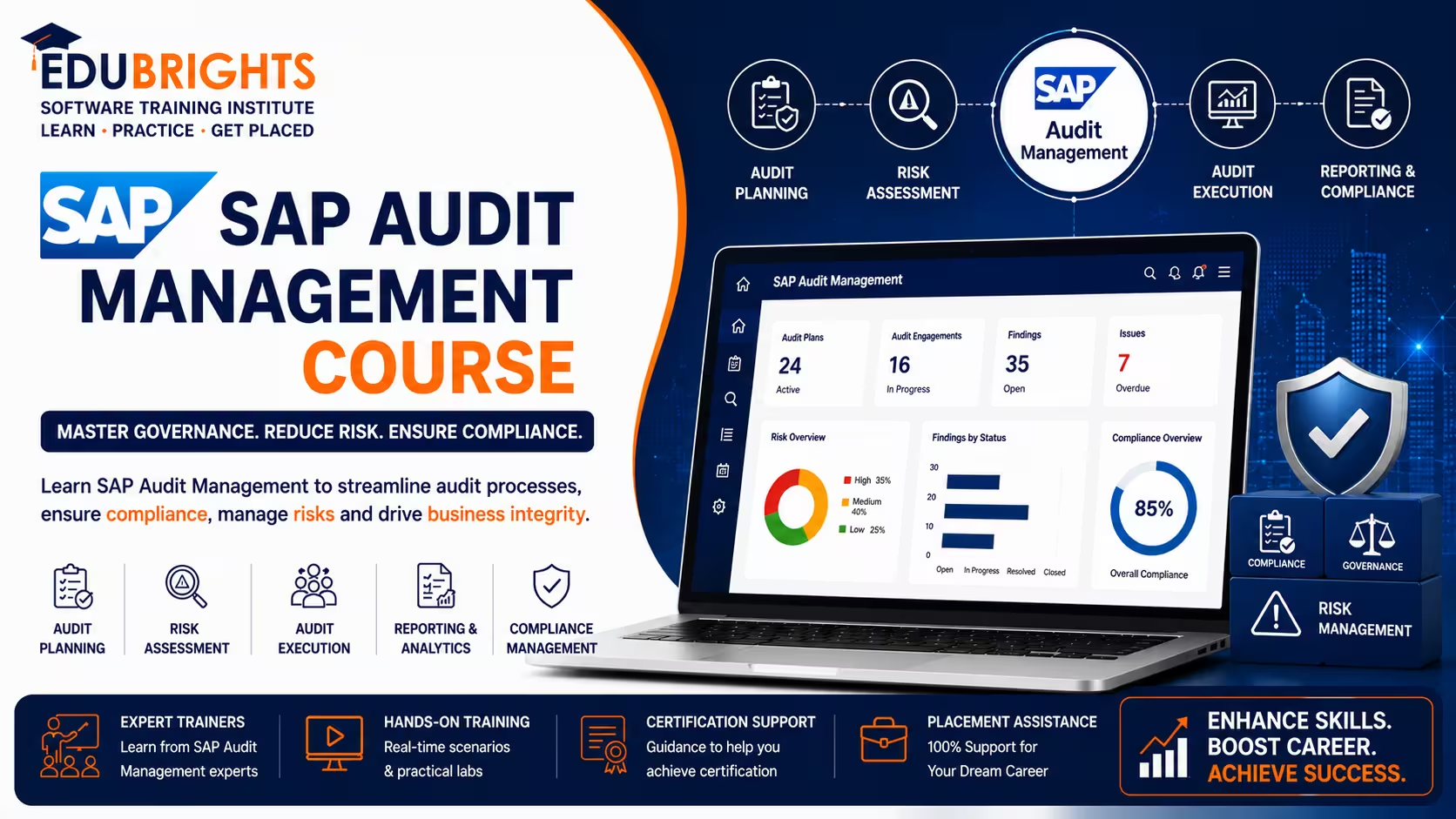
Course Objectives
1. What will I learn in the SAP Audit Management course?
You will learn how to plan, execute, monitor, and manage audits using SAP Audit Management solutions. The course helps you understand audit workflows, compliance requirements, and risk-based auditing processes used by organizations.
2. How does this course help improve my career opportunities?
This course equips you with practical SAP auditing knowledge that is valuable across industries such as banking, manufacturing, healthcare, and IT services. It can help you qualify for roles related to audit management, governance, risk, and compliance.
3. Will I gain hands-on experience with SAP Audit Management tools?
Yes. The training includes practical exercises that help you work with audit planning, findings management, audit reporting, and compliance monitoring. Hands-on learning improves your confidence in real-world project environments.
4. Why should professionals learn SAP Audit Management?
Organizations are increasingly focusing on governance, risk management, and compliance. Learning SAP Audit Management helps professionals support audit processes efficiently and contribute to organizational transparency and regulatory compliance.
Popular Techniques Covered in This Course
Governance, Risk & Compliance (GRC)
Internal Control Evaluation
Audit Reporting
Audit Workflow Management
Compliance Monitoring
Findings Management
SAP Audit Management Fundamentals
Audit Planning
Risk Assessment
Audit Execution Techniques
Get Hands-on Knowledge about Real-Time Projects
Project 1
1. Internal Audit Planning and Execution Project
Develop a complete internal audit plan for a business department using SAP Audit Management. The project covers audit scheduling, resource allocation, audit scope definition, execution tracking, and audit documentation. Learners gain practical experience in managing the entire audit lifecycle.
Project 2
2. Risk-Based Audit Assessment Project
Develop a complete internal audit plan for a business department using SAP Audit Management. The project covers audit scheduling, resource allocation, audit scope definition, execution tracking, and audit documentation. Learners gain practical experience in managing the entire audit lifecycle.
Project 3
3. Audit Findings and Corrective Action Management Project
Design and manage audit findings generated during audit activities. The project involves documenting observations, assigning corrective actions, tracking remediation status, and generating follow-up reports. This helps learners understand issue resolution and compliance monitoring processes.
Project 4
4. Regulatory Compliance Audit Project
Conduct a compliance audit to evaluate adherence to organizational policies and industry regulations. The project includes compliance checks, evidence collection, control validation, audit reporting, and recommendations for improvement. Learners gain hands-on experience in regulatory audit management.
Project 5
5. Enterprise Audit Reporting Dashboard Project
Build an audit reporting and analytics dashboard using SAP Audit Management data. The project focuses on audit status tracking, risk visualization, findings analysis, compliance metrics, and executive-level reporting. Participants learn how audit insights support business decision-making and governance initiatives.
Key Features
Edubrights offers SAP Audit Management in virtual mode with expert trainers. Here are the key features
100% Job Oriented Training
Industry Expert Faculties
Free Demo Class Available
Completed 500+ Batches
Certification Guidance
40 Hours Course Duration
Curriculum
Module 1: Introduction to SAP Audit Management
- Overview of SAP Audit Management
- Audit management within SAP GRC suite
- Internal audit standards: IIA, ISO 19011
- Integration with Risk Management and Process Control
- SAP Audit Management architecture
Module 2: Audit Universe and Planning
- Audit universe setup
- Auditable entity configuration
- Annual audit plan creation
- Risk-based audit prioritization
- Audit plan approval workflow
Module 3: Audit Engagement Management
- Audit engagement creation
- Engagement team assignment
- Audit scope and objectives definition
- Opening meeting and kickoff
- Audit timeline and milestone management
Module 4: Audit Fieldwork
- Audit program and work program steps
- Working papers and evidence management
- Interview and observation documentation
- Control testing in fieldwork
- Issue identification and documentation
Module 5: Audit Issue Management
- Issue classification and rating
- Root cause analysis
- Recommendation creation
- Management response tracking
- Issue escalation workflow
Module 6: Audit Reporting
- Draft report generation
- Review and approval workflow
- Final audit report issuance
- Executive summary and findings
- Distribution list management
Module 7: Follow-Up and Remediation
- Remediation action assignment
- Action due date monitoring
- Evidence upload for closed actions
- Follow-up audit planning
- Overdue action escalation
Module 8: Continuous Auditing
- Automated control monitoring
- Data analytics integration
- Continuous monitoring dashboards
- Exception-based audit triggering
- Integration with SAP HANA analytics
Module 9: Audit Analytics and Reporting
- Audit KPIs and metrics
- Audit completion rates
- Issue aging and resolution reports
- Trend analysis dashboards
- Board-level audit reporting
Module 10: Configuration and Administration
- Audit Management SPRO configuration
- Custom fields and forms
- Workflow configuration (BRF+)
- Authorization management
- System integration setup
Module 11: SAP Audit Management in Cloud
- Cloud-based audit management
- Integration with SAP BTP
- Mobile audit execution
- Collaboration with external auditors
Module 12: Real-Time Projects and Case Studies
- Internal audit department implementation
- Financial audit scenarios
- End-to-end Audit Management cycle
- Certification and interview preparation
Receive Training From Our Skilled and Effective Trainers
Learn from Experienced SAP Audit Management Professionals
Gain practical expertise from SAP Audit Management professionals with hands-on experience delivering enterprise SAP Audit Management, SAP GRC, internal audit, governance, risk management, compliance, and regulatory audit projects across banking, financial services, manufacturing, healthcare, retail, energy, telecommunications, logistics, and public sector organizations.
Industry Exposure with Enterprise Audit & Compliance Projects
Our trainers have worked on real-world SAP Audit Management implementations for global enterprises, helping organizations streamline audit planning, risk assessment, audit execution, control testing, compliance monitoring, issue management, corrective actions, and enterprise governance processes. Learn industry best practices aligned with corporate audit and regulatory compliance requirements.
Simple, Practical & Business-Oriented Teaching Approach
Complex SAP Audit Management concepts are taught through structured lessons, live demonstrations, audit lifecycle scenarios, compliance workflows, risk assessment exercises, workpaper management, audit reporting, and real-world business case studies. This practical approach enables both beginners and working professionals to confidently understand enterprise audit management and SAP GRC processes.
Hands-On Real-Time SAP Audit Management Projects
Develop practical expertise through guided labs and enterprise projects covering SAP Audit Management configuration, audit universe creation, audit planning, audit scheduling, risk assessment, audit execution, workpapers, evidence collection, control testing, findings management, issue tracking, corrective action plans, audit reporting, SAP GRC integration, dashboards, analytics, and end-to-end SAP Audit Management implementation projects.
Updated with the Latest SAP Governance, Risk & Compliance Technologies
Our curriculum is continuously updated with the latest SAP Audit Management, SAP Governance, Risk & Compliance (SAP GRC), SAP S/4HANA, enterprise risk management frameworks, internal control methodologies, regulatory compliance standards, AI-powered audit analytics, continuous auditing, digital governance, and industry best practices. This ensures learners develop practical, certification-ready, and job-oriented SAP Audit Management skills that are highly valued by organizations worldwide.
Succeed Our Resourceful Certification
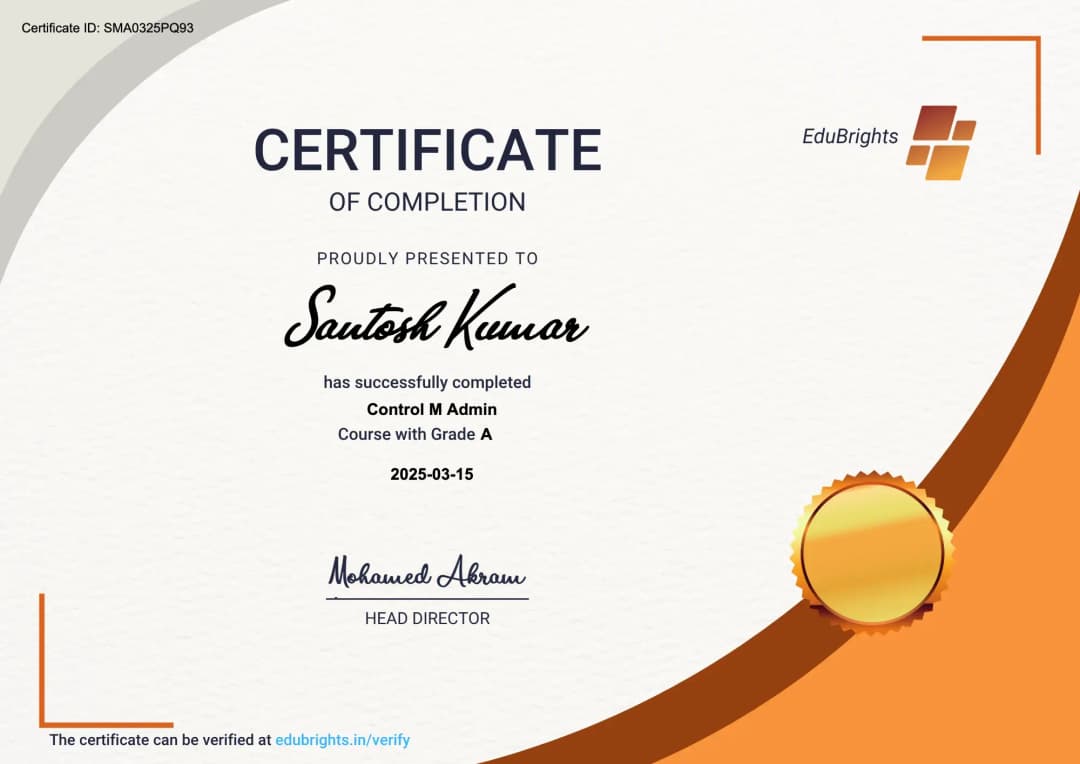
The SAP Audit Management Certification validates your skills in audit planning, risk assessment, compliance monitoring, and audit reporting using SAP solutions. It demonstrates your ability to support governance, risk, and compliance (GRC) processes in organizations. This certification enhances your professional credibility and prepares you for audit and compliance-related SAP roles.
Course FAQs
1. What is SAP Audit Management?
SAP Audit Management is an SAP solution used to manage internal audit activities across the audit lifecycle. It supports audit planning, preparation, execution, working papers, findings, reporting, and follow-up.
2. What are the main phases of SAP Audit Management?
The main phases are Planning, Preparation, Execution, Reporting, and Follow-Up. These phases provide a structured lifecycle for managing audits from initial planning through remediation monitoring.
3. What is an Audit Universe in SAP Audit Management?
An Audit Universe represents the collection of auditable areas within an organization. It can be used as the foundation for identifying auditable items and developing risk-based audit plans.
4. What is an auditable item?
An auditable item represents a process, organizational area, activity, or other entity that can be subject to an audit. Auditable items can be incorporated into audit planning and risk assessment activities.
5. What is risk-based auditing in SAP Audit Management?
Risk-based auditing prioritizes audit activities according to the risks associated with business processes and organizational areas. Risk information can help audit teams determine where audit resources and coverage should be focused.
6. What is risk assessment in SAP Audit Management?
Risk assessment evaluates identified risks based on configured criteria and organizational requirements. The results can support audit prioritization and annual audit planning.
7. What are controls in SAP Audit Management?
Controls are mechanisms or activities designed to prevent, detect, or reduce risks. During audit execution, auditors can evaluate the effectiveness of relevant controls and document their testing results.
8. What is audit planning in SAP Audit Management?
Audit planning defines which areas, risks, processes, and organizational units should be audited during a particular period. An audit plan can also include timelines, resources, scope, and other planning information.
9. What is an annual audit plan?
An annual audit plan organizes planned audit activities for a defined audit period. It can be developed using risk-based priorities and can specify the audits, scope, resources, and schedules to be managed during the period.
10. What is audit prioritization?
Audit prioritization determines which auditable items or risk areas should receive attention based on defined criteria. Risk exposure, business importance, previous audit results, and organizational requirements may be considered.
11. What is an audit plan workflow?
An audit plan workflow controls the review and approval process for an audit plan. It can help move the plan through configured statuses before audits are released for execution.
12. What is an audit engagement?
An audit engagement represents a specific audit assignment with a defined objective and scope. It contains information required to organize the audit team, schedule activities, perform fieldwork, and document results.
13. How is an audit created in SAP Audit Management?
An audit can be created as part of an audit plan or according to the configured audit-management process. The audit can then be initiated and moved through preparation, execution, reporting, and follow-up activities.
14. What is audit scope?
Audit scope defines the boundaries of an audit. It can identify the processes, organizational units, systems, risks, controls, transactions, or periods that will be examined.
15. What is an audit objective?
An audit objective describes what the audit is intended to evaluate or establish. Objectives provide direction for defining procedures, evidence requirements, control testing, and expected results.
16. What is audit preparation?
Audit preparation is the phase in which auditors establish the detailed work program and prepare the audit team for fieldwork. It can include defining work packages, responsibilities, procedures, timelines, and documentation requirements.
17. What is an audit work program?
An audit work program defines the procedures and activities that auditors perform during an engagement. It provides a structured approach for conducting fieldwork and documenting the work performed.
18. What are work packages in SAP Audit Management?
Work packages divide audit activities into manageable assignments. They can be assigned to individual auditors or team members and can contain procedures, scopes, and working-paper requirements.
19. What is audit fieldwork?
Audit fieldwork is the execution stage where auditors perform audit procedures and gather evidence. SAP Audit Management supports activities such as working-paper management, control evaluation, findings documentation, and action-plan creation.
20. What are working papers in SAP Audit Management?
Working papers contain documentation supporting the audit procedures performed and conclusions reached. SAP Audit Management supports creating, uploading, generating, reviewing, and managing working papers.
21. Can working papers be generated automatically?
Yes. SAP Audit Management supports generating working papers from supported sources such as business-rule ad hoc query results and detection-run results. File-generation scenarios can also be configured for working-paper categories.
22. How is audit evidence managed?
Audit evidence is documented and associated with the relevant audit work and working papers. Evidence provides support for control assessments, observations, findings, recommendations, and audit conclusions.
23. What is control testing?
Control testing evaluates whether a control is properly designed and operating effectively according to defined audit criteria. Test procedures, evidence, observations, and results can be documented during audit execution.
24. What is a control effectiveness assessment?
A control effectiveness assessment records the auditor's evaluation of how effectively a control operates. The assessment can contribute to the identification and evaluation of audit findings.
25. What is an audit finding?
An audit finding documents an error, deficiency, adverse condition, or other result identified during auditing. SAP Audit Management findings can contain criteria, condition, cause, consequence, ranking, recommendation, working papers, and action plans.
26. What are criteria, condition, cause, and consequence in an audit finding?
Criteria describe the expected requirement, condition describes what was actually found, cause explains why the issue occurred, and consequence describes the resulting or potential impact. These attributes help structure audit findings consistently.
27. What is finding classification?
Finding classification categorizes identified audit issues according to configured types or categories. It helps organizations analyze findings consistently and generate meaningful audit reports.
28. What is finding ranking?
Finding ranking indicates the relative significance or severity of an audit finding based on configured organizational criteria. It helps auditors prioritize issues, determine management attention, and support remediation planning.
29. What is root cause analysis in audit management?
Root cause analysis identifies the underlying reason for an audit issue rather than focusing only on its visible symptoms. It supports the development of corrective actions that address the source of the problem.
30. What is an audit recommendation?
An audit recommendation describes the corrective or improvement measure proposed by the audit team in response to a finding. Recommendations can be associated with findings and used as the basis for action plans.
31. What is an action plan in SAP Audit Management?
An action plan defines the activities required to address an audit finding. It can contain an action-plan title, details, responsible person, deadline, and workflow status.
32. Can the auditee propose an action plan?
Yes. SAP Audit Management supports scenarios in which the auditee can propose an action plan for an assigned finding. The proposed plan can then be submitted to the audit team for review and acceptance or rejection.
33. What is action-plan workflow?
Action-plan workflow controls the lifecycle of corrective actions associated with findings. SAP provides configurable workflows that can support creation, submission, review, approval, processing, and completion of action plans.
34. What is remediation tracking?
Remediation tracking monitors whether corrective actions identified from audit findings are completed. It can include responsible users, deadlines, evidence, statuses, and escalation activities.
35. What is audit follow-up?
Audit follow-up evaluates whether management has adequately and effectively implemented agreed actions or recommendations. Auditors can assess completed actions and determine whether the finding has been properly addressed.
36. How does SAP Audit Management handle overdue actions?
Overdue corrective actions can be monitored through action-plan information, deadlines, statuses, and follow-up processes. Organizations can configure workflows and escalation mechanisms according to their audit-management requirements.
37. What is audit reporting?
Audit reporting converts the results of audit procedures into a formal report containing relevant audit information, findings, recommendations, and action plans. SAP Audit Management provides predefined report templates for supported reporting scenarios.
38. What are audit report templates?
Audit report templates provide predefined structures for generating audit reports. SAP documentation includes Word, PDF, and interactive audit report templates, depending on the supported configuration and version.
39. What is an interactive audit report?
An interactive audit report allows users to edit supported draft findings and action plans outside the core application and synchronize the changes back to SAP Audit Management. This can support collaborative review and offline reporting activities.
40. How does SAP Audit Management support audit workflow?
SAP Audit Management provides workflows and status schemas for objects such as audits, work packages, findings, and action plans. Workflows can control review, approval, submission, processing, and completion activities.
41. What is continuous auditing?
Continuous auditing uses recurring or automated monitoring activities to identify exceptions or control issues on an ongoing basis rather than relying only on periodic audits. SAP Audit Management can be used with relevant analytics and monitoring capabilities depending on the overall SAP landscape.
42. How can data analytics support SAP Audit Management?
Audit analytics can help auditors analyze business data, identify exceptions, evaluate controls, and support evidence-based audit procedures. SAP Audit Management documentation also supports business-rule queries and detection-run results as sources for working papers.
43. What are audit KPIs and metrics?
Audit KPIs are measurable indicators used to monitor audit performance and results. Examples include audit completion rates, open findings, issue aging, remediation status, overdue actions, and audit-plan progress.
44. What is audit dashboard reporting?
Audit dashboards provide visual views of audit-related information such as findings, action plans, audit progress, completion rates, and trends. They can help audit management monitor the overall audit portfolio and communicate results.
45. How does SAP Audit Management support SAP GRC integration?
SAP Audit Management can work with SAP Governance, Risk, and Compliance processes to support risk-based auditing, control evaluation, and governance activities. Integration can help auditors use relevant risk and control information during audit planning and execution.
46. How does SAP Audit Management integrate with SAP S/4HANA?
SAP Audit Management for SAP S/4HANA provides audit-management capabilities within the SAP S/4HANA environment. Depending on the architecture and configuration, auditors can use business data and supported integration capabilities during audit planning, execution, evidence collection, and analysis.
47. What is SAP Audit Management configuration?
Configuration defines how the audit solution operates within the SAP system. Important areas can include audit types, workflows, status schemas, master data, report templates, working-paper categories, roles, authorizations, and integration settings.
48. What is workflow configuration in SAP Audit Management?
Workflow configuration determines how audit objects move between statuses and users. SAP documentation provides predefined workflow concepts for audits, work packages, findings, and action plans, which can be assigned according to audit-type requirements.
49. What practical projects can be covered in SAP Audit Management training?
Practical projects can include Internal Audit Planning and Execution, Risk-Based Audit Assessment, Audit Findings and Corrective Action Management, Regulatory Compliance Auditing, and Enterprise Audit Reporting Dashboard development. These topics directly align with the practical projects and curriculum listed on the Edubrights SAP Audit Management course page.
50. What technical skills can I gain from SAP Audit Management training in Chennai?
SAP Audit Management training can help develop skills in Audit Universe management, risk assessment, risk-based audit planning, audit engagement management, work programs, working papers, evidence management, control testing, findings management, root cause analysis, recommendations, action plans, remediation tracking, audit reporting, workflow configuration, audit analytics, SAP GRC integration, and governance and compliance processes.
Get Training Quote for Free
Testimonials
Hear What our Students say
"Transform your life through Education, hear it from our Alumni"

8 LPA
Rahul
Student
Data Scientist
"Transform your life through Education, hear it from our Alumni"

6 LPA
Fathima
Student
Software Engineer
"Transform your life through Education, hear it from our Alumni"

8 LPA
Siddharth
NIELSON IQ
Data Analyst