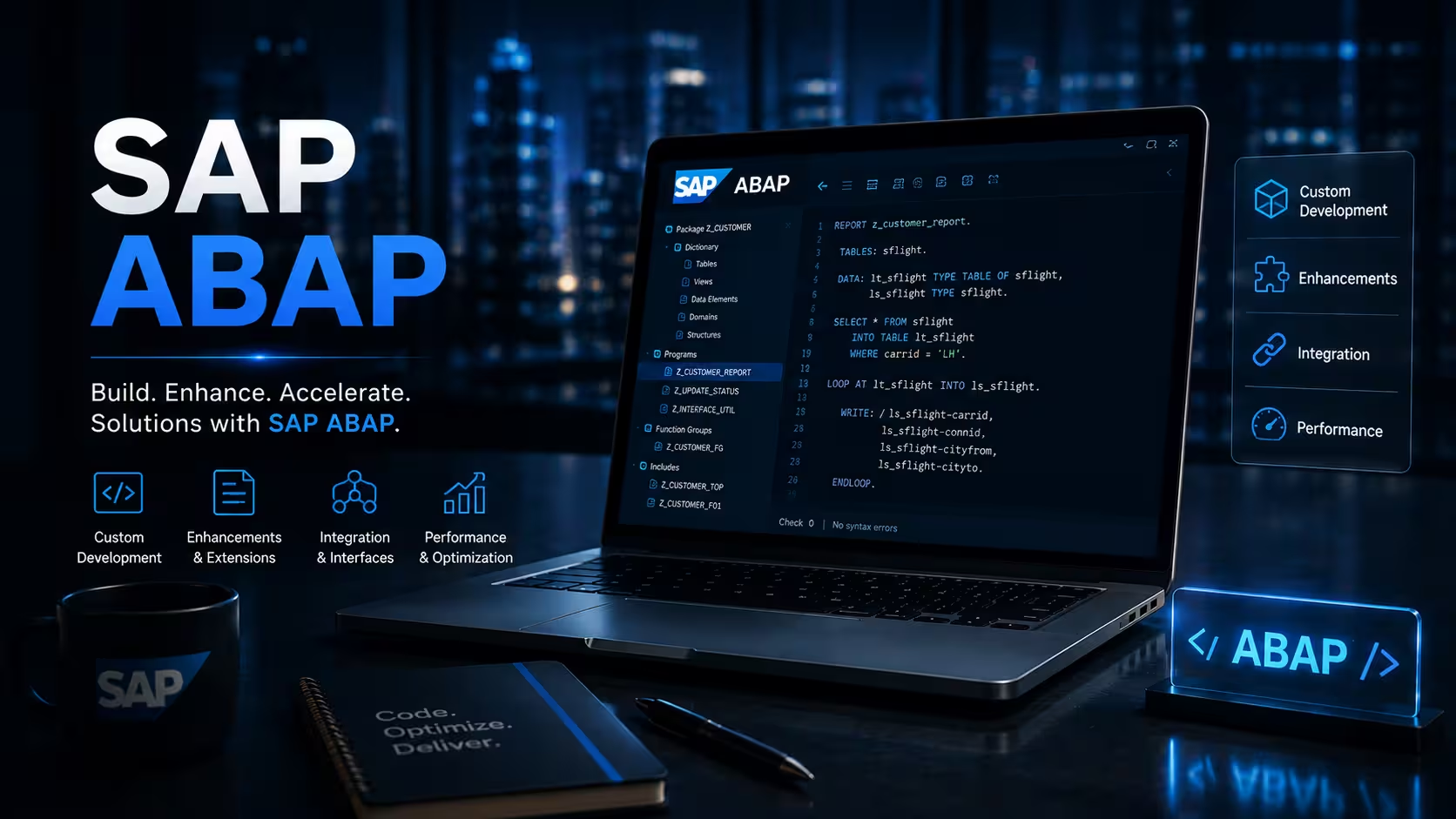
Course Objectives
What will I learn in this SAP ABAP course?
You'll learn how organizations configure and use SAP ABAP to run core business processes, covering master data, transactions, and reporting so you understand both the how and the why behind each step.
What hands-on skills will I gain from SAP ABAP training?
You'll get hands-on experience with industry-relevant SAP ABAP tools and workflows through guided exercises, so you learn by doing rather than just reading theory.
How does this course prepare me for real-world SAP ABAP work?
The course is designed around how SAP ABAP is actually applied to solve real-world problems in professional settings, not just textbook scenarios.
Will I work on real projects during the SAP ABAP course?
Yes, the course includes real-time projects and case studies that reinforce SAP ABAP concepts through practice, giving you portfolio-ready work by the end.
How does this course help with certification and job interviews?
The course is structured to help you prepare for relevant SAP ABAP certifications and interviews, covering the concepts and terminology employers and exam boards expect.
Popular Techniques Covered in This Course
Master data setup and maintenance in SAP ABAP
Configuring business processes and transaction workflows
Navigating core modules and transaction screens
Generating and customizing business reports
Managing organizational structures and user roles
Handling period-end and month-end processing
Troubleshooting transactional errors
Integrating SAP ABAP with upstream and downstream systems
Supporting user training and change management
Certification-aligned exam preparation
Get Hands-on Knowledge about Real-Time Projects
Project 1
SAP ABAP Fundamentals Project
A guided, hands-on project where you apply the core concepts and basic tools of SAP ABAP to a simple task — designed to build confidence with the fundamentals before moving on to advanced work.
Project 2
Real-World SAP ABAP Case Study
Work through a real-world scenario that mirrors how SAP ABAP is used on the job, practicing the workflows, decisions, and troubleshooting professionals rely on day to day.
Project 3
SAP ABAP Configuration & Setup Exercise
Configure and set up a working SAP ABAP environment from scratch, applying what you've learned in a structured, hands-on format with guidance from your trainer.
Project 4
SAP ABAP Integration & Automation Challenge
Tackle a practical, open-ended problem involving SAP ABAP integration or automation, working through troubleshooting, optimization, and best practices the way you would in a real professional environment.
Project 5
SAP ABAP Capstone Project
Bring together everything you've learned into one comprehensive, portfolio-ready project that demonstrates your end-to-end SAP ABAP skills to potential employers.
Key Features
This SAP ABAP program offers comprehensive hands-on training to prepare you for industry demands.
40 Hours Course Duration
100% Job Oriented Training
Industry Expert Faculties
Free Demo Class Available
Completed 500+ Batches
Certification Guidance
Curriculum
Module 1: Introduction to SAP ABAP
- Overview and evolution of SAP ABAP
- Industry landscape, use cases, and business value
- Career paths and job roles related to SAP ABAP
Module 2: Core Concepts and Terminology
- Key modules, screens, and terminology in SAP ABAP
- Master data structures and organizational hierarchies
- How SAP ABAP fits into a broader enterprise systems landscape
Module 3: Environment Setup and Configuration
- Setting up a working SAP ABAP environment
- Initial configuration and system requirements
- Navigating the core interface and tools
Module 4: Architecture and Key Components
- Understanding the underlying architecture of SAP ABAP
- Key modules, components, and how they interact
- Data flow and system design considerations
Module 5: Hands-On Tools and Techniques
- Practical, hands-on use of core SAP ABAP tools
- Step-by-step configuration and customization
- Common workflows used in real projects
Module 6: Data Management and Administration
- Creating and maintaining master and transactional data
- User roles, authorizations, and access management
- Data cleansing, archiving, and housekeeping practices
Module 7: Integration with Related Systems
- Connecting SAP ABAP with other enterprise systems
- APIs, interfaces, and data exchange methods
- Common integration patterns and challenges
Module 8: Automation and Workflow Optimization
- Automating repetitive tasks within SAP ABAP
- Streamlining workflows for efficiency
- Tools and techniques for process optimization
Module 9: Security, Compliance and Best Practices
- Role-based access control and segregation of duties
- Audit trails and compliance reporting
- Data protection guidelines specific to SAP ABAP
Module 10: Troubleshooting and Performance Tuning
- Identifying and resolving common SAP ABAP issues
- Performance tuning and optimization techniques
- Monitoring and diagnostic approaches
Module 11: Real-World Case Studies and Projects
- Applying SAP ABAP to practical, real-world scenarios
- Working through guided, project-based exercises
- Learning from common industry implementation patterns
Module 12: Certification Preparation and Capstone Project
- Consolidating skills through a capstone project
- Exam-focused review of key SAP ABAP concepts
- Interview preparation and next steps for your career
Receive Training From Our Skilled and Effective Trainers
Experience in the Industry
Learn from seasoned SAP ABAP professionals with extensive experience in SAP ECC, SAP S/4HANA, and enterprise application development. Our trainers have successfully delivered real-world SAP ABAP implementations across manufacturing, banking, retail, healthcare, automotive, and consulting industries, providing practical insights into enterprise SAP development and real-time project execution.
Backgrounds at the Top
Our SAP ABAP trainers have worked on enterprise-scale SAP projects for leading multinational organizations and global consulting firms. Their expertise includes custom development, reports, interfaces, enhancements, Smart Forms, Adobe Forms, workflows, SAP migrations, and SAP S/4HANA transformation projects, ensuring you learn industry-standard SAP development practices followed by top companies.
Clear & Effective Teaching
Master SAP ABAP programming through structured, easy-to-understand sessions that combine theory with practical implementation. Topics such as Data Dictionary (DDIC), Reports, ALV Reporting, Module Pool Programming, Smart Forms, Adobe Forms, BAPIs, BADIs, User Exits, Enhancements, Interfaces, OData Services, CDS Views, RAP Model, and Debugging are explained using real business scenarios and production-level examples.
Hands-On Learning Focus
Build practical SAP development skills by working in a live SAP environment with coding assignments, guided labs, mini-projects, and real-time implementation scenarios. Develop custom reports, interfaces, enhancements, forms, database objects, and SAP S/4HANA ABAP applications while gaining the hands-on experience required for enterprise SAP ABAP Developer and SAP Technical Consultant roles.
Up-to-Date Knowledge
Stay ahead with the latest SAP S/4HANA ABAP, ABAP on HANA, RESTful ABAP Programming Model (RAP), Core Data Services (CDS Views), AMDP, SAP Fiori Integration, Eclipse ADT, and modern SAP development best practices. Our curriculum is continuously updated to match current industry standards, ensuring your SAP ABAP skills remain relevant for today's enterprise projects and future SAP innovations.
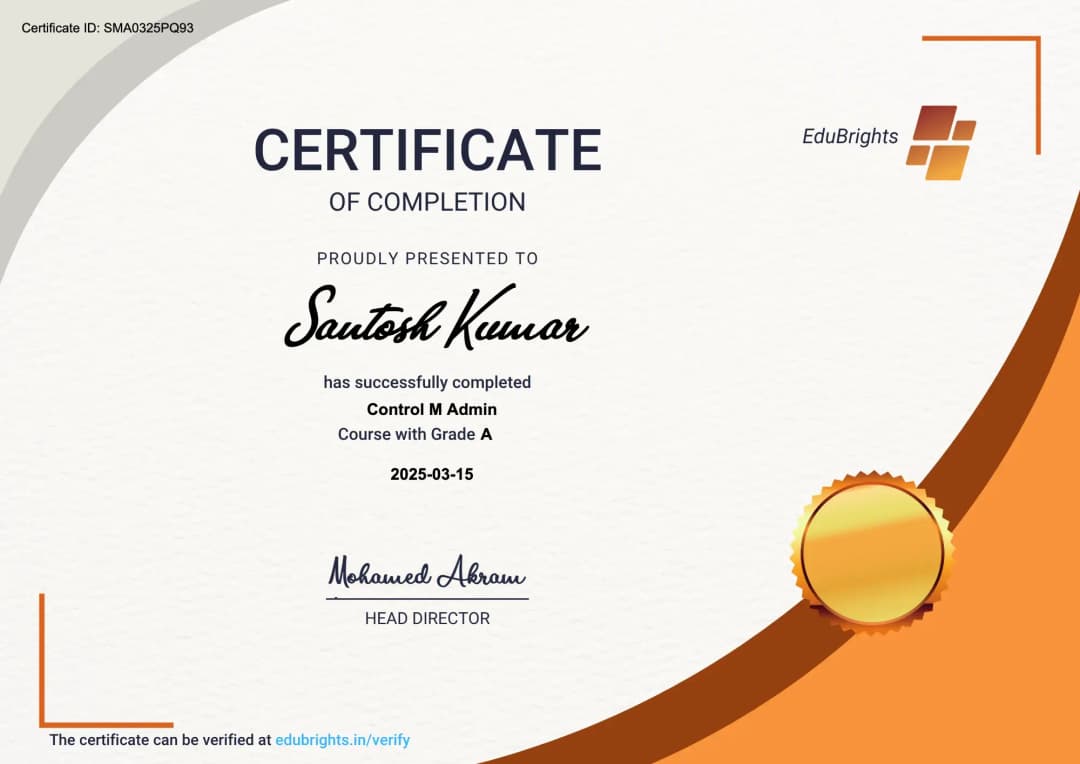
Certified SAP ABAP Professional
Our certification validates your expertise in SAP ABAP. Gain practical skills to apply SAP ABAP confidently in real-world projects. Ideal for professionals and freshers looking to strengthen their SAP ABAP career profile.
Course FAQs
1. What is SAP ABAP Online Training?
SAP ABAP Online Training is a live, instructor-led program that teaches ABAP programming, SAP development tools, database programming, reports, interfaces, enhancements, forms, debugging, and modern S/4HANA development through online sessions and practical exercises.
2. Is SAP ABAP Online Training suitable for beginners?
Yes. Beginners can start with ABAP fundamentals such as data types, variables, operators, control statements, internal tables, modularization, Open SQL, and debugging before progressing to Object-Oriented ABAP and advanced SAP development technologies.
3. Does SAP ABAP Online Training include live practical sessions?
Yes. Practical learning is an important part of the training. Learners can practise ABAP development through coding assignments, guided exercises, mini-projects, and real-time implementation scenarios in a SAP environment.
4. Will I get access to a SAP system for online ABAP practice?
Hands-on SAP environment practice is included as part of the training approach. Learners can practise developing reports, database objects, interfaces, enhancements, forms, and other ABAP components rather than relying only on theoretical demonstrations.
5. What technical topics are covered in SAP ABAP Online Training?
The training covers ABAP fundamentals, Data Dictionary (DDIC), internal tables, Open SQL, reports, ALV, Module Pool Programming, Smart Forms, Adobe Forms, Object-Oriented ABAP, BAPIs, BAdIs, user exits, enhancements, interfaces, debugging, OData, CDS Views, RAP, AMDP, and SAP S/4HANA ABAP development.
6. Does online SAP ABAP training cover Object-Oriented ABAP?
Yes. Object-Oriented ABAP covers classes, objects, methods, attributes, inheritance, interfaces, polymorphism, encapsulation, events, and exception handling. These concepts help developers build reusable and maintainable SAP applications.
7. Does SAP ABAP Online Training cover SAP S/4HANA development?
Yes. Modern S/4HANA ABAP development includes topics such as ABAP on HANA, optimized Open SQL, CDS Views, AMDP, OData services, RAP, Eclipse ADT, and modern SAP development practices.
8. Are CDS Views and AMDP included in SAP ABAP Online Training?
Yes. CDS Views are covered for modern data modeling and semantic data access, while AMDP introduces database-side processing using SQLScript on SAP HANA. These technologies are important for developing performance-oriented S/4HANA applications.
9. Does the online ABAP course cover OData and RAP?
Yes. The training covers OData services for exposing SAP backend data and functionality and introduces the ABAP RESTful Application Programming Model (RAP) for developing modern transactional and service-based applications.
10. Can I learn ABAP debugging and performance optimization online?
Yes. Online training can cover practical debugging using breakpoints, watchpoints, variable inspection, call stacks, and step-by-step execution. Performance topics can include efficient SQL, internal-table processing, ST05 SQL Trace, runtime analysis, and identifying database bottlenecks.
11. Does SAP ABAP Online Training include real-time projects?
Yes. The training includes practical projects and case studies designed to apply ABAP concepts to real-world scenarios. Projects can involve ABAP fundamentals, integration, automation, troubleshooting, optimization, and end-to-end development.
12. Can working professionals attend SAP ABAP Online Training?
Yes. Online instructor-led training is suitable for working professionals because they can participate remotely while developing ABAP skills through practical assignments and project-based learning.
13. Is Eclipse ADT covered in SAP ABAP Online Training?
Yes. Eclipse ADT (ABAP Development Tools) is covered as part of modern SAP development. It provides an Eclipse-based environment for working with ABAP classes, CDS Views, debugging, code analysis, RAP, and other modern development objects.
14. Does SAP ABAP Online Training prepare learners for real-time SAP projects?
Yes. The training focuses on applying ABAP concepts to real-world development scenarios, including custom reports, interfaces, enhancements, forms, database objects, integrations, troubleshooting, and S/4HANA development.
15. What skills can I gain from SAP ABAP Online Training?
You can develop skills in ABAP programming, DDIC, internal tables, Open SQL, ALV reporting, Object-Oriented ABAP, Module Pool Programming, Smart Forms, Adobe Forms, BAPIs, BAdIs, enhancements, interfaces, debugging, CDS, AMDP, OData, RAP, Eclipse ADT, and SAP S/4HANA development.
16. What are the prerequisites for SAP ABAP Online Training?
Basic programming knowledge, database concepts, and familiarity with enterprise applications can be helpful, but they are not always required. A structured course can introduce ABAP concepts from the beginning and gradually progress to advanced topics.
17. What programming fundamentals are taught in SAP ABAP?
ABAP programming fundamentals include variables, constants, data types, operators, conditional statements, loops, strings, structures, internal tables, field symbols, data references, modularization, exception handling, and database operations.
18. What are internal tables in SAP ABAP?
Internal tables are temporary runtime data structures used to store and process multiple records in an ABAP program. They are commonly used for database results, calculations, sorting, filtering, data transformation, and report generation.
19. What is the difference between standard, sorted, and hashed internal tables?
Standard tables are generally used for index-based processing, sorted tables automatically maintain records according to their key, and hashed tables provide efficient key-based access. The correct table type depends on the application's processing and performance requirements.
20. What are field symbols and data references in ABAP?
Field symbols act as dynamic aliases for existing data objects, while data references point to data objects dynamically. Both are useful for generic programming, dynamic data processing, and efficient manipulation of internal tables and structures.
21. What is the ABAP Dictionary?
The ABAP Dictionary, also called DDIC, is SAP's central metadata repository for defining data structures and database-related objects. It includes domains, data elements, tables, structures, table types, views, search helps, indexes, and lock objects.
22. What is the difference between a domain and a data element?
A domain defines the technical properties of a field, including its data type, length, and possible value range. A data element defines the business meaning of the field and provides labels, documentation, and semantic information.
23. What are transparent tables and structures in SAP ABAP?
Transparent tables store persistent business data in the SAP database. Structures are reusable collections of fields that do not independently store database records and are commonly used in programs, interfaces, screens, and internal tables.
24. What are search helps in SAP ABAP?
Search helps provide input assistance for SAP fields. They allow users to search for and select valid values from database tables or other data sources, improving usability in SAP screens and applications.
25. What are lock objects in SAP ABAP?
Lock objects provide logical locking to prevent multiple users or processes from changing the same business data simultaneously. SAP generates enqueue and dequeue function modules based on lock-object definitions.
26. What is Open SQL in SAP ABAP?
Open SQL is SAP's database-independent interface for reading and modifying application data. It supports statements such as SELECT, INSERT, UPDATE, MODIFY, and DELETE while allowing ABAP programs to work across supported database platforms.
27. What is the difference between Open SQL and Native SQL?
Open SQL is database-independent and processed through the ABAP database interface. Native SQL uses database-specific syntax and is generally used only when a required database operation cannot be performed through standard Open SQL.
28. How are joins used in ABAP SQL?
Joins combine related records from multiple database tables in a single database operation. They help retrieve connected business data efficiently and can reduce the number of database calls made by an ABAP program.
29. What is FOR ALL ENTRIES in ABAP?
FOR ALL ENTRIES allows an ABAP SQL query to select records based on values stored in an internal table. The internal table should be checked to ensure it is not empty before executing the query, and duplicate values should be handled appropriately.
30. How can database performance be improved in ABAP?
Database performance can be improved by selecting only required fields, reducing database round trips, avoiding database access inside loops, using suitable joins, applying proper filters, analyzing SQL statements, and processing data efficiently at the database level.
31. What is ALV in SAP ABAP?
ALV, or ABAP List Viewer, is a standard reporting framework used to display business data in an interactive format. It provides sorting, filtering, grouping, aggregation, totals, subtotals, layouts, and export options.
32. What is the difference between classical reports and ALV reports?
Classical reports use traditional list-processing statements and provide limited interactive features. ALV reports use a standardized framework with built-in functions for sorting, filtering, layouts, aggregation, and data export.
33. What is Module Pool Programming?
Module Pool Programming is used to develop interactive SAP GUI applications with Dynpro screens. It includes screen design, screen flow logic, PBO, PAI, GUI status, screen fields, and ABAP modules for processing user actions.
34. What are PBO and PAI in SAP ABAP?
PBO stands for Process Before Output and runs before a screen is displayed. PAI stands for Process After Input and runs after the user submits input. These events control screen preparation and user-input processing.
35. What are Smart Forms and Adobe Forms?
Smart Forms and Adobe Forms are SAP technologies used to create formatted business documents such as invoices, purchase orders, delivery notes, labels, and statements. They support print output and PDF generation.
36. What are function modules in SAP ABAP?
Function modules are reusable procedures maintained in the Function Builder. They provide a standardized way to encapsulate business logic and can be called from different ABAP programs or exposed for remote execution.
37. What are BAPIs in SAP ABAP?
BAPIs, or Business Application Programming Interfaces, are standardized SAP interfaces for accessing business objects and executing business processes. They are commonly used for integration and controlled interaction with SAP functionality.
38. What is RFC in SAP ABAP?
RFC, or Remote Function Call, enables a function module to be executed remotely between SAP systems or between SAP and external applications. RFC is commonly used for distributed processing, system integration, and communication between SAP landscapes.
39. What are IDocs in SAP ABAP?
IDocs, or Intermediate Documents, are structured data containers used to exchange business information between SAP systems and external applications. They contain control records, data segments, and status information.
40. What is the difference between inbound and outbound IDocs?
Outbound IDocs transfer data from SAP to another system, while inbound IDocs transfer data into SAP. ABAP developers may work with IDoc generation, segment processing, partner profiles, error handling, monitoring, and reprocessing.
41. What are BAdIs, user exits, and enhancement points?
BAdIs, user exits, customer exits, and enhancement points are SAP extensibility mechanisms that allow developers to add custom functionality to standard applications. Modern SAP development favors upgrade-safe enhancements instead of modifying standard code.
42. How does debugging work in SAP ABAP?
ABAP debugging helps developers analyze program execution and identify logical, runtime, and data-processing errors. Common tools include breakpoints, watchpoints, conditional breakpoints, variable inspection, call-stack analysis, and step-by-step execution.
43. What are ST05, SAT, and ST12 in SAP ABAP?
ST05 is used for SQL and database tracing, SAT performs ABAP runtime analysis, and ST12 provides combined performance tracing. These tools help identify expensive SQL statements, slow program sections, and application bottlenecks.
44. What is ATC in SAP ABAP?
ATC, or ABAP Test Cockpit, is a static code-analysis tool used to identify syntax problems, security risks, performance issues, obsolete statements, naming violations, and other code-quality concerns.
45. What are CDS Views in SAP S/4HANA?
CDS Views, or Core Data Services views, provide a modern approach to creating semantic data models in SAP S/4HANA. They support annotations, associations, calculated fields, authorization concepts, analytical scenarios, and service consumption.
46. What is AMDP in SAP ABAP?
AMDP, or ABAP Managed Database Procedures, allows developers to implement database procedures using SQLScript that execute directly on SAP HANA. AMDP is useful for selected data-intensive processing scenarios.
47. What is OData in SAP ABAP?
OData is a web-based protocol used to expose and consume structured business data through HTTP services. In SAP development, OData services can connect ABAP backend functionality with SAP Fiori applications and external systems.
48. What is the ABAP RESTful Application Programming Model?
The ABAP RESTful Application Programming Model, or RAP, is SAP's modern framework for developing transactional and service-based applications with ABAP. It includes business objects, behavior definitions, behavior implementations, service definitions, and service bindings.
49. What are ABAP Cloud and Clean Core?
ABAP Cloud is SAP's cloud-ready ABAP development model based on released APIs, restricted language versions, and upgrade-safe extensibility. Clean Core is the strategy of minimizing modifications to standard SAP and using approved extension points, CDS, RAP, and released interfaces.
50. How are ABAP applications tested and transported between SAP systems?
ABAP applications are typically developed in a development system, tested in a quality system, and deployed to production through transport requests. Testing may include syntax checks, unit testing, integration testing, debugging, ATC analysis, performance testing, and functional validation before release.
Get Training Quote for Free
Testimonials
Hear What Our Students Say
"Transform your life through Education, hear it from our Alumni"

8 LPA
Rahul
Student
Data Scientist
"Transform your life through Education, hear it from our Alumni"

6 LPA
Fathima
Student
Software Engineer
"Transform your life through Education, hear it from our Alumni"

8 LPA
Siddharth
NIELSON IQ
Data Analyst