Course Objectives
1. What exactly Python for Data, ML & AI training cover?
Python for Data, ML & AI training covers data manipulation, statistical analysis, machine learning algorithms, and deep learning models using Python libraries. It teaches NumPy, Pandas for data processing, Scikit-learn for ML, TensorFlow/PyTorch for neural networks, and deployment techniques. Learners build predictive models, analyze datasets, and create AI applications from scratch. The course emphasizes practical projects for real-world data science challenges.
2. What are the main objectives of the Python for Data, ML & AI course for your development skills?
The course transforms you into a proficient data scientist capable of end-to-end ML/AI projects. Objectives include mastering data preprocessing, building supervised/unsupervised models, neural networks, and model evaluation/deployment. You'll develop skills in feature engineering, hyperparameter tuning, and AI ethics for production environments. Gain portfolio projects qualifying for data analyst, ML engineer roles immediately.
3. Construct Supervised & Unsupervised ML Pipelines
Build, train, evaluate, and tune robust predictive models utilizing regularized regression, tree-based ensemble methods, and clustering algorithms.
4. Architect Deep Learning & Generative AI Systems
Design deep neural network architectures and multi-turn autonomous agent frameworks using tensor processing and large language model (LLM) orchestration tools.
Popular Techniques Covered in This Course
1.Pandas data manipulation
2.Scikit-learn pipelines
3.XGBoost hyperparameter tuning
4.CNN architecture design
5.NLP text preprocessing
6.Cross-validation strategies
7.Model interpretability (SHAP)
8.Time series forecasting
9.MLOps deployment pipelines
10.production deployment
Get Hands-on Knowledge about Real-Time Projects
Project 1
Project 1: Multi-Source Exploratory Data Engineering Engine
Build a comprehensive data parsing subsystem. You will write robust Python logic to ingest unstructured JSON tracking logs and tabular CSV records, resolve structural anomalies using Pandas, execute complex grouping transformations, and generate automated statistical visual portfolios using Seaborn
Project 2
Project 2: Predictive Customer Lifetime Value (CLV) Modeling Pipeline
Develop an end-to-end predictive machine learning model to evaluate client value drop-offs. You will build comprehensive transformation pipelines in Scikit-Learn to encode categorical features, handle missing arrays, train regularized regression and ensemble models, and run hyperparameter grids to isolate optimal accuracy matrices.
Project 3
Project 3: Real-Time Financial Fraud Classification Network
Construct a high-stakes classification model to catch anomalous financial transactions. You will address heavy data imbalances using advanced sampling methods, evaluate model success with precise precision-recall metrics, and serialize the trained pipeline into production endpoints using model saving utilities.
Project 4
Project 4: Deep Learning Computer Vision Defect Detector
Design a structural image analysis framework utilizing deep learning principles. You will construct a multi-layer Convolutional Neural Network (CNN) in PyTorch, implement custom dataset loading classes to manage image inputs, write optimized optimization loops, and visualize layer attention nodes
Project 5
Project 5: Autonomous Enterprise Contextual Knowledge Agent
Create a production-grade generative AI assistant capable of interacting with internal corporate data stores. You will utilize LangChain to parse unformatted document libraries, convert text strings into dense vector embeddings, store arrays inside a vector database, and build a Retrieval-Augmented Generation (RAG) pipeline powered by pre-trained large language models.
Key Features
Edubrights offers Python for Data, ML & AI Training in virtual mode with expert trainers. Here are the key features.
40 Hours Course Duration
100% Job Oriented Training
Industry Expert Faculties
Free Demo Class Available
Completed 500+ Batches
Certification Guidance
Curriculum
Module 1: Python Programming Essentials
- Variables, data types, control structures, functions
- Lists, dictionaries, sets, tuples operations
- File handling, exception management
Module 2: NumPy for Numerical Computing
- Array creation, indexing, broadcasting
- Mathematical operations, linear algebra
- Random number generation, statistical functions
Module 3: Pandas for Data Analysis
- Series, DataFrames creation and manipulation
- Data cleaning, missing values, duplicates
- Grouping, merging, pivot tables
Module 4: Data Visualization with Matplotlib & Seaborn
- Line plots, histograms, scatter plots
- Statistical visualizations, heatmaps
- Subplots, customization, saving figures
Module 5: Statistics for Data Science
- Descriptive statistics, probability distributions
- Hypothesis testing, p-values, confidence intervals
- Correlation, ANOVA, chi-square tests
Module 6: Machine Learning Fundamentals
- Supervised vs unsupervised learning overview
- Train-test split, cross-validation
- Overfitting, underfitting, bias-variance tradeoff
Module 7: Regression Algorithms
- Linear regression, multiple regression
- Polynomial regression, regularization (Ridge, Lasso)
- Model evaluation (R², RMSE, MAE)
Module 8: Classification Algorithms
- Logistic regression, decision trees, random forests
- SVM, KNN, Naive Bayes classifiers
- Precision, recall, F1-score, ROC curves
Module 9: Unsupervised Learning
- K-means clustering, hierarchical clustering
- PCA, t-SNE dimensionality reduction
- Anomaly detection techniques
Module 10: Ensemble Methods & Model Optimization
- Bagging, boosting (XGBoost, LightGBM)
- Grid search, random search hyperparameter tuning
- Feature selection and engineering
Module 11: Deep Learning Foundations
- Neural networks, activation functions, backpropagation
- TensorFlow/Keras, PyTorch basics
- CNNs for image classification
Module 12: Natural Language Processing (NLP)
- Text preprocessing, tokenization, stemming
- Bag of words, TF-IDF, word embeddings
- Sentiment analysis, topic modeling
Module 13: Time Series Analysis
- Stationarity, decomposition, autocorrelation
- ARIMA, SARIMA models
- Prophet forecasting library
Module 14: Model Deployment & MLOps
- Flask/FastAPI for model serving
- Docker containerization
- Model monitoring, versioning
Module 15: AI Ethics & Advanced Topics
- Bias detection, fairness metrics
- Explainable AI (SHAP, LIME)
- Reinforcement learning introduction
Receive Training From Our Skilled and Effective Trainers
Experience in the Industry Gain knowledge from experts with practical Python for Data, ML & AI project experience in a variety of sectors.
Backgrounds at the Top Prominent corporations such as HCL, TCS, Accenture, and Cognizant employ trainers.
Clear & Effective Teaching Excellent communication and real-world examples simplify complex subjects.
Hands-On Learning Focus Students can apply their abilities in real-world situations with the use of case studies and real-time projects.
Up-to-Date Knowledge Trainers stay current with the latest tools, techniques, and best practices.
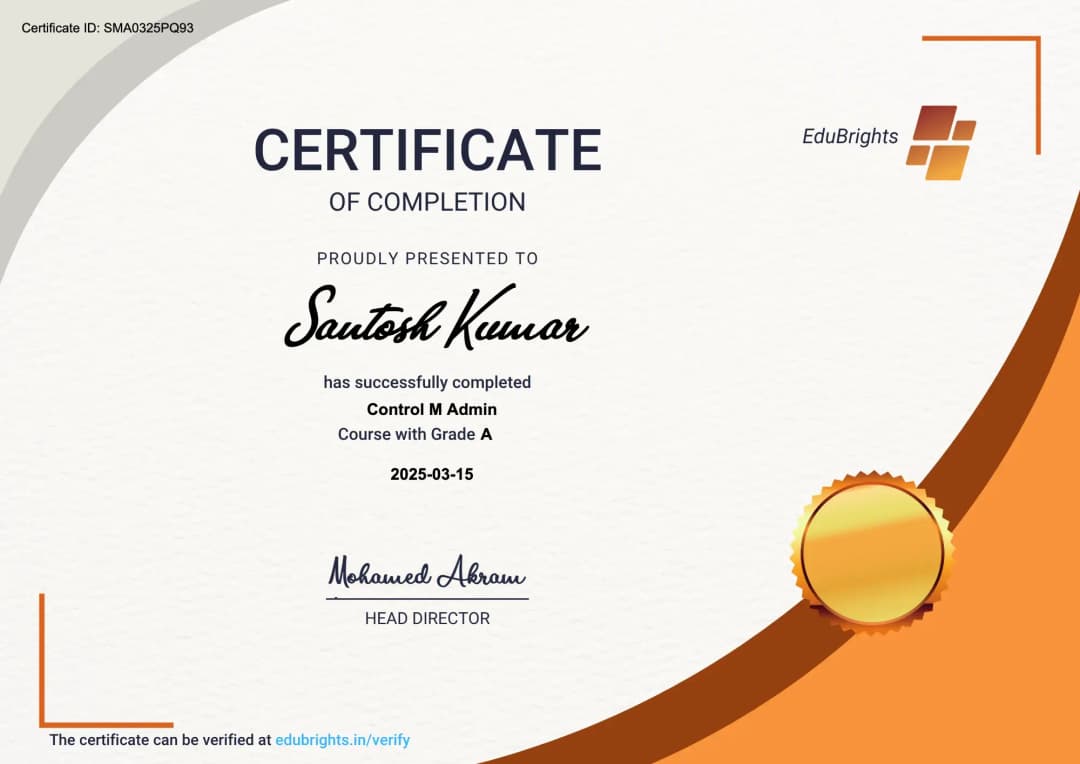
Succeed Our Resourceful Certification
Our institution offers Python for Data, ML & AI certification validating end-to-end data science proficiency. Complete 8+ portfolio projects spanning regression, classification, deep learning. Industry-recognized credential accelerates data analyst/ML engineer career paths.
Course FAQs
1. Do I need math background for ML/AI?
Basic statistics and linear algebra; advanced math taught contextually.
2. Which Python libraries for data science?
NumPy, Pandas, Matplotlib, Scikit-learn, TensorFlow/PyTorch.
3. What's the difference between ML and AI?
ML is subset of AI; focuses on algorithms learning from data.
4. Can I learn ML without coding experience?
Basic Python required; Python fundamentals covered first
5. Which IDE for data science projects?
Jupyter Notebook, VS Code, Google Colab recommended.
6. How to handle imbalanced datasets?
SMOTE, undersampling, class weights, ensemble methods
7. What is overfitting in machine learning?
Model performs well on training but poorly on unseen data
8. Deep learning vs traditional ML?
Deep learning excels with unstructured data (images, text).
9. How to deploy ML models to production?
Flask/FastAPI APIs, Docker, cloud platforms (AWS SageMaker).
10. Is GPU required for deep learning?
Helpful for training; Google Colab provides free GPU access.
11. What does it mean when a machine learning model is "Overfitting" data?
Overfitting occurs when an algorithm learns the training data too perfectly, memorizing individual rows, background noise, and outlier anomalies. As a result, the model performs exceptionally well on your training set but completely fails to generalize when exposed to new, unseen testing data.
12. How do we address data imbalances in real-world tracking metrics?
In scenarios like financial fraud tracking or rare disease identification, the target event might make up less than 1% of your rows. We teach you advanced structural mitigation methods—including synthetic minority oversampling (SMOTE), class-weight balancing algorithms, and tracking success using precision-recall curves instead of misleading accuracy percentages.
Get Training Quote for Free
Testimonials
Hear What Our Students Say
"Transform your life through Education, hear it from our Alumni"

6 LPA
Fathima
Student
Software Engineer
"Transform your life through Education, hear it from our Alumni"

8 LPA
Rahul
Student
Data Scientist
"Transform your life through Education, hear it from our Alumni"

8 LPA
Siddharth
NIELSON IQ
Data Analyst