Course Objectives
1. What will you learn in the MuleSoft Integration & API Design course?
You will learn how to build, manage, and secure APIs and enterprise integrations using the MuleSoft Anypoint Platform. The course covers API-led connectivity, Anypoint Studio, API design with RAML, DataWeave, REST and SOAP web services, API Manager, CloudHub, connectors, message transformation, security, deployment, monitoring, and integration best practices.
2. How does this course prepare you for real-world MuleSoft integration projects?
The course provides hands-on experience in integrating enterprise applications, cloud services, databases, ERP systems, CRM platforms, and third-party APIs. You will develop reusable APIs, automate business processes, and implement scalable integration solutions for modern enterprises.
3. What practical skills will you develop during the training?
You will gain expertise in Anypoint Studio, API design using RAML, DataWeave transformations, API-led connectivity, REST APIs, SOAP services, API security, CloudHub deployment, MuleSoft connectors, exception handling, monitoring, and enterprise integration patterns.
4. How will real-time projects improve your MuleSoft integration skills?
You will work on practical enterprise projects involving Salesforce integration, SAP connectivity, payment gateway integration, customer data synchronization, cloud application integration, API lifecycle management, and enterprise service orchestration.
5. What career opportunities can you pursue after learning MuleSoft Integration & API Design?
This course prepares you for roles such as MuleSoft Developer, Integration Developer, API Developer, Integration Engineer, Middleware Developer, API Integration Consultant, Enterprise Integration Engineer, Cloud Integration Developer, Middleware Consultant, and Solution Integration Specialist.
Popular Techniques Covered in This Course
API-Led Connectivity Architecture
RAML API Specification Design
Anypoint Studio Flow Development
DataWeave 2.0 Transformation Coding
Error Handling and Exception Strategies
Batch Processing & Pagination Configuration
MUnit Integration Testing Framework
API Governance and Security Policies
CloudHub Deployment Mechanics
Connector Configuration (Salesforce, Database, HTTP)
Get Hands-on Knowledge about Real-Time Projects
Project 1
Project 1: Salesforce CRM Integration
Develop MuleSoft APIs to integrate Salesforce with ERP systems, synchronize customer data, automate lead management, and improve business workflows.
Project 2
Project 2: E-Commerce API Integration
Build REST APIs to integrate product catalogs, inventory systems, payment gateways, shipping providers, and customer management platforms.
Project 3
Project 3: Banking API Gateway
Design secure APIs for banking applications with authentication, transaction processing, audit logging, and third-party financial service integration.
Project 4
Project 4: SAP Enterprise Integration
Integrate SAP ERP with HR, finance, procurement, and external business applications using MuleSoft connectors and DataWeave transformations.
Project 5
Project 5: Cloud-Based Enterprise Integration Platform
Develop an API-led integration solution connecting multiple cloud applications, databases, messaging systems, and enterprise services deployed on CloudHub.
Key Features
Edubrights offers MuleSoft Integration & API Design Training in virtual mode with expert trainers. Here are the key features,
40 Hours Course Duration
100% Job Oriented Training
Industry Expert Faculties
Free Demo Class Available
Completed 500+ Batches.
Certification Guidance
Curriculum
Module 1: API-First Design Methodology
- API-first vs code-first development
- RAML specification: resources, methods, types
- API design reviews: consistency and usability
- Anypoint Design Centre: browser-based design
- Publishing to Anypoint Exchange
- Consumer-driven API design principles
Module 2: Integration Flow Design Patterns
- Message enrichment pattern
- Content-based routing with Choice router
- Aggregation pattern with Scatter-Gather
- Message transformation pipeline
- Request-reply vs fire-and-forget
- Canonical data model for enterprise integration
Module 3: Real-World Connector Integration
- Salesforce to database synchronisation flow
- REST to SOAP bridging with DataWeave
- File polling and file processing flows
- Event-driven integration with JMS
- Scheduled batch integration design
- Error handling strategy for each pattern
Module 4: API Security & Management
- End-to-end API security design
- OAuth 2.0 token flow: authorisation code and client credentials
- API Manager: policy management at scale
- Rate limiting by SLA tier
- API analytics: consumer usage insights
- API deprecation and versioning strategies
Module 5: DataWeave in Practice
- Real-world JSON to XML transformation
- EDI to JSON using flat file schema
- Aggregating data from multiple sources
- Dynamic SQL query construction
- Error enrichment with DataWeave
- Canonical model transformation library
Module 6: Testing Integration Flows
- MUnit test suite design
- Mocking HTTP connectors and databases
- Integration test strategy: when to use real vs mock
- Test coverage for error paths
- CI/CD test automation with Maven
- Regression testing for integration changes
Module 7: Publishing & Documentation
- Exchange asset lifecycle management
- API documentation best practices in RAML
- API notebook for interactive docs
- Developer portal customisation
- API client SDK generation
- Consumer onboarding and trial setup
Module 8: Production Readiness
- Monitoring: CloudHub alerts and dashboards
- Log management and centralised logging
- SLA monitoring and breach alerts
- Disaster recovery and backup strategy
- Production deployment checklist
- Integration project handover documentation
Receive Training From Our Skilled and Effective Trainers
Our MuleSoft instructors are MuleSoft Certified Platform Architects and Developers who have built enterprise integration solutions on the Anypoint Platform for Fortune 500 companies across banking, retail, healthcare, and manufacturing. They combine deep Anypoint Platform expertise with real-world API-led connectivity design patterns and DataWeave transformation mastery.
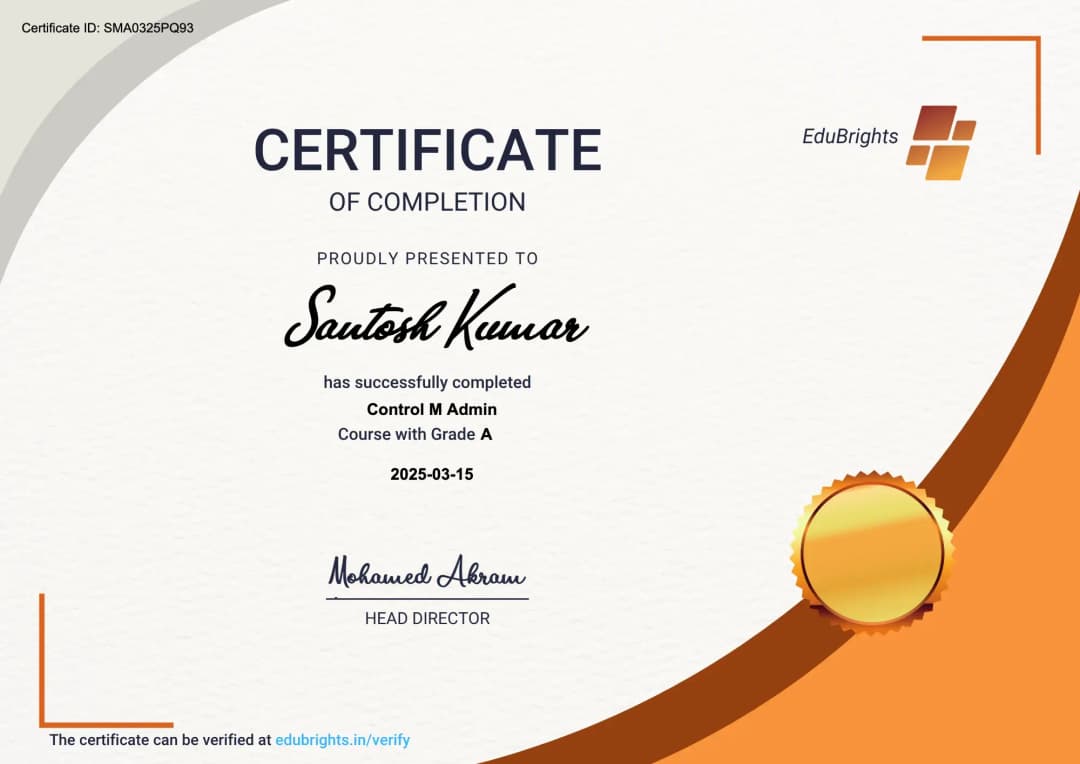
About Our Course Certification*
Our institution offers a recognized MuleSoft Integration & API Design certification. This certification enhances your portfolio and prepares you for collaborative projects in real-world environments. Gain practical skills through hands-on training and assessments.
Course FAQs
1. What is MuleSoft Anypoint Platform?
MuleSoft Anypoint Platform is a comprehensive integration platform designed to connect applications, data sources, and devices across cloud and on-premise infrastructure. It allows companies to build an application network using reusable APIs rather than writing messy, fragile point-to-point code.
2. What is API-led connectivity?
API-led connectivity is MuleSoft's core design methodology. It breaks integrations into three distinct API layers: System APIs (accessing raw data from core databases), Process APIs (combining and modeling data based on business processes), and Experience APIs (formatting data for specific end-user apps or portals).
3. Do I need strong Java experience to learn MuleSoft?
While MuleSoft is built on Java, deep Java coding skills are not mandatory for everyday development. The platform relies primarily on a visual drag-and-drop interface within Anypoint Studio and uses DataWeave for data transformations. However, understanding general object-oriented programming logic is highly beneficial.
4. Why should I choose this MuleSoft training in Chennai at EduBrights?
Our MuleSoft course in Chennai focuses entirely on real-world enterprise architectures. You will not just watch theory slides; you will actively build RAML specifications, write advanced DataWeave scripts, configure MUnit test cases, and manage cloud deployments exactly like a certified integration developer.
5. What is DataWeave 2.0?
DataWeave is MuleSoft’s powerful, native data transformation language. It allows developers to ingest data in one format (such as an XML file from an old legacy database) and instantly transform it into a completely different format (like a JSON payload required by a modern mobile application) using minimal code.
6. What is the difference between a flow and a sub-flow in MuleSoft?
A Flow is a complete asynchronous processing unit that contains its own source listener (like an HTTP connector) and its own dedicated error-handling strategy. A Sub-flow is a synchronous block of processing steps that lacks a source listener and automatically inherits the error-handling rules of whichever main flow calls it.
7. Can freshers learn MuleSoft to get an integration job?
Yes, freshers aiming for cloud computing, middleware, or backend development roles find MuleSoft highly rewarding. As thousands of global companies migrate to cloud architectures, the demand for specialized MuleSoft developers who can bridge data silos is exceptionally high.
8. What is MUnit in the MuleSoft ecosystem?
MUnit is a specialized testing framework built natively into Anypoint Studio. It allows integration developers to create automated unit and integration tests for their Mule applications, ensuring that changes to transformation mappings or routing logic do not break existing production features.
9. How does MuleSoft handle runtime errors?
MuleSoft provides a highly structured error-handling framework. Developers can use global error handlers or localized Try scopes to catch specific exception types (like routing timeouts or database connection failures), trigger automated retries, and return clean error messages to the client application.
10. What are out-of-the-box (OOTB) connectors?
OOTB connectors are pre-built integration adapters supplied by MuleSoft for widely used enterprise software. Instead of writing custom API code from scratch, developers can simply drag and configure native connectors for Salesforce, SAP, Oracle Databases, Amazon S3, and standard JMS queues.
11. Is MuleSoft a cloud-only platform?
No, it is highly flexible. MuleSoft applications can be deployed fully in the cloud via CloudHub, on-premise on local corporate servers, or within hybrid environments using Anypoint Runtime Fabric (RTF) built on top of Kubernetes container structures.
12. What is the role of RAML in MuleSoft development?
RAML stands for RESTful API Modeling Language. It is used during the design phase to create a clear, human-readable blueprint of an API before any actual backend code is written. This allows frontend developers and business teams to review and test the API layout early in the project.
Get Training Quote for Free
Testimonials
Hear What Our Students Say
"Transform your life through Education, hear it from our Alumni"

6 LPA
Fathima
Student
Software Engineer
"Transform your life through Education, hear it from our Alumni"

8 LPA
Rahul
Student
Data Scientist
"Transform your life through Education, hear it from our Alumni"

8 LPA
Siddharth
NIELSON IQ
Data Analyst
