Course Objectives
1. What will I learn from the IBM Tivoli Course?
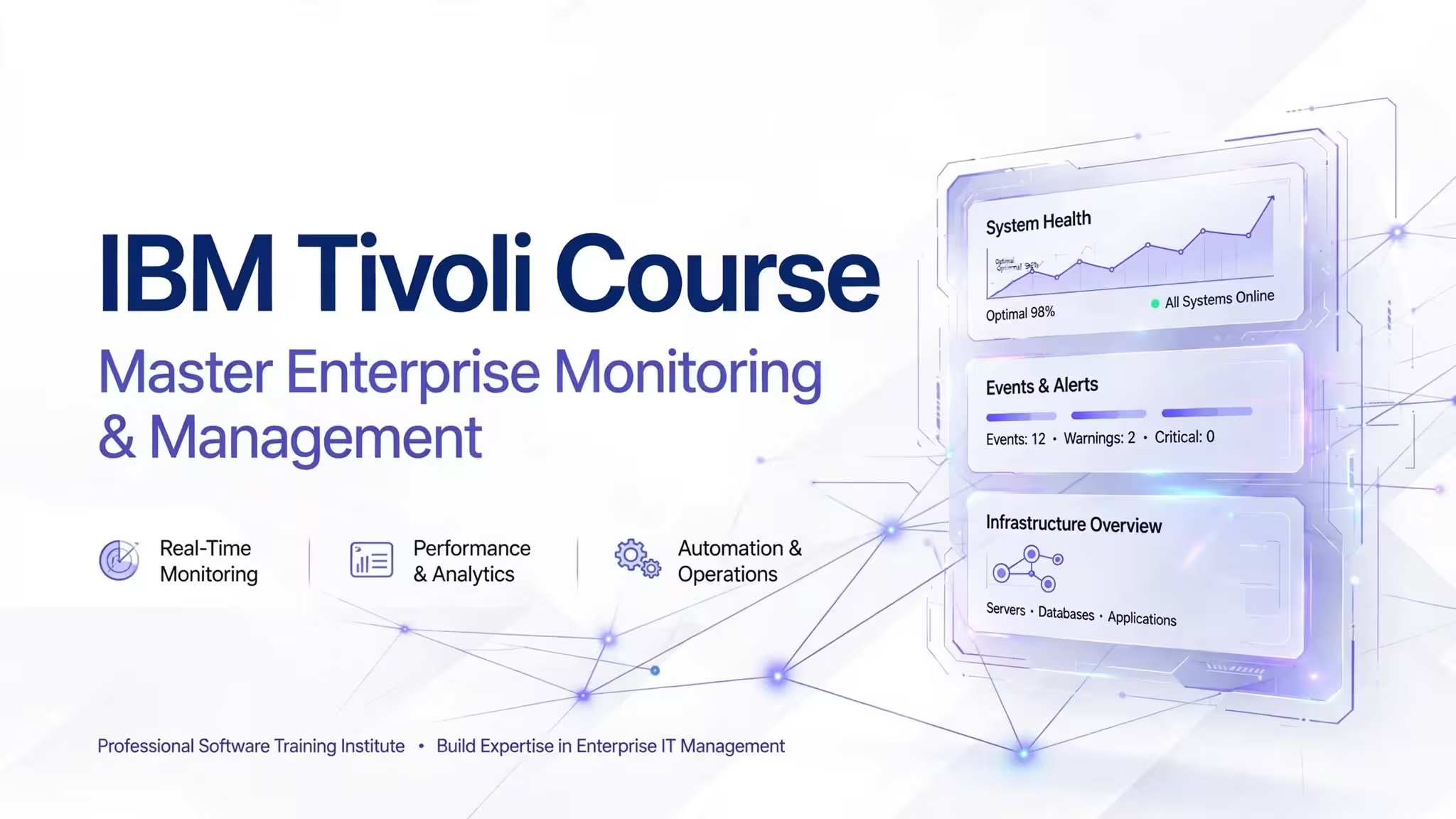
You will learn IBM Tivoli fundamentals, enterprise monitoring, event management, alerts, monitoring agents, performance analysis, and automation. The course helps you build practical knowledge relevant to IT infrastructure and enterprise operations.
2. Will this IBM Tivoli Training help me develop practical skills?
Yes. You will develop practical skills in monitoring configuration, situation management, event processing, troubleshooting, reporting, and operational workflows. These skills can help you understand how enterprise IT environments are monitored and managed.
3. Can IBM Tivoli Training help me prepare for IT jobs?
Yes. The training can help you develop knowledge relevant to monitoring, infrastructure support, system administration, event management, and IT operations roles. It can also support technical interview preparation and improve your understanding of enterprise monitoring environments.
4. Is IBM Tivoli useful for career development?
IBM Tivoli knowledge can complement existing skills in system administration, networking, infrastructure, and IT operations. Learning monitoring, event management, automation, and troubleshooting can help professionals expand their technical capabilities and explore related enterprise IT career paths.
5. What career benefits can I gain after completing IBM Tivoli Training?
You can build a structured understanding of enterprise monitoring, event management, performance analysis, automation, and troubleshooting. The training can also help you strengthen your technical profile, prepare for interviews, and identify suitable IT operations and monitoring career opportunities.
Popular Techniques Covered in This Course
IBM Tivoli Fundamentals
Tivoli Architecture
Enterprise Monitoring
Monitoring Agents
Tivoli Enterprise Portal
Performance Monitoring
Situation Management
Alert Management
Event Management
Netcool/OMNIbus
Event Correlation
Event Automation
Tivoli Reporting
Troubleshooting
Enterprise IT Operations
Get Hands-on Knowledge about Real-Time Projects
Project 1
Enterprise Server Monitoring Using IBM Tivoli
Build an enterprise server monitoring environment using IBM Tivoli Monitoring to monitor server availability, CPU utilization, memory usage, disk performance, and overall system health. Configure monitoring agents, create monitoring views, define thresholds, generate alerts, analyze performance data, and troubleshoot common monitoring issues. This project helps learners gain practical experience in enterprise infrastructure monitoring and performance management.
Project 2
Tivoli Situation and Alert Management
Create a practical monitoring workflow using Tivoli situations to identify predefined infrastructure conditions and generate alerts. Configure monitoring conditions, thresholds, alert severity, notifications, and situation status. Learners will also practice investigating triggered alerts and resolving basic monitoring issues. This project develops practical skills in situation management, alert handling, threshold configuration, and operational monitoring.
Project 3
Enterprise Event Management with Netcool/OMNIbus
Develop an enterprise event-management workflow using IBM Netcool/OMNIbus concepts. Work with ObjectServer, probes, gateways, event collection, filtering, prioritization, and event processing. The project focuses on managing infrastructure events efficiently, identifying duplicate events, prioritizing critical incidents, and understanding automated event-processing workflows.
Project 4
Infrastructure Performance Monitoring and Reporting
Create a performance monitoring and reporting environment for analyzing infrastructure health and historical performance information. Monitor CPU, memory, disk, availability, and other operational metrics while identifying performance trends and potential capacity issues. Learners will practice interpreting monitoring data, preparing reports, and using performance information to support enterprise IT operations.
Project 5
IBM Tivoli Monitoring Troubleshooting and Automation
Work on a practical enterprise monitoring scenario involving monitoring agent failures, missing monitoring data, connectivity problems, triggered situations, and event-processing issues. Analyze logs, identify the root cause of common monitoring problems, troubleshoot agent and server communication, and apply basic automation concepts. This project strengthens troubleshooting, monitoring administration, event management, and enterprise IT operations skills.
Key Features
This IBM Tivoli program offers comprehensive hands-on training to prepare you for industry demands.
40 Hours Course Duration
100% Job Oriented Training
Industry Expert Faculties
Free Demo Class Available
Completed 500+ Batches
Certification Guidance
Curriculum
Module 1: Introduction to IBM Tivoli
- Overview of IBM Tivoli
- IBM Tivoli product ecosystem
- Enterprise IT management concepts
- Monitoring and event management fundamentals
- Tivoli architecture and components
- Enterprise monitoring use cases
- Tivoli administration roles and responsibilities
- Understanding Tivoli-based IT environments
Module 2: IBM Tivoli Monitoring Fundamentals
- Introduction to Tivoli Monitoring
- Tivoli Monitoring architecture
- Monitoring servers and components
- Tivoli Enterprise Monitoring Server
- Tivoli Enterprise Portal Server
- Tivoli Enterprise Portal
- Monitoring agents
- Managed systems and monitoring data flow
Module 3: Tivoli Monitoring Agents and Configuration
- Monitoring agent architecture
- Agent installation concepts
- Agent configuration
- Agent communication
- Managed node configuration
- Data collection and monitoring attributes
- Agent status and health monitoring
- Agent connectivity troubleshooting
Module 4: Tivoli Enterprise Portal and Monitoring
- Tivoli Enterprise Portal overview
- Portal navigation and administration
- Monitoring workspaces
- Managed system views
- Monitoring data visualization
- Performance and availability views
- Filters and monitoring perspectives
- Dashboard and operational monitoring concepts
Module 5: Situations, Thresholds, Alerts and Notifications
- Understanding Tivoli situations
- Situation configuration concepts
- Monitoring thresholds
- Situation evaluation
- Alert generation
- Event severity and prioritization
- Notifications and acknowledgements
- Alert troubleshooting and management
Module 6: IBM Tivoli Netcool/OMNIbus
- Introduction to Netcool/OMNIbus
- Enterprise event management architecture
- ObjectServer fundamentals
- Probes and event collection
- Gateways and event forwarding
- Event information processing
- Web GUI and event visualization
- Netcool/OMNIbus administration concepts
Module 7: Event Correlation and Automation
- Event management fundamentals
- Event filtering and processing
- Event deduplication
- Event correlation concepts
- Event enrichment
- Event prioritization
- Triggers and automated actions
- Event escalation and notification workflows
Module 8: Tivoli Reporting and Performance Management
- Monitoring reports and dashboards
- Historical performance data
- Tivoli Data Warehouse concepts
- Performance analysis
- Availability monitoring
- Capacity monitoring
- Operational metrics
- Report interpretation and analysis
Module 9: Tivoli Workload and Job Management
- Introduction to workload management
- Job scheduling concepts
- Jobs and job streams
- Scheduling dependencies
- Workload monitoring
- Event-driven workload processing
- Job failure monitoring
- Notifications and recovery workflows
Module 10: Tivoli Storage and Data Management
- Tivoli storage management concepts
- Backup and recovery fundamentals
- Archive management
- Policy-based storage management
- Backup scheduling concepts
- Storage monitoring
- Data protection concepts
- Storage administration best practices
Module 11: Tivoli Administration, Integration and Troubleshooting
- Tivoli administration fundamentals
- Configuration and maintenance
- User and access management concepts
- Monitoring integrations
- Event forwarding and system integration
- Log analysis and diagnostics
- Common monitoring issues
- Agent and server troubleshooting
- Performance troubleshooting
- Enterprise maintenance best practices
Module 12: Advanced IBM Tivoli Operations and Career Preparation
- Enterprise monitoring strategies
- Advanced event management concepts
- Monitoring optimization
- Automation best practices
- Infrastructure performance analysis
- Operational troubleshooting techniques
- Enterprise monitoring workflows
- Technical interview preparation
- Resume and portfolio guidance
- IBM Tivoli career roadmap
Receive Training From Our Skilled and Effective Trainers
Experience in the Industry Learn from Tivoli professionals with hands-on experience in enterprise infrastructure, systems management, automation, and IT operations, bringing practical industry knowledge and real-world project experience into every Tivoli training session.
Backgrounds at the Top Our Tivoli trainers bring strong technical and industry backgrounds, having worked on real-world Tivoli projects involving enterprise monitoring, workload automation, systems management, and infrastructure operations across different business environments.
Clear & Effective Teaching Complex Tivoli concepts, tools, configurations, and workflows are explained through practical examples and real project scenarios, helping you understand not only how Tivoli works but also how it is applied in enterprise IT environments.
Hands-On Learning Focus Students receive structured hands-on practice with Tivoli through guided exercises, configuration tasks, troubleshooting activities, and practical projects designed to develop real-world and job-ready skills.
Up-to-Date Knowledge Our trainers keep the Tivoli curriculum aligned with current enterprise IT practices, platform capabilities, automation approaches, monitoring techniques, and industry best practices, helping learners build skills that remain relevant to modern IT environments.
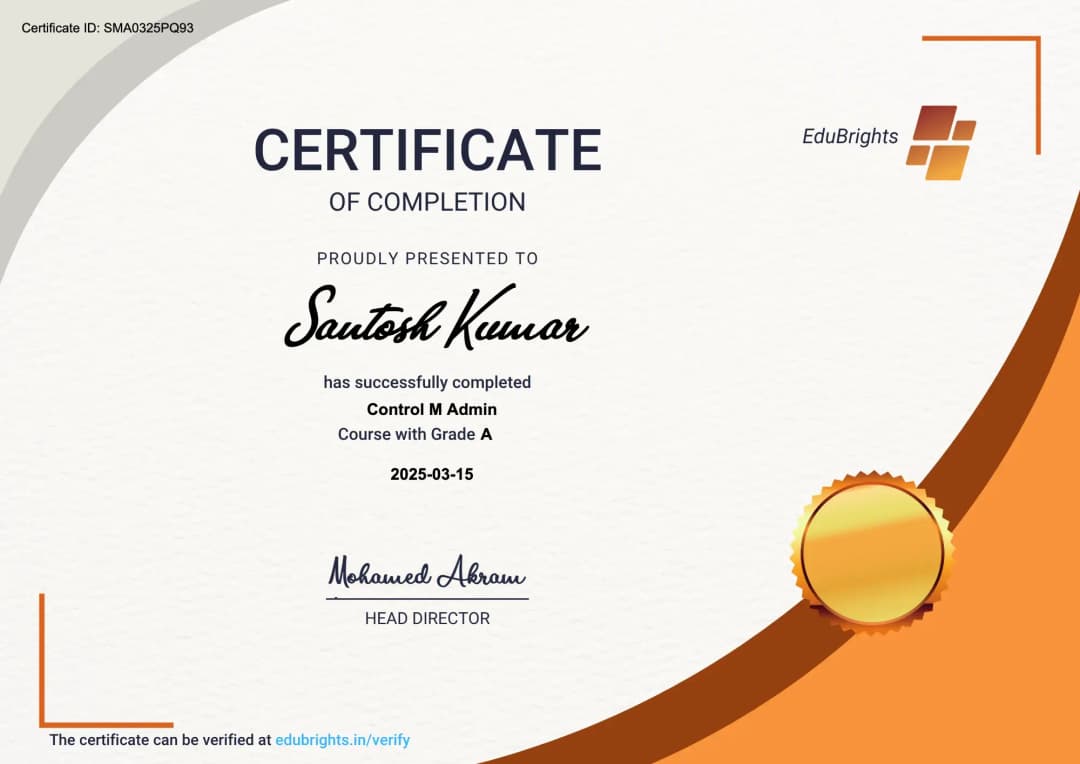
About Our Course Certification
The IBM Tivoli certification pathway helps learners validate their understanding of enterprise monitoring, IT infrastructure management, event management, automation, and system performance monitoring. Certification preparation can focus on the specific IBM Tivoli technology or product area relevant to your career goals. Through structured IBM Tivoli Training, learners can strengthen their understanding of Tivoli Monitoring, monitoring agents, Tivoli Enterprise Portal, situations, alerts, Netcool/OMNIbus, event correlation, reporting, troubleshooting, and enterprise IT operations. The training also provides practical exposure to common enterprise monitoring scenarios, helping learners connect theoretical concepts with real-world IT operations. Certification preparation, technical revision, hands-on exercises, and interview guidance can help candidates build greater confidence in their IBM Tivoli knowledge.
Course FAQs
1. What is the IBM Tivoli Course?
The IBM Tivoli Course is a training program focused on enterprise monitoring, event management, IT infrastructure management, automation, performance monitoring, and troubleshooting. It helps learners understand how Tivoli technologies can be used to monitor and manage enterprise IT environments.
2. Who can join IBM Tivoli Training?
IBM Tivoli Training is suitable for students, freshers, system administrators, monitoring engineers, infrastructure professionals, network professionals, IT support engineers, and working professionals. Anyone interested in enterprise monitoring and IT operations can build relevant knowledge through the course.
3. Is IBM Tivoli Training suitable for beginners?
Yes, beginners can start IBM Tivoli Training by learning the fundamentals of enterprise monitoring and Tivoli architecture. The course can gradually introduce monitoring agents, alerts, situations, event management, automation, reporting, and troubleshooting without assuming extensive prior Tivoli experience.
4. Do I need previous IBM Tivoli experience to take this course?
Previous IBM Tivoli experience is not essential for learning the fundamentals. A structured course can introduce the architecture, components, monitoring concepts, and operational workflows first. Professionals who already have monitoring or infrastructure experience may find it easier to connect the concepts with their existing technical knowledge.
5. What are the prerequisites for IBM Tivoli Course?
Basic knowledge of computers, operating systems, networking, and IT infrastructure can be helpful. Advanced programming knowledge is generally not required for learning the core monitoring and administration concepts, although scripting and command-line skills can be useful for certain operational responsibilities.
6. Is coding required for IBM Tivoli Training?
IBM Tivoli Training primarily focuses on monitoring, configuration, event management, administration, automation, and troubleshooting rather than software development. Basic scripting or command-line knowledge can be beneficial for administrators and monitoring professionals who need to automate tasks or investigate technical issues.
7. What will I learn in IBM Tivoli Training?
You can learn IBM Tivoli architecture, monitoring agents, Tivoli Enterprise Portal, situations, thresholds, alerts, performance monitoring, Netcool/OMNIbus, event correlation, reporting, automation, workload concepts, troubleshooting, and enterprise IT operations. The exact technologies covered can vary according to the training curriculum.
8. How long does the IBM Tivoli Course take to complete?
The duration depends on the depth of the curriculum, training format, practical sessions, and technologies included. A comprehensive IBM Tivoli program may be delivered over several weeks, while customized corporate or accelerated programs can follow different schedules.
9. Is IBM Tivoli Training available online?
Yes, online IBM Tivoli Training can be a convenient option for learners in different locations. Depending on the training provider, online classes may include live instructor sessions, demonstrations, practical exercises, discussions, troubleshooting activities, and technical interview preparation.
10. Is classroom IBM Tivoli Training available?
Classroom training may be available depending on the institute and batch schedule. Face-to-face training can provide direct interaction with instructors, guided technical exercises, and opportunities to discuss monitoring and administration concepts with other learners.
11. Are weekend batches available for IBM Tivoli Course?
Weekend batches may be offered depending on the training provider's current schedule. They can be useful for working professionals and students who have weekday commitments. Learners should confirm the latest batch timings and practical-session schedule before enrolling.
12. Is IBM Tivoli Training practical?
A good IBM Tivoli Training program should combine theoretical concepts with practical demonstrations and exercises. Learners can practice monitoring configurations, alert handling, situations, event processing, troubleshooting, reporting, and other operational activities to better understand enterprise monitoring workflows.
13. Will I get hands-on practice in IBM Tivoli?
Hands-on practice can include guided configuration activities, monitoring exercises, event-management scenarios, troubleshooting tasks, and demonstrations. The availability and type of lab environment depend on the training provider, so learners should confirm practical access before joining the course.
14. What is IBM Tivoli Monitoring?
IBM Tivoli Monitoring is an enterprise monitoring technology used to collect and manage information about the performance and availability of systems and applications. Its environment can include monitoring agents, monitoring servers, portal components, and historical data systems.
15. What is a Tivoli Monitoring Agent?
A Tivoli Monitoring Agent is a software component that collects monitoring information from a system, application, or other monitored resource. The collected information can be sent to monitoring components for analysis, alerting, and performance management.
16. What is Tivoli Enterprise Monitoring Server?
The Tivoli Enterprise Monitoring Server is a central component in a Tivoli Monitoring environment. It manages information received from monitoring agents and supports monitoring activities such as situation evaluation and communication between monitoring components.
17. What is Tivoli Enterprise Portal?
Tivoli Enterprise Portal is a user interface used to view and analyze monitoring information. It provides monitoring workspaces and views that allow users to examine system performance, availability, alerts, and other information collected from monitored environments.
18. What are Tivoli situations?
Tivoli situations are monitoring conditions that can be configured to identify specific states or events in a monitored environment. They can use defined criteria or thresholds to detect conditions and generate alerts when those conditions occur.
19. What is alert management in IBM Tivoli?
Alert management involves identifying, reviewing, prioritizing, acknowledging, and responding to monitoring alerts. IBM Tivoli environments can generate alerts when configured conditions are met, helping operations teams identify potential performance, availability, or infrastructure issues.
20. What is IBM Tivoli Netcool/OMNIbus?
IBM Tivoli Netcool/OMNIbus is an enterprise event-management technology designed to collect, process, and manage event information from multiple sources. It includes components such as ObjectServers, Probes, Gateways, and user interfaces for handling enterprise events.
21. What is an ObjectServer in Netcool/OMNIbus?
The ObjectServer is a central component of Netcool/OMNIbus that stores and manages event information. Understanding ObjectServer concepts helps learners understand how events are processed, maintained, displayed, and managed within an enterprise event-management environment.
22. What are probes in Netcool/OMNIbus?
Probes are components that collect event information from different sources and convert it into a format that Netcool/OMNIbus can process. Training can cover probe concepts, configuration principles, event parsing, rules, and basic troubleshooting.
23. What are gateways in Netcool/OMNIbus?
Gateways provide communication and data or event movement between Netcool/OMNIbus and other systems. They can support enterprise integrations where event information needs to be forwarded, synchronized, or exchanged between different operational platforms.
24. What is event correlation in IBM Tivoli?
Event correlation analyzes multiple events to identify relationships, duplicates, patterns, or common causes. It can help operations teams reduce unnecessary alerts and focus attention on meaningful events or underlying infrastructure problems.
25. Does IBM Tivoli support event automation?
Automation is an important concept within enterprise event-management environments. Depending on the specific Tivoli technology, automated actions can support event processing, notifications, escalation, and operational responses, helping teams handle repetitive monitoring activities more efficiently.
26. Does IBM Tivoli Training cover performance monitoring?
Yes. Performance monitoring is an important part of enterprise monitoring. Learners can study system performance information, availability metrics, monitoring thresholds, historical data, dashboards, reports, and troubleshooting techniques used to understand the health of monitored environments.
27. Does IBM Tivoli Training cover reporting?
Yes, reporting and performance analysis can be included in a comprehensive Tivoli curriculum. Learners can study historical monitoring information, operational metrics, performance reports, dashboards, and methods for interpreting monitoring data to support IT operations and infrastructure analysis.
28. Can I learn IBM Tivoli troubleshooting?
Yes. Troubleshooting can cover issues involving monitoring agents, connectivity, configurations, alerts, situations, event processing, logs, and performance. Learning a structured troubleshooting approach can help professionals investigate problems systematically rather than relying only on trial and error.
29. Is IBM Tivoli useful for system administrators?
Yes. System administrators can benefit from IBM Tivoli knowledge because monitoring and alert management are important parts of enterprise infrastructure operations. Tivoli skills can complement knowledge of servers, operating systems, networking, performance management, logs, and technical troubleshooting.
30. Is IBM Tivoli suitable for monitoring engineers?
Yes. Monitoring engineers can use Tivoli training to strengthen their understanding of monitoring agents, situations, alerts, event management, Netcool/OMNIbus, performance analysis, and troubleshooting. These skills can complement experience with other enterprise monitoring and observability platforms.
31. Can freshers learn IBM Tivoli?
Yes. Freshers can begin with the fundamental concepts and gradually learn enterprise monitoring, event management, and troubleshooting. Basic knowledge of operating systems, networking, and IT infrastructure can be helpful, but a structured beginner-friendly course can provide the foundation needed to progress.
32. Is IBM Tivoli suitable for students?
Yes. Students interested in IT infrastructure, system administration, networking, monitoring, cloud operations, or technical support can explore IBM Tivoli. Learning enterprise monitoring concepts can help students understand how organizations track system health, performance, availability, and operational events.
33. Is IBM Tivoli useful for working professionals?
Yes. Working professionals can use IBM Tivoli Training to strengthen their monitoring, infrastructure, administration, or IT operations knowledge. It can be particularly useful for professionals who want to expand into enterprise event management, performance monitoring, automation, and troubleshooting responsibilities.
34. Can networking professionals learn IBM Tivoli?
Yes. Networking professionals can benefit from learning centralized monitoring and event management. Tivoli concepts such as availability monitoring, alerts, thresholds, event correlation, and infrastructure performance analysis can complement networking skills and support network operations responsibilities.
35. Can system administrators move into monitoring roles with IBM Tivoli?
IBM Tivoli knowledge can support a move from system administration toward monitoring and IT operations roles. System administrators already understand infrastructure, operating systems, logs, and troubleshooting, while Tivoli training can add specialized knowledge in monitoring, alert management, event processing, and automation.
36. Can IT support professionals learn IBM Tivoli?
Yes. IT support professionals can learn IBM Tivoli to strengthen their understanding of infrastructure monitoring and technical events. Knowledge of alerts, system availability, event severity, troubleshooting, and escalation can help support professionals communicate more effectively with infrastructure and monitoring teams.
37. Can career switchers join IBM Tivoli Training?
Yes. Career switchers with backgrounds in IT support, networking, system administration, infrastructure, or technical operations can consider IBM Tivoli Training. Combining existing IT knowledge with enterprise monitoring, event management, and automation skills can help create a broader technical profile.
38. What practical skills will I gain from IBM Tivoli Training?
You can develop practical skills in monitoring configuration, agent management, situation handling, alert analysis, event processing, Netcool/OMNIbus concepts, reporting, automation, performance analysis, and troubleshooting. These skills can help you understand enterprise monitoring processes from data collection through operational response.
39. Does IBM Tivoli Training cover automation?
Yes. Automation concepts can be included within event management and enterprise operations topics. Learners can study triggers, actions, notifications, automated event handling, escalation workflows, and operational automation concepts depending on the Tivoli technologies covered.
40. Does IBM Tivoli Training cover workload management?
A broader Tivoli curriculum can include workload and job-management concepts. These may include jobs, job streams, scheduling, dependencies, workload monitoring, failure handling, notifications, and recovery workflows, depending on the specific Tivoli technology included in the training program.
41. Does IBM Tivoli include storage management?
IBM's Tivoli product family has historically included technologies related to storage management, backup, archive, and data protection. A broad Tivoli course may introduce these concepts to help learners understand the wider enterprise management ecosystem, although specific product coverage depends on the curriculum.
42. Can I learn IBM Tivoli without Linux knowledge?
You can begin learning IBM Tivoli without advanced Linux knowledge. However, Linux or UNIX skills can be valuable for monitoring professionals because enterprise environments often involve command-line administration, services, logs, configuration files, permissions, and troubleshooting activities.
43. Can I learn IBM Tivoli without networking knowledge?
Yes, you can start with basic Tivoli concepts without advanced networking knowledge. However, understanding IP addresses, ports, connectivity, protocols, and network availability can make monitoring and event-management concepts easier to understand and can be useful for infrastructure-related roles.
44. Is IBM Tivoli Training useful for career growth?
IBM Tivoli Training can support career growth by adding specialized knowledge in enterprise monitoring, event management, performance analysis, automation, and troubleshooting. Professionals can further strengthen their profile by combining Tivoli skills with Linux, networking, cloud, automation, observability, and IT operations technologies.
45. What job roles can I target after IBM Tivoli Training?
Depending on your experience and technical background, possible career paths include IBM Tivoli Administrator, Monitoring Engineer, Infrastructure Support Engineer, System Administrator, IT Operations Analyst, Event Management Engineer, Network Monitoring Engineer, and Technical Support Engineer.
46. Is there industry demand for IBM Tivoli skills?
Demand varies based on the organization, region, technology environment, and specific Tivoli products in use. Since enterprise monitoring technologies continue to evolve, professionals can improve their career flexibility by combining Tivoli knowledge with modern observability, cloud infrastructure, automation, Linux, networking, and IT operations skills.
47. What is the career scope after learning IBM Tivoli?
IBM Tivoli knowledge can support career paths related to enterprise monitoring, infrastructure operations, event management, system administration, and IT support. Long-term career development can be strengthened by learning complementary technologies and staying familiar with the monitoring and automation practices used in modern IT environments.
48. Can IBM Tivoli Training help with technical interviews?
Yes. Training can help you prepare for questions related to Tivoli architecture, monitoring agents, situations, alerts, Netcool/OMNIbus, event correlation, reporting, automation, and troubleshooting. Practical understanding can also help you explain how you would approach common monitoring and infrastructure scenarios.
49. How do I choose the best IBM Tivoli Training?
Look for a structured syllabus, experienced instructors, practical demonstrations, relevant Tivoli technologies, troubleshooting exercises, and a suitable learning environment. It is also important to verify whether the course covers the specific Tivoli product or version relevant to your career goals.
50. Does IBM Tivoli Training guarantee a job?
No training program can guarantee a job solely based on course completion. Quality IBM Tivoli Training can provide technical knowledge, practical exposure, interview preparation, and career guidance, but employment depends on your skills, experience, qualifications, interview performance, employer requirements, and market conditions.
Get Training Quote for Free
Testimonials
Hear What Our Students Say
"Transform your life through Education, hear it from our Alumni"

8 LPA
Rahul
Student
Data Scientist
"Transform your life through Education, hear it from our Alumni"

6 LPA
Fathima
Student
Software Engineer
"Transform your life through Education, hear it from our Alumni"

8 LPA
Siddharth
NIELSON IQ
Data Analyst