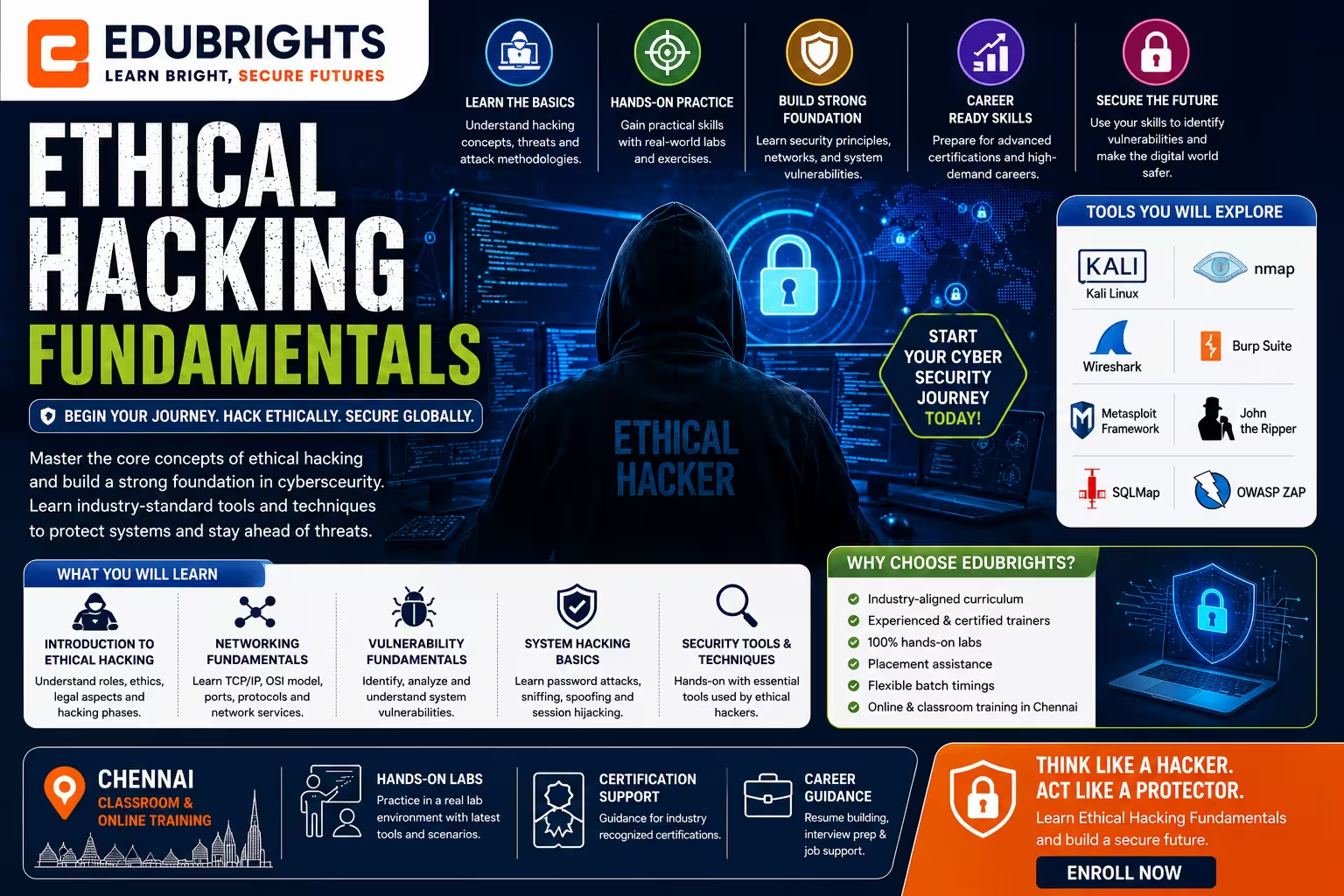
Course Objectives
1. What is Ethical Hacking and why is it essential for cybersecurity?
Learn how ethical hacking helps organizations discover vulnerabilities, strengthen security, and defend against cyber threats before attackers can exploit them.
2. Why do businesses perform ethical hacking assessments?
Understand how proactive security testing reduces cyber risks, protects sensitive information, and improves overall organizational security posture.
3. Which technologies are covered in Ethical Hacking fundamentals?
Explore networking concepts, Linux, Windows security, vulnerability assessment tools, web security, and basic penetration testing techniques.
4. How does Ethical Hacking improve enterprise security?
Learn how vulnerability identification, security assessments, and risk analysis help organizations prevent cyberattacks and maintain secure IT environments.
5. What skills are required to begin a career in Ethical Hacking?
Develop practical skills in networking, operating systems, vulnerability scanning, reconnaissance, security testing, and cybersecurity best practices.
Popular Techniques Covered in This Course
Cybersecurity fundamentals
Ethical hacking concepts
Networking fundamentals
Ethical hacking concepts
Linux basics
Windows security basics
Footprinting and reconnaissance
Network scanning
Vulnerability assessment
Password security
Get Hands-on Knowledge about Real-Time Projects
Project 1
1. Network Security Assessment Project
Perform a basic security assessment of a network using scanning tools to identify open ports and potential vulnerabilities. Document findings and recommend security improvements.
Project 2
2. Website Vulnerability Analysis Project
Analyze a sample web application for common security weaknesses and understand how secure coding practices help reduce cyber risks.
Project 3
3. Password Security Evaluation Project
Evaluate password policies and perform controlled password security assessments to understand authentication risks and improve organizational security.
Project 4
4. Wireless Network Security Project
Assess wireless network configurations, identify common security issues, and recommend best practices to improve Wi-Fi security and access protection.
Project 5
5. Basic Penetration Testing Project
Conduct a beginner-level penetration testing exercise in a controlled lab environment using ethical hacking methodologies and prepare a professional security assessment report.
Key Features
Edubrights offers Ethical Hacking Fundamentals Training in virtual mode with expert trainers. Here are the key features,
40 Hours Course Duration
100% Job Oriented Training
Industry Expert Faculties
Free Demo Class Available
Completed 500+ Batches
Certification Guidance
Curriculum
Module 1: Introduction to Ethical Hacking
- What is ethical hacking and penetration testing
- Types of hackers: White hat, grey hat, black hat
- Legal framework: Computer Misuse Act, IT Act India
- Penetration testing methodologies: OWASP, PTES, OSSTMM
- Setting up a home lab: Kali Linux, VirtualBox, Metasploitable
Module 2: Networking Essentials for Hackers
- TCP/IP protocol suite review
- Common ports and services
- OSI model in the context of attacks
- Packet analysis with Wireshark
- Network scanning fundamentals
Module 3: Footprinting and Reconnaissance
- Passive reconnaissance: OSINT techniques
- Google Dorking and Shodan searches
- WHOIS, DNS lookups, email harvesting
- theHarvester, Maltego, Recon-ng
- Active reconnaissance overview
Module 4: Scanning and Enumeration
- Network scanning with Nmap: Host discovery, port scanning, service detection
- OS fingerprinting
- Vulnerability scanning with Nessus and OpenVAS
- Service enumeration: SMB, SNMP, LDAP
- Banner grabbing and version detection
Module 5: System Hacking Fundamentals
- Password cracking: Dictionary, brute force, rainbow tables
- Tools: Hydra, Hashcat, John the Ripper
- Authentication bypass techniques
- Post-exploitation basics: Maintaining access
- Clearing tracks and evidence removal
Module 6: Malware and Threats Overview
- Types of malware: Viruses, worms, Trojans, ransomware
- How malware spreads and persists
- Antivirus evasion concepts
- Creating a basic backdoor (lab environment only)
- Malware analysis: Static vs. dynamic
Module 7: Social Engineering
- Phishing, vishing, smishing techniques
- Pretexting and impersonation
- Social engineering toolkit (SET)
- Physical security: Tailgating, shoulder surfing, dumpster diving
- Defending against social engineering
Module 8: Web Application Security Basics
- OWASP Top 10 overview
- SQL injection basics
- Cross-site scripting (XSS) basics
- CSRF and broken authentication
- Burp Suite introduction
Module 9: Wireless Security Basics
- Wireless encryption: WEP, WPA, WPA2, WPA3
- Wireless attack types: Evil twin, deauthentication
- Tools: Aircrack-ng suite
- Bluetooth security basics
- Wireless security best practices
Module 10: Cryptography Essentials
- Symmetric vs. asymmetric encryption
- Hashing algorithms: MD5, SHA family
- PKI and digital certificates
- SSL/TLS: Concepts and attacks
- Password hashing and salting
Module 11: Vulnerability Assessment
- Vulnerability assessment vs. penetration testing
- Nessus: Scanning, policies, and reports
- OpenVAS configuration and scanning
- CVSS scoring and vulnerability prioritisation
- Reporting vulnerability assessment results
Module 12: Capstone Projects
- Full vulnerability assessment of a lab network
- CTF (Capture the Flag) challenges on HackTheBox and TryHackMe
- Basic penetration test report writing
- Ethical hacking career paths
- Certification preparation: CEH, CompTIA Security+
Receive Training From Our Skilled and Effective Trainers
Experience in the Industry Learn from certified ethical hackers with practical penetration testing experience across enterprise networks, web applications, and wireless environments.
Backgrounds at the Top Our instructors hold certifications including CEH, OSCP, and CompTIA PenTest+, with experience conducting assessments for IT companies, banks, and government organisations.
Clear & Effective Teaching Attack techniques are demonstrated step by step in safe, isolated lab environments, with clear explanations of the underlying concepts and defensive countermeasures.
Hands-On Learning Focus Students perform real scans, exploitation attempts, and password attacks against intentionally vulnerable lab machines, building practical skills immediately.
Up-to-Date Knowledge Instructors stay current with new CVEs, updated CEH v13 exam content, OWASP Top 10 updates, and emerging hacking techniques covered in CTF competitions.
About Our Course Certification*
Our institution offers a recognized Fundamentals of Ethical Hacking certification. This certification enhances your portfolio and prepares you for collaborative projects in real-world environments. Gain practical skills through hands-on training and assessments.

Course FAQs
1. What is Ethical Hacking?
Ethical hacking is the authorized practice of identifying security vulnerabilities in systems and networks to help organizations strengthen cybersecurity and prevent unauthorized cyberattacks.
2. Who should learn Fundamentals of Ethical Hacking?
Students, fresh graduates, IT professionals, network administrators, and cybersecurity enthusiasts who want to build a strong foundation in cybersecurity should take this course.
3. Do I need programming knowledge before starting this course?
No. Programming knowledge is not mandatory because the course begins with cybersecurity fundamentals and gradually introduces technical concepts through practical exercises.
4. What topics are covered in this course?
The course covers networking, Linux basics, vulnerability assessment, reconnaissance, password security, web security, wireless security, and ethical hacking methodologies.
5. Which operating systems are used during the training?
Yes. The course introduces penetration testing fundamentals, including reconnaissance, vulnerability scanning, basic exploitation concepts, and professional security reporting practices.
6. Will I learn penetration testing?
Yes. The course introduces penetration testing fundamentals, including reconnaissance, vulnerability scanning, basic exploitation concepts, and professional security reporting practices.
7. Is this course suitable for beginners?
Yes. It is specifically designed for beginners and provides structured learning with practical examples before progressing to advanced cybersecurity topics.
8. Does the course include practical lab sessions?
Yes. Learners participate in hands-on security labs, vulnerability assessments, network scanning, and controlled penetration testing exercises using industry-standard tools.
9. What jobs can I pursue after completing this course?
You can begin careers as a Junior Security Analyst, SOC Analyst, IT Security Support Engineer, Vulnerability Assessment Associate, or Cybersecurity Intern.
10. Is Ethical Hacking a good career choice?
Yes. Cybersecurity professionals are in high demand as organizations continuously invest in protecting their digital assets from evolving cyber threats.
11. Can I move to advanced ethical hacking after this course?
Yes. This course builds a solid foundation, making it easier to progress into advanced penetration testing, malware analysis, and cybersecurity certifications.
12. Which tools will I learn during the course?
You will gain practical experience with tools such as Kali Linux, Nmap, Wireshark, Burp Suite, and other beginner-friendly cybersecurity utilities.
13. Does this course help prepare for cybersecurity certifications?
Yes. The course provides foundational knowledge that supports preparation for various entry-level cybersecurity and ethical hacking certification pathways.
Get Training Quote for Free
Testimonials
Hear What Our Students Say
"Transform your life through Education, hear it from our Alumni"

8 LPA
Rahul
Student
Data Scientist
"Transform your life through Education, hear it from our Alumni"

8 LPA
Siddharth
NIELSON IQ
Data Analyst
"Transform your life through Education, hear it from our Alumni"

6 LPA
Fathima
Student
Software Engineer