Course Objectives
1. Master Machine Learning on the Lakehouse Platform
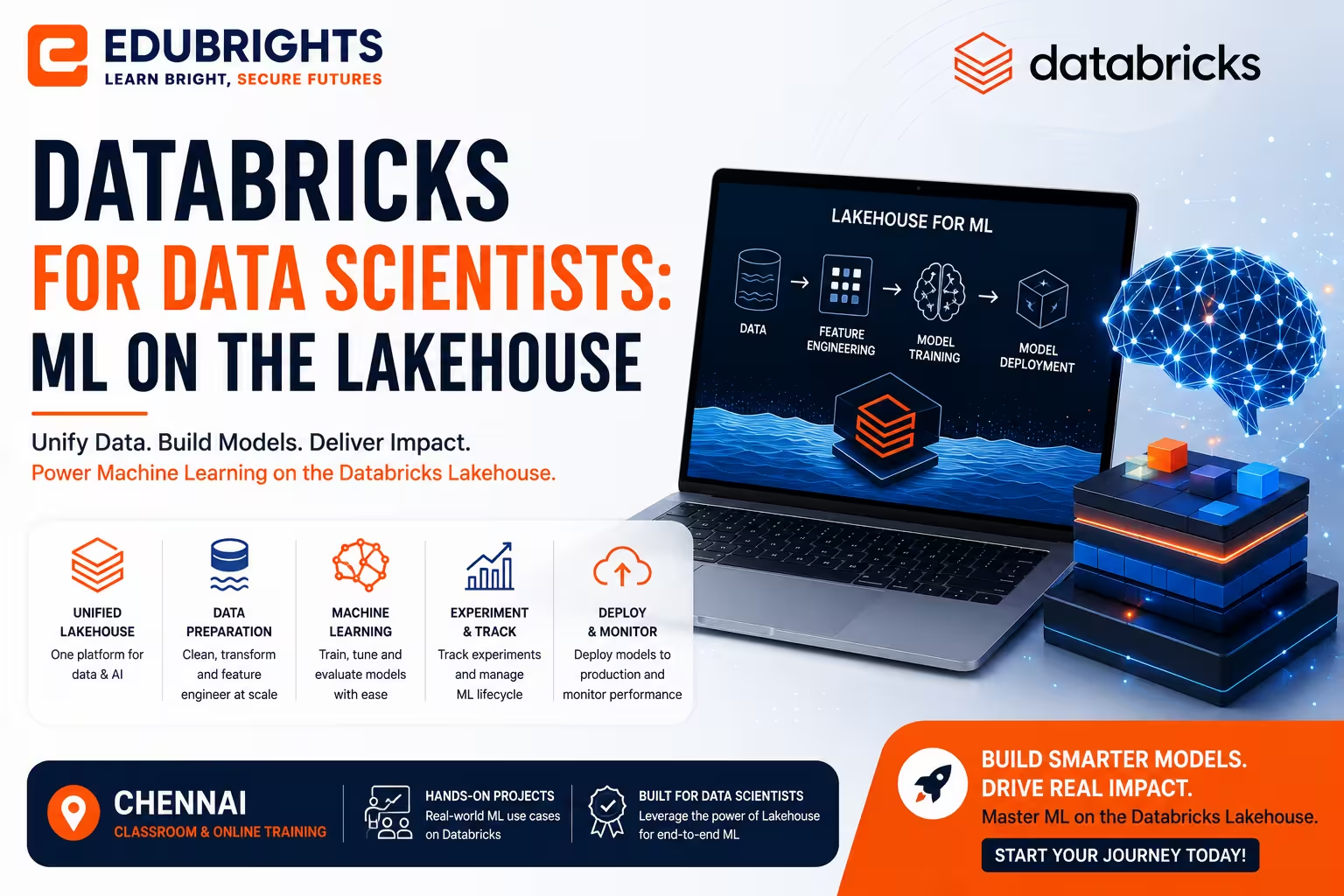
Learn how to build, train, evaluate, and deploy machine learning models using the Databricks Lakehouse Platform for scalable and efficient AI development.
2. Understand End-to-End Data Science Workflows
Gain practical knowledge of the complete data science lifecycle, from data preparation and feature engineering to model deployment and monitoring.
3. Leverage Databricks for Advanced Analytics
Develop expertise in using Databricks notebooks, clusters, and collaborative tools to perform advanced analytics and machine learning tasks.
4. Build Scalable Predictive Models
Learn how to create machine learning solutions capable of processing large datasets and delivering accurate business predictions.
5. Implement MLOps Best Practices5. Implement MLOps Best Practices
Understand modern MLOps methodologies for model tracking, versioning, deployment, monitoring, and lifecycle management.
Popular Techniques Covered in This Course
1. Data Science Fundamentals
2. Feature Engineering
3. Machine Learning Model Development
4. Exploratory Data Analysis (EDA)
5. MLflow Experiment Management
6. Lakehouse Data Management
7. Model Evaluation and Optimization
8. Distributed Machine Learning
9. MLOps and Model Deployment
10. AI-Powered Business Analytics
Get Hands-on Knowledge about Real-Time Projects
Project 1
1. Customer Churn Prediction on Lakehouse
Build a predictive analytics solution that identifies customers likely to leave a business by analyzing behavioral, transactional, and demographic data stored in the Lakehouse.
Project 2
2. E-Commerce Recommendation Engine
Develop a machine learning recommendation system that suggests products based on customer preferences, browsing behavior, and purchase history.
Project 3
3. Financial Risk Assessment Model
Create a predictive model that evaluates customer creditworthiness and financial risk using historical transaction and behavioral data.
Project 4
4. Healthcare Disease Prediction System
Design a machine learning application that analyzes healthcare records to predict disease risks and support proactive medical decision-making.
Project 5
5. Sales Forecasting and Demand Prediction Platform
Build an AI-driven forecasting solution that predicts future sales trends and product demand using historical business data and seasonal patterns.
Key Features
Edubrights offers Databricks for Data Scientists: ML on the Lakehouse Training in virtual mode with expert trainers. Here are the key features,
40 Hours Course Duration
100% Job Oriented Training
Industry Expert Faculties
Free Demo Class Available
Completed 500+ Batches
Certification Guidance
Curriculum
Module 1: Data Scientist Workspace Orientation
- Databricks vs local Jupyter: collaboration, scalability, and compute advantages
- Cluster configuration for data science: GPU selection and library management
- Notebook best practices: parameterised notebooks and reproducible experiments
- Accessing data: reading from Delta tables, Unity Catalog, and S3 buckets
Module 2: Exploratory Data Analysis at Scale
- Pandas on Spark (Koalas): running familiar Pandas code on distributed data
- Visualisation in notebooks: matplotlib, seaborn, and Plotly for EDA
- Profiling large datasets: using data profile widget on Indian census microdata
- Correlation analysis: identifying signals in e-commerce click-stream data
Module 3: Feature Engineering & Feature Store
- Designing features for Indian consumer behaviour prediction models
- Feature Store workflow: creating, writing, and reading features consistently
- Point-in-time lookups: preventing data leakage in time-series training sets
- Feature sharing across teams: reducing duplication in a data science platform
Module 4: Scalable Model Training
- Training sklearn pipelines on Databricks: from single-node to distributed
- Spark ML Pipelines: fitting models natively on distributed DataFrames
- Hyperopt and SparkTrials: parallel hyperparameter search across worker nodes
- AutoML for rapid prototyping: baseline models for Kolkata traffic prediction
Module 5: MLflow for Data Scientists
- Experiment tracking: automatically logging every model run with autolog()
- Comparing experiments: identifying the winning model across 100+ trials
- Model flavours: logging scikit-learn, XGBoost, PyTorch, and custom models
- Reproducibility: re-running any experiment from a saved MLflow run ID
Module 6: Deep Learning & NLP on Databricks
- PyTorch and TensorFlow on Databricks: single-node and Horovod distributed training
- Hugging Face integration: fine-tuning BERT for Indian language sentiment analysis
- Petastorm: efficient data loading from Delta Lake for deep learning workloads
- GPU cluster strategies: managing cost for iterative deep learning experimentation
Module 7: Model Deployment for Data Scientists
- From notebook to production: packaging models with MLflow pyfunc wrapper
- Batch scoring: running inference on new customer data using Spark DataFrames
- Model Serving: deploying real-time prediction APIs without DevOps dependency
- Model monitoring: detecting drift in a Hindi NLP classifier over time
Module 8: Capstone & Best Practices
- Capstone: end-to-end ML project -- Mumbai property price prediction on Lakehouse
- Code quality for data scientists: modular code, testing, and version control
- Collaboration patterns: working with data engineers on shared pipelines
- Career guide: Databricks certifications relevant for data scientist roles in India
Receive Training From Our Skilled and Effective Trainers
Experience in the Industry Learn from Databricks-certified data engineers and ML engineers who have built production lakehouse platforms, Delta Live Tables pipelines, and ML workflows on Databricks for data-driven enterprises.
Backgrounds at the Top Our Databricks trainers have delivered data platform projects at technology companies, financial services firms, and healthcare organisations where Databricks is the central platform for data engineering and machine learning.
Clear & Effective Teaching Databricks architecture, Spark DataFrames, Delta Lake, Databricks SQL, MLflow, Delta Live Tables, Unity Catalog, and governance are explained clearly with real lakehouse data platform examples.
Hands-On Learning Focus Students build end-to-end lakehouse pipelines, work with Delta tables, create DLT pipelines, track ML experiments with MLflow, and configure Unity Catalog governance through structured lab exercises.
Up-to-Date Knowledge Trainers keep content current with the latest Databricks platform releases, Databricks AI and GenAI capabilities, Unity Catalog enhancements, and evolving lakehouse architecture best practices.
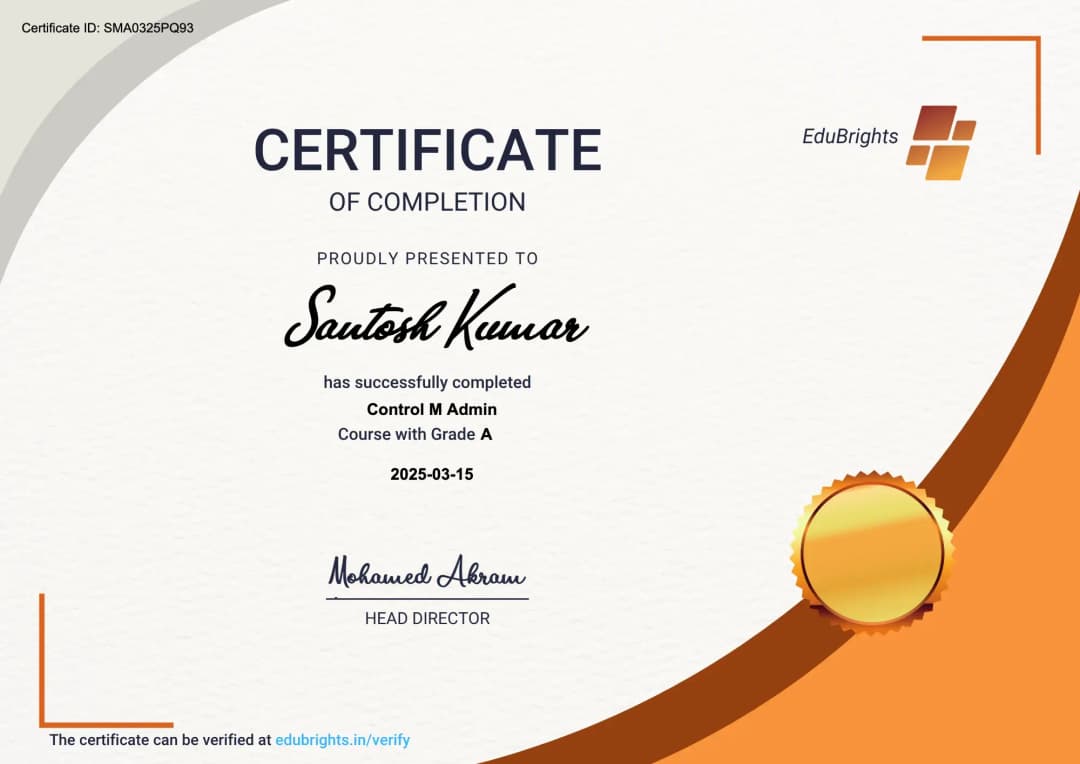
Certified Databricks Data Scientist – ML on the Lakehouse Professional
Our institution offers a recognized Databricks for Data Scientists: ML on the Lakehouse certification. This certification enhances your portfolio and prepares you for collaborative projects in real-world environments. Gain practical skills through hands-on training and assessments.
Course FAQs
1. What is Databricks for Data Scientists: ML on the Lakehouse?
It is a specialized training program that teaches machine learning, data science workflows, and AI model development using the Databricks Lakehouse Platform.
2. Who should take this course?
This course is ideal for Data Scientists, Machine Learning Engineers, AI Professionals, Data Analysts, Researchers, and aspiring data science practitioners.v
3. What is the Databricks Lakehouse?
The Databricks Lakehouse is a unified data architecture that combines the scalability of data lakes with the performance and governance features of data warehouses.
4. Do I need prior machine learning experience?
Basic knowledge of statistics, Python, and data analysis is helpful, but the course provides structured guidance for learners transitioning into machine learning.
5. What programming language is primarily used?
Python is the primary language used for machine learning development, along with SQL for data analysis and querying.
6. What is MLflow and why is it important?
MLflow is a platform for managing the machine learning lifecycle, including experiment tracking, model versioning, deployment, and monitoring.
7. Will I learn feature engineering?
Yes. The course includes feature engineering techniques that improve machine learning model accuracy and performance.
8. What types of machine learning algorithms are covered?
The course covers regression, classification, clustering, recommendation systems, forecasting, and model optimization techniques.
9. Are real-world projects included?
Yes. The course includes practical projects that simulate real business scenarios and machine learning applications.
10. Can Databricks handle large-scale machine learning workloads?
Yes. Databricks uses Apache Spark and distributed computing technologies to efficiently process large datasets and train models at scale.
11. What industries use Databricks for data science?
Industries such as banking, healthcare, retail, insurance, manufacturing, telecommunications, and e-commerce actively use Databricks for AI and analytics.
12. Will I learn model deployment?
Yes. The course covers model deployment, model serving, monitoring, retraining, and MLOps best practices.
13. What job roles can I pursue after this course?
You can pursue roles such as Data Scientist, Machine Learning Engineer, AI Engineer, Predictive Analytics Specialist, Research Scientist, and Data Science Consultant.
14. How long does it take to complete the course?
The duration varies depending on the learning schedule, but most learners can build strong practical skills within several weeks of guided training.
15. Why is the Lakehouse architecture beneficial for data scientists?
The Lakehouse architecture provides unified access to data, simplifies collaboration, improves scalability, and accelerates machine learning development workflows.
Get Training Quote for Free
Testimonials
Hear What Our Students Say
"Transform your life through Education, hear it from our Alumni"

8 LPA
Rahul
Student
Data Scientist
"Transform your life through Education, hear it from our Alumni"

8 LPA
Siddharth
NIELSON IQ
Data Analyst
"Transform your life through Education, hear it from our Alumni"

6 LPA
Fathima
Student
Software Engineer