Course Objectives
1. Master DevOps Practices for Data Engineering Teams
2. Automate Databricks Operations Using CLI and REST APIs
Develop practical skills in managing Databricks workspaces, clusters, jobs, notebooks, and storage using Databricks CLI and REST APIs to streamline operational tasks and improve productivity.
3. Build and Manage CI/CD Pipelines for Data Workloads
Learn how to design, implement, and maintain automated CI/CD pipelines using GitHub Actions and Azure DevOps for testing, validating, and deploying Databricks assets across environments.
4. Implement Infrastructure as Code and Security Best Practices
Gain hands-on experience with Terraform, secret management, access control, audit logging, and compliance-focused deployment practices to build secure and scalable data platforms.
5. Develop Production-Ready Data Deployment Workflows
Create reliable deployment processes with automated testing, rollback mechanisms, monitoring, and operational documentation that support enterprise-scale data engineering projects.
6. Prepare for DevOps Data Engineering Roles
Build industry-ready skills required for Data Engineer, DevOps Engineer, and Cloud Data Engineer roles.
Popular Techniques Covered in This Course
Databricks DevOps Fundamentals
Git Version Control and Databricks Repos
Databricks CLI Administration
Databricks REST API Automation
CI/CD Pipeline Development
GitHub Actions for Databricks
Azure DevOps Pipeline Automation
Terraform for Databricks Infrastructure
Secrets Management and Security Automation
Data Pipeline Testing and Deployment Strategies
Get Hands-on Knowledge about Real-Time Projects
Project 1
1. Automated CI/CD Pipeline for Databricks Notebooks
In this project, learners will build a complete CI/CD workflow that automatically validates, tests, and deploys Databricks notebooks from a Git repository into development, staging, and production environments. The pipeline will use GitHub Actions or Azure DevOps to automate deployment activities, reducing manual effort and improving release consistency
Project 2
2. Infrastructure Automation Using Terraform
Students will create reusable Terraform modules to provision Databricks workspaces, clusters, jobs, and access controls automatically. The project demonstrates how Infrastructure as Code can simplify environment management, improve consistency, and support scalable cloud deployments.
Project 3
3. Databricks REST API Automation Framework
This project focuses on automating operational tasks using Databricks REST APIs. Learners will develop scripts to create clusters, schedule jobs, manage notebooks, and monitor platform resources programmatically.
Project 4
4. Secure Data Platform Deployment Solution
In this project, students will design and implement a secure deployment framework using Databricks Secret Scopes, Azure Key Vault, or AWS Secrets Manager. The project includes access management, credential rotation, audit logging, and role-based deployment controls to meet enterprise security and compliance requirements.
Project 5
5. End-to-End DevOps Pipeline for a Financial Data Platform
Learners will build a complete DevOps solution for a financial data processing platform. The project includes source control integration, automated testing, CI/CD deployment, infrastructure provisioning, rollback strategies, and operational documentation.
Key Features
Edubrights offers Databricks DevOps & CI/CD for Data Pipelines Training in virtual mode with expert trainers. Here are the key features,
40 Hours Course Duration
100% Job Oriented Training
Industry Expert Faculties
Free Demo Class Available
Completed 500+ Batches
Certification Guidance
Curriculum
Module 1: DevOps Principles for Data Teams
- DataOps vs DevOps: applying software engineering discipline to data pipelines
- Version control for notebooks: Git integration and Databricks Repos setup
- Environment strategy: dev, staging, and prod workspace architecture
- Infrastructure as Code overview: managing Databricks resources declaratively
Module 2: Databricks CLI Mastery
- CLI installation and authentication: PAT tokens and OAuth setup on Linux/Mac/Windows
- Managing clusters: creating, starting, stopping, and resizing via CLI commands
- Workspace operations: importing, exporting, and syncing notebooks from terminal
- DBFS management: uploading datasets and libraries from CI/CD pipelines
Module 3: Databricks REST API
- REST API fundamentals: authentication, pagination, and error handling patterns
- Jobs API: programmatically creating and triggering Databricks Workflow jobs
- Clusters API: dynamic cluster provisioning for cost-optimised pipelines
- Secrets API: injecting database credentials and API keys without hardcoding
Module 4: Testing Data Pipelines
- Unit testing transformations: pytest with in-memory Spark fixtures
- Integration testing: validating end-to-end pipeline outputs against expected datasets
- Nutter framework: running notebook-based tests in CI/CD pipelines
- Data contract testing: schema and quality assertions between producer and consumer
Module 5: CI/CD Pipeline Design
- GitHub Actions workflows: lint, test, and deploy Databricks notebooks automatically
- Azure DevOps pipelines: YAML-based CI/CD for Microsoft-aligned Indian enterprises
- Artifact management: packaging notebooks, wheels, and configs for deployment
- Rollback strategies: safely reverting failed pipeline deployments
Module 6: Infrastructure as Code with Terraform
- Terraform Databricks provider: provisioning workspaces, clusters, and jobs
- State management: remote Terraform state in S3 or Azure Blob for team use
- Module design: reusable Terraform modules for standard Databricks patterns
- Drift detection: identifying manual changes that conflict with IaC definitions
Module 7: Secrets, Security & Compliance
- Databricks Secrets Scopes: integrating with Azure Key Vault and AWS Secrets Manager
- PAT token rotation: automated credential refresh for long-running pipelines
- Audit log automation: streaming CLI activity logs to a SIEM for compliance
- Role-based deployment: restricting production deployments to approved service principals
Module 8: Capstone -- Full DevOps Pipeline
- Capstone: building a complete CI/CD pipeline for a Chennai fintech data product
- End-to-end demo: code commit triggers test -> staging deploy -> prod promotion
- Runbook creation: operational documentation for on-call data engineering teams
- Exam prep: DevOps-related questions in Databricks Professional certificatio
Receive Training From Our Skilled and Effective Trainers
Experience in the Industry Gain expertise from Azure-certified data engineers who have built cloud data platforms using Azure Databricks, ADLS Gen2, Azure Data Factory, and Azure Synapse for enterprises on the Microsoft Azure ecosystem.
Backgrounds at the Top Our Azure Databricks trainers have delivered cloud data engineering projects at financial institutions, retail companies, and healthcare organisations leveraging the full Microsoft Azure data platform stack.
Clear & Effective Teaching Azure Databricks workspace setup, ADLS Gen2 integration, Delta Lake, ADF orchestration, Structured Streaming, Azure ML integration, and Unity Catalog governance are taught with real Azure data platform examples.
Hands-On Learning Focus Students build Azure data pipelines, work with Delta Lake on ADLS Gen2, orchestrate notebooks with ADF, stream from Event Hubs, and configure Unity Catalog through structured hands-on lab exercises.
Up-to-Date Knowledge Trainers keep content current with the latest Azure Databricks releases, Microsoft Fabric integration considerations, Unity Catalog on Azure enhancements, and evolving Azure data platform best practices.
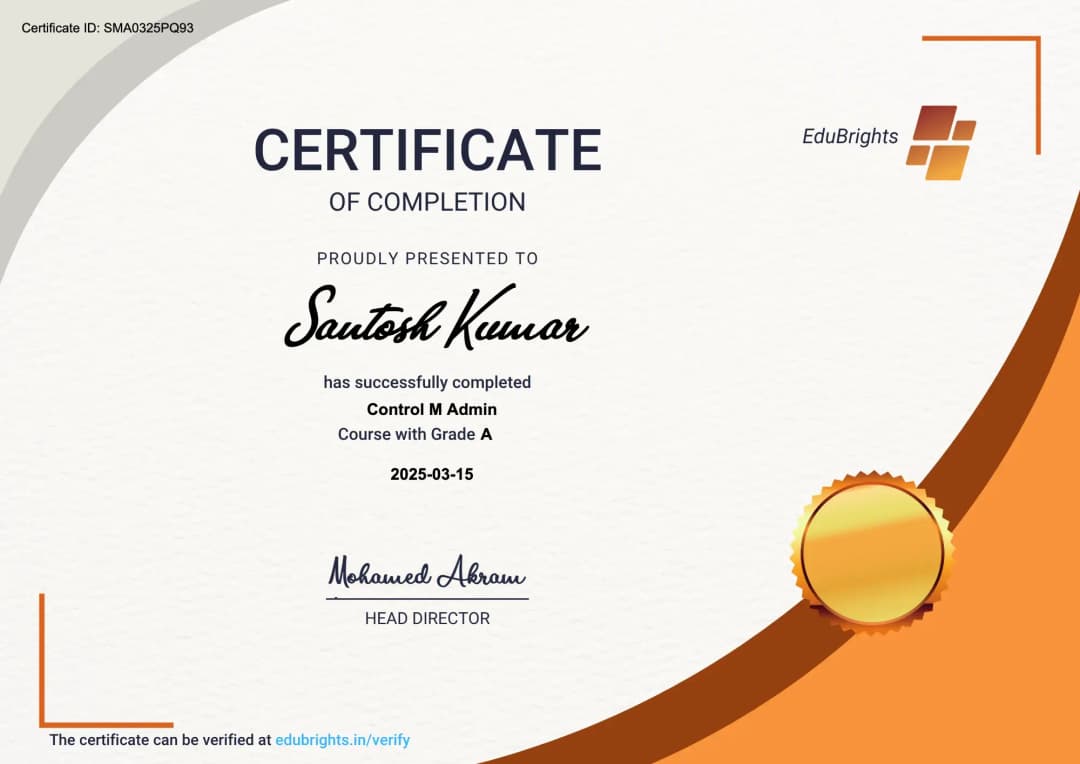
Databricks DevOps & CI/CD for Data Pipelines Professional Certification
Edubrights Offers the Databricks DevOps & CI/CD for Data Pipelines Professional Certification validates your ability to automate, deploy, test, secure, and manage Databricks-based data engineering solutions using modern DevOps practices. This certification demonstrates practical knowledge of Databricks CLI, REST APIs, Git integration, CI/CD pipeline implementation, Infrastructure as Code (Terraform), automated testing, security management, and deployment automation.
Course FAQs
1. What is Databricks DevOps?
Databricks DevOps is the practice of applying DevOps principles such as automation, testing, version control, and continuous deployment to Databricks-based data engineering and analytics projects.
2. Who should learn Databricks DevOps and CI/CD?
This course is ideal for Data Engineers, DevOps Engineers, Cloud Engineers, Platform Engineers, Data Architects, and professionals responsible for deploying and managing Databricks workloads.
3. Do I need prior DevOps experience to join this course?
Basic knowledge of Databricks, cloud platforms, or data engineering concepts is helpful, but the course introduces core DevOps practices and deployment workflows from the ground up.
4. What tools are covered in this Databricks DevOps course?
The course covers Databricks CLI, Databricks REST API, Git, GitHub Actions, Azure DevOps, Terraform, Secrets Management, and testing frameworks used in modern data engineering environments.
5. Why is CI/CD important for data engineering projects?
CI/CD helps automate testing, deployment, and validation processes, reducing manual effort, improving reliability, and ensuring faster delivery of data solutions.
6. What is Terraform and how is it used with Databricks?
Terraform is an Infrastructure as Code tool that allows teams to automate the creation and management of Databricks resources such as workspaces, clusters, jobs, and permissions.
7. Will I learn how to automate Databricks deployments?
Yes. The course includes hands-on training on automating deployments using GitHub Actions, Azure DevOps pipelines, Databricks CLI, and REST APIs.
8. What career opportunities are available after learning Databricks DevOps?
Learners can pursue roles such as Databricks Engineer, Data DevOps Engineer, Cloud Data Engineer, Platform Engineer, DevOps Engineer, and Data Infrastructure Specialist.
9. Does the course include real-world projects?
Yes. The course includes practical projects covering CI/CD automation, infrastructure provisioning, deployment pipelines, testing frameworks, and security implementation.
10. Is Databricks DevOps a valuable skill in the job market?
Yes. As organizations adopt cloud-based analytics platforms, professionals who can automate deployments, manage infrastructure, and implement CI/CD pipelines are increasingly in demand.
11. Do I learn monitoring tools?
Yes, you learn how to monitor pipelines.
12. Is Git important here?
Yes, Git is essential for version control.
13. How long is the course?
Usually 4–8 weeks depending on learning speed.
14. Can I get certification?
Yes, certification is provided after completion.
15. Is this useful for career growth?
Yes, it improves chances for senior data engineering roles.v
Get Training Quote for Free
Testimonials
Hear What Our Students Say
"Transform your life through Education, hear it from our Alumni"

8 LPA
Rahul
Student
Data Scientist
"Transform your life through Education, hear it from our Alumni"

6 LPA
Fathima
Student
Software Engineer
"Transform your life through Education, hear it from our Alumni"

8 LPA
Siddharth
NIELSON IQ
Data Analyst