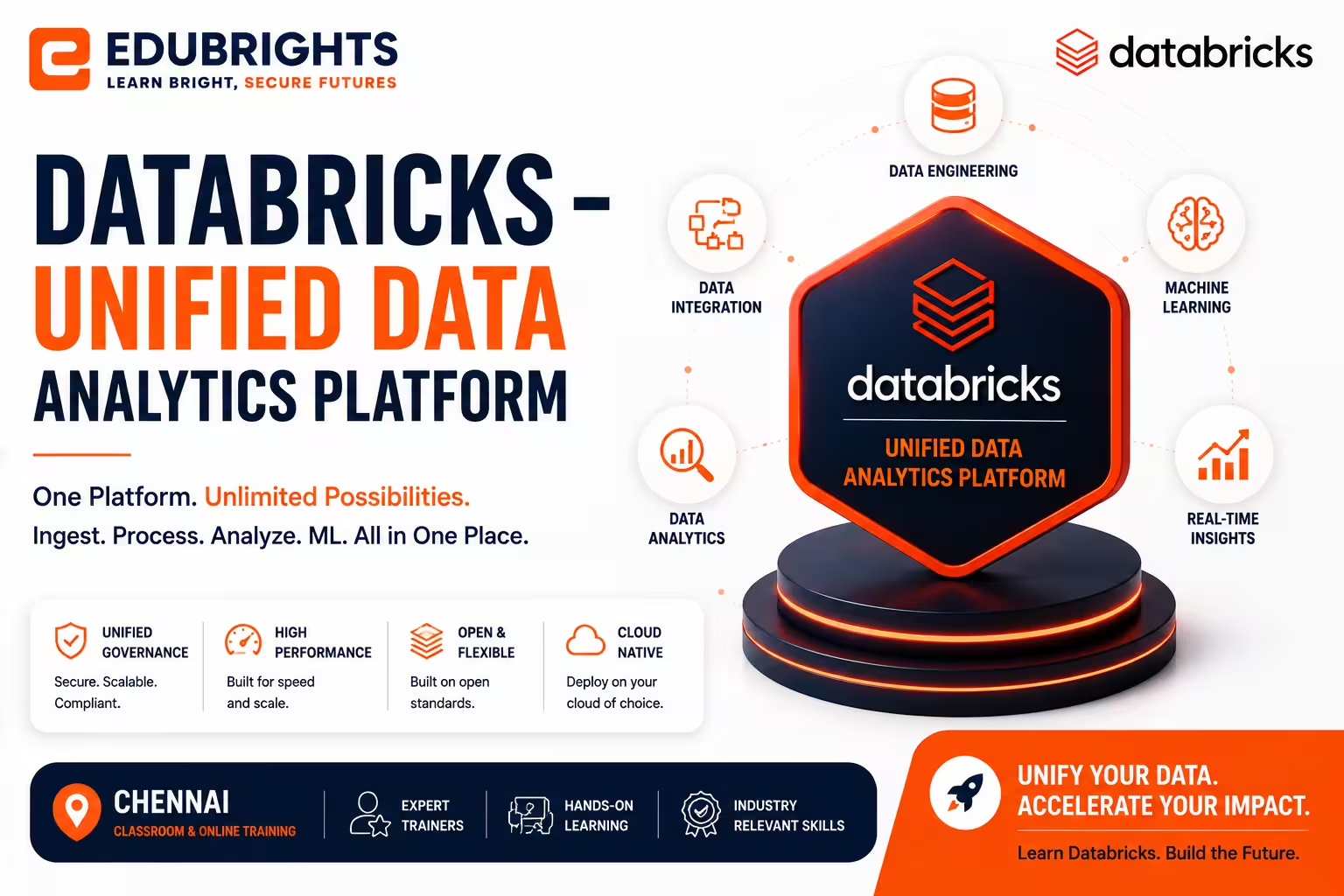
Course Objectives
1. What is Databricks and why is it widely used for unified data analytics?
Learn how Databricks combines data engineering, analytics, machine learning, and business intelligence on a single cloud-based platform using the Lakehouse architecture.
2. Why do organizations choose Databricks for big data and AI projects?
Understand how Databricks simplifies data processing, improves collaboration, accelerates analytics, and supports scalable AI and machine learning workloads.
3. Which technologies integrate with Databricks?
Explore Apache Spark, Delta Lake, MLflow, Unity Catalog, SQL Warehouses, Azure, AWS, Google Cloud, Apache Kafka, and Power BI integration.
4. How does Databricks improve enterprise data analytics?
Learn how distributed computing, Delta Lake, collaborative notebooks, automated workflows, and optimized data pipelines enhance analytics performance and data reliability.
Popular Techniques Covered in This Course
Databricks fundamentals
Lakehouse architecture
Apache Spark
Spark SQL
PySpark
Delta Lake
Databricks Workspace
Databricks Notebooks
ETL pipeline development
Data engineering
Get Hands-on Knowledge about Real-Time Projects
Project 1
1. Enterprise Data Lakehouse Project
Build a modern Lakehouse solution using Databricks and Delta Lake to centralize enterprise data for analytics. Improve data quality, scalability, and reporting efficiency.
Project 2
2. ETL Pipeline Automation Project
Develop automated ETL pipelines in Databricks to process and transform large business datasets. Streamline data movement for reporting and business intelligence.
Project 3
3. Big Data Analytics Project
Analyze high-volume structured and unstructured datasets using Apache Spark and Databricks SQL. Generate actionable insights to support business decision-making.
Project 4
4. Machine Learning Pipeline Project
Create an end-to-end machine learning workflow using Databricks and MLflow for model development, tracking, and deployment. Improve collaboration between data engineers and data scientists.
Project 5
5. Real-Time Data Processing Project
Implement a real-time analytics solution using Databricks and Apache Kafka to process streaming business data. Deliver live dashboards and operational insights with low latency.
Key Features
Edubrights offers DATABRICKS – UNIFIED DATA ANALYTICS PLATFORM Training in virtual mode with expert trainers. Here are the key features,
40 Hours Course Duration
100% Job Oriented Training
Industry Expert Faculties
Free Demo Class Available
Completed 500+ Batches
Certification Guidance
Curriculum
Module 1: Introduction to Databricks and Lakehouse Architecture
- Data lakehouse concept: combining data lake flexibility with data warehouse reliability
- Databricks platform architecture: workspaces, clusters, and jobs
- Databricks on AWS, Azure, and GCP: deployment and key differences
- Navigating the Databricks UI: workspace, compute, workflows, and Delta Lake
Module 2: Apache Spark on Databricks
- Spark cluster configuration: driver, executors, and autoscaling
- Databricks Runtime versions and ML runtime selection
- Spark DataFrames: reading, transforming, and writing data
- Catalyst optimizer and Tungsten execution engine internals
Module 3: Delta Lake on Databricks
- Delta Lake architecture: transaction log, checkpoints, and Parquet files
- CRUD operations on Delta tables: merge, update, and delete
- Time travel: querying historical data with version and timestamp
- Delta table optimisation: OPTIMIZE, ZORDER, and VACUUM commands
Module 4: Databricks SQL
- Databricks SQL warehouses: serverless and classic configurations
- Writing and running SQL queries in the Databricks SQL editor
- Creating and managing Delta tables with SQL DDL
- Databricks SQL dashboards and visualisation tools
Module 5: Machine Learning on Databricks
- MLflow on Databricks: experiment tracking and model registry
- Feature Store: creating and serving ML features
- AutoML: automated model training and evaluation
- Deploying models with Model Serving endpoints
Module 6: Data Engineering Workflows
- Databricks Workflows: job creation and multi-task orchestration
- Delta Live Tables (DLT): declarative ETL pipeline development
- DLT expectations: data quality constraints and monitoring
- Photon engine: accelerated query execution for ETL workloads
Module 7: Unity Catalog and Data Governance
- Unity Catalog: centralised governance for data and AI assets
- Three-level namespace: catalog, schema, and table structure
- Fine-grained access control: table, column, and row-level security
- Data lineage: tracking data flow across tables and notebooks
Module 8: Capstone Project and Assessment
- End-to-end lakehouse pipeline: ingestion, Delta tables, and serving
- Delta Live Tables ETL pipeline with data quality expectations
- MLflow model training, registration, and serving project
- Final assessment and course certification
Receive Training From Our Skilled and Effective Trainers
Experience in the Industry Learn from Databricks-certified data engineers and ML engineers who have built production lakehouse platforms, Delta Live Tables pipelines, and ML workflows on Databricks for data-driven enterprises.
Backgrounds at the Top Our Databricks trainers have delivered data platform projects at technology companies, financial services firms, and healthcare organisations where Databricks is the central platform for data engineering and machine learning.
Clear & Effective Teaching Databricks architecture, Spark DataFrames, Delta Lake, Databricks SQL, MLflow, Delta Live Tables, Unity Catalog, and governance are explained clearly with real lakehouse data platform examples.
Hands-On Learning Focus Students build end-to-end lakehouse pipelines, work with Delta tables, create DLT pipelines, track ML experiments with MLflow, and configure Unity Catalog governance through structured lab exercises.
Up-to-Date Knowledge Trainers keep content current with the latest Databricks platform releases, Databricks AI and GenAI capabilities, Unity Catalog enhancements, and evolving lakehouse architecture best practices.
About Our Course Certification*
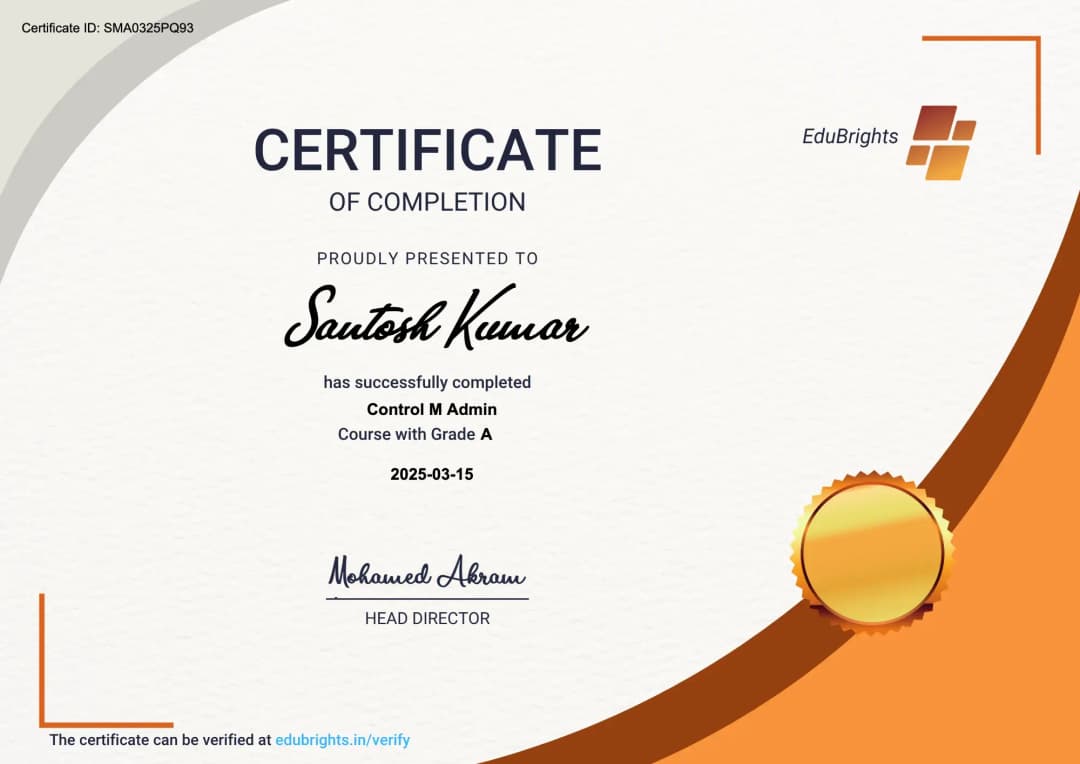
Our institution offers a recognized DATABRICKS – UNIFIED DATA ANALYTICS PLATFORM certification. This certification enhances your portfolio and prepares you for collaborative projects in real-world environments. Gain practical skills through hands-on training and assessments.
Course FAQs
1. What is Databricks?
Databricks is a unified data analytics platform that combines data engineering, analytics, machine learning, and AI development using Apache Spark.
2. Who should learn Databricks?
Data engineers, data analysts, data scientists, cloud engineers, AI professionals, and big data developers.
3. What is the Databricks Lakehouse architecture?
The Lakehouse architecture combines the scalability of data lakes with the reliability and performance of data warehouses.
4. Does Databricks use Apache Spark?
Yes. Databricks is built on Apache Spark and provides optimized tools for distributed data processing.
5. What is Delta Lake?
Delta Lake is an open-source storage layer that adds reliability, ACID transactions, and performance improvements to data lakes.
6. Can Databricks be used for machine learning?
Yes. Databricks supports end-to-end machine learning workflows through MLflow and integrated AI tools.
7. Does Databricks support multiple cloud platforms?
Yes. Databricks runs on Microsoft Azure, Amazon Web Services (AWS), and Google Cloud Platform (GCP).
8. Is programming required to learn Databricks?
Yes. Basic knowledge of Python, SQL, or Apache Spark is recommended for working with Databricks.
9. What jobs can I pursue after completing this course?
You can work as a Data Engineer, Databricks Developer, Big Data Engineer, Data Scientist, Analytics Engineer, or Machine Learning Engineer.
10. Does this course include practical industry projects?
Yes. The course includes hands-on projects covering Lakehouse architecture, ETL pipelines, machine learning, big data analytics, and real-time data processing.
11. Is Databricks suitable for enterprise big data projects?
Yes. Organizations worldwide use Databricks for scalable analytics, AI, data engineering, and cloud-based business intelligence.
12. How does Databricks improve collaboration between data teams?
Databricks provides shared workspaces, collaborative notebooks, unified governance, and integrated workflows that allow data engineers, analysts, and data scientists to work together efficiently.
Get Training Quote for Free
Testimonials
Hear What Our Students Say
"Transform your life through Education, hear it from our Alumni"

8 LPA
Rahul
Student
Data Scientist
"Transform your life through Education, hear it from our Alumni"

8 LPA
Siddharth
NIELSON IQ
Data Analyst
"Transform your life through Education, hear it from our Alumni"

6 LPA
Fathima
Student
Software Engineer