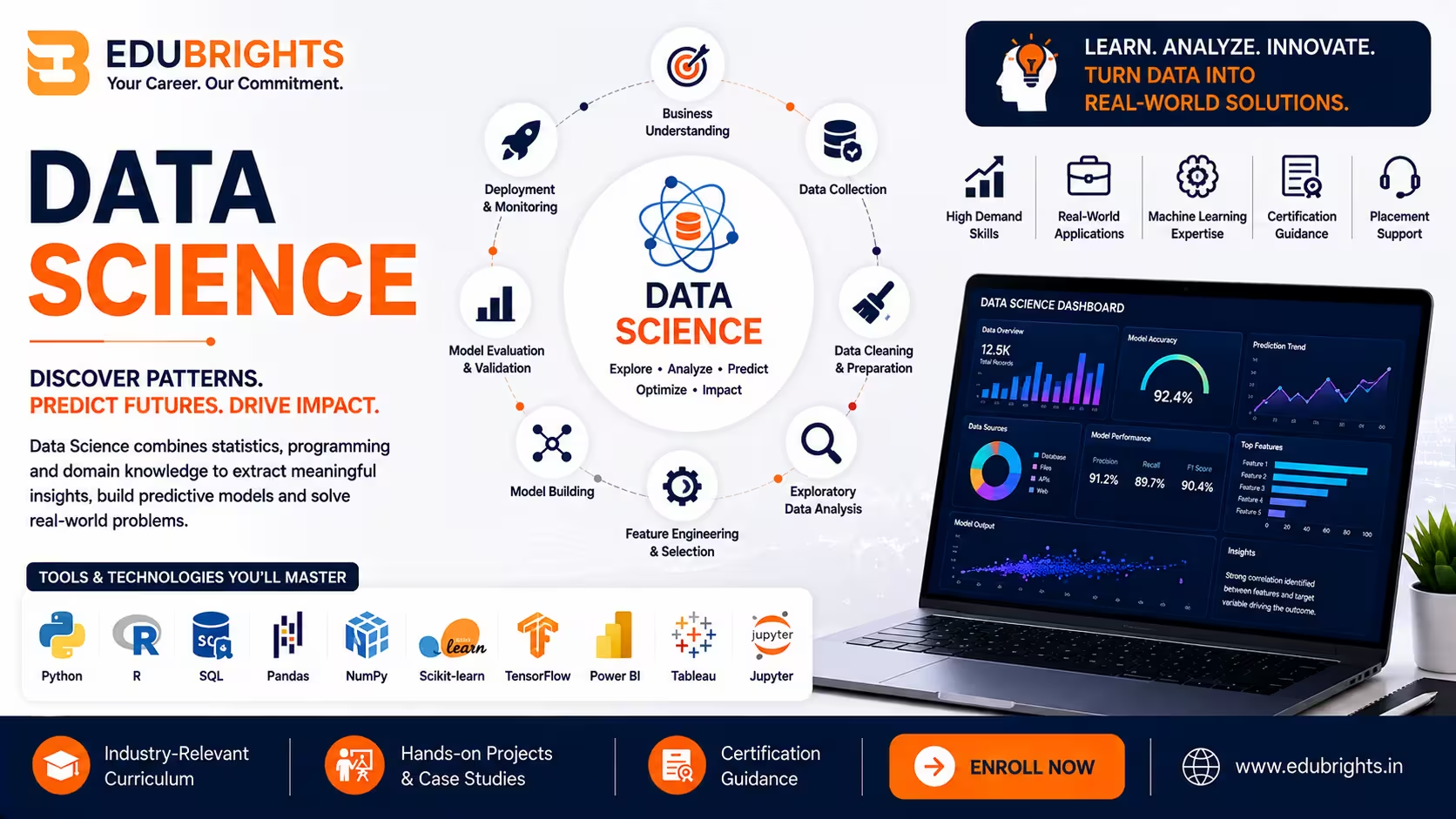
Course Objectives
What will I learn in this Data Science course?
You'll build a solid understanding of the core concepts, terminology, and fundamentals of Data Science, giving you a strong foundation to build on.
What hands-on skills will I gain from Data Science training?
You'll get hands-on experience with industry-relevant Data Science tools and techniques through guided exercises, so you learn by doing rather than just reading theory.
How does this course prepare me for real-world Data Science work?
The course is designed around how Data Science is actually applied to solve real-world problems in professional settings, not just textbook scenarios.
Will I work on real projects during the Data Science course?
Yes, the course includes real-time projects and case studies that reinforce Data Science concepts through practice, giving you portfolio-ready work by the end.
How does this course help with certification and job interviews?
The course is structured to help you prepare for relevant certifications and interviews, covering the concepts and terminology employers expect.
Popular Techniques Covered in This Course
Python programming for data science (Pandas, NumPy)
Machine learning algorithms (regression, classification, clustering)
Data wrangling and feature engineering
Statistical analysis and hypothesis testing
Model building, evaluation, and tuning
Data visualization (Matplotlib, Seaborn, Power BI)
SQL for data extraction
Introduction to deep learning and neural networks
Model deployment basics
Certification-aligned exam preparation
Get Hands-on Knowledge about Real-Time Projects
Project 1
Data Science Fundamentals Project
A guided, hands-on project where you apply the core concepts and basic tools of Data Science to a simple task — designed to build confidence with the fundamentals before moving on to advanced work.
Project 2
Real-World Data Science Case Study
Work through a real-world scenario that mirrors how Data Science is applied on the job, practicing the decisions and troubleshooting professionals rely on day to day.
Project 3
Data Science Hands-On Practice Exercise
Apply Data Science concepts to a structured, hands-on exercise from scratch, guided by your trainer.
Project 4
Data Science Applied Challenge
Tackle a practical, open-ended problem using Data Science, working through troubleshooting, optimization, and best practices the way you would in a real professional environment.
Project 5
Data Science Capstone Project
Bring together everything you've learned into one comprehensive, portfolio-ready project that demonstrates your end-to-end Data Science skills to potential employers.
Key Features
This Data Science program offers comprehensive hands-on training to prepare you for industry demands.
40 Hours Course Duration
100% Job Oriented Training
Industry Expert Faculties
Free Demo Class Available
Completed 500+ Batches
Certification Guidance
Curriculum
Module 1: Introduction to Data Science
- Overview and evolution of Data Science
- Industry landscape, use cases, and business value
- Career paths and job roles related to Data Science
Module 2: Core Concepts and Terminology
- Key data terminology and analytics concepts
- How data analytics/science fits into business decision-making
- Core objects: datasets, models, and reports
Module 3: Environment Setup and Configuration
- Setting up a working Data Science environment
- Initial configuration and system requirements
- Navigating the core interface and tools
Module 4: Architecture and Key Components
- Understanding the underlying architecture of Data Science
- Key components and how they interact
- Core design considerations
Module 5: Hands-On Tools and Techniques
- Practical, hands-on use of core Data Science tools
- Step-by-step practice and customization
- Common workflows used in real projects
Module 6: Data Management and Administration
- Managing and cleaning raw datasets
- User roles and access to sensitive data
- Data quality and governance practices
Module 7: Integration with Related Systems
- Connecting Data Science with other tools and systems
- APIs, interfaces, and data exchange methods
- Common integration patterns and challenges
Module 8: Automation and Workflow Optimization
- Automating repetitive tasks within Data Science
- Streamlining workflows for efficiency
- Tools and techniques for process optimization
Module 9: Security, Compliance and Best Practices
- Data governance and privacy considerations
- Access control across data teams
- Audit trails for data changes
Module 10: Troubleshooting and Performance Tuning
- Identifying and resolving common Data Science issues
- Performance tuning and optimization techniques
- Monitoring and diagnostic approaches
Module 11: Real-World Case Studies and Projects
- Applying Data Science to practical, real-world scenarios
- Working through guided, project-based exercises
- Learning from common industry implementation patterns
Module 12: Certification Preparation and Capstone Project
- Consolidating skills through a capstone project
- Exam-focused review of key Data Science concepts
- Interview preparation and next steps for your career
Receive Training From Our Skilled and Effective Trainers
Learn from Experienced Data Science Professionals Gain expertise from experienced data science professionals who have delivered predictive modeling and machine learning projects across e-commerce, finance, and technology organizations.
Industry Exposure with Real Data Science Projects Our data science trainers bring hands-on experience with Python for data science, machine learning algorithms, statistical modeling, and model deployment, drawn from real predictive analytics engagements.
Simple, Practical & Business-Oriented Teaching Approach Core data science concepts—data wrangling, feature engineering, supervised and unsupervised learning, and model evaluation—are taught through live demonstrations and real-world datasets.
Hands-On Real-Time Data Science Projects Build job-ready expertise through structured labs building machine learning models, predictive analytics pipelines, and data visualizations using realistic business and industry datasets.
Updated with the Latest Data Science Technologies Our data science curriculum is updated with evolving generative AI, large language models, and MLOps practices used across modern data science teams.
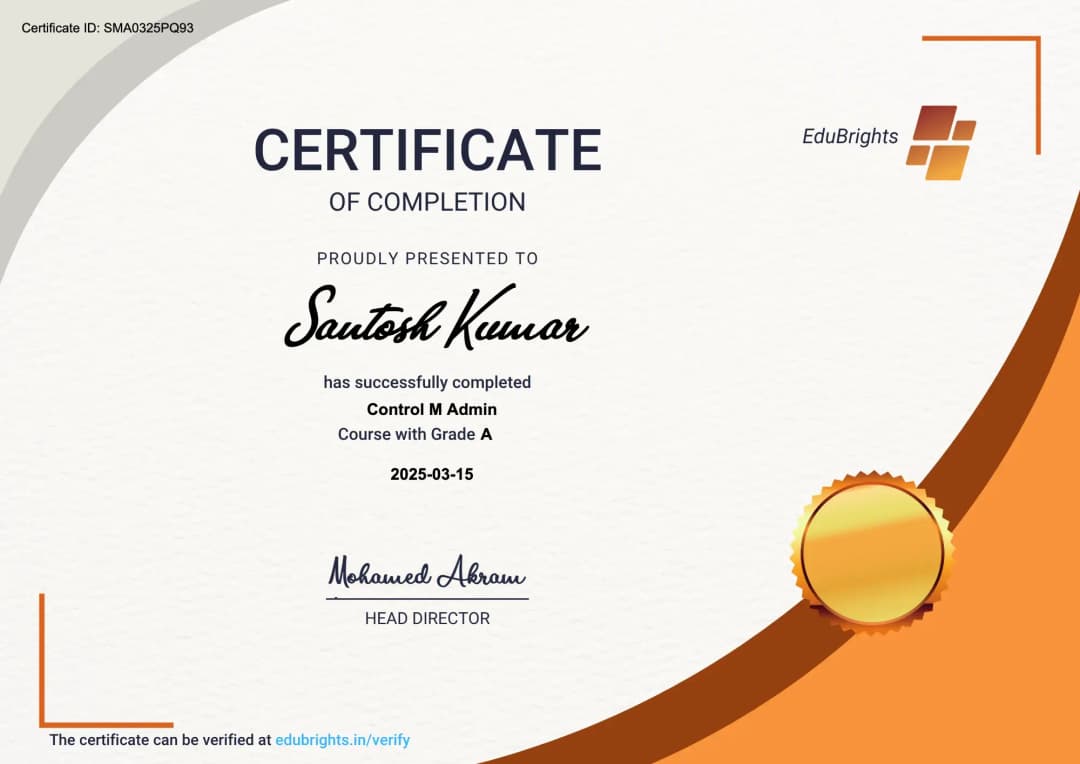
Certified Data Science Professional
Our certification validates your expertise in Data Science. Gain practical skills to apply Data Science confidently in real-world projects. Ideal for professionals and freshers looking to strengthen their Data Science career profile.
Course FAQs
Q1: What is the total fee for the Online Data Science Training at Edubrights?
A: The total fee for our comprehensive Online Data Science Training is ₹34,500 after applying our current discount from the original price. This all-inclusive cost covers live instructor-led virtual training, access to our learning management system, study materials, certification guidance, and dedicated placement support without any hidden charges. We believe in transparent pricing that provides exceptional value through deep technical training and real-world project exposure accessible from anywhere.
Q2: How does Edubrights compare to others for online Data Science training?
A:Edubrights offers a more rigorous, interactive, and project-intensive online learning experience tailored for serious Data Science aspirants. We go beyond basic machine learning by covering Deep Learning, Natural Language Processing (NLP), and Big Data tools like Spark in our live virtual classes. Our trainers are active practitioners from top MNCs who guide you through complex model deployment and MLOps concepts, ensuring you are job-ready for advanced roles that competitors often overlook in their standard online offerings.
Q3: Is prior programming experience required for the online Data Science course?
A: While prior programming experience is helpful, it is not strictly mandatory as we start with Python fundamentals specifically tailored for data science. However, a strong foundation in mathematics and statistics is highly recommended because Data Science involves heavy analytical reasoning. Our course bridges the gap by teaching Python libraries like NumPy and Pandas from scratch, ensuring that even those with limited coding background can grasp the technical requirements effectively in an online setting.
Q4: Do you cover Deep Learning and Neural Networks in the online curriculum?
A: Yes, our online curriculum includes a dedicated module on Deep Learning where you will learn about Artificial Neural Networks (ANN), Convolutional Neural Networks (CNN) for image processing, and Recurrent Neural Networks (RNN) for sequence data. We use TensorFlow and Keras to build and train these models, giving you hands-on experience with the technologies powering modern AI applications like facial recognition and language translation, all delivered through interactive live sessions.
Q5: What is the difference between Data Analytics and Data Science courses at Edubrights?
A: Data Analytics focuses on interpreting historical data to answer business questions using tools like SQL, Excel, and Power BI. In contrast, our Data Science course dives deeper into predictive modeling, machine learning algorithms, and artificial intelligence. You will learn to build custom models, perform complex statistical analysis, and handle unstructured data, preparing you for roles that require creating new data products rather than just reporting on existing data, which is crucial for senior roles in the tech industry.
Q6: Do you offer placement assistance for online Data Science students?
A: Yes, we provide 100% job-oriented placement assistance specifically targeted at Data Science and Machine Learning Engineer roles, regardless of whether you attend online or offline. Our support includes resume building that highlights your ML projects, LinkedIn optimization for tech recruiters, mock technical interviews focusing on coding and algorithm questions, and direct referrals to our hiring partners across India and globally.
Q7: Which programming languages are taught in the Data Science course?
A: The primary programming language taught is Python, as it is the industry standard for data science due to its extensive library ecosystem. We also introduce you to R for statistical analysis and SQL for database management. Additionally, you will gain exposure to Scala and PySpark for big data processing, ensuring you have a versatile skill set that meets the demands of modern data teams in any location.
Q8: Do you teach Natural Language Processing (NLP)?
A: Yes, our course includes a comprehensive module on Natural Language Processing (NLP). You will learn how to process and analyze human language data using techniques like tokenization, stemming, lemmatization, and sentiment analysis. We also cover advanced topics like transformer models and BERT, enabling you to build applications such as chatbots, text summarizers, and language translators, which are key skills for AI roles globally.
Q9: What kind of real-time projects will I work on?
A: You will work on five advanced real-time projects that simulate industry challenges. These include building a recommendation engine for e-commerce, developing a fraud detection system using anomaly detection, creating a sentiment analysis tool for social media data, implementing a computer vision model for object detection, and designing a predictive maintenance system for IoT data. These projects are designed to build a robust portfolio that demonstrates your end-to-end data science capabilities to remote and onsite recruiters.
Q10: Are the online classes live or pre-recorded?
A: All our online classes are 100% live instructor-led sessions to ensure maximum engagement and real-time doubt resolution. Data Science concepts can be complex, so having the ability to ask questions immediately and see code debugging in real-time is crucial. This interactive format allows you to participate in live coding sessions and receive immediate feedback on your model performance, which is far superior to passive video watching.
Q11: Do you cover Big Data tools like Hadoop and Spark?
A: Yes, we introduce you to Big Data ecosystems including Hadoop and Apache Spark. You will learn how to process large datasets that do not fit into memory using PySpark, which is essential for handling enterprise-level data. Understanding distributed computing concepts gives you a significant advantage when applying for roles in companies dealing with massive data volumes, a common requirement in large tech enterprises globally.
Q12: What is the duration of the Online Data Science Course?
A: The standard duration of our Online Data Science Course is approximately three to four months, covering around 60 hours of intensive live training. Given the depth of the subject, this extended timeline ensures you have enough time to grasp complex mathematical concepts, practice coding, and complete substantial projects. Fast-track options are available for those who wish to accelerate their learning pace and enter the job market sooner.
Q13: Will I learn about Model Deployment and MLOps?
A: Yes, we cover the critical aspect of Model Deployment and MLOps (Machine Learning Operations). You will learn how to take your trained models from a Jupyter Notebook to a production environment using tools like Flask, Docker, and cloud platforms like AWS or Azure. This skill is highly valued by employers as it bridges the gap between data science experiments and real-world application, making you a more hireable candidate for remote and hybrid roles.
Q14: Who are the trainers for the Online Data Science course?
A: Our trainers are senior Data Scientists and Machine Learning Engineers with over ten years of experience in top multinational corporations. They have worked on live AI projects in sectors like healthcare, finance, and retail, bringing practical insights and industry best practices into the virtual classroom. Their mentorship extends beyond technical skills to include career advice and industry networking, ensuring you get the same quality of training as onsite students.
Q15: Do you provide study materials and code repositories?
A: Yes, we provide comprehensive study materials including detailed slide decks, Jupyter notebooks with code snippets, dataset links, and reference guides. All resources are accessible via our Learning Management System, allowing you to review lessons and replicate code exercises at your own pace. We also provide access to a private GitHub repository where course codes and project templates are stored for your reference anytime.
Q16: Is there an EMI option available for the online course fee?
A: Yes, we offer flexible EMI options to make our Data Science Course affordable for students and working professionals globally. You can spread the payment over several months without interest, reducing the immediate financial burden. This allows you to invest in your upskilling without worrying about lump-sum payments, making high-quality education accessible to everyone regardless of location.
Q17: Do you offer a free demo class for the online course?
A: Absolutely, we offer a free demo class where you can experience our teaching methodology and interact with our expert trainers virtually. This session covers fundamental Data Science concepts and gives you a glimpse of the curriculum structure. It helps you decide if our online course aligns with your learning goals before making a commitment, ensuring you are confident in your choice.
Q18: What is the average salary for a Data Scientist after this online course?
A: Entry-level Data Scientists typically start with packages ranging from ₹6 lakhs to ₹12 lakhs per annum in India, and significantly higher globally, depending on their skills and portfolio. With the advanced competencies in Deep Learning and Big Data that you gain from our course, you are well-positioned to negotiate higher salaries and aim for roles in top-tier tech companies and well-funded startups worldwide.
Q19: Can freshers join the Online Data Science course?
A: Yes, freshers with a strong aptitude for mathematics and logic can join our online course. We provide foundational training in Python and statistics to bring everyone to the same level before diving into advanced machine learning topics. However, freshers should be prepared to put in extra effort to build a strong project portfolio that compensates for lack of work experience, which is critical in the competitive global job market.
Q20: Do you teach Computer Vision?
A: Yes, our curriculum includes a module on Computer Vision where you will learn how to process and analyze visual data. You will work with libraries like OpenCV and TensorFlow to build models for image classification, object detection, and facial recognition. These skills are in high demand in industries like security, automotive, and healthcare, many of which offer remote opportunities for skilled professionals.
Q21: How is the online course different from self-paced platforms like Coursera or Udemy?
A: Unlike self-paced platforms where you learn in isolation, our live instructor-led model provides real-time interaction, mentorship, and peer collaboration. Data Science requires debugging complex code and understanding nuanced mathematical concepts, which is much easier with live guidance. Additionally, our personalized career coaching and portfolio reviews offer a level of support and accountability that automated platforms cannot provide.
Q22: Do you help with GitHub portfolio building?
A: Yes, building a professional GitHub portfolio is a key part of our course. We guide you on how to structure your repositories, write clear documentation, and showcase your five real-time projects effectively. A well-maintained GitHub profile serves as tangible proof of your coding skills and problem-solving abilities to potential employers globally, who often review code before interviewing.
Q23: What is Medallion Architecture and is it covered?
A: While Medallion Architecture is more common in Data Engineering, we introduce it in the context of data preparation for machine learning. Understanding how data flows from raw (Bronze) to cleaned (Silver) to aggregated (Gold) layers helps you build more robust and scalable ML pipelines. This knowledge makes you a more versatile candidate who understands the entire data lifecycle, a skill highly valued in modern remote data teams.
Q24: Do you cover Time Series Analysis?
A: Yes, Time Series Analysis is a critical component of our curriculum. You will learn how to analyze temporal data, identify trends and seasonality, and build forecasting models using ARIMA and Prophet. These skills are essential for roles in finance, supply chain, and sales forecasting where predicting future values is key, particularly in global fintech and e-commerce sectors.
Q25: Is the certification recognized by industry?
A: Our certification is industry-recognized and valued by our hiring partners who understand the rigor of our training. However, we emphasize that your practical skills and GitHub portfolio are equally important. The combination of a recognized certificate and a strong project portfolio significantly boosts your credibility in the job market, especially when applying to top MNCs and startups globally.
Q26: Do you teach Ensemble Learning techniques?
A: Yes, we cover advanced Ensemble Learning techniques such as Bagging, Boosting, and Stacking. You will learn to use algorithms like Random Forest, Gradient Boosting, XGBoost, and LightGBM to improve model accuracy and robustness. These techniques are widely used in Kaggle competitions and industry projects to achieve state-of-the-art performance, giving you an edge in technical interviews.
Q27: Can working professionals attend weekend online batches?
A: Yes, we offer dedicated weekend online batches specifically designed for working professionals. These batches allow you to balance your job responsibilities while upskilling in Data Science from the comfort of your home. The curriculum is the same as the weekday batches, ensuring you do not miss out on any content or project opportunities, making it ideal for IT professionals looking to switch domains.
Q28: Do you provide mock interviews for technical rounds?
A: Yes, we conduct rigorous mock interviews that simulate real technical rounds via video conferencing. These include coding challenges in Python, questions on machine learning algorithms, and system design discussions. Our trainers provide detailed feedback on your answers and approach, helping you refine your communication and problem-solving skills under pressure, which is crucial for cracking remote interviews.
Q29: What is the role of Statistics in Data Science?
A: Statistics is the backbone of Data Science, providing the theoretical foundation for machine learning algorithms. Our course covers probability distributions, hypothesis testing, Bayesian inference, and regression analysis. A strong grasp of statistics enables you to choose the right models, interpret results correctly, and avoid common pitfalls like overfitting, ensuring your models are scientifically valid.
Q30: Do you teach Cloud Platforms for Data Science?
A: Yes, we introduce you to cloud platforms like AWS and Azure for deploying machine learning models. You will learn how to use services like AWS SageMaker or Azure Machine Learning to train, deploy, and manage models at scale. Cloud proficiency is increasingly becoming a mandatory skill for Data Scientists in modern enterprises, and many global companies are heavily invested in cloud infrastructure.
Q31: How do I register for the Online Data Science course?
A: You can register by visiting our website, filling out the inquiry form, or calling our admissions team directly. Our counselors will guide you through the enrollment process, explain the payment options, and help you choose the best batch for your schedule. Early registration often comes with additional discounts and benefits, so we recommend securing your spot in advance.
Q32: Do you cover Data Visualization libraries in Python?
A: Yes, we cover popular Python visualization libraries such as Matplotlib, Seaborn, and Plotly. You will learn how to create static and interactive visualizations to explore data patterns and communicate insights effectively. Strong visualization skills are essential for presenting your findings to stakeholders and non-technical audiences, a key requirement for any remote data role.
Q33: Is there any support after course completion?
A: Yes, our support continues even after course completion. We provide ongoing career guidance, access to alumni networks, and updates on new industry trends and tools. We also help you prepare for specific job interviews by reviewing job descriptions and tailoring your preparation accordingly, ensuring you have long-term career support regardless of your location.
Q34: What is the minimum qualification required?
A: A bachelor’s degree in engineering, science, mathematics, or a related field is preferred, but not strictly mandatory. Candidates from other backgrounds with strong analytical skills and programming aptitude are also welcome. The key requirement is a willingness to learn complex technical concepts and apply them practically, which we facilitate through our structured online curriculum.
Q35: Do you teach Feature Engineering techniques?
A: Yes, Feature Engineering is a critical step in the machine learning pipeline that we cover extensively. You will learn how to select, transform, and create new features from raw data to improve model performance. Techniques like encoding categorical variables, scaling numerical features, and handling missing values are taught in detail, as they often determine the success of a model.
Q36: Can I switch careers from non-IT to Data Science?
A: Switching to Data Science from a non-IT background is challenging but possible with dedication. Our course provides the necessary technical foundation, but you will need to invest extra time in practicing coding and building projects. Leveraging your domain knowledge in fields like finance or healthcare can give you a unique advantage in specialized data science roles, even in remote work environments.
Q37: Do you cover Unsupervised Learning algorithms?
A: Yes, we cover Unsupervised Learning algorithms such as K-Means Clustering, Hierarchical Clustering, and Principal Component Analysis (PCA). These techniques are used for pattern recognition, customer segmentation, and dimensionality reduction when labeled data is not available. Understanding unsupervised learning expands your ability to solve diverse data problems where explicit labels are absent.
Q38: How often are new online batches started?
A: We start new online batches frequently, including weekday, weekend, and fast-track options. You can contact our admissions team to get the exact start dates for the upcoming batches. Regular batch starts ensure that you can begin your learning journey without long waiting periods, allowing you to plan your career transition effectively from anywhere.
Q39: Do you teach Hyperparameter Tuning?
A: Yes, Hyperparameter Tuning is an essential skill for optimizing machine learning models. You will learn techniques like Grid Search, Random Search, and Bayesian Optimization to find the best parameters for your algorithms. Proper tuning can significantly improve model accuracy and generalization performance, which is a common topic in advanced technical interviews.
Q40: What makes Edubrights the best choice for Online Data Science training?
A: Edubrights stands out due to our comprehensive curriculum covering advanced topics like Deep Learning and NLP, experienced industry trainers, and focus on real-world projects. Our personalized career support, including GitHub portfolio building and LinkedIn optimization, ensures you are not just certified but job-ready. We prioritize quality education and practical skills over mass enrollment, making us a preferred choice for serious learners globally.
Q41: Do you provide access to cloud labs for practice?
A: Yes, we provide access to cloud-based lab environments where you can practice coding and run machine learning experiments without setting up local infrastructure. This ensures that you have a consistent and hassle-free learning experience, regardless of your computer’s specifications, allowing you to focus entirely on learning the concepts from anywhere.
Q42: Will I learn about Ethical AI and Bias?
A: Yes, we include a module on Ethical AI and Bias in Machine Learning. You will learn about the ethical implications of AI, how to detect bias in datasets and models, and best practices for building fair and transparent AI systems. This knowledge is increasingly important for responsible AI development in corporate environments, and global tech leaders are prioritizing ethical AI practices.
Q43: Do you teach API development for ML models?
A: Yes, you will learn how to wrap your machine learning models into APIs using frameworks like Flask or FastAPI. This allows other applications to interact with your models and make predictions in real-time. Building APIs is a crucial skill for integrating data science solutions into production software systems, making you a more versatile developer for remote teams.
Q44: Can I talk to a former student for reference?
A: Yes, we can connect you with our alumni network so you can hear firsthand about their learning experience and career progression. Speaking with former students can give you valuable insights into how the course helped them transition into Data Science roles and what to expect from our training, helping you make an informed decision.
Q45: Do you cover Reinforcement Learning?
A: We provide an introduction to Reinforcement Learning concepts, including agents, environments, and reward systems. While deep expertise in RL is specialized, understanding the basics prepares you for advanced roles in robotics, gaming, and autonomous systems. We focus on practical applications rather than just theoretical concepts, giving you a foundational understanding of this advanced field.
Q46: Is there any group project component?
A: Yes, we encourage collaborative learning through group projects where you work with peers to solve complex data problems virtually. This simulates real-world remote team dynamics and helps you develop soft skills like communication, collaboration, and project management. Group projects also allow you to learn from diverse perspectives and approaches, which is valuable in global corporate settings.
Q47: Do you teach Data Wrangling with Pandas?
A: Yes, Data Wrangling with Pandas is a core component of our Python module. You will learn how to clean, transform, and manipulate large datasets efficiently using Pandas dataframes. Mastery of Pandas is essential for any Data Scientist as it is the primary tool for data preparation and exploration, and we ensure you become proficient in its advanced features.
Q48: What is the success rate of placements?
A: We have a strong track record of placing students in top companies, with hundreds of successful placements across various industries. Our focus on advanced technical skills and practical project experience ensures that our students are highly competitive in the job market. We continuously update our curriculum to match industry demands, ensuring high placement success rates for both onsite and remote roles.
Q49: Do you offer any scholarships?
A: Yes, we offer merit-based scholarships for students with exceptional academic records or financial need. You can inquire about scholarship opportunities during the counseling session. Our goal is to make high-quality Data Science education accessible to talented individuals regardless of their financial background, fostering diversity in the global tech community.
Q50: How do I stay updated with industry trends after the course?
A: We provide lifetime access to our alumni community and regular webinars on emerging trends in Data Science and AI. Our trainers share relevant articles, research papers, and tool updates to keep you informed. Continuous learning is key in this fast-evolving field, and we support your journey even after course completion, ensuring you remain relevant in the industry regardless of where you work.
Get Training Quote for Free
Testimonials
Hear What Our Students Say
"Transform your life through Education, hear it from our Alumni"

8 LPA
Rahul
Student
Data Scientist
"Transform your life through Education, hear it from our Alumni"

6 LPA
Fathima
Student
Software Engineer
"Transform your life through Education, hear it from our Alumni"

8 LPA
Siddharth
NIELSON IQ
Data Analyst