Popular
What's the Difference Between Character Animation and Motion Graphics?
EduBrights
July 24, 2026
2 min read
Trying to decide whether character animation or motion graphics fits your creative goals? Here is a clear comparison of skill requirements, software tools, and career paths for both disciplines.
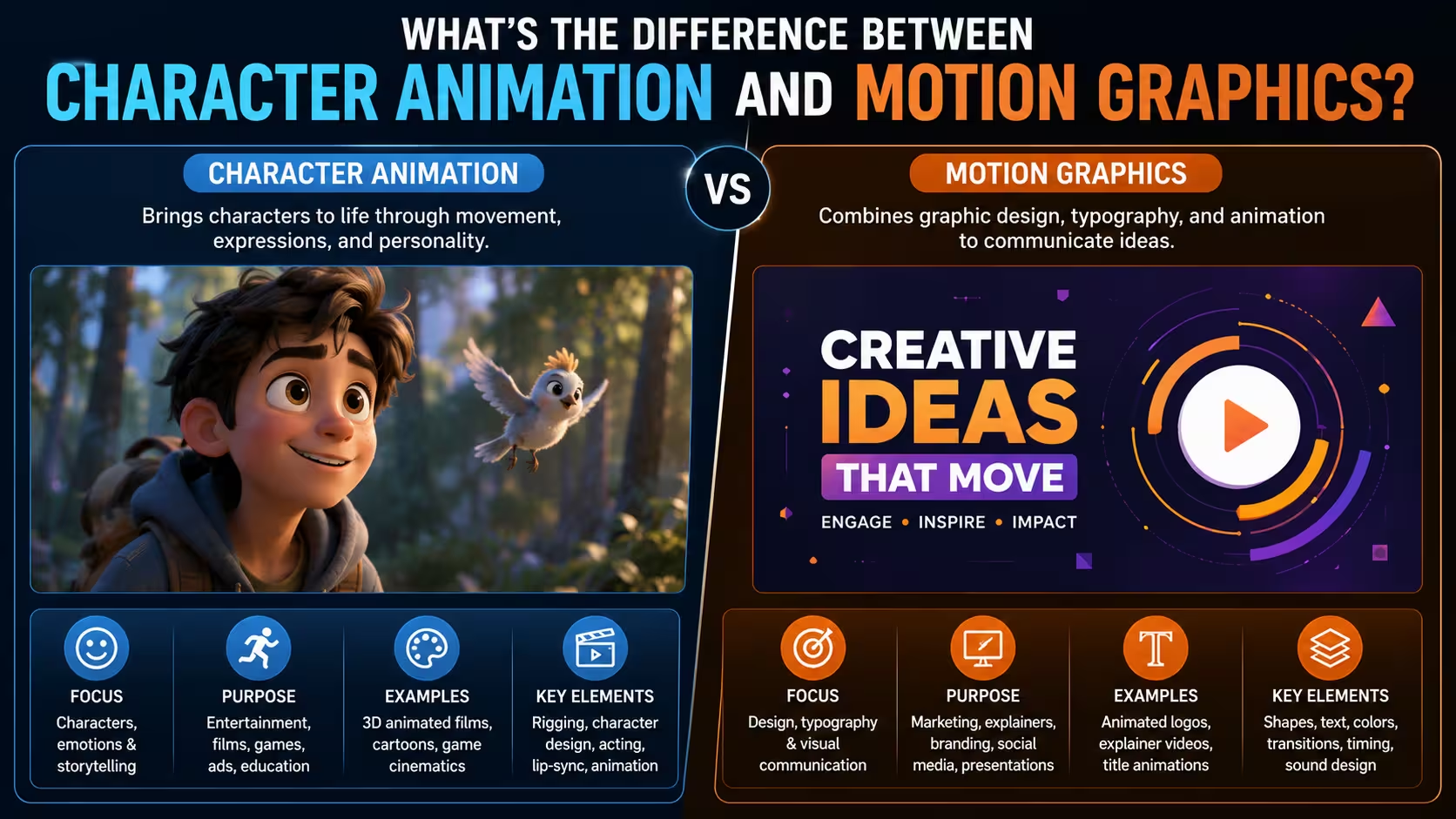
What's the Difference Between Character Animation and Motion Graphics?
While both character animation and motion graphics fall under the broader umbrella of digital media, they are distinct specializations with different creative objectives, daily workflows, and software suites. Understanding these differences helps you choose the discipline that best aligns with your artistic strengths.
What Is Character Animation?
Character animation focuses on bringing digital figures (human, animal, or fantasy) to life through believable motion, body mechanics, acting, and facial performance:
- Primary Goal: Storytelling, emotional connection, and realistic acting performances.
- Core Focus: Body mechanics, weight transfer, lip-syncing, and staging.
- Key Industries: Feature films, animated TV series, AAA video games, and VFX houses.
What Is Motion Graphics (Motion Design)?
Motion graphics involves animating graphic design elements, typography, logos, abstract shapes, and UI assets to communicate information visually:
- Primary Goal: Visual communication, branding, and clear information delivery.
- Core Focus: Kinetic typography, layout composition, color theory, and smooth transitions.
- Key Industries: Advertising agencies, TV broadcast graphics, corporate media, and UI/UX app design.
Core Comparison Matrix
| Feature | Character Animation | Motion Graphics |
|---|---|---|
| Main Creative Focus | Acting, Emotion & Physics | Layout, Design & Typography |
| Primary Software | Maya, Blender, Toon Boom | After Effects, Cinema 4D, Illustrator |
| Drawing / Rigging Need | High (Character Rigs & Anatomy) | Moderate (Vector Graphics & Layouts) |
| Production Speed | Slower (Detailed Frame Editing) | Faster (Commercial Project Turnarounds) |
Final Word
Choose character animation if you love acting, storytelling, and physical motion mechanics; choose motion graphics if you enjoy graphic design, typography, color theory, and fast-paced commercial projects.
Whether you're deciding on a specialization, enrolling in 3D animation courses in Chennai, or building a portfolio, hands-on project creation remains the single best predictor of real studio readiness.
Explore 3D Animation Training in Chennai →
EduBrights is a leading training institute offering hands-on 2D and 3D animation courses designed to build job-ready portfolios. View all courses.
character animation vs motion graphics
motion graphics career
3d animation course in chennai
2d motion design


