Popular
What Does Collibra Actually Do? A Beginner's Guide
Akram
June 29, 2026
5 min read
Understand what Collibra does and why it is important for modern data management. This beginner-friendly guide explains Collibra’s role in data governance, data cataloging, metadata management, data quality, and career opportunities for IT professionals.
Introduction
In today’s data-driven world, organizations generate massive amounts of data every day. But having large volumes of data is not enough — companies need to understand where their data comes from, who can access it, how accurate it is, and how it should be managed.
This is where Collibra plays an important role.
Many businesses struggle with unclear data ownership, inconsistent information, compliance challenges, and difficulty finding trusted data. Collibra helps organizations solve these problems by providing a powerful Data Intelligence and Data Governance platform.
Whether you are a data analyst, data engineer, business user, IT professional, or someone starting a career in data management, understanding Collibra can help you build valuable skills for modern enterprise environments.
What Is Collibra?
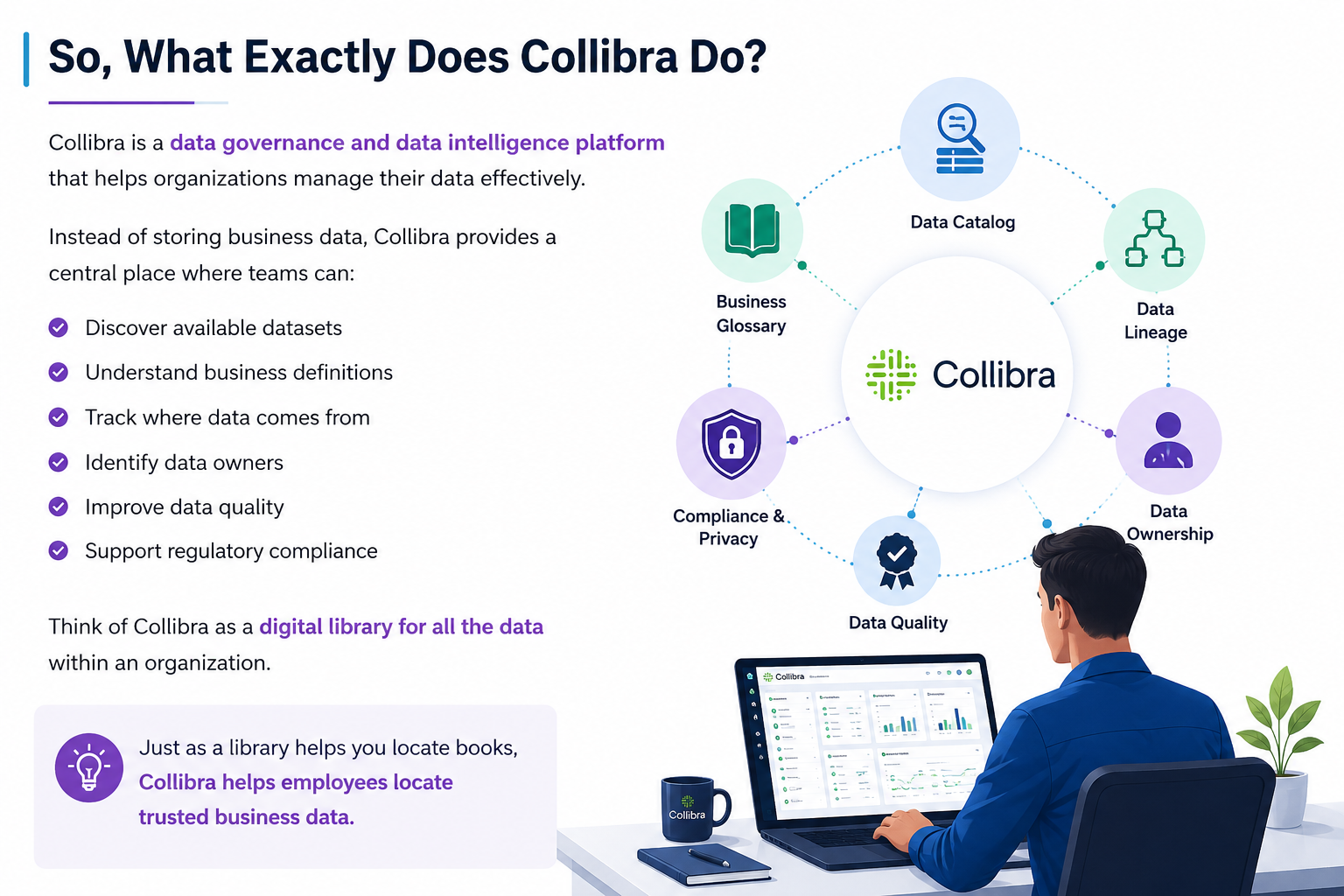
Collibra is an enterprise-level Data Intelligence Platform that helps organizations manage, govern, and understand their data.
It creates a centralized environment where companies can discover their data assets, define ownership, improve data quality, and ensure compliance with industry standards.
Simply put, Collibra helps organizations answer important questions:
- Where does our data come from?
- Who owns this data?
- Can we trust this information?
- How is this data being used?
- Are we following data regulations?
Why Do Organizations Need Collibra?
Modern companies store data across multiple systems such as:
- Databases
- Cloud platforms
- Data warehouses
- Business applications
- Analytics tools
Without proper governance, organizations may face:
- Duplicate or inaccurate data
- Security risks
- Compliance issues
- Poor decision-making
- Difficulty finding trusted information
Collibra helps businesses create a structured approach to managing their data effectively.
How Does Collibra Work?
Collibra works by connecting people, processes, and technology around enterprise data.
The platform mainly focuses on:
1. Data Governance
Collibra helps organizations define policies, responsibilities, and processes for managing data.
Teams can identify:
- Data owners
- Data stewards
- Business definitions
- Data policies
2. Data Catalog
Collibra provides a searchable data catalog where users can discover available data assets.
Users can understand:
- Data sources
- Metadata information
- Data relationships
- Data usage
3. Data Quality Management
Reliable data is essential for business decisions.
Collibra helps teams monitor data quality by identifying:
- Missing information
- Incorrect values
- Duplicate records
- Data inconsistencies
4. Metadata Management
Metadata explains the meaning and background of data.
Collibra helps organizations manage technical and business metadata to improve data understanding.
5. Privacy and Compliance
Organizations must follow regulations and security standards.
Collibra supports better control over:
- Sensitive data
- Data access
- Compliance processes
- Privacy management
Who Uses Collibra?
Collibra is used by different professionals across an organization:
Data Professionals
- Data Analysts
- Data Engineers
- Data Scientists
- Data Architects
Business Teams
- Business Analysts
- Data Owners
- Data Stewards
- Department Managers
IT and Security Teams
- IT Administrators
- Governance Teams
- Compliance Professionals
Key Skills You Can Learn in Collibra
Learning Collibra helps professionals develop skills in:
- Data Governance
- Metadata Management
- Data Catalog Implementation
- Data Quality Management
- Business Glossary Management
- Data Lineage
- Enterprise Data Management
- Regulatory Compliance
Career Opportunities After Learning Collibra
Professionals with Collibra skills can explore roles such as:
- Data Governance Analyst
- Collibra Developer
- Data Steward
- Metadata Analyst
- Data Quality Analyst
- Data Governance Consultant
- Data Management Specialist
Why Learn Collibra Now?
Organizations are investing heavily in data governance because trusted data is essential for:
- Artificial Intelligence
- Business Analytics
- Cloud Data Platforms
- Digital Transformation
- Regulatory Compliance
Professionals who understand data governance platforms like Collibra can gain an advantage in today’s competitive IT industry.
Why Choose Edubrights for Collibra Training?
Edubrights provides industry-focused Collibra training designed for beginners and working professionals.
The training focuses on:
- Practical understanding of Collibra concepts
- Real-time industry scenarios
- Hands-on learning
- Data governance implementation
- Career-oriented skills
Frequently Asked Questions (FAQs)
Q1. What is Collibra used for?
Collibra is used for data governance, data cataloging, metadata management, data quality improvement, and helping organizations manage enterprise data effectively.
Q2. Is Collibra suitable for beginners?
Yes, beginners with basic knowledge of databases, data concepts, or IT systems can start learning Collibra and build skills in data governance.
Q3. What skills are required to learn Collibra?
Basic understanding of databases, data management concepts, metadata, and business processes can help learners understand Collibra more easily.
Q4. Does Collibra have career opportunities?
Yes, companies are looking for professionals skilled in data governance, metadata management, and data quality, creating opportunities in Collibra-related roles.
Q5. Is Collibra useful for data professionals?
Yes, Collibra is valuable for data analysts, data engineers, data architects, and governance professionals working with enterprise data.
Conclusion
Data has become one of the most valuable assets for organizations, but managing it correctly is a major challenge.
Collibra helps businesses transform complex data into trusted, accessible, and governed information. Learning Collibra can help IT professionals build strong expertise in modern data management and governance.
Start your journey with Edubrights Collibra Training and develop the skills needed for today’s data-driven industry.
Collibra
Collibra Data Governance
Collibra Training
Collibra Course
What is Collibra
Data Intelligence
Metadata Management
Data Catalog
Data Quality
Enterprise Data Management
Data Governance Career
Collibra Developer
Collibra Certification


