Popular
What Do Employers Look for Beyond Certification? Skills That Get You Hired in 2026
Akram
June 28, 2026
5 min read
Learn what employers look for beyond certifications in 2026. Discover the practical skills, hands-on experience, communication, and problem-solving abilities that can help you stand out, become job-ready, and secure your dream IT career.
Introduction
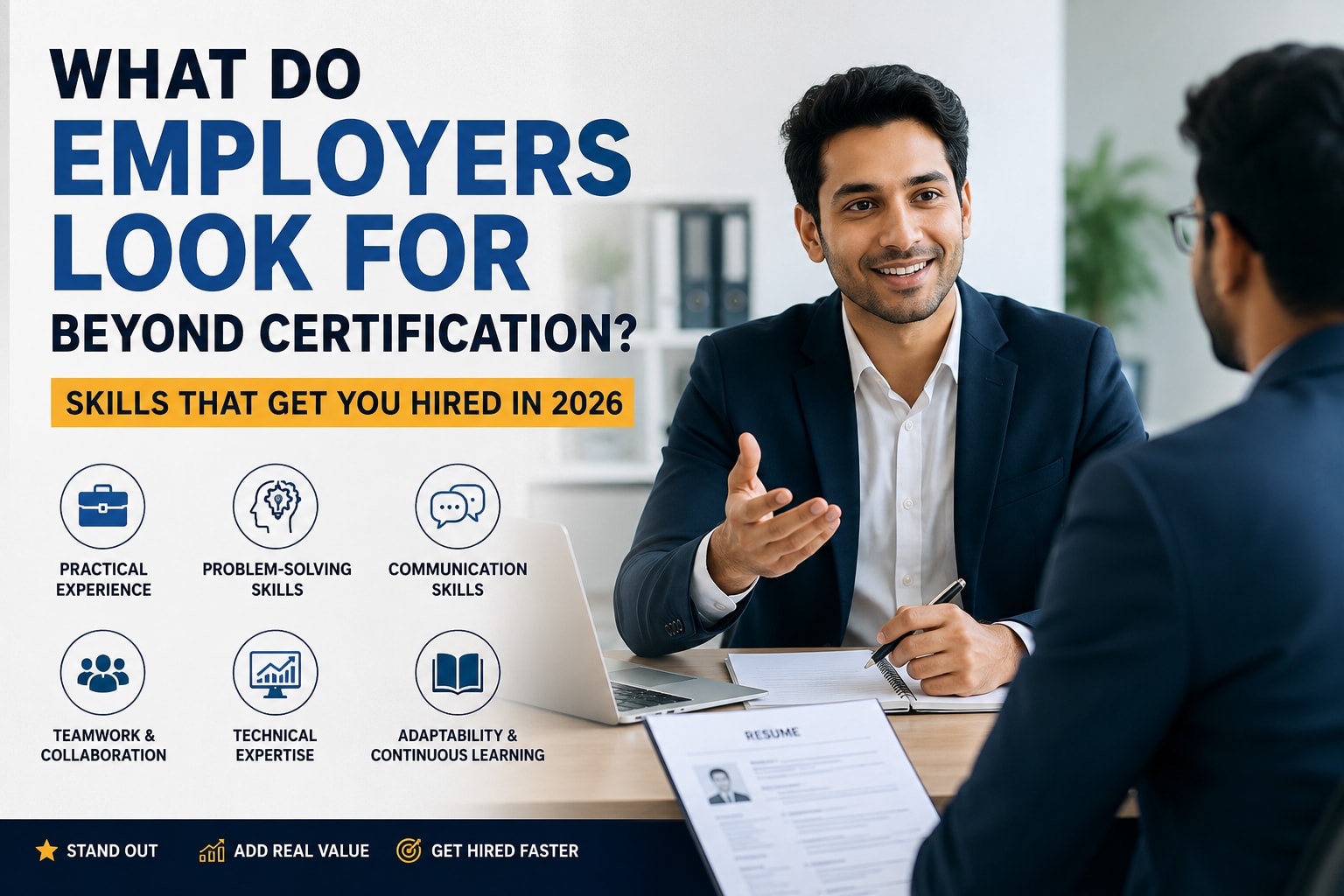
In today's competitive job market, earning a certification is a great achievement, but it is no longer enough to guarantee employment. Companies receive applications from hundreds of candidates with similar certifications, making it important to stand out in other ways. Employers are looking for professionals who can apply their knowledge, solve real business problems, communicate effectively, and adapt to changing technologies.
Whether you're pursuing a career in Data Engineering, Cloud Computing, Cybersecurity, DevOps, Artificial Intelligence, Software Testing, or SAP, becoming job-ready is just as important as becoming certified.
This article explains what employers look for beyond certification, the skills that make candidates stand out, and practical ways to improve your employability in 2026.
Why Certifications Alone Are No Longer Enough
Certifications validate your understanding of a technology or platform, but they don't always prove that you can perform in a real work environment. Today's employers need professionals who can contribute from day one.
For example, two candidates may have the same cloud certification. During the interview, one confidently explains a cloud migration project they completed, while the other only discusses theory. The first candidate is far more likely to receive the job offer because they have demonstrated practical knowledge.
Certifications can help you get shortlisted, but your skills, projects, and attitude help you get hired.
Top Skills Employers Look for in 2026
1. Hands-on Experience
One of the first things recruiters evaluate is practical experience. Employers want candidates who have worked on projects rather than simply studying concepts.
Hands-on experience may include:
- SQL database projects
- Cloud deployments
- Power BI dashboards
- ETL pipeline development
- Automation workflows
- Cybersecurity labs
- DevOps pipelines
If you're a fresher, personal projects, internships, and capstone projects are excellent ways to showcase your abilities.
2. Problem-Solving Skills
Companies hire professionals to solve business challenges, not just perform routine tasks.
During interviews, recruiters often ask scenario-based questions such as:
"How would you troubleshoot a slow production database?"
They want to understand your analytical thinking, decision-making process, and troubleshooting approach.
Strong problem-solving skills demonstrate that you can work independently and handle real-world situations.
3. Technical Knowledge
Employers expect candidates to have strong fundamentals in their chosen domain.
Some commonly required technical skills include:
Data Engineering
- SQL
- Python
- Apache Spark
- Apache Kafka
- ETL Tools
Cloud Computing
- AWS
- Microsoft Azure
- Google Cloud
- Cloud Security
DevOps Click Here For Info
- Docker
- Kubernetes
- Jenkins
- Git
- CI/CD
Cybersecurity Click Here
- Network Security
- Identity and Access Management
- SIEM Tools
- Vulnerability Assessment
Having practical exposure to these technologies makes your certification much more valuable.
4. Communication Skills
Technical knowledge alone is not enough.
IT professionals regularly communicate with:
- Clients
- Project Managers
- Business Analysts
- Developers
- Testing Teams
Employers appreciate candidates who can explain technical concepts clearly and collaborate effectively with different teams.
Good communication improves teamwork, project delivery, and customer satisfaction.
5. Real-Time Projects
Projects are one of the strongest indicators of your practical skills.
A good project should explain:
- Business problem
- Technology used
- Your role
- Challenges faced
- Solution implemented
- Final outcome
Being able to discuss your project confidently during interviews leaves a positive impression on recruiters.
Build a Strong Professional Portfolio
A professional portfolio gives employers evidence of your work.
Your portfolio can include:
- GitHub repositories
- SQL projects
- Cloud deployment screenshots
- Power BI dashboards
- Technical blogs
- Automation workflows
- Project documentation
Even if you don't have work experience, a well-maintained portfolio demonstrates initiative and continuous learning.
Soft Skills That Employers Value
Technical expertise should be supported by strong workplace skills.
Some important soft skills include:
- Communication
- Teamwork
- Adaptability
- Time management
- Leadership
- Critical thinking
- Problem-solving
- Willingness to learn
These skills help professionals perform effectively in collaborative work environments.
Certification vs Job Readiness
| Certification | Job Readiness |
|---|---|
| Validates theoretical knowledge | Demonstrates practical application |
| Helps get shortlisted | Helps secure the job offer |
| Focuses on exams | Focuses on real projects |
| Shows learning commitment | Shows workplace readiness |
The ideal candidate combines both certification and practical skills.
Common Mistakes Candidates Make
Many job seekers unknowingly reduce their chances of getting hired.
Avoid these common mistakes:
- Relying only on certifications
- Ignoring hands-on practice
- Having an outdated resume
- Poor LinkedIn profile
- Unable to explain projects
- Lack of interview preparation
- Stopping learning after certification
Continuous improvement is essential for long-term career success.
How to Become Job-Ready
To improve your employability, focus on the following:
- Complete hands-on projects.
- Build a professional portfolio.
- Practice mock interviews.
- Improve communication skills.
- Stay updated with industry trends.
- Learn complementary technologies.
- Participate in technical communities.
These activities demonstrate commitment and practical capability beyond certifications.
Career Opportunities
Candidates with strong practical skills can explore roles such as:
- Data Engineer
- Cloud Engineer
- DevOps Engineer
- Cybersecurity Analyst
- Data Analyst
- Business Intelligence Developer
- Software Test Engineer
- Automation Engineer
- Database Administrator
- AI Engineer
As organizations continue adopting digital technologies, demand for skilled professionals continues to grow.
Why Choose Edubrights?
At Edubrights, we believe that certifications should be supported by practical learning.
Our training programs include:
- Live Instructor-Led Classes
- Hands-on Lab Sessions
- Real-Time Industry Projects
- Resume Building Support
- Mock Interviews
- Placement Assistance
- Flexible Online and Classroom Training
- Industry-Relevant Curriculum
Our goal is to help learners become job-ready by combining theoretical knowledge with practical experience.
Frequently Asked Questions (FAQs)
1. Is certification enough to get an IT job?
No. Employers also evaluate practical experience, technical skills, communication, and problem-solving abilities.
2. What skills do employers value the most?
Hands-on experience, technical knowledge, communication, teamwork, adaptability, and analytical thinking.
3. How can freshers gain practical experience?
Freshers can build projects, complete internships, participate in online labs, contribute to open-source projects, and attend hands-on training programs.
4. Do employers check project portfolios?
Yes. Many recruiters review GitHub repositories, technical blogs, dashboards, and project documentation to evaluate practical skills.
5. Why are real-time projects important?
Projects demonstrate your ability to solve real business problems and apply theoretical concepts in practical situations.
Conclusion
Certifications remain valuable in today's IT industry, but they are only one part of what employers evaluate. Organizations want professionals who can apply their knowledge, work collaboratively, solve business challenges, and continuously improve their skills.
By combining certifications with hands-on projects, technical expertise, communication skills, and continuous learning, you can significantly improve your chances of building a successful IT career.
If you're looking to become truly job-ready, choose training that goes beyond certification and prepares you for real-world challenges.
Start Your Career Journey with Edubrights
At Edubrights, we help students and professionals gain practical skills through industry-focused training, real-time projects, and expert mentorship.
Whether you're preparing for your first IT job or planning a career transition, our courses are designed to help you succeed in today's competitive job market.
Explore our industry-oriented IT courses and take the next step toward a successful career with Edubrights.
Related Courses
- Data Engineering Course in Chennai
- AWS Course in Chennai
- Azure Course in Chennai
- DevOps Course in Chennai
- Cybersecurity Course in Chennai
- SQL Course in Chennai
- Power BI Course in Chennai
SEO Keywords
- What Do Employers Look for Beyond Certification
- Skills That Get You Hired in 2026
- IT Training in Chennai
- IT Course in Chennai
- Job-Oriented IT Courses
- Hands-on IT Training
- Technical Skills for IT Jobs
- Resume Building
- Mock Interview Preparation
- Placement Assistance
- Real-Time Projects
- Career Guidance
- Best IT Training Institute in Chennai
- Edubrights
Career Growth
Employability Skills
IT Careers
Technical Skills
Hands-on Learning
Interview Preparation
Freshers
Working Professionals
Professional Development
Edubrights