![How to Create Your First Project in Planisware]
(https://res.cloudinary.com/drhkeytvk/image/upload/v1783080442/how-to-create-your-first-project-in-planisware_k9peyb.png)
Introduction
Managing projects efficiently is essential for every organization. As businesses handle multiple projects, resources, and budgets simultaneously, they need a reliable Project Portfolio Management (PPM) solution. Planisware is one of the leading PPM platforms that helps organizations plan, execute, and monitor projects effectively.
If you're new to Planisware, creating your first project may seem challenging. However, once you understand the basic workflow, it becomes a simple and structured process.
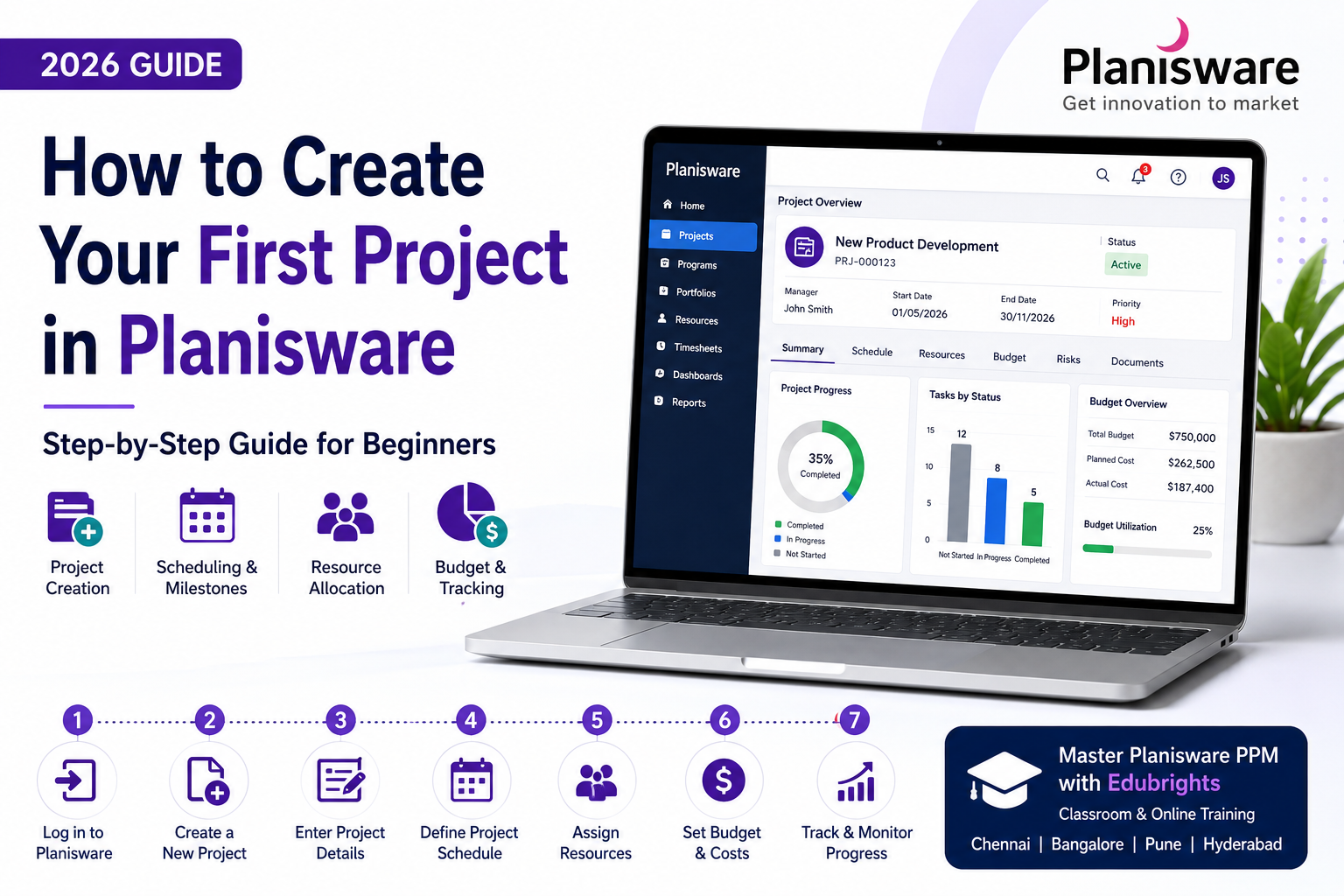
In this beginner-friendly guide, you'll learn how to create your first project in Planisware, from setting up project details to assigning resources and tracking progress.
What is a Project in Planisware?
A project in Planisware is a structured workspace where you manage tasks, schedules, resources, budgets, risks, and project milestones.
Each project contains essential information such as:
- Project name
- Timeline
- Budget
- Team members
- Tasks and milestones
- Resource allocation
- Progress reports
Planisware centralizes this information, making it easier for project managers and stakeholders to collaborate effectively.
Prerequisites Before Creating a Project
Before creating your first project, ensure you have:
- Access to the Planisware application
- Required user permissions
- Basic understanding of project objectives
- Resource and team information
- Estimated project timeline and budget
Having this information ready helps you set up the project efficiently.
Step 1: Log in to Planisware
Start by logging into your Planisware account using your organization's credentials.
After logging in, navigate to the Project Portfolio or Projects section from the dashboard. Depending on your organization's configuration, the menu names may vary slightly.
Step 2: Create a New Project
Click the Create Project or New Project option.
You may be asked to choose a project template. Templates help standardize project creation by including predefined workflows, milestones, and approval processes.
If no template is available, you can start with a blank project.
Step 3: Enter Project Details
Fill in the basic project information, including:
- Project Name
- Project Description
- Project Manager
- Start Date
- End Date
- Business Unit
- Priority Level
- Project Category
Providing accurate project details helps improve reporting and portfolio management later.
Step 4: Define the Project Schedule
The next step is creating the project schedule.
Add:
- Project phases
- Tasks
- Milestones
- Dependencies
- Estimated durations
A well-planned schedule allows teams to monitor progress and identify delays early.
Step 5: Assign Resources
Resource management is one of Planisware's strongest features.
Assign employees based on:
- Skills
- Availability
- Department
- Workload
- Project role
Balanced resource allocation helps prevent overloading team members and improves project delivery.
Step 6: Set Budget and Costs
Enter your estimated project budget.
You can define:
- Labor costs
- Material costs
- External vendor costs
- Planned expenses
- Forecasted budget
Tracking financial information helps organizations control spending throughout the project lifecycle.
Step 7: Save and Monitor the Project
Once all project information has been entered, save the project.
Planisware provides dashboards and reports that help you monitor:
- Project progress
- Budget utilization
- Resource availability
- Task completion
- Risks and issues
- Portfolio performance
Regular updates ensure stakeholders always have accurate project information.
Best Practices
To get the most out of Planisware:
- Define clear project objectives.
- Keep project schedules updated.
- Allocate resources realistically.
- Monitor budgets regularly.
- Review project dashboards frequently.
- Update milestones on time.
- Communicate changes with stakeholders.
Following these practices helps improve project success rates.
Common Mistakes to Avoid
Many beginners make avoidable mistakes, such as:
- Creating incomplete project details
- Ignoring resource availability
- Setting unrealistic deadlines
- Not updating project progress
- Skipping budget tracking
- Failing to review reports regularly
Avoiding these issues makes project management more effective.
Career Opportunities
As organizations adopt enterprise Project Portfolio Management solutions, professionals with Planisware skills are increasingly in demand.
Popular roles include:
- Planisware Consultant
- PMO Analyst
- Project Manager
- Portfolio Manager
- Resource Manager
- Business Analyst
- Project Planner
Companies across Chennai, Bangalore, Pune, and Hyderabad continue to hire professionals with practical Planisware experience.
Learn Planisware with Edubrights
If you're looking to build a career in Project Portfolio Management, Edubrights offers industry-focused Planisware Project Portfolio Management Training with:
- Live Instructor-Led Sessions
- Hands-on Practical Exercises
- Real-Time Industry Scenarios
- Resume Building
- Mock Interviews
- Placement Assistance
👉 Explore our Planisware Course:
https://edubrights.in/courses/planisware-project-portfolio-management-course-in-chennai
Frequently Asked Questions
Is Planisware easy for beginners?
Yes. With structured training and regular practice, beginners can quickly learn how to create and manage projects in Planisware.
Do I need coding knowledge?
No. Planisware mainly focuses on project management, resource planning, budgeting, and portfolio management.
Can I use templates while creating projects?
Yes. Many organizations use project templates to standardize project creation and improve consistency.
Conclusion
Creating your first project in Planisware is straightforward when you follow a structured approach. By defining project details, building schedules, assigning resources, and tracking progress, you can efficiently manage projects from initiation to completion.
As more organizations invest in enterprise Project Portfolio Management, learning Planisware can significantly improve your career prospects. Whether you're a beginner or an experienced professional, mastering Planisware will help you manage projects more effectively and become a valuable asset to any organization.