Popular
How Much Do Murex Professionals Earn?
EduBrights
July 24, 2026
2 min read
Curious about compensation levels in the Murex ecosystem? Here is a transparent look at salary ranges for Murex Business Analysts, MXML Developers, and Senior Consultants.
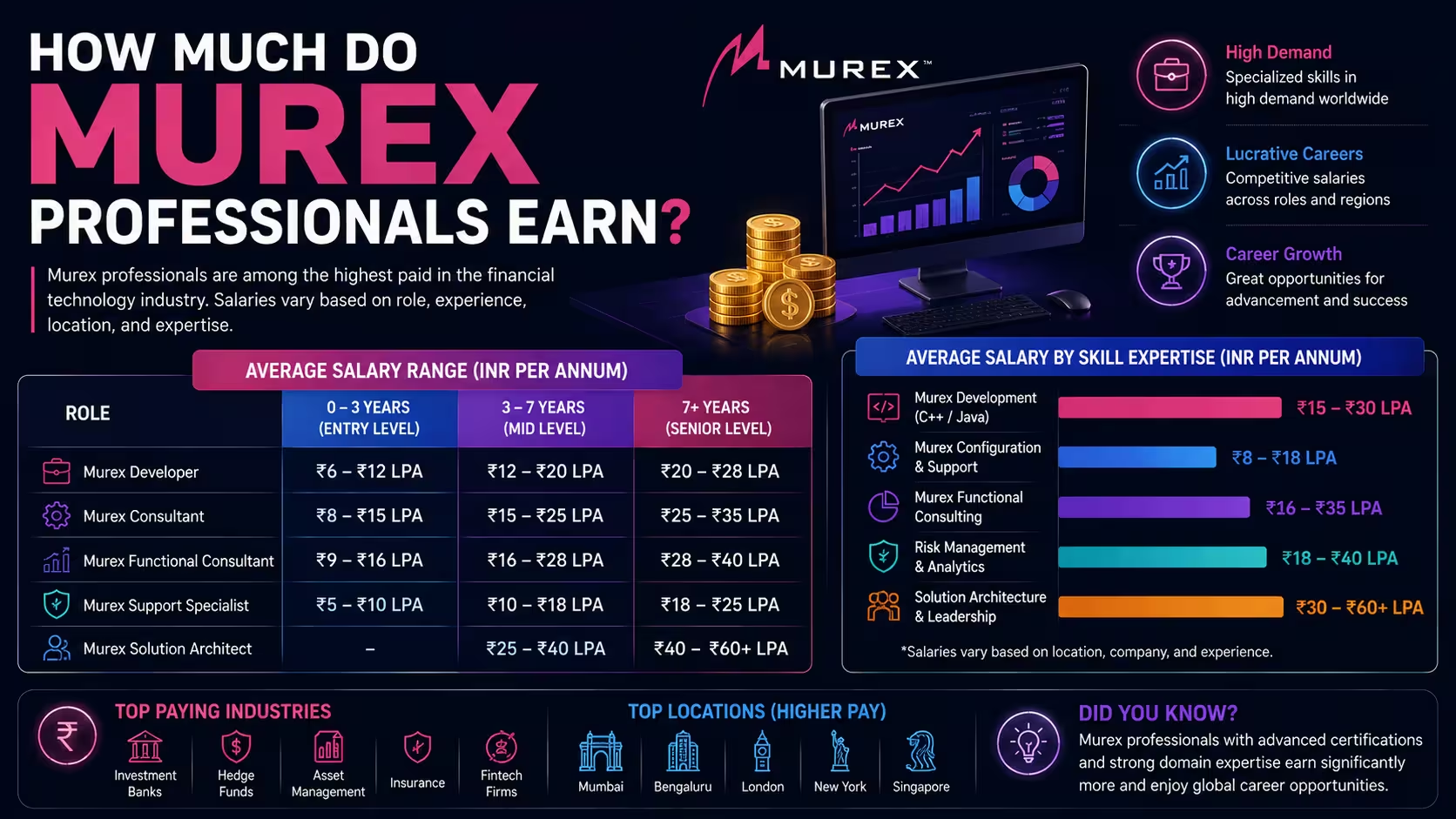
How Much Do Murex Professionals Earn?
When choosing a FinTech specialization, understanding compensation potential is essential. Because Murex MX.3 is high-end enterprise software handling billions of dollars in daily trades across investment banks, Murex professionals command significant salary premiums compared to general IT roles.
Here is a realistic look at earnings potential across experience levels and specializations.
Why Murex Professionals Command High Salaries
Murex pay scales reflect a fundamental supply-and-demand imbalance:
- High Strategic Value: Banks rely heavily on Murex for core trading, risk management, and regulatory compliance (FRTB, VaR).
- Niche Talent Pool: Qualified consultants who understand both financial instruments and technical Murex architecture are relatively scarce.
- Global Mobility: Murex skills transfer directly across financial hubs like Singapore, London, Dubai, New York, Chennai, and Bangalore.
Salary Spectrum by Experience Level
Entry-Level / Junior Murex Professionals (0–2 Years)
- Common Roles: Junior Functional Analyst, Support Engineer, Trainee Integration Developer.
- Compensation Focus: Strong starting pay significantly higher than standard IT entry-level packages, reflecting specialized domain knowledge.
Mid-Level Murex Consultants (3–6 Years)
- Common Roles: MXML Developer, Datamart Reporting Engineer, Risk Functional Analyst.
- Compensation Focus: Substantial compensation growth as professionals take ownership of full MxML workflow builds, regulatory reports, or trade booking configurations.
Senior Murex Architects & Lead Consultants (7+ Years)
- Common Roles: Murex Technical Architect, Lead Functional Consultant, Program Integration Lead.
- Compensation Focus: Elite tier compensation, often including international contracting rates, performance bonuses, and advisory roles on global bank migration projects.
Final Word
Murex expertise offers exceptional long-term earning potential, fast salary progression, and global consulting opportunities across leading financial institutions.
Whether you're mapping your FinTech career trajectory, evaluating Murex training programs, or preparing for banking tech interviews, hands-on platform practice remains the single best predictor of job readiness.
Explore Murex Training at EduBrights →
EduBrights is a leading IT training institute offering hands-on Murex courses across capital markets and treasury specializations. View all courses.
Murex professional salary
Murex consultant pay scale
Murex developer salary
Murex training


